O que é este blog?

Este blog trata basicamente de ideias, se possível inteligentes, para pessoas inteligentes. Ele também se ocupa de ideias aplicadas à política, em especial à política econômica. Ele constitui uma tentativa de manter um pensamento crítico e independente sobre livros, sobre questões culturais em geral, focando numa discussão bem informada sobre temas de relações internacionais e de política externa do Brasil. Meus livros podem ser vistos nas páginas da Amazon. Outras opiniões rápidas podem ser encontradas no Facebook ou no Threads. Grande parte de meus ensaios e artigos, inclusive livros inteiros, estão disponíveis em Academia.edu: https://unb.academia.edu/PauloRobertodeAlmeida

Site pessoal: www.pralmeida.net.
Mostrando postagens com marcador Bloomberg News. Mostrar todas as postagens

segunda-feira, 28 de julho de 2025

O acordo entre a UE e Tump: We Have a Deal (Bloomberg News)

 O acordo entre a UE e Trump (sim, com Trump, pois ele faz questão de ser assim, ignorando completamente, economistas, empresários, diplomáticos, técnicos conhecedores do assunto), no site da Bloomberg News (27/07/2025):


We Have a Deal
Bloomberg News, July 27, 2025

The US and European Union agreed to a deal that will see the bloc face 15% tariffs on most of its exports, including automobiles, staving off a trade war that could have delivered a hammer blow to the global economy.


The pact comes less than a week before a Friday deadline for President Donald Trump’s higher tariffs to take effect. The president in May threatened to impose a 50% duty on nearly all EU goods, adding pressure that accelerated negotiations, before lowering that to 30%.

Trump announced the deal Sunday after a meeting with European Commission President Ursula von der Leyen. He said the charge would cover automobiles. The European leader said the rate would be “all inclusive,” though Trump said later it did not include pharmaceuticals and metals. Steel and aluminum “stays the way it is,” the US president added.


Donald Trump shakes hands with Ursula von der Leyen during the meeting. Photographer: Brendan Smialowski/AFP
“I think that basically concludes the deal,” Trump told reporters at his golf club in Turnberry, Scotland. “It’s the biggest of all the deals.”

Von der Leyen said the agreement “will bring stability” and “it will bring predictability.”

According to the US president, the EU agreed to

purchase $750 billion in energy,
invest $600 billion in the US on top of existing investments,
open up countries’ markets to trade with US at zero tariffs, and
purchase “vast amounts” of military equipment.
The transatlantic pact removes a major risk for markets and the global economy — a trade war involving $1.7 trillion worth of cross-border commerce — even though it means European shipments to the US are getting hit with a higher tax at the border.

The goals, Trump said, were more production in the US and wider access for American exporters to the European market. Von der Leyen acknowledged that part of the drive behind the talks was a rebalancing of trade, but cast it as beneficial for both sides.

“The starting point was an imbalance,” von der Leyen said. “We wanted to rebalance the trade we made, and we wanted to do it in a way that trade goes on between the two of us across the Atlantic, because the two biggest economies should have a good trade flow.”

Read more: A Guide to Trade Talks, Trump-Style:

US and European negotiators had been zeroing in on an agreement this past week. Officials have discussed terms for a quota system for steel and aluminum imports, which would face a lower import tax below a certain threshold and would be charged the regular 50% rate above it. The EU had also been seeking quotas and a ceiling on future industry-specific tariffs, but it’s unclear if the initial agreement will shield the bloc from potential levies that have yet to be implemented.


sexta-feira, 3 de junho de 2022

100 dias da guerra de agressão da Rússia contra a Ucrânia - Bloomberg News


In the 100 days since President Vladimir Putin invaded Ukraine, he has caused immense death and destruction for few military gains and at huge economic cost. Yet he shows no sign of cracking even as Russia’s war aims have proved illusory.

Putin appealed to Ukraine’s army to “immediately lay down arms and go home” on the first day of the war, apparently convinced Russia’s neighbor would welcome his troops as liberators from a neo-Nazi “junta.”

Instead, fierce Ukrainian resistance broke Russian attempts to seize the capital, Kyiv, and has forced a retreat to focus on the eastern Donbas region. Ukrainian President Volodymyr Zelenskiy has emerged as a global symbol of democratic resistance to tyranny.

Key reading:

Putin declared the invasion was a response to NATO’s “unacceptable” expansion. Yet Sweden and Finland are now poised to join, greatly increasing Russia’s border with the military alliance.

After vowing to “demilitarize” Ukraine, Putin has prompted the US and Europe to deliver massive quantities of modern weapons to help Ukrainians defend themselves — all this while incurring unprecedented sanctions that may push Russia toward its deepest recession in decades as foreign investors flee.

The challenge facing the US and its allies now is how to ratchet up the pain for Putin while avoiding divisions that may let him claim a Pyrrhic victory if his army succeeds in taking the Donbas and absorbing it into Russia. Zelenskiy said yesterday Russia now occupies 20% of Ukraine.

Rising energy prices are already causing political difficulties for US President Joe Biden and in the European Union, where a partial ban on Russian oil was agreed yesterday after weeks of division. Russian blockades of Ukrainian grain exports threaten a global food crisis that may add to calls for concessions to end the war.

Ukraine confounded Russian expectations of a quick and easy victory. The question now is whether the West or Putin will have greater staying power.

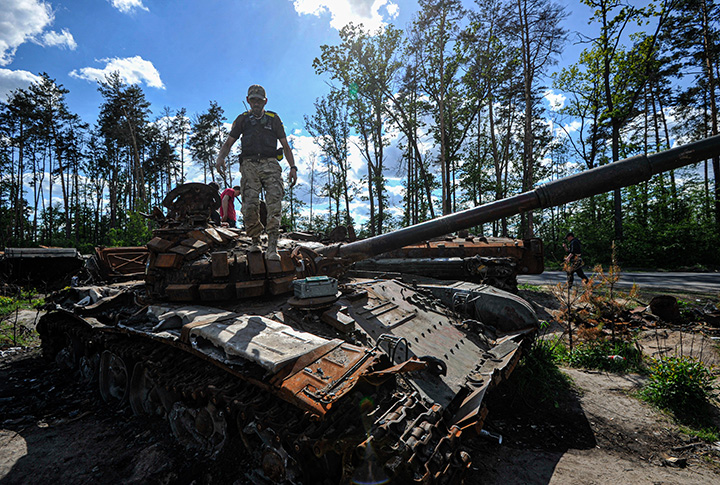
A man inspects a destroyed Russian tank in Dmytrivka village near Kyiv. Source: SOPA Images/LightRocket

Click here for this week’s most compelling political images and share this newsletter with others. They can sign up here.

Global Headlines

Gun plea | Biden called for a ban on sales of assault weapons and high-capacity magazines, pleading with Congress to toughen laws following a spate of mass shootings. Still, he acknowledged that Congress is unlikely to restrict them, with Republican lawmakers, who can block the passage of bills in the Senate, vowing to prevent sweeping gun-control measures.

  • The New York state legislature approved raising the legal age to buy semiautomatic rifles to 21 from 18 and tightened rules on purchasing firearms and other military equipment.

Jan. 6 hearings | The US Congressional committee investigating last year’s insurrection at the Capitol will lay out its findings in hearings starting next Thursday. The panel said it will detail how former President Donald Trump and allies attempted to overturn the 2020 election results. At issue is whether Trump and his associates organized and incited the mob, which he and his former top advisers deny.

Saudi nod | OPEC+ agreed to open its oil taps faster in the summer months, a gesture of reconciliation to the US that nevertheless keeps Russia at the heart of the cartel. The White House welcomed the deal, which came after months of diplomatic pressure on Saudi Arabia to mitigate the surge in energy prices that’s battered the global economy since Russia’s invasion of Ukraine.

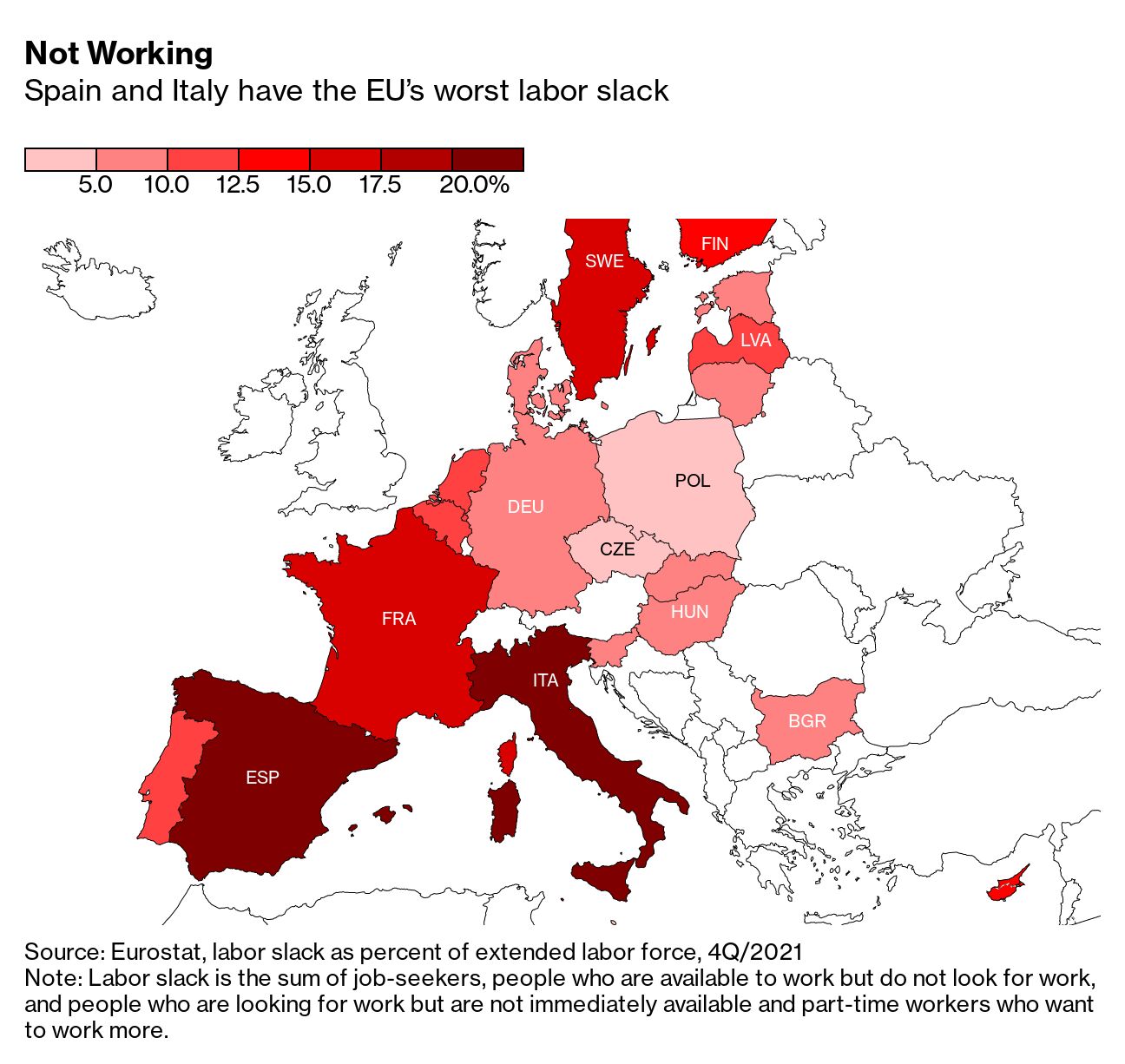
The proportion of Italians who don’t bother to seek work is among the highest in Europe. It poses a challenge for unlocking the jobs potential in the euro zone’s third-biggest economy, which is one of the few options available to fight the impact of a demographic decline so stark that the world’s richest man, Elon Musk, has warned the country risks having no people left.

Best of Bloomberg Opinion

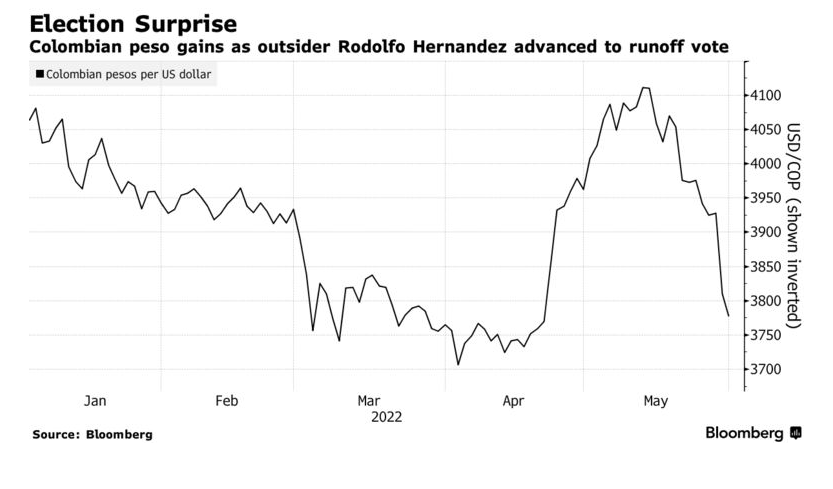
Radical warning | Colombian voters will reject the socialist “Venezuelan model” when they vote in a runoff election in just over two weeks, outgoing President Ivan Duque said in an interview. Duque, who is term-limited and deeply unpopular in polls, didn’t identify specific candidates, but left-wing senator Gustavo Petro, 62, is running against construction magnate Rodolfo Hernandez on a platform that centers on a radical shift in the economy.

Explainers you can use

Price rival | Turkish President Recep Tayyip Erdogan has no clear rival for elections next June, with the opposition yet to agree on a candidate to challenge him. But as Selcan Hacaoglu writes, runaway inflation is the most urgent threat to his nearly 20-year grip on power, and it’s a formidable one: A survey by MetroPoll shows public support for Erdogan’s Justice and Development Party has fallen close to the lowest level since it was established.

Bloomberg TV and Radio air Balance of Power with David Westin weekdays from 12 to 1 p.m. ET, with a second hour on Bloomberg Radio from 1 to 2 p.m. ET. You can watch and listen on Bloomberg channels and online here or check out prior episodes and guest clips here.

News to Note

  • The US Treasury Department announced a new round of sanctions targeting what it said were yachts linked to Putin and his allies in the latest set of penalties over the war in Ukraine.
  • The number of deaths from the coronavirus in Africa may fall 94% to 22,563 this year if current variants and transmission rates remain the same, according to a World Health Organization model.
  • Sweden’s prime minister may have to put her fate in the hands of a Kurdish-born lawmaker who has drawn the ire of Turkey, just as the Nordic country seeks to overcome Erdogan’s veto of its bid for NATO membership.
  • Sudan’s military will hold direct talkswith civilian politicians and activists next week for the first time since October’s coup, the United Nations envoy said.
  • Kim Jong Un congratulated Queen Elizabeth II on the anniversary of her ascension to the throne, as the young North Korean leader sent his first public message to the 96-year-old monarch.

Pop quiz, readers (no cheating!). In which country has a 26-year-old woman become interim co-chair of a top political party and the inspiration for millions enraged by a rash of high-profile sexual harassment cases? Send your answers to balancepower@bloomberg.net.

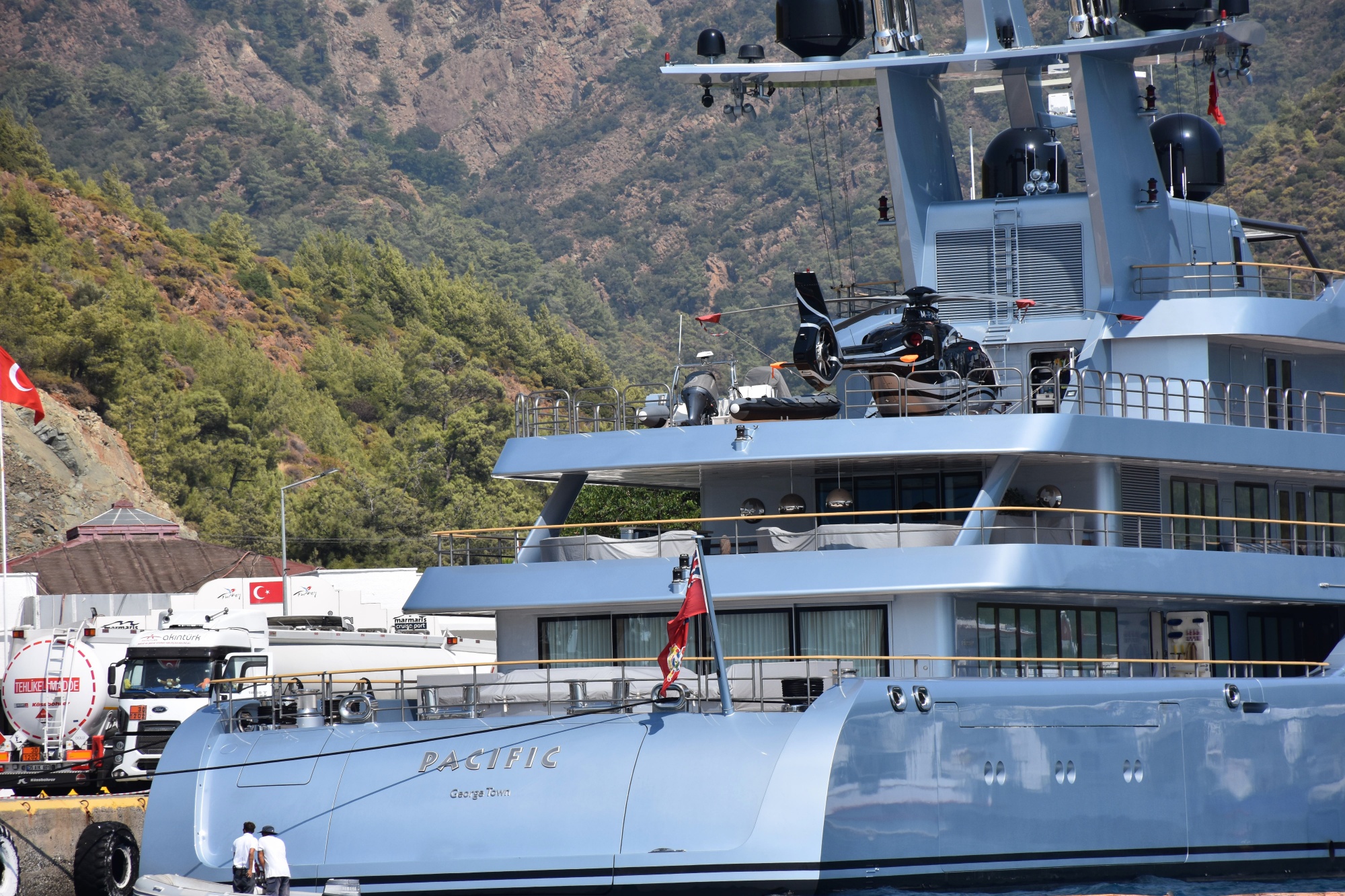
And finally ... After not broadcasting its location for almost two weeks, a $150 million luxury superyacht linked to Leonid Mikhelson — a sanctioned billionaire and Russia’s second-richest person — reappeared, transmitting that it was headed to the Bahamas and Barcelona. But its final destination was actually Turkey, a favored destination for superyachts connected to Russian tycoons facing scrutiny as countries look to step up sanctions for Putin’s war.

The superyacht Pacific at Cruise Port Harbour in Marmaris, Turkey, in 2020. Source: Anadolu Agency