O que é este blog?

Este blog trata basicamente de ideias, se possível inteligentes, para pessoas inteligentes. Ele também se ocupa de ideias aplicadas à política, em especial à política econômica. Ele constitui uma tentativa de manter um pensamento crítico e independente sobre livros, sobre questões culturais em geral, focando numa discussão bem informada sobre temas de relações internacionais e de política externa do Brasil. Meus livros podem ser vistos nas páginas da Amazon. Outras opiniões rápidas podem ser encontradas no Facebook ou no Threads. Grande parte de meus ensaios e artigos, inclusive livros inteiros, estão disponíveis em Academia.edu: https://unb.academia.edu/PauloRobertodeAlmeida

Site pessoal: www.pralmeida.net.
Mostrando postagens com marcador LSE. Mostrar todas as postagens

quarta-feira, 22 de outubro de 2025

The London Consensus -Tim Besley, Irene Bucelli, Andrés Velasco (eds.) (LSE)

The London Consensus

Tim Besley, Irene Bucelli, Andrés Velasco (eds.)

London: London School of Economics, 2025 

Preface

The year 2025 marks three-and-a-half decades since the publication of John Williamson’s essay on the Washington Consensus. The ideas contained in that essay have many advocates and also plenty of critics, but there is no denying they have been extremely influential as a list of do’s and don’ts in economic policy and development.

Mindful of that anniversary, in May 2023 we convened a conference at the London School of Economics and Political Science (LSE), whose aim was to bring together a group of economists and other social scientists to explore what would constitute a new consensus in their respective areas of expertise. In most topics, we also sought the views of discussants.

We did not provide an overall conceptual framework for the conference or a template for the individual contributions. These were entirely developed by the authors in the spirit of provoking discussion, and the meeting fostered a lively exchange of ideas.  Many authors chose to edit their contributions in line with the comments that they received at the conference and afterwards. The book is a record of that exchange, but the events and debates that motivated it continue to evolve. The next phase of the project will be disseminating these ideas and to respond to a fast-moving policy landscape. Only time will tell how well the ideas in this book stand the test of time and whether they prove influential.

The project would not have been possible without the generosity and vision of LSE Emeritus Governor, Benefactor and Alumnus Mario Francescotti. His leadership in establishing the research programme on Renewing the Social Contract at LSE launched this process of academic enquiry. His support has been crucial throughout the project, from the original conference in 2023 to the turning of the papers into the present volume. We acknowledge his support with gratitude.

LSE is a cosmopolitan hub for contrasting policy ideas, but also a place where diverse views co-exist in a collegial way. The School’s motto is rerum cognoscere causas, Latin for ‘to know the causes of things’. This book follows in that tradition. Its success will be judged by the debate that it fosters.

Tim Besley

Irene Bucelli

Andrés Velasco


terça-feira, 10 de novembro de 2020

Mind the Gap": New Directions in History, Culture and Diplomacy in a Time of COVID - LSE Dept of International History

"Mind the Gap": New Directions in History, Culture and Diplomacy in a Time of COVID

Hosted by the Department of International History

ZOOM, UNITED KINGDOM

How to Attend: 

https://www.lse.ac.uk/International-History/Events/2020/mind-the-gap#ticket-info 

This event series is co-hosted by the Cold War Studies Project at LSE IDEAS

History, Culture and Diplomacy Series

Join the Department of International History for the first presentation of the programme in History, Culture and Diplomacy with Blanche Wiesen Cook, Margaret Peacock, Audra Wolfe, and Patryk Babiracki.

Blanche Wiesen Cook, the acclaimed biographer of Eleanor Roosevelt, will be discussing her new paper ‘Doctors Divided: The AMA’s war against National Health care for ALL, 1935-2020’. Margaret Peacock (Innocent Weapons: The Soviet and American Politics of Childhood in the Cold War)Audra Wolfe (Freedom's Laboratory: The Cold War Struggle for the Soul of Science), and Patryk Babiracki (Soviet Soft Power in Poland: Culture and the Making of Stalin's New Empire, 1943-1957) will discuss new directions and their future publications, and reflect on moving forward in a time of COVID.

The panel sets the stage for on-campus lectures by each scholar in the 2021-2022 academic year.

Piers Ludlow, Chair, Department of International History, will introduce the programme and Victoria Phillips, Visiting Fellow, London School of Economics, will moderate the discussion.


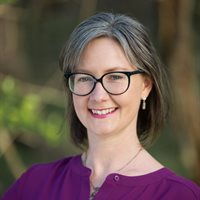
Margaret Peacock is Associate Professor of History at the University of Alabama.

Audra J. Wolfe (@ColdWarScience) is a Philadelphia-based writer, editor, and historian. She is the author of Competing with the Soviets: Science, Technology, and the State in Cold War America.

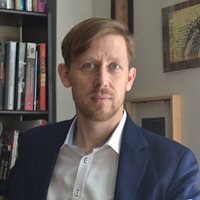
Patryk Babiracki is Associate Professor in Russian and East European history at the University of Texas-Arlington.

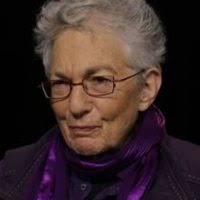
Blanche Wiesen Cook is Distinguished Professor of History and Women's Studies at the John Jay College and the Graduate Center of the City University of New York.

Victoria Phillips is LSE Visiting Fellow in the Department of International Histroy at LSE. She is the author of Martha Graham’s Cold War: The Dance of American Diplomacy. A Lecturer in History at the European Institute and Department of History at Columbia University in the City of New York, Dr. Phillips is also Associated Faculty at the Harriman Institute, director of the Cold War Archival Research project (CWAR), and Visiting Fellow in the Department of International History at the London School of Economics

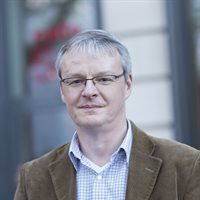
Piers Ludlow is Head of Department in International History at LSE. His main research interests lie in the history of Western Europe since 1945, in particular the historical roots of the integration process and the development of the EU.

The Department of International History (@lsehistory) teaches and conducts research on the international history of Britain, Europe and the world from the early modern era up to the present day. Sponsored by the department's Contemporary International History and the Global Cold War research cluster.

Speakers

Dr Margaret Peacock

Dr Margaret Peacock

Dr Audra J. Wolfe

Dr Audra J. Wolfe

Dr Patryk Babiracki

Dr Patryk Babiracki

Professor Blanche Wiesen Cook

Professor Blanche Wiesen Cook

Chair

Professor Piers Ludlow

Professor Piers Ludlow

Moderator

Professor Piers Ludlow

Dr Victoria Phillips

domingo, 27 de outubro de 2019

A London School of Economics e a China autoritária: dilemas quanto a valores e princípios

O Financial Times reporta que a LSE desistiu de um programa que seria financiado por um magnata de Shanghai que apoia as políticas autoritárias de Xi Jinping.
O Board deve ter decidido, depois de pressões contrárias de professores e estudantes, certamente preocupados com o que está acontecendo em Hong Kong.
Paulo Roberto de Almeida

London School of Economics academics outraged by proposed China programme 
University forced to put on hold plan backed by pro-Beijing venture capitalist

 Documents outlining the programme said the scheme would fund research and support new courses on Chinese economics, politics and society

The London School of Economics has been forced to “put on hold” a proposed China programme funded by a staunchly pro-Beijing venture capitalist after the plan sparked outrage among the university’s academics. The university outlined the proposal to LSE scholars focused on China at a meeting last month, according to Chris Hughes, a professor of international relations at the school, and another academic who did not wish to be identified. It named Eric X Li as the backer of the programme, said Prof Hughes and the other academic, both of whom attended the briefing.
Mr Li is a Shanghai businessman who has regularly praised the authoritarian government of Chinese president Xi Jinping and previously justified the 1989 crackdown on the Tiananmen Square protests. When questioned about the matter by the Financial Times, the university said management had decided in mid-October to suspend the plan.
 “LSE has regular discussions about potential new programmes or partnerships which will strengthen our research, teaching and public engagement,” an LSE spokesperson said. “Following consultation with colleagues, initial plans for a China programme have been put on hold.” The events have raised concerns among LSE scholars about the threat to academic freedom from what they say is an over-reliance on foreign donors at the university, which has come under fire in the past over the issue. The university was criticised in 2011 for accepting donations from sources linked to Muammer Gaddafi, the late Libyan dictator, in a report by former Lord Chief Justice Woolf.
The scandal forced the resignation of Howard Davies, the university director. Prof Hughes said university management told the group of China-focused researchers that the programme was to receive a sum “in the millions” from Mr Li, who has given TED talks and written opinion pieces in international newspapers defending the Chinese government. “I’m really furious about this . . . it is an insult to our intelligence,” Prof Hughes said of the plan. In a letter to university management, Prof Hughes said the project would compromise and “certainly reasonably be perceived to compromise the school’s values”. University documents outlining the programme obtained by the FT said the scheme would fund research, support new undergraduate and postgraduate courses on Chinese economics, politics and society, and will be overseen by an advisory group of “distinguished individuals from China”. Academics also told the FT they believed the advisory group would exclude Chinese individuals perceived to be unsupportive or opposed to the Communist party government in Beijing. “It’s not going to be Ai Weiwei or Joshua Wong,” Prof Hughes said, referring to the dissident Chinese artist and the Hong Kong pro-democracy leader. Mr Li, founder of Chinese investment firm Chengwei Capital, has said alternatives to the Tiananmen Square crackdown “would have been far worse” and the “resulting stability ushered in a generation of growth and prosperity”. He has also said: “My bet is that Xi will indeed change China, and the world, for the better.” Academics said his proposed role in the programme was unclear. In his letter, Prof Hughes said: “The fact that senior figures in the school have reached an advanced stage in negotiating a donation from an individual who prides himself on being an advocate of China’s authoritarian system shows that the school’s existing procedures for protecting our core values and reputation are inadequate.” The proposal document said funding sources “closely affiliated” with the Chinese government would be “unacceptable”. It added that “additional governance arrangements” would be needed to allay concerns about the close links between government and industry in China. Mr Li did not respond to a request for comment. The LSE did not respond to the specific complaints from some academics about the programme. The university documents also said there were other country specific, philanthropy-funded programmes under consideration for India and Israel. “We have started to develop a new way of promoting research, scholarships, entrepreneurship and alumni engagement for particular regions and countries of the world which are funded primarily though philanthropy,” a university governance document said.