Mostrando postagens com marcador Niall Ferguson. Mostrar todas as postagens

quarta-feira, 7 de outubro de 2026

Is Peace at Hand in Ukraine? - Niall Ferguson (Substack)

 Is Peace at Hand in Ukraine?

This week, my train in Ukraine was almost hit by a Russian drone. It sent the same message that aggressors have been sending since the earliest days of siege warfare: Be afraid.
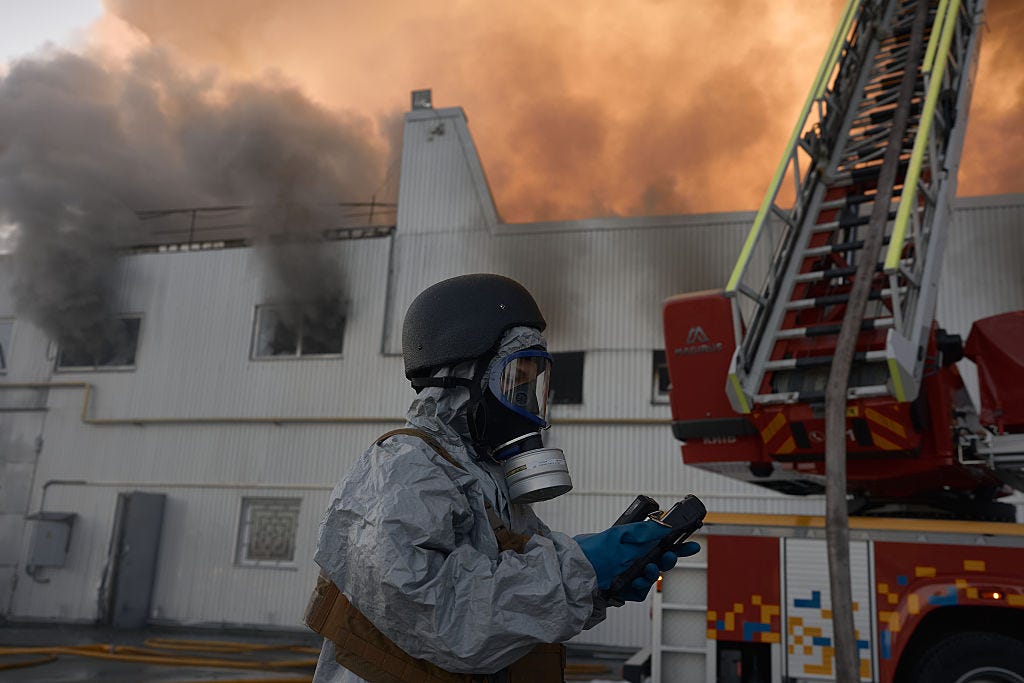
KYIV, Ukraine — I did not take it personally that a Russian drone destroyed the train behind ours as we neared the Polish border with Ukraine on Sunday. Indeed, I wasn’t aware of what had happened until a few hours later. I had taken it for granted that going to Ukraine amid a relentless aerial bombardment would have its risks. But I had also assumed that I’d probably be all right if I was traveling with such luminaries as the former UK prime minister Boris Johnson, the former director of the CIA David Petraeus, and multiple current or former leaders of Scandinavian and Baltic states—not forgetting the editor of The Economist.

I don’t think the Russians intended to hit our train. I do think they intended to send us all a message. And it is the same message that aggressors have been sending since the earliest days of siege warfare: Be afraid. It says much about the war in Ukraine that President Vladimir Putin believes he can send such a message to eminent Westerners with impunity. He is probably right about that. It dovetails with his current strategy of drone incursions, sabotage, and cyberattacks directed at multiple NATO (North Atlantic Treaty Organization) members.

My annual visit to Kyiv for the Yalta European Strategy (YES) meeting was faintly encouraging about the chances of some diplomatic progress, but grimly sobering about Ukraine’s economic and political situation. Just over a week ago, President Donald Trump’s diplomatic representatives, his son-in-law Jared Kushner, and his friend Steve Witkoff, visited Moscow and Kyiv for meetings with the leaders of Russia and Ukraine, President Putin, and President Volodymyr Zelensky. This was not long after Director of Central Intelligence John Ratcliffe had also visited Moscow on August 26.

Contrary to generally negative media coverage, some progress was made. Speaking via video link at the opening of the YES conference in Kyiv on Friday, Kushner said that the key elements of a peace agreement were largely in place, with the exception of “territory,” an allusion to the Donbas region. The other elements—security guarantees for Ukraine and a “deconfliction mechanism”—had been in place since the last trilateral meeting of Russian, Ukrainian, and U.S. representatives in Abu Dhabi in January. “If Ukraine were willing to move back to Putin’s desired line,” Kushner said, “the rest of the deal would be ready.”

That is, of course, a very big “if,” given the consistent refusal of the Ukrainian government to accept territorial cessions. Kushner said he expected there to be new trilateral talks, again in Abu Dhabi, later this month or in early October, following the Russian Duma elections on September 18 to 20. He elicited incredulous laughter when he said Putin was sincere about peace talks. However, he responded: “Everything looks impossible until right before it’s achieved.”

I have no illusions that Zelensky is eager to cede the remaining 21 to 22 percent of Donetsk that Ukraine still controls. This is not out of sentimentality about square miles. The territory in question includes the so-called “Fortress Belt,” anchored by the key cities of Sloviansk, Kramatorsk, Druzhkivka, and Kostyantynivka. On the other hand, both sides do appear to have stronger incentives to end their war than at any time since late 2022, the nadir of Russia’s fortunes, when Western leaders misguidedly urged Ukraine to keep fighting rather than seek peace.

A year ago, I was quite concerned about Ukraine’s thinly stretched armed forces. However, Ukraine’s advances in military technology have more than compensated for these vulnerabilities. The evidence is visible in Russian casualty figures, running at more than 40,000 in July and August according to the Ukrainian General Staff, as well as in the minimal territorial gains Russia made this spring and summer, compared with March through August last year. It is also apparent in the damage done by Ukrainian deep strikes on Russian energy infrastructure, especially oil refineries.
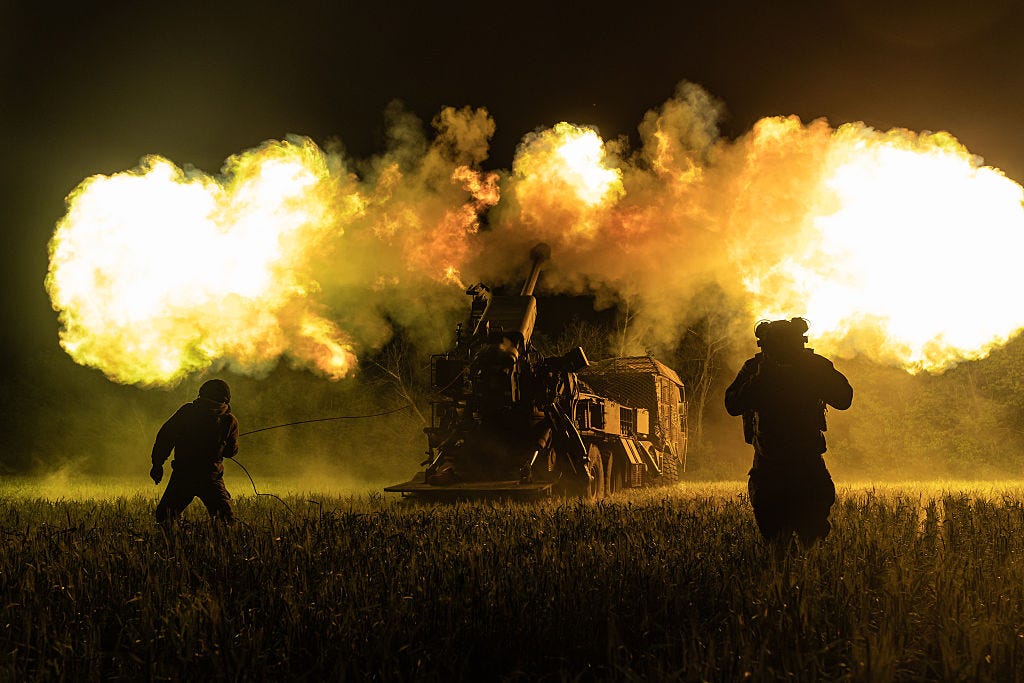
A year ago, I was quite concerned about Ukraine’s thinly stretched armed forces. (Diego Herrera Carcedo/Anadolu via Getty Images)

On September 9, Ukrainian forces struck the Novy Urengoy Gas Condensate Treatment Plant and the Purovsky Gas Processing Plant in Yamalo-Nenets Autonomous Okrug—both more than 2,700 kilometers from the Ukrainian border. On the same night, Ukraine hit Russian ports along the Black and Caspian Sea coasts. Ukrainian successes have been partly due to assistance from U.S. intelligence in targeting. However, the principal credit goes to the speed and creativity with which the Ukrainian Armed Forces have innovated in their use of drones, software, and artificial intelligence. Asked if Ukraine already had autonomous AI weapons systems in which no human decision-maker played a part, Artem Martynenko, deputy commander in chief of Armed Forces of Ukraine, conspicuously avoided giving a reply.

Nevertheless, Russia has responded in ways that dispel any notion of a Ukrainian victory. Russia continues to strike Ukrainian cities every day with drones and missiles, while Ukraine’s air defenses are much less effective than a year ago. Not only is there a shortage of Patriot interceptors; Russia has also switched to jet-powered strike drones that are much harder to intercept. Moreover, the Ukrainians are fearful that Russia is close to deploying its own version of Starlink. At the same time, Russian attacks on Ukraine’s biggest port on the Danube and on cargo ships in the Black Sea have brought Ukrainian agricultural exports from its Black Sea ports to a standstill.

Both the Ukrainian and Russian economies are showing signs of strain, but the strain is greater in Ukraine.

From the outset, this war has been a contest between David and Goliath. The International Monetary Fund estimates that the Russian population is 4.4 times larger than Ukraine’s and the Russian economy is 11.8 times larger (on a current dollar basis). Ukraine’s growth has stalled this year. The Black Sea escalation began in July. According to Ukraine’s Infrastructure Ministry, in July, Russia carried out 67 attacks on port infrastructure, 35 attacks on civilian vessels in ports, and 22 attacks on vessels using Ukraine’s maritime corridor. The result has been an effective commercial blockade of Ukraine’s Black Sea ports. Ukraine is trying to reroute agricultural exports to the Danube, but capacity is far lower. Russia has also started attacking Ukraine’s overland export routes. At the same time, Russian air raids on power infrastructure and commercial distribution nodes are causing severe disruption to both the manufacturing and the retail sectors. Last winter was bitter in Ukraine. This one will be worse.

As in Ukraine, the costs of war have caused an economic slowdown in Russia. High interest rates are the main reason for the slowdown. Fixed capital investment declined sharply in the first half of the year. Overall industrial production flatlined. Preliminary estimates suggest Russian seaborne grain exports fell 62 percent in August compared with a year ago. However, the decline in agricultural exports is far less significant for Russia than for Ukraine.

Russia’s fiscal situation is ugly but workable. Despite higher oil prices from the Gulf crisis, oil and gas revenues are down. But the budget deficit is currently 2.5 percent of GDP. Unemployment was just 2.3 percent in July. Inflation peaked at 10.3 percent in March 2025 and is now 6.3 percent. Real wage growth remains robust. Although there are signs of financial stress (e.g., signs of trouble at VTB Bank; the sharp decline of Gazprom’s share price), those who continue to talk about the outcome of the war being determined by a Russian economic crisis are missing the point. It is Ukraine that is much closer to a crisis.

Both sides appear to have stronger incentives to end their war than at any time since late 2022.

Both combatants rely on foreign support, though it takes different forms. Calculating all aid allocations (financial, humanitarian, and military) to Ukraine by the EU and its member states since 2022, the total comes to €195 billion ($224 billion)—52 percent of the amount from all donors—compared with the U.S. figure of €115.4 billion ($132.6 billion). Including committed (but not yet allocated) aid, the EU’s contribution is €326.5 billion ($375 billion)—59 percent of the total—compared with a U.S. figure of €119 billion ($136.7 billion). In other words, total EU aid to Ukraine is now nearly three times more than U.S. aid to Ukraine. And that gap will only widen as U.S. aid to Ukraine effectively ceased early last year, following President Trump’s second inauguration.

Europe will continue to prop up Ukraine’s budget through at least the first half of next year. The EU’s main financing vehicle, the €90 billion ($103.4 billion) Ukraine Support Loan, runs through 2027 but will need to be front-loaded to cover Ukraine’s faster-than-anticipated spending. Thereafter, Ukraine will be at the mercy of European politics.

By contrast, Russia’s war effort relies increasingly on China, but it is made available on commercial terms, not as aid. Bilateral trade between Moscow and Beijing is on track to hit an all-time high of roughly $280 billion this year. Russia now relies on China for roughly 57 percent of its total imports, compared with 13 to 14 percent before the war. China supplies around 90 percent of Russia’s sanctioned tech imports. While Beijing stops short of sending finished military hardware, it provides billions in dual-use goods—microchips, drones, and tools. And China buys about 50 percent of all Russian crude oil exports, 37 percent of its exported coal, and 31 percent of its pipeline gas. It has even defied U.S. sanctions by ramping up imports from Russia’s newer Arctic LNG 2 project. Over the last two decades, Russia has also accumulated $169.3 billion in total debt to China.

To an extent that is underappreciated, the war in Ukraine is now a proxy war between the EU and China. The difference is that China makes a profit from backing Russia.

Intertwined with Ukraine’s deteriorating economic situation is the unraveling of wartime political unity. This is a war between a fledgling democratic nation-state and a fascist empire. In this regard, too, it is not a fair fight. Putin’s opposition is either dead, in jail, or in exile. Not so Zelensky’s.

Russia’s full-scale invasion came roughly halfway through Volodymyr Zelensky’s first term, several months after his party, Servant of the People (Sluha Narodu), lost its parliamentary majority. The invasion prevented a rebalancing of parliamentary power. The war has also postponed the next presidential election. The result has been a narrowing political upper echelon, growing friction between its more powerful members, and a series of conflicts that are impossible to solve without an election. Yet holding an election in wartime is legally and logistically extremely difficult.

The main opposition to Zelensky is now the Anti-Corruption Bloc, a coalition of disparate elements that includes Ukraine’s anti-corruption institutions, civil-society activists, and individual members of parliament. Last November they claimed the scalp of Andriy Yermak, the head of the Office of the President of Ukraine (OPU). As Zelensky’s right-hand man, Yermak was feared, not loved. But his system ensured all key decisions were taken, delegated, and executed quite effectively. That system collapsed when Zelensky was forced to remove Yermak after he became implicated in the widening corruption investigation known as Operation Midas.
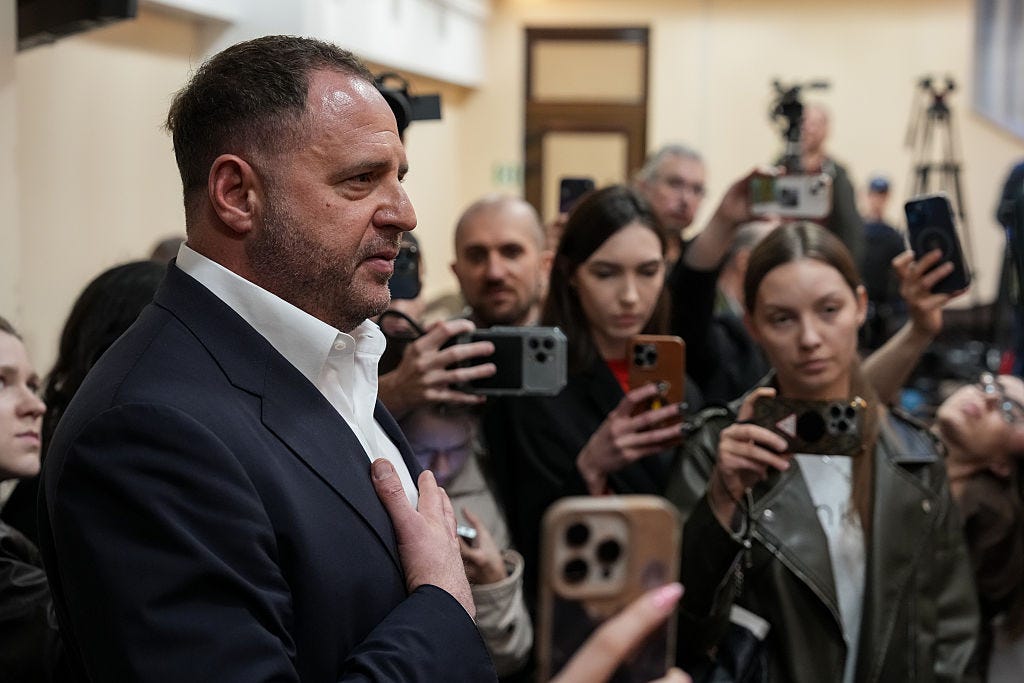
As Zelensky’s right-hand man, Andriy Yermak was feared, not loved. (Ivan Antypenko/Suspilne Ukraine/JSC “UA:PBC”/Global Images Ukraine via Getty Images)

Following Yermak’s removal, Zelensky tried to create a team of rivals. Kyrylo Budanov came from the Main Directorate of Intelligence (HUR) to OPU. Denys Shmyhal moved from defense to energy. Rustem Umerov, Yermak’s last surviving protégé, moved to the Ukrainian National Security Council. And the mercurial Mykhailo Fedorov went from minister for digital transformation to defense minister. However, Fedorov had wanted to run the OPU, aspiring to take over Yermak’s old role—and perhaps even to replace Zelensky. He repeatedly pressed for elections, even in wartime, during multiple strategy meetings in the early summer. His removal from government in July and his subsequent attack on Zelensky has created a situation of extreme tension.

Earlier this week, allegations of money laundering surfaced against Budanov. If Ukraine’s anti-corruption institutions were to release evidence of Zelensky’s direct knowledge of the corruption scheme exposed by Midas over the winter, there could be protests. Kyiv mayor Vitali Klitschko and former president Petro Poroshenko would likely support them.

Ordinary Ukrainians are thoroughly sick of this war and filled with foreboding as winter approaches. The government continues to insist that Ukraine will fight on to victory. In the words of Yuri Fedorenko, the handsome, decorated commander of the Brigade Achilles, “The war will continue as long as Russia exists.” But I heard very different views at a rehabilitation center for war wounded at one of Kyiv’s municipal hospitals.

One officer—a big, bearded, powerful man, his body covered in tattoos—had lost a leg when he stepped on a Russian land mine. He said the war would end only when “they” (meaning the Ukrainian oligarchs) could make no more money out of it. And yet he said he would return to the army after his rehabilitation was complete. A second younger man, whose foot had been severely damaged by a mine, said the war would only end when Putin decided to end it. A third, who had lost an arm to a Russian drone and was confined to a wheelchair by his leg injuries, said the war would be ended with negotiation, and Ukraine would have to make concessions.

Ukraine has never published credible statistics on its military casualties. As Russia’s now likely exceed 1.5 million, of which roughly one-third were killed in action or died of wounds, a reasonable estimate would put Ukraine’s mutilés de guerre at above 200,000. Mass bereavement and disability are the less obvious costs of a large-scale conventional war such as this.

Under these circumstances, the obvious path for Putin is simply to press on through the winter, waging total war against Ukraine and exploiting his advantages, as Eric Schmidt has recently warned. However, there are other forces at work.

First, as the situation in the Gulf deteriorates—with exchanges of fire between U.S. and Iranian forces disrupting the Strait of Hormuz, and Houthi attacks compromising the Red Sea route for Saudi oil—the Trump administration is casting around for any kind of relief for energy markets.

Second, progress toward ending the Russia-Ukraine conflict, no matter how tentative, could be presented by Trump as a major diplomatic breakthrough—a modest October surprise ahead of the November midterms.

Third, the U.S. has worked out a better way of involving European countries in the Russia-Ukraine peace process. Rather than being exposed to the divergent arguments of all the various EU member states, which derailed diplomatic efforts last year, Washington now appears to be dealing only with Berlin, London, and Paris. National security advisers from those capitals, France’s Emmanuel Bonne, the UK’s Jonathan Powell, and Germany’s Günter Sautter, were directly involved in the recent U.S.-led talks in Kyiv. How far they were working alongside Kushner and Witkoff and how far they were merely “props” was unclear.
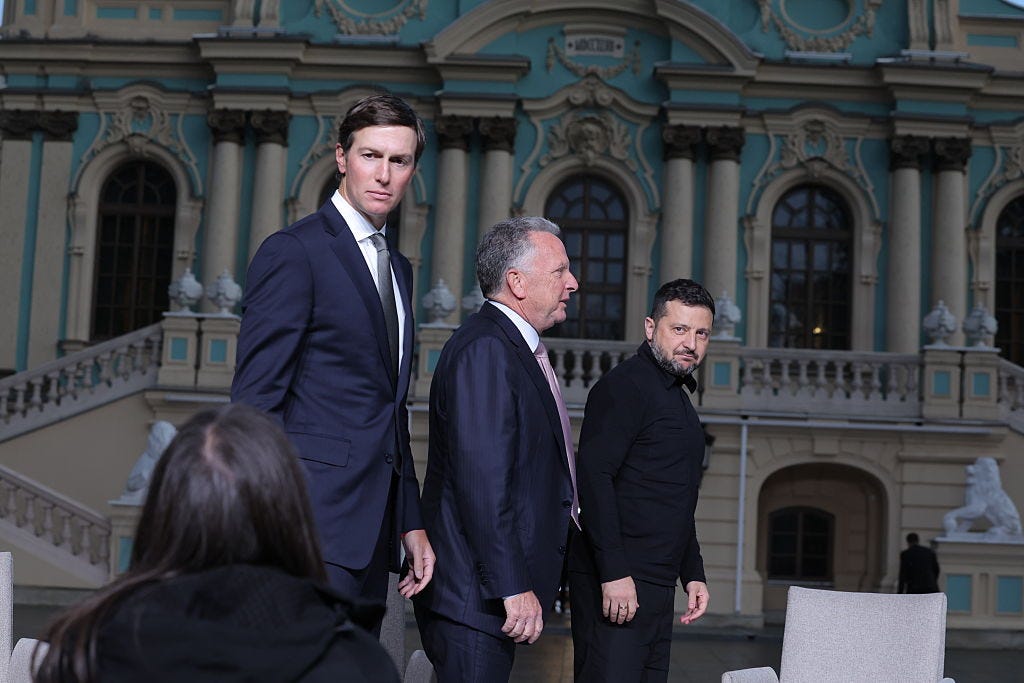
How far France and Germany were working alongside Kushner and Witkoff in negotiations was unclear. (Yan Dobronosov/Global Images Ukraine via Getty Images)

This is a striking turn of events. Now that they are the principal source of aid and lending to Ukraine, the Europeans ought to have much more diplomatic leverage. In practice, however, the British, French, and German governments prefer to let the U.S. take the lead in negotiations. Other European governments may well view this development with unease, as Kersti Kaljulaid, the former president of Estonia, pointed out—especially if they find themselves committed by the “E3” to security guarantees for Ukraine as part of a trilateral peace deal. The problem is that European initiatives such as the “Coalition of the Willing”—an Anglo-French initiative launched last year—lack the military resources to make credible commitments to the proposed postwar multinational force in Ukraine.

Moreover, the trends in European politics are not friendly to Ukraine. In France, Rassemblement National leader Marine Le Pen is the favorite to succeed Emmanuel Macron as French president. In Germany, the chancellorship of Friedrich Merz is crumbling as the Alternative für Deutschland gains ground in regional elections. In Italy, Giorgia Meloni risks being outflanked by the neo-fascist Roberto Vannacci’s Futuro Nazionale. All the European populist parties are skeptical about the war in Ukraine, if not overtly pro-Russian.

The recent U.S. visitors to Moscow offered Putin a stark choice: “Press on with the war and we will continue to provide the Ukrainians with targeting intelligence; or settle this diplomatically and we can give you the kind of economic rehabilitation you will not get from anyone else.” As usual, the Kushner-Witkoff team approaches a classic diplomatic problem—how to end a war—with the techniques of the New York real estate market. In effect, the Ukrainians are being told to sell the remaining territory they control in Donetsk at an attractive price in the form of postwar funding for reconstruction and investment. Note that much of this is supposed to come from private-sector entities such as Blackrock, whose CEO, Larry Fink, has not been reticent in pledging to invest in Ukraine.

The Russians, meanwhile, will get sanctions relief if they renounce their earlier demands for regime change in Ukraine. The presence of a representative of the U.S. Treasury in Moscow and Kyiv was significant in this regard: Gene Lange, who accompanied Kushner and Witkoff, is the acting head of the U.S. Treasury Department’s sanctions unit.

The Americans believe Putin is more open to this argument than previously. They are also hoping to secure European support for a compromise peace by offering a path to lower natural gas prices. At least some in Kyiv share his assessment. Davyd Arakhamia, who was Ukraine’s negotiator in Istanbul early in the war, stated confidently at YES that the Russians would come to the negotiating table after their Duma elections.

The backdrop for the YES stage this year was a Banksy mural of a David versus Goliath judo contest, with the heroic boy easily tossing the giant over his shoulder. Certainly, Ukraine has done some serious defense-technology judo to Russia in the past year. But the sheer economic preponderance of Russia, and its leader’s seeming readiness to ramp up his military mobilization, are exerting strong pressure on Ukraine to negotiate a compromise peace. The Americans seem to think Putin is finally ready for serious talks in which he would effectively concede the rump Ukraine’s right to a continued independent existence, minus Crimea and Donbas.

I remain doubtful that such a compromise peace can be signed and successfully implemented. Putin may play along, but he will continue to hammer the Ukrainians in the belief that further battlefield gains are achievable. Zelensky may need a ceasefire, but he would surely not survive politically if he relinquished territory Ukraine has succeeded in defending. Nevertheless, I would not be surprised by an announcement that “peace is at hand.” As my train made it across the Polish border, I recollected that Henry Kissinger used that phrase in October 1972—about Vietnam.

This essay was first published in The Free Press on September 17, 2026.

segunda-feira, 15 de maio de 2023

Cold War II: Niall Ferguson on The Emerging Conflict With China Uncommon Knowledge


Cold War II: Niall Ferguson on The Emerging Conflict With China

Uncommon Knowledge

Hoover Institution

814 mil inscritos


349 mil visualizações há 13 dias

Recorded on April 24, 2023

https://www.youtube.com/watch?v=KDLTUMIR4jg


Niall Ferguson is the Milbank Family Senior Fellow at the Hoover Institution and the author of numerous books, including Doom: The Politics of Catastrophe and Kissinger, 1923–1968: The Idealist. In this conversation, we cover the conflict over Taiwan: why it’s a cold war, when it started, how to avoid allowing it to become a hot war, and how to de-escalate and even win it. Along the way, Ferguson discusses the Russian invasion of Ukraine, the role of the United States and Western Europe in both conflicts, and how we can avoid once again living under the threat of nuclear war as we did in Cold War I.


terça-feira, 7 de janeiro de 2020

Niall Ferguson examina paralelos históricos ao atual conflito Irã-EUA

Iran is too weak to start a world war
Niall Ferguson
The Times, Londres – 6/01/2020

My response to the news that US forces had assassinated Qassem Soleimani was: “Good riddance. Now what?” No tears should be shed for Soleimani. As the mastermind of Iran’s numerous proxy wars beyond the Islamic Republic’s borders, he had the blood of countless people on his hands, including hundreds of American and coalition soldiers killed by the Shi’ite militias he helped to train and finance. Second only to the Iran’s supreme leader, Ayatollah Ali Khamenei, in personal power, Soleimani had come to personify the ruthless, bloodthirsty spirit of the regime in Tehran.
But what will the consequences be of his assassination? Let us begin by dismissing that hardy perennial, “Oh no! Reckless Donald Trump has lit the fuse for the Third World War.” At a time such as this, commentators in need of a facile historical analogy inevitably reach for the murder of Austria’s Archduke Franz Ferdinand in Sarajevo in June 1914, generally regarded as the catalyst for the First World War.
But Soleimani was no Franz Ferdinand. First, it was Bosnian-Serb terrorists backed by Serbian military intelligence who carried out the hit on the legitimate heir to the august Austro-Hungarian imperial throne.Soleimani’s career as a sponsor of terrorism puts him closer to the Sarajevo assassin, Gavrilo Princip, than to his victim.
Second, the Middle East in January 2020 is not Europe in June 1914. The great powers then were quite evenly matched; each made the mistake of thinking that it might gain from a full-scale European war.Today, Iran’s leaders are under no illusions. They cannot risk a war with the vastly superior United States, which numbers among its allies both the richest state in the region (Saudi Arabia) and the most technologically advanced (Israel).
A better analogy might be with the assassination of Reinhard Heydrich, “the man with the iron heart” (Hitler’s grim accolade), the founding head of the Nazi Sicherheitsdienst (Security Service), the creator of the genocidal Einsatzgruppen and the brutal tyrant of the dismembered Czechoslovakia, who was fatally wounded by British-trained agents of the Czech government in exile in May 1942.
The British government’s decision to train and send Heydrich’s killers was made in the full knowledge that there would be harsh reprisals. There were. In the erroneous belief that the assassins were connected to the villages of Lidice and Lezaky, Hitler ordered the execution of all their male inhabitants over 16, as well as all the women of Lezaky. More than 1,300 Czechs perished in this orgy of vengeance.
Winston Churchill, who was fond of the kind of “dirty war” waged by the Special Operations Executive, favoured further retaliation, proposing that the RAF wipe out three German villages for every Czech one destroyed. Only with difficulty did the other members of the war cabinet dissuade him.
In much the same way, Trump and his advisers knew when they took the decision to launch an airstrike on Soleimani that there would be reprisals. There will be. On Friday, Khamenei tweeted the hashtag #SevereRevenge. Stand by for attacks by Iranian forces and their Shi’ite proxies on US personnel, as well as against US allies, all over the Middle East. The question is will the benefits of killing Soleimani outweigh those costs?
Benjamin Disraeli famously observed, in response to Abraham Lincoln’s murder, that “assassination has never changed the history of the world”. He was wrong. As Benjamin Jones and Benjamin Olken show in my favourite economics paper on this subject — which covers all 298 assassination attempts on national leaders from 1875 to 2004 — successful assassinations tend to increase the intensity of small-scale conflicts. But when an autocrat is killed, the probability of a transition to democracy rises.
The downside of killing Soleimani is that Iraq will now blow up. Freed from Saddam Hussein’s tyranny by the US invasion of 2003, it is a democracy with only limited US security support. Iranian penetration of Shi’ite militias and political parties means that it is dangerously close to becoming a vassal of Tehran. Significantly, the Iraqi prime minister, Adel Abdul Mahdi, has condemned the US strike against Soleimani. The danger is a return to civil war.
This assassination does nothing to solve the problem created by Trump’s predecessor, Barack Obama, when he decided to liquidate the US presence in Iraq in excessive haste, squandering all that had been achieved in the “surge” that ended the last Iraqi civil war.
The upside of killing Soleimani is that the Iran regime’s bluff has been called and its vulnerability exposed for everyone in the region to see.
Iran is in dire economic straits, largely because of American sanctions, which the Trump administration tightened last year. Oil production is down by nearly half since April 2018. The International Monetary Fund estimates that the Iranian economy shrank by 9.5% last year. The Statistical Centre for Iran puts the inflation rate at 47.2%.
The country’s beleaguered rulers gambled that they could force America to relax sanctions by exerting force, in the belief that Trump would not risk war in an election year. Wrong. America may now face pandemonium in Iraq, but Iran will not necessarily be the beneficiary. There is a good deal of anti-Iranian sentiment in the country; indeed, there have been numerous anti-Iranian protests since October and many in Iraq celebrated Soleimani’s obliteration last week.
It is in the wider regional struggle for mastery, however, that Iran is most obviously at a disadvantage. Last July Israel struck Iranian targets in Iraq, where Iran is believed to have stockpiled missiles. In September it was the turn of Hezbollah, Iran’s client in Lebanon. The Israelis have also been hitting Iran’s forces in Syria. Last month Israel’s defence minister, Naftali Bennett, threatened to turn Syria into “Iran’s Vietnam”.
Aside from Qatar, the Arab states are uniformly hostile to Tehran. Not only are the Saudis still smarting from Iran’s attack on their oil facilities in September; they also bitterly resent Iranian support for the Houthi rebels in Yemen.
Meanwhile, the Europeans are finding it harder to keep the 2015 Joint Comprehensive Plan of Action alive, as Iranian violations grow ever more flagrant.
As for the other main players in the region — Russia and Turkey — they are increasingly antagonistic to Iran. With the Syrian civil war all but over, Moscow is intent on squeezing out the Iranians.
Civil war in Iraq? Quite possibly. A Third World War? Forget about it. The unanswered question is what, if anything, can be done to reverse the biggest trend of the past decade, which has been Russia — not Iran — taking over from the United States as the Middle East’s powerbroker. The assassination of Soleimani changes many things. It doesn’t change that.

Niall Ferguson is the Milbank Family senior fellow at the Hoover Institution, Stanford

[Grato a meu amigo, embaixador Pedro Luiz Rodrigues, pela seleção da matéria.]

segunda-feira, 28 de janeiro de 2019

A Grande Degeneração, no Brasil? Nos países desenvolvidos - Niall Ferguson, Paulo R. Almeida

O trabalho que segue abaixo resultou de minha leitura do livro de Niall Ferguson, The Great Degeneration: How Institutions Decay and Economies Die (New York: Penguin Press, 2013), quando eu ainda me encontrava nos EUA, e o livro tinha acabado de ser publicado.
O livro do grande historiador trata, como explicitado, exclusivamente dos países desenvolvidos, mas eu aproveitei para abordar o caso brasileira, um tema que eu já havia abordado várias vezes anos, e alguns anos antes, especialmente nestes trabalhos referidos nesta postagem: 
       https://diplomatizzando.blogspot.com/2019/01/e-por-falar-em-declinio-paulo-roberto.html
Espero que possamos nos recuperar, sair do declínio, ou decadência, e enveredar pela via do desenvolvimento novamente, depois dos 13 anos da Grande Destruição trazida pela organização criminosa que dominou o Brasil entre 2003 e 2016, e dos dois anos de transição do governo que a sucedeu.
Paulo Roberto de Almeida
Brasília, 28 de janeiro de 2019


Paulo Roberto de Almeida
Hartford, 14 de Dezembro de 2013

Degeneração é um outro nome para a decadência, processos que podem atingir indivíduos, empresas, instituições públicas e privadas, sociedades ou comunidades nacionais, enfim, países inteiros, nações antigas e modernas, emergentes ou avançadas. Todos sabemos o que esses conceitos significam, mediante uma simples consulta aos dicionários ou à literatura da área: os registros disponíveis falam da erosão gradual dos costumes, da inoperância dos poderes constituídos, da corrosão progressiva das relações entre pessoas e grupos inteiros, da perda de dinamismo da base econômica, enfim da descrença generalizada das pessoas na validade e legitimidades dos valores e princípios que anteriormente davam sentido a uma determinada formação social.
Não é difícil reconhecer sinais de decadência, de retrocesso, ou mesmo de simples estagnação, na vida do país: baixo crescimento econômico, inovação declinante, dívidas crescendo, desigualdades persistentes ou em expansão, população em processo de envelhecimento, comportamentos desviantes ou antissociais. O que pode ter acontecido de errado? O mais provável é que as instituições nacionais estejam enfrentando um processo de degeneração contínua, o que se traduz em retrocesso no seu funcionamento e em nítido recuo na sua capacidade de organizar a vida do país.
E quais são as instituições que podem estar atravessando esse declínio? Elas são: o governo representativo, os mercados livres, o Estado de direito e a própria sociedade civil. Estas são as instituições fundamentais que construíram a prosperidade e o bem-estar da nação e que podem agora caminhar para um itinerário de estagnação ou até mesmo de retrocesso.
Estou falando do Brasil, certo? Não exatamente...
Estou simplesmente transcrevendo a orelha de um livro que leio agora (dentre vários outros), de Niall Ferguson, The Great Degeneration: How Institutions Decay and Economies Die (New York: Penguin Press, 2013), que trata exclusivamente das sociedades avançadas do Ocidente capitalista: Estados Unidos e Europa ocidental, basicamente. Para o conhecido historiador econômico, é a degeneração institucional que está por trás da estagnação econômica e do declínio geopolítico que dela decorrem. O livro analisa as causas dessa degeneração e suas profundas consequências para o modo de vida, o bem-estar e o futuro das populações dessas nações avançadas econômica e tecnologicamente e dispondo, ainda, de níveis de vida invejáveis para todos os demais povos do planeta. Mas os sinais se acumulam de negligência e de complacência com o lento declínio, observável a olhos vistos em alguns países, e detectável em diversos estudos de especialistas econômicos. O Ocidente, para Ferguson, está desperdiçando a herança institucional que erigiu durante séculos e que foi responsável pela sua preeminência mundial no último meio milênio. Para reverter a ruptura dos seus padrões civilizatórios, Ferguson recomenda reformas radicais e lideranças à altura dos desafios.
Pois bem, o que isso tem a ver com o Brasil? Em 2002, em plena campanha eleitoral que se traduziu na mais importante mudança política já ocorrida na história republicana do Brasil em condições de pleno funcionamento democrático – ou seja, fora de golpes militares ou de revoltas civis – e que se traduziu pela vitória do principal partido de oposição ao regime em vigor, eu redigia os parágrafos finais de um livro que seria publicado no início de 2003, logo em seguida à posse do novo governo: A Grande Mudança: consequências econômicas da transição política no Brasil (São Paulo: Códex, 2003). Nele, escrito antes mesmo dos dois turnos das eleições de outubro daquele ano, eu já previa com segurança a vitória do candidato opositor e traçava um roteiro do que iria acontecer e do que se esperava que ocorresse a partir de 2003. Eu tinha certeza, por exemplo, da ruptura “neoliberal” no terreno econômico, obviamente em relação ao que recomendavam os economistas “aloprados” do PT, a maior parte ainda imbuídos daquela rústica esquizofrenia econômica que ainda caracteriza boa parte da esquerda acadêmica no Brasil, Eu também achava que os novos donos do poder – aqui sem qualquer ilusão – iriam realmente introduzir um novo estilo de fazer política no Brasil, não basicamente ético, como proclamava sua propaganda mistificadora, mas em todo caso diferente, e que tudo isso poderia ser um sinal promissor de uma grande transformação na vida da nação.
Como vários outros observadores, fui confirmado, para melhor, nas minhas antecipações econômicas e, como a maior parte dos analistas honestos, fiquei chocado, num cenário bem pior do que se poderia imaginar, com as fraudes políticas, o reino de mentiras e todos os crimes comuns logo cometidos pela nomenklatura que se apossou do poder naquela conjuntura. Não que eu tenha ficado absolutamente surpreendido com a possibilidade dessas transgressões, mas todos fomos surpreendidos pela extensão, amplitude e profundidade das falcatruas cometidas pelo grupo que pretendia reintroduzir a ética na vida política do Brasil. Ou seja, não foi uma surpresa total – pelo menos para os que acompanharam a vida política, sindical e a trajetória da esquerda no país, desde os anos 1960 – mas foi chocante descobrir quão baixo era possível descer na degeneração moral e nas patifarias políticas em tão pouco tempo.
Paradoxalmente, esse livro, que foi o que me deu maior prazer na redação e na reorganização de alguns materiais que já tinham sido preparados nos meses anteriores ao ano eleitoral, foi, no entanto, o que menor sucesso de público teve, provavelmente porque eu me encontrava no exterior no momento de sua publicação; depois, já de volta ao Brasil, e trabalhando no coração do Estado, não podia defender abertamente certas teses que foram sendo confirmadas ao longo dos meses e anos seguintes.
Estruturado em três partes, A Grande Mudança tratava, em primeiro lugar, de uma nova forma de fazer política no Brasil – mas eu estava apenas imaginando, e sugerindo medidas de correção de nossos principais defeitos, se eu mesmo fosse presidente – e, numa segunda parte, se ocupava da economia: nela eu já previa, em quatro capítulos revisionistas, a orientação abertamente “neoliberal” da gestão econômica, tese que me rendeu muitos apupos em seminários acadêmicos de que participei, para desgosto de certa esquerda alienada (como, por exemplo, no encontro de ciências sociais da Anpocs, em outubro de 2003). Numa terceira parte, eu tratava de temas internacionais, num sentido amplo: o fim do socialismo e suas consequências para o Brasil, a globalização e as negociações econômicas internacionais e regionais, com algum destaque para o projeto americano de acordo hemisférico de livre comércio, a malfadada Alca (que pronto seria implodida pelos novos governantes).
Não pretendo, obviamente, mais de dez anos depois de redigido aquele livrinho polêmico, retomar suas teses principais para confirmar ou corrigir meus argumentos em torno da economia, da política ou das relações internacionais do Brasil. Mas, na onda de euforia continuada – e bastante reforçada por doses maciças de propaganda enganosa – com o “sucesso” do governo em vigor, minha intenção agora é a de examinar, com minha lupa impiedosa e meu bisturi iconoclasta, o que eu considero ser, de fato, um retrocesso institucional, um dos mais profundos em nossa história republicana, e que não tem a ver, apenas, com o baixo crescimento e a perda de dinamismo da economia nacional, e sim com fatores políticos alimentados e reforçados pelo partido no poder.
Meu objetivo é puramente analítico, uma vez que não pertenço, nem nunca pertencerei, a qualquer partido ou agrupamento político, incapaz que sou de me submeter à disciplina de qualquer programa que possa ser elaborado por algum movimento determinado, de qualquer orientação política ou ideológica que seja. Sou por demais libertário para me dobrar às conveniências eleitorais de qualquer liderança política, pretendendo, ao contrário, manter minha independência de pensamento seja qual for o partido ou a coalizão que ocupar o poder, agora em 2014 ou mais adiante.
O que tenciono fazer, nos meses de campanha eleitoral, é justamente me libertar da ditadura dos eventos correntes e das pesquisas de opinião para refletir sobre o que é o Brasil atualmente, como ele chegou ao estado atual de retrocesso institucional, e como ele poderia avançar, no terreno econômico, político e educacional, com base em análises totalmente descompromissadas com as plataformas eleitorais e resolutamente orientadas para uma crítica radical da atual situação de erosão moral e decadência política em nosso país. Para isso, não necessito do modelo analítico de Niall Ferguson para poder examinar o caso do Brasil; mas acredito, sim, que a clara decadência do governo representativo, o retrocesso visível em relação às reformas econômicas que vínhamos experimentando desde os anos 1990, a perda do sentido do respeito à lei e a deformação completa da noção de sociedade civil, sob a nova hegemonia dos “companheiros”, são elementos importantes do que chamei de grande retrocesso no Brasil.
A esses quatro grandes fatores podemos acrescentar diversos outros, entre eles aquilo que eu também já chamei de “mediocrização” do estabelecimento universitário no Brasil, que na verdade percorre toda a cadeia do ensino, do primário ao pós-doutorado, em especial nas ciências sociais e humanidades (mas a que não estão imunes outras vertentes da pesquisa especializada. Ela é obra, em grande medida, das “saúvas freireanas”, ou seja aquela classe de pedagogos deformados, inspirados na obra de um dos nossos grandes idiotas, Paulo Freire, e que o elevaram à condição de “patrono da educação brasileira”.
O Brasil tem, por certo, muitas outras causas que explicam sua atual decadência institucional e seu renitente retrocesso econômico, que poderão ser examinadas com maior ou menor grau de detalhe. O importante seria destacar, neste momento, meu compromisso com uma análise empiricamente embasada, meu engajamento com um trabalho intelectual voltado para a busca de soluções factíveis, não utópicas (como em geral a esquerda costuma fazer), para os problemas do Brasil, e a irrenunciável postura de independência em relação a quaisquer forças ou movimentos voltados para a luta político-partidária e a conquista do poder. Sequer aspiro à condição de “conselheiro do príncipe”, pois sou um péssimo conselheiro – devido a minha brutal sinceridade – e não pretendo servir a nenhuma liderança política. Minha vocação está unicamente voltada para o estudo e a compreensão dos problemas brasileiros e a aplicação das soluções mais racionais, do ponto de vista da eficiência econômica e da justiça social, para os desafios detectados. Não tenho nenhuma ilusão de que quaisquer propostas que eu possa ter venham a ser implementadas, não que elas sejam exatamente utópicas, mas porque o Brasil carece de estadistas que possam liderar um processo de reformas que julgo necessário e até indispensável se quisermos inverter a nossa trajetória atual de decadência e de retrocesso.
Os dados estão lançados em face de um cenário ainda altamente incerto em seus desdobramentos eleitorais, e o meu roteiro de navegação ainda está sendo traçado. Em mais alguns meses veremos se o diário de bordo traz algumas propostas inteligentes. Ao trabalho, daqui para a frente.

Hartford, 14 de Dezembro de 2013.

Postagem em destaque

Os impropérios de PRA contra o bolsonarismo e os bolsonaristas - Madame IA mimentizando PRA

  Os impropérios de PRA (no blog Diplomatizzando ou em outras postagens) contra o bolsonarismo e os bolsonaristas, sobrando mais algunas out...