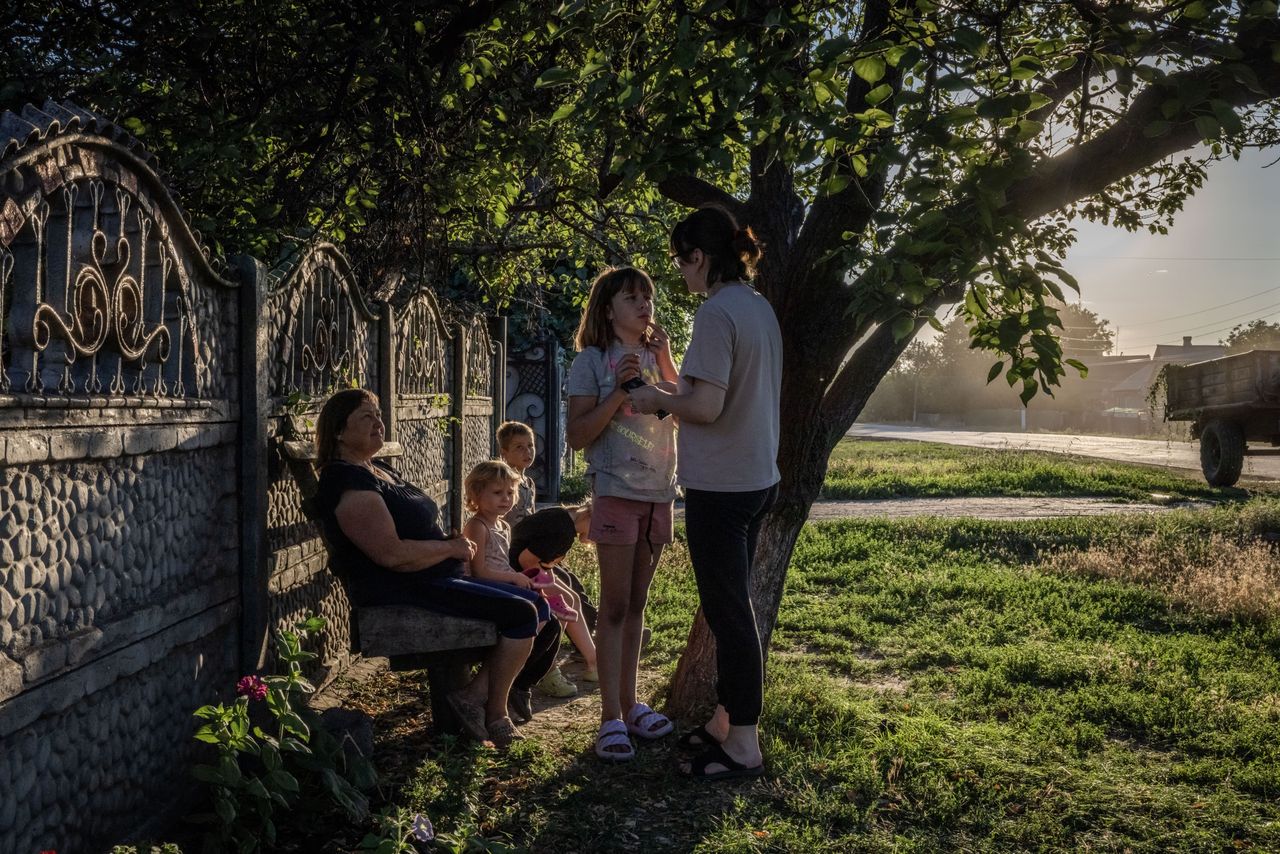
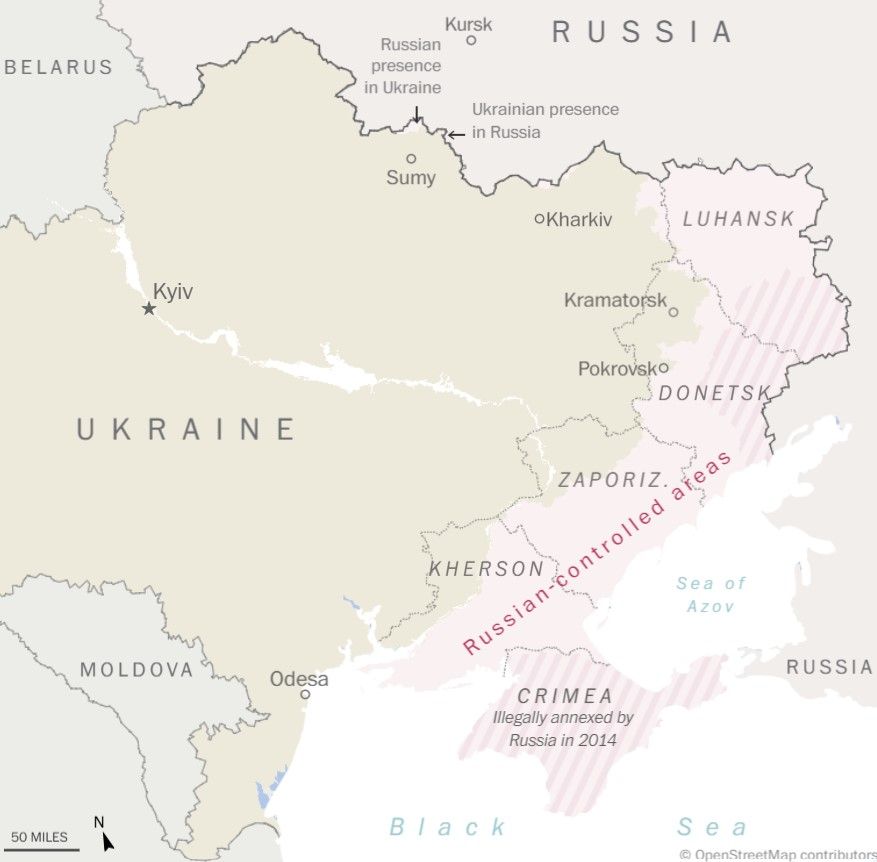
“Emotionally, it’s a tragedy,” said Anton Grushetskyi, executive director of the Kyiv International Institute of Sociology (KIIS), which has been tracking Ukrainian attitudes toward various peace plans that have been floated. About 80 percent of Ukrainians when polled by KIIS last September said that they could drive Russian forces from the country if the West supported with sufficient weapons. Grushetskyi said that number has not moved significantly from last year. But Ukrainians have realized that they will not receive the weapons they need. Under the Biden administration, Ukraine’s army received expansive support, although Kyiv needed to lobby heavily to receive key weapons systems like F-16 fighter jets, which only arrived in small numbers after long delays. The Trump administration has reduced and at times frozen military aid to Ukraine, and sent signals that the days of generous assistance are over. “We see that it’s not possible to receive all needed support, especially with the current U.S. administration and certain states in Europe,” Grushetskyi said. “Ukrainians understand that we need to be much more pragmatic.” This pragmatism involves accepting that “we will not return the territories that are already occupied in the near future,” saidlawmaker Yehor Cherniev, who chairs Ukraine’s delegation to NATO’s Parliamentary Assembly. But Ukraine would never formally cede the territories, Cherniev said. “We are ready to wait, but we will never legally recognize them as Russian,” he said. “These territories will remain in the status of being occupied.” Not recognizing the territories as legally part of Russia allows the Ukrainian leadership to sidestep tricky legal questions, like holding a national referendum to approve changes to the country’s borders, as the constitution requires. According to Grushetskyi, the majority of Ukrainians share this view — that admitting Russia de facto controls the territories does not mean that they are lost forever. This allows them to swallow the bitter pill of permitting Russia to continue its occupation of millions of Ukrainian citizens. But Putin is insisting that Ukraine officially relinquish this territory as well as the remaining third of Donetsk that Russia has failed to take. This, Ukrainian officials say, will not happen. Zelensky said that he told President Donald Trump and European leaders in a meeting earlier this week in the Oval Office that “legally, we do not recognize the occupation.” Moreover, if Ukrainian troops withdraw from the remaining portion of Donetsk, “it would then open the path to Kharkiv” and other industrial centers in eastern Ukraine. “This is not only a constitutional issue — it is a matter of our country’s survival, involving the strongest defensive lines and distances to industrial centers,” Zelensky said in Washington, according to his account to journalists on Wednesday. “If Putin gains this territory, he will try to advance further, regardless of whether he signs anything or not.” Zelensky now must persuade Trump to back Ukraine’s position. Although the Ukrainian leader’s popularity at the moment remains high — a 58 percent trust rating, according to KIIS — his political survival is very likely to depend on being able to resist Russia’s demands. “The situation is difficult for him, because from what I know, he’s being put under a lot of pressure and he’s being threatened that there will no longer be financial support, intelligence,” said Tymofiy Mylovanov, director of the Kyiv School of Economics and an adviser to the presidential administration. “There are people who might use it against him. Very few will defend him,” Mylovanov said. “So he’s very much limited politically. Just like in any democracy.” How the Ukrainian public would react to a peace deal remains to be seen. Grushetskyi says it is unlikely there will be mass protests if Ukraine consents to Russia’s de facto control of what it already occupies. But this must also be accompanied by firm security guarantees by the West, as well as rejecting other Kremlin demands, such as reducing Ukraine’s military and allowing the Kremlin to dictate internal Ukrainian politics. In the end, many Ukrainians are simply exhausted by the war and will welcome a stop to the fighting, even if in a few years Russia violates the terms of the agreement. Oleksandr Kaluhin, 43, a former border guard, fled his home in Donetsk city with his wife, who was then pregnant, in 2014 when it was first stormed by Russian-backed forces. He signed up to fight in Donetsk in 2016, when Russia waged an undeclared war in the Donbas region, and then again in 2022, a week after the full-scale invasion. His wife fled with their son Heorhii to Poland in 2022, and he has not seen them since. Ideally, Kaluhin would like to return to a Ukrainian-controlled Donetsk city — even if just to visit. But after 11 years, he holds no illusions about showing his son the city he has never seen. “People can be realistic about this, or they can fantasize about what’s going to happen,” he said. “Soldiers, especially those who fought since 2014, are exhausted.” When the war ends, he said, he will probably move to Poland to live with his family — and adapt to the life they have built in his absence. His wife works in a poultry plant, and his son is enrolled in Polish school. “I want a better life for my kid,” he said. “I don’t want to just see him, I want to raise him.” Anastasiia, also from Donetsk city, disagrees. She lived there for eight years under the control of Russian-backed forces until the full-scale war started. “I believe that any territorial agreement with the aggressor is unacceptable,” said Anastasiia, who spoke on the condition that only her first name be used because her parents still live there. “Giving Russia any Ukrainian territory would be a betrayal — betrayal of the Ukrainians for whom these lands are home, and of those who have already given their lives to liberate them.” Anastasiia does not believe Russia will adhere to the terms of any agreement. “My parents still live under occupation. Donetsk is my home. Many of my friends’ parents are also living in the occupied cities of Donetsk and Luhansk regions,” she said. “Accepting this cynical deal would probably extinguish the hope of ever seeing them again.” Stern and Galouchka reported from Kyiv. |