Schrödinger's Putin: a tyrant who can and also cannot end his war
russia invades neighbours by default and rules through violence. POO-tihn is the instrument, manifestation, and product of a predatory colonizer state that birthed him.
|
Few medieval figures loom larger in Russia’s origin story than Yuriy Dolgorukiy, the prince credited with founding an outpost on the banks of the Moskva River from which the Russian empire eventually arose.
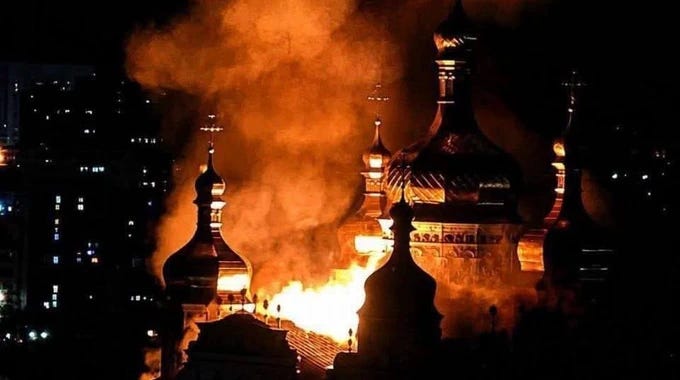
But the man Moscow claims as one of its forefathers is buried not in Russia, but in Kyiv. His ambition was to rule Kyivan Rus from its true center – let the name be a hint. He died there as Grand Prince in 1157 and was laid to rest at the Kyiv-Pechersk Lavra, which Russia struck on June 15, setting a UNESCO World Heritage site ablaze after weeks of attacks on schools, apartment blocks, and supermarkets.
 |
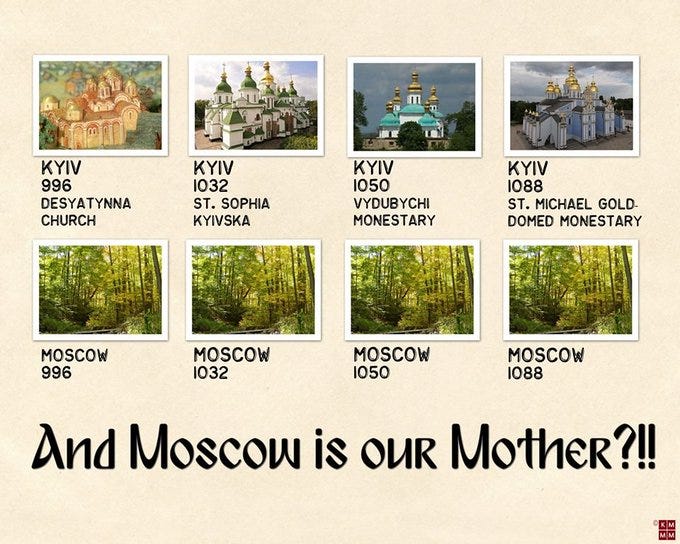
The barbarism of the attack crystallizes the very contradiction in which Russia’s war is rooted. Putin oscillates between insisting Ukraine does not exist and dismissing it as a fabricated state, yet Moscow’s own origin story keeps leading back to Kyiv.
A shapeless, nagging terror has gripped Russian rulers since time immemorial: the risk of discovering that what lacks meaning, substance, and coherence is Russia itself, a fragmented empire of peoples Moscow colonized in a hurry, forever searching and never finding a unifying national idea.
Russia’s president, a wanted war criminal, made the decision to invade Ukraine. But in the broader logic of the Russian power vertical, Putin the puppeteer is also a puppet in the hands of Russian imperial ethos. The instrument of Moscow’s recurring efforts to reassert its right to rule over the colonial possessions, most people call the Russian Federation.
 |
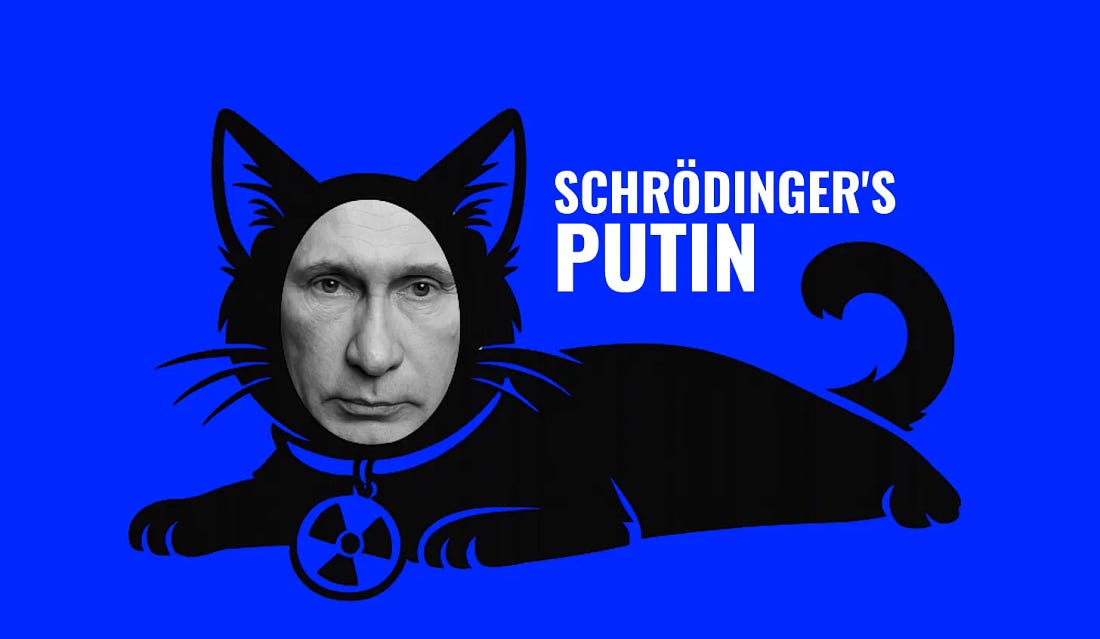
Therein lies the paradox. Schrödinger’s Putin: the autocrat who holds the key to ending the war and cannot bring himself to use it.
Putin’s choice
The record leaves no ambiguity. In 2014, on Putin’s command, Russian troops without insignia appeared in Crimea. Eight years later, the Kremlin leader ordered a full-scale invasion. These crimes were neither inevitable nor a result of an inclusive or deliberative process. Both were acts of aggression under the U.N. Charter, and both were political choices made unilaterally by an increasingly tyrannical ruler who has spent a quarter-century concentrating power.
The same Putin possesses ample authority to end the war. No parliament can overrule him. No meaningful opposition can mobilize against him. No independent media can challenge his narrative, for it was cowed into obedience long ago. The propaganda juggernaut, which controls every communication channel in Russia, will make sure Kremlin talking points turn into an undeniable truth by nightfall.
On any given Tuesday morning, Putin could dismiss generals, reshuffle ministers, purge oligarchs, declare military objectives fulfilled, and hold a parade on Red Square if he felt like it.
 |
When Bashar Assad fell in December 2024, Putin simply informed his people that Russia had, “in general,” achieved its objectives. The phrase was absurd on its face. Having propped up the Assad dynasty from 1971, Moscow had lost its client, its influence, foothold on the strategically important Mediterranean Sea, and much of its investment. Yet the news was absorbed without difficulty.
With little fuss, Russia swallowed the capture of Maduro, the precision strikes on Russia’s close ally Iran, and Azerbaijan’s reconquest of Nagorno-Karabakh, despite Moscow’s treaty obligations to Armenia.
The Kremlin’s official justification for the war on Ukraine has shifted repeatedly. The mission began with protecting Russian speakers in Donbas. It expanded into “demilitarization” and “denazification.” The Kremlin has alternated between warning of NATO encirclement and presenting the war as a civilizational struggle against the “Anglo-Saxons.” A regime capable of changing the rationale for war will have zero problems inventing a rationale for ending it.
Russia currently occupies roughly one-fifth of Ukraine’s territory. The Kremlin could easily agree to the cessation of hostilities along the line of contact and present those gains as a historic triumph. In a country where citizenship comes with neither rights nor responsibilities, politics is a spectator sport. A declaration of victory would likely be accepted by the Russian population with relief, resignation, and apathetic shrugging.
For the last four years, Russia has been conducting a “special military operation” in Ukraine, and calling it a war could land one in jail. The operation ends when the commander-in-chief says it has.
Moscow’s categorical imperative
Most explanations for Russia’s commitment to the war on Ukraine, in its twelfth year, focus on regime survival. Putin cannot end the war, the argument goes, because he would appear weak before the siloviki, the security elites, who happen to be the only constituency that matters.
Russia’s curse is that it has never developed a reliable mechanism for transferring power. Its tsars and commissars usually left office by dying in it, through palace intrigue or revolution. Putin knows this history and has reason to fear for his life. But the ever-present specter of a coup explains only the dictator’s anxiety, not the governance system’s underlying modus operandi. To understand why Moscow cannot quit its war on Ukraine, the more important question is not how the war assures Putin’s survival, but what Russia is.
The bloodsoaked lexicon of Russian imperialism | ||||||
| ||||||
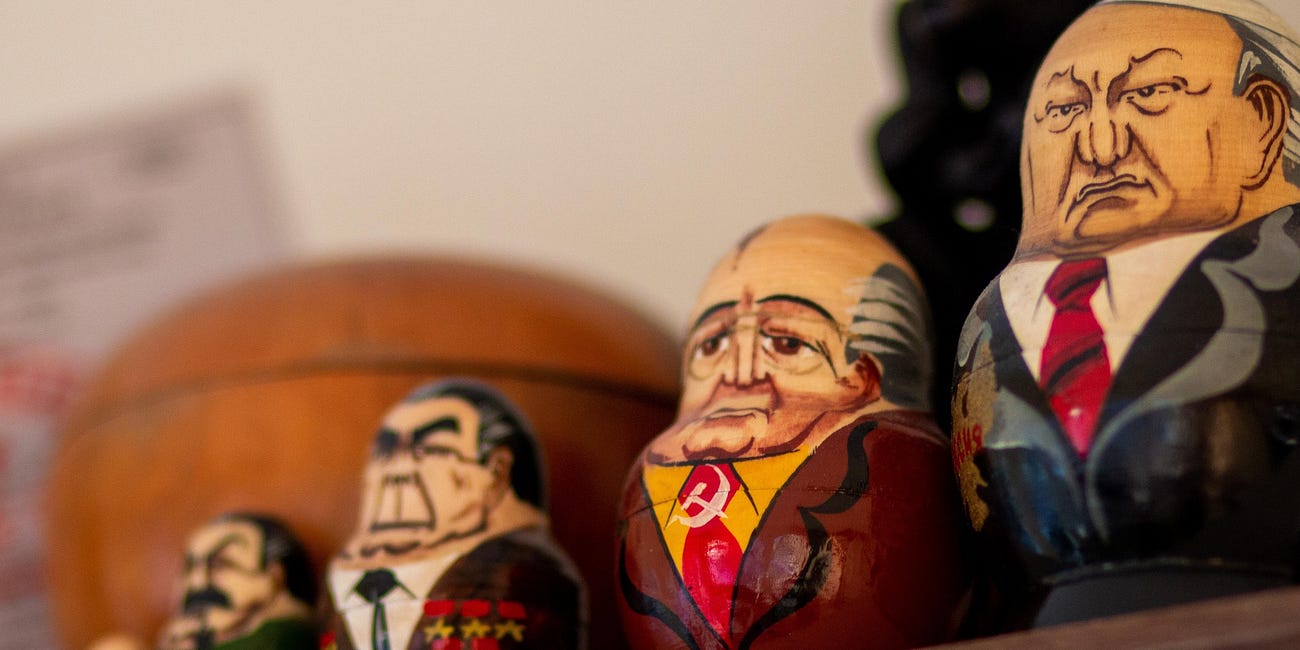 | ||||||
A lot of ink has been spilled trying to divine Moscow’s motivations to invade Ukraine, commit innumerable war crimes, and burn the remaining bridges with the West. | ||||||
Beneath the façade of “Federation” lies a patchwork of subjugated peoplesand territories ruled from the center. Switzerland is a federation because power is shared among cantons that voluntarily joined a common political project. Russia calls itself a federation, although power flows in the opposite direction: from Moscow downward.
Every despotic leader is tempted by a “small victorious war” to tighten his grip on the population. In Russia’s case, however, the impulse goes deeper. It is not about a particular ideology or regime, but about Moscow’s mandate to rule over internal colonies.
Hoping Russia will outgrow this doom-loop is nostalgia for a country that has never existed. When the outer shell of the Soviet empire fell in 1991, many took it for the end. It was not. Within one prison of nations, another was waiting – the Russian Federation.
A Dutch imperialist could go home as a Dutch citizen when the empire fell apart. The Buryats, Tuvans, Bashkirs, and dozens of other peoples whose identities Moscow spent centuries trying to erase have no such civic homeland. Neither, for that matter, do ethnic Russians. Strip away the imperial essence, and there is no Russia to return to.
Moscow’s founding myth was always a con. Kyiv appears in historical records from the fifth century; Moscow from the twelfth. When Ivan the Terrible crowned himself Tsar of All Rus in 1547, he was not inheriting a civilization. He was claiming one that had flourished for centuries without him, the Kremlin or Moscow. A polity whose identity rests on perjury feels compelled to try to raze Ukraine again and again.
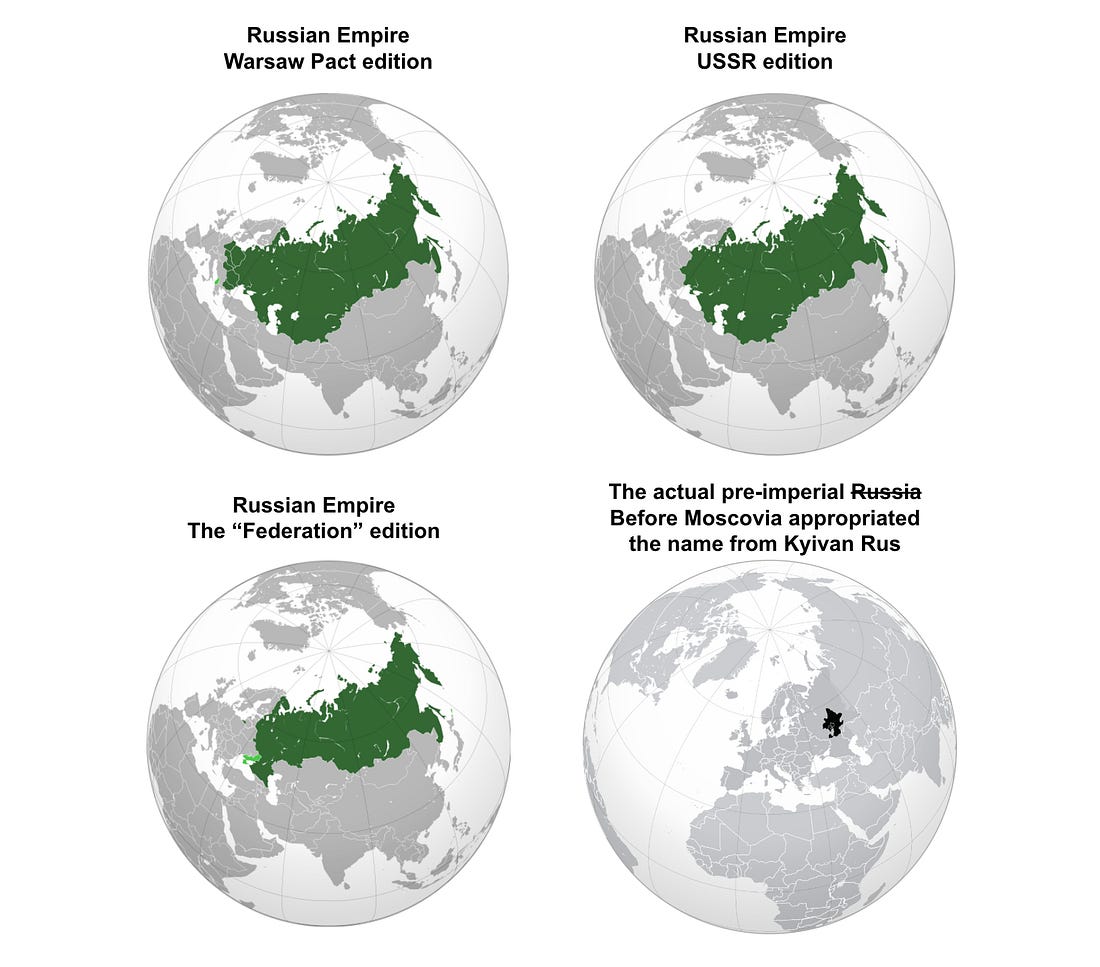 |
The saltwater fallacy holds that colonial domination becomes harder to see when there is no ocean separating the colonizer from the colonized. To an outside observer, Moscow’s wars always looked like internal affairs, its colonies looked like provinces, and its imperial anxiety continues to look like legitimate security concerns.
The forces that could compel Putin to end his war as a way to preserve the state are indistinguishable from forces that demand he keep going to preserve Russia – the idea. That is the categorical imperative Moscow cannot escape, and that no negotiation table will dissolve.
Europe’s duty
Russia’s war on Ukraine is not a temporary crisis tied to the whims of a mad ruler. As long as the Russian Federation remains an empire stretching from Kaliningrad to Kamchatka, governed from a single center and searching for domestic legitimacy through aggression, it will remain a factor and a well-defined threat to European security.
The former Lithuanian Foreign Minister Gabrielius Landsbergis asked the right question: “Who cares what Putin would do if Russia loses? We should worry more about what he would do if Russia wins.” For years, European debate has been dominated by fears of escalation, humiliation, and Russian reactions to defeat. Far less attention has been paid to the consequences of success.
If this is not your war, whose war is it? | ||||||
| ||||||
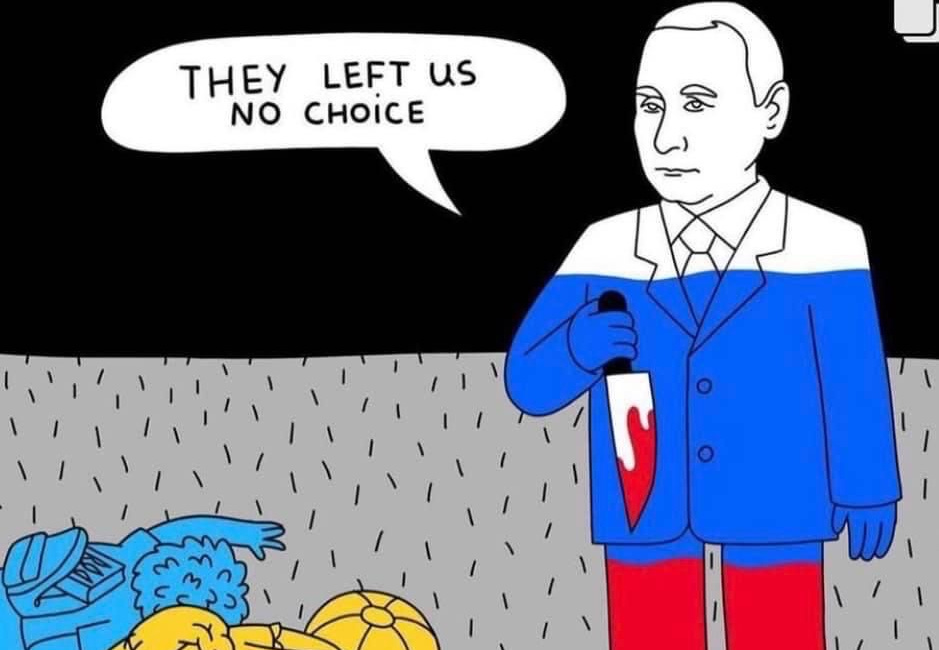 | ||||||
The EU’s top diplomat says Europe must prepare for war with Russia. But how do you prepare for what’s already happening? Russia isn’t planning a war – it’s waging one. Those familiar with Moscow’s blood-soaked history know this: you don’t have to be at war with Russia for Russia to be at war with you. | ||||||
A Moscow-centered polity cannot be pacified through endless concessions. Its resting state, its equilibrium, is warmaking. The haggling over villages in Donetsk or Luhansk provinces, lines on a map is self-deception on the side of Ukraine’s allies. The question is not where the border ultimately runs. The question is whether naked violence works and whether Europe’s deterrence posture is backed by capability and credibility. Russia formally recognized Ukraine’s 1991 borders in multiple treaties and agreements. That should be the only border that matters in Berlin, Paris, London, and Brussels, unless Kyiv says otherwise.
Moscow’s aggression against Ukraine functions as a legitimating ritual for its grip on Tatarstan’s oil, Yakutia’s diamonds, and the political agency of 140 million inhabitants. Europe cannot end such a war by stepping back and watching a predatory state feed its imperial ambition. The objective is not to accommodate Moscow, but to make its ambitions fail.
Europe can shape the incentives under which Moscow operates, but it cannot decide when Russia de-imperializes or how it reconciles itself with its neighbors. That is for Russians to work out, but their future rulers must learn the big lesson: wars of conquest bring ever larger costs, not rewards.
Schrödinger’s Putin, who has the power to end the war tomorrow, is stymied by the political tradition he embodies. The paradox will not resolve on its own. Empires rarely choose to stop being empires. They are made to stop.
 |
A version of this article first appeared in Neue Zürcher Zeitung (in German) on July 4, 2026


