How Ukraine’s Drone Strike Shattered Russia’s Nuclear Arsenal on June 1, 2025
A detailed analysis of the unprecedented operation that crippled Russia’s strategic bombers, nuclear submarines, and command systems—rewriting the rules of modern deterrence.

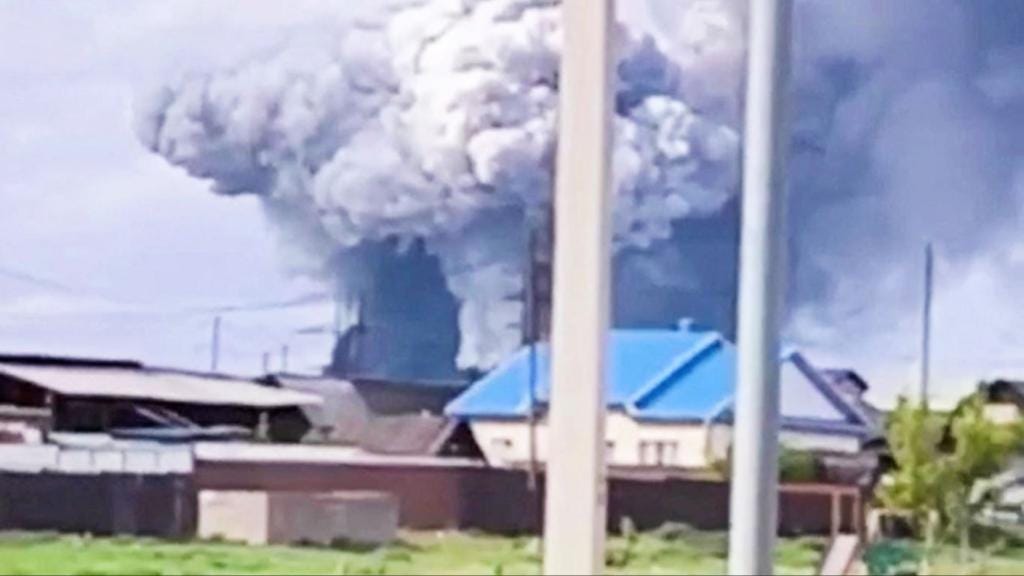
Multiple attacks against Russia’s strategic aircraft and nuclear fleet by Ukraine today are gamechangers in the war.
On June 1, 2025, Ukraine executed one of the most daring and consequential military operations of the modern era. Operation ПАВУТИНА—a coordinated, long-range drone strike—pierced deep into the heart of Russia’s strategic nuclear capabilities, crippling critical airbases and naval facilities in a single, devastating night.
This wasn’t just another strike. It was a seismic event that rewrote the very rules of nuclear deterrence and modern warfare.
Watch my video presentation of this article above! Please like and subscribe on YouTube!
The Scale of the Attack
The operation targeted six of Russia’s most vital military installations, including:
Olenya Air Base (Murmansk Oblast): Home to Tupolev Tu-160 “Blackjack” and Tupolev Tu-95MS “Bear-H” strategic bombers—the airborne backbone of Russia’s nuclear triad. Ukraine’s Defense Intelligence Directorate (GUR) confirmed at least four Tu-95MS bombers destroyed, severely undermining Russia’s second-strike capability.
Severomorsk Naval Base (Murmansk Oblast): Headquarters of Russia’s Northern Fleet and a critical nuclear submarine hub. Multiple explosions rocked the base, and unconfirmed videos suggest damage to a Project 667BDRM “Delfin”-class nuclear ballistic missile submarine—one of Russia’s key sea-based nuclear deterrents.
Dyagilevo Air Base (Ryazan Oblast): Hosting Tupolev Tu-22M3 “Backfire-C” bombers and Ilyushin Il-78 “Midas” aerial refueling tankers, this base’s destruction crippled Russia’s ability to extend its air strike range deep into NATO airspace.
Ivanovo Severny Air Base (Ivanovo Oblast): Destroyed a Beriev A-50 “Mainstay” airborne early warning and control aircraft, effectively blinding Russian air command over large swathes of territory.
Belaya Air Base (Irkutsk Oblast): Three Tu-22M3 bombers destroyed, damaging Russia’s Pacific strike projection.
Voskresensk Airfield (Moscow Region): Destroyed an Ilyushin Il-76 “Candid” strategic airlifter, disrupting logistics and rapid troop deployments.
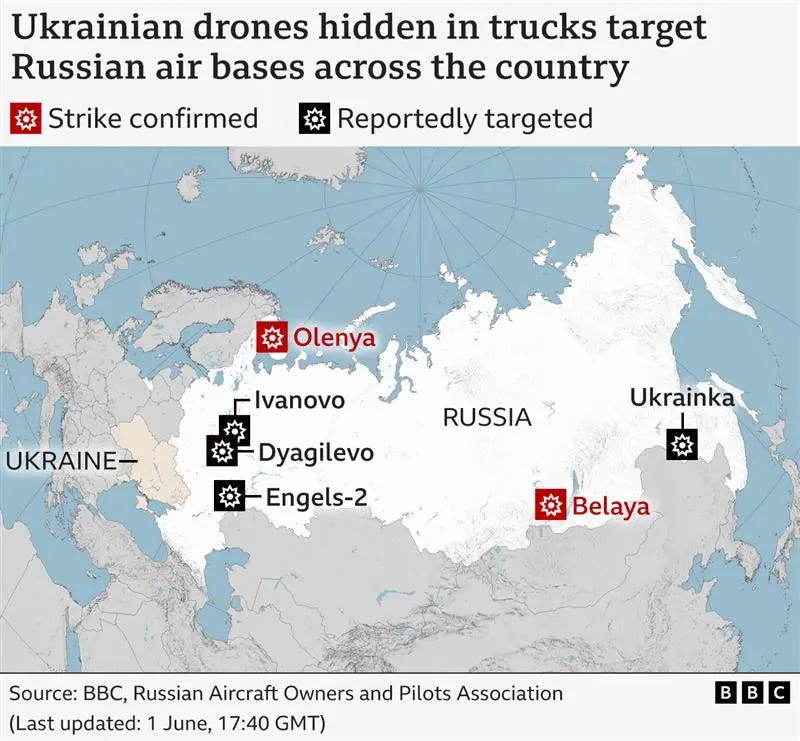
The attacks transpired across Russia’s vast territory.
What Was Lost?
In total, Ukraine damaged or destroyed roughly 10 to 15 percent of Russia’s nuclear delivery platforms in one night, a historic blow without precedent since the Cold War.
At least four Tu-95MS bombers, critical for nuclear strikes, were lost.
Multiple long-range bombers and tankers that extend strike range were destroyed.
Command and control airborne assets such as the A-50 were eliminated.
A nuclear submarine base suffered damage to critical assets, threatening Russia’s sea-based nuclear deterrent.
Strategic Implications
This operation strikes at the core of Russia’s Mutually Assured Destruction (MAD) doctrine, which depends on the credibility of a retaliatory second strike to deter nuclear war. With 10-15% of its strategic aviation and naval nuclear forces compromised, Russia’s ability to project nuclear power against NATO and to sustain attacks on Ukraine is seriously impaired.
The loss of aerial refueling tankers reduces bomber range and effectiveness. The destruction of airborne early warning assets blunts Russia’s air defense coordination. Damage to the Severomorsk naval base threatens the viability of the sea-based second-strike leg—the silent cornerstone of Russia’s nuclear strategy.
Historical Context
To grasp the scale, compare this to:
The devastating first day of Operation Barbarossa (June 22, 1941), when the USSR lost 10-15% of its air force to surprise German attacks.
The START treaties of the Reagan-Gorbachev era, which saw Russia negotiate away approximately 30% of its nuclear delivery systems over years.
In one night, Ukraine destroyed half of that reduction’s worth of strategic assets—with no negotiations, no diplomacy, just decisive action.
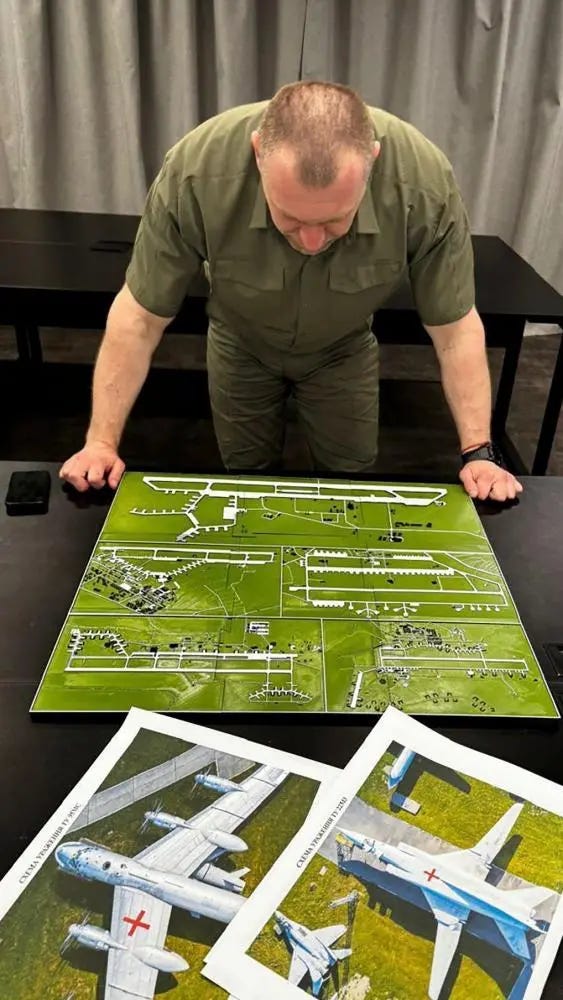
Ukraine’s intelligence service, the SBU, prepared more than a year and a half for the attacks.
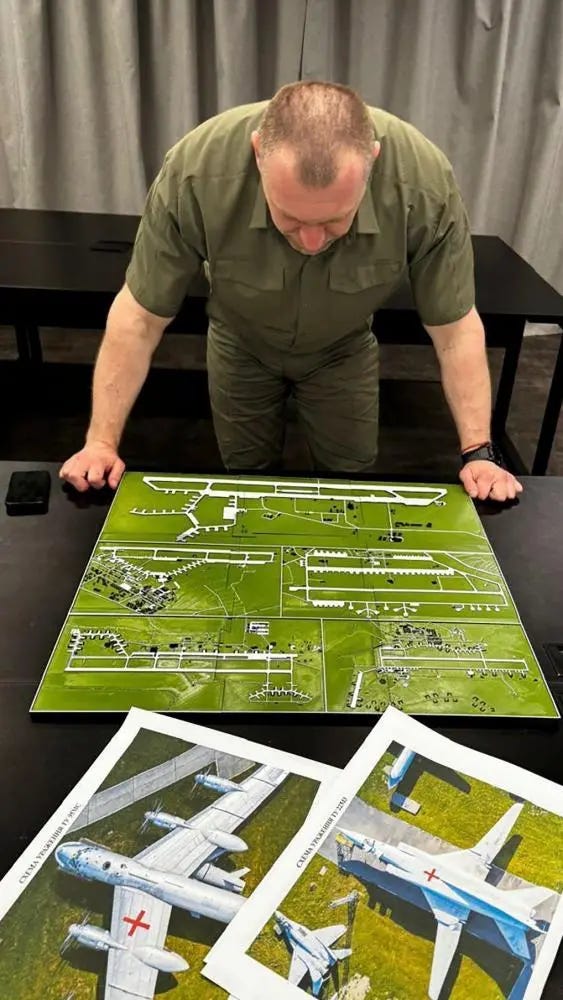
The Tactics Behind Operation Spider Web
Far from a conventional strike, this was an asymmetric masterpiece:
Drones smuggled piece-by-piece across Russian territory, assembled covertly.
Launched from hidden trailers and vehicles, exploiting radar blind spots.
Equipped with AI-assisted thermal imaging and encrypted communication relays.
Coordinated attacks across five time zones, with drones in the air for up to four hours.
What Comes Next?
The Kremlin’s silence is telling. Panic is rippling through the Federal Security Service and military command, with investigations and emergency briefings underway. The loss isn’t just material—it’s psychological and strategic.
NATO and global security analysts must reassess Russian nuclear deterrence credibility. This operation sets a new precedent for modern warfare, proving that high-tech asymmetric tactics can neutralize the most formidable strategic arsenals.
Watch my full video breakdown for an in-depth analysis:


