sexta-feira, 23 de dezembro de 2022

Atlantic Council: previsões para 2023: Global Foresight 2023

Atlantic Council: previsões para 2023

Global Foresight 2023
The Authoritative Forecast for the 
Year Ahead - and Beyond


The Scowcroft Center for Strategy and Security is pleased to share the first component of its latest Atlantic Council Strategy PaperGlobal Foresight 2023.  

Read Here


This is the second edition of the Scowcroft Center's annual Global Foresight report. For the past decade, the center has been home to one of the world's premier strategic foresight shops. 


We are excited to share the first part of this year's installment (which is part of the Atlantic Council Strategy Papers series): our ranking of 2023's top risks and opportunities. This year, we have asked the leaders of the Atlantic Council's sixteen programs and centers to predict the biggest global risks and opportunities that 2023 could bring. 


What should we watch for in the year ahead? Potential risks include: 

  • Democracies descend into instability: Some democratic countries are heading into 2023 with highly divided societies, shaky institutions, and question marks hanging over their political leaders. Over the past several years, for example, we have seen repeated changes in leadership in the United Kingdom and Israel, and disputed elections in the United States and Brazil, all of which could be ominous signs for the health of global democracy.  
  • The internet splits forever: Watch for a slow roll toward two internets: one designed to facilitate government control with built-in surveillance, and one that’s free, open, and secure—or at least trying to be. 
  • Support for Ukraine plummets: Though support has held steady thus far, several variables affect the resolve of US, European, and other allied governments—and voters—to continue paying the costs of arming Ukraine and isolating Russia over the coming year. Vladimir Putin’s nuclear threats, energy prices and associated cost-of-living crises, and a looming recession all threaten the backing Ukraine needs to win the war. 

Potential opportunities on the horizon include: 
  • The transition away from fossil fuels hits an inflection point: 2023 could be a bellwether year for the energy transition—and net-zero greenhouse-gas emissions could be within sight by 2050 if we play our cards right.   
  • The European Union acts more like a great power: After Russia’s invasion, and with more hawkish views on China in ascendance, Europeans broadly agree on the question of the EU’s relationship with power, even if the EU still lacks instruments for exercising hard power.  
  • Funding for climate resilience doubles: While countries pledged $230 million to help the places most vulnerable to a changing climate adapt at the 2022 UN climate summit, private investors on the sidelines discussed new ways to channel capital to cities and regions facing extreme heat.   

In the first week of 2023, we will be sharing the second and third components of Global Foresight: our expert survey of the world's leading geopolitical and foresight experts, and our list of Snow Leopards, which are under-the-radar phenomena that we should be monitoring.


The Scowcroft Center for Strategy and Security works to develop sustainable, nonpartisan strategies to address the most important security challenges facing the United States and the world. The Center honors General Brent Scowcroft’s legacy of service and embodies his ethos of nonpartisan commitment to the cause of security, support for US leadership in cooperation with allies and partners, and dedication to the mentorship of the next generation of leaders.


Another world-shaking, world-reordering war in Europe. Brewing fears of war on an even greater scale in Asia. A coronation in China and political upheaval across the democratic world. Climate-induced catastrophes and emboldened movements to mitigate and adapt to them. The worst energy crisis in a half century and worst food crisis in over a decade. Spiraling inflation and the specter of global recession. A less acute but still-raging, still-hugely disruptive pandemic. Epochal ferment in social media and technology more broadly.

Recently, the leaders of the Atlantic Council’s sixteen programs and centers gathered to take stock of these and other developments and trends over the past year, peer into the future, and predict the biggest global risks and opportunities that 2023 could bring.

The results of this foresight exercise are below. Each scenario is assigned a probability; “medium” means a 50/50 chance that the scenario will occur within the next year. Many lower-probability but highly consequential scenarios are included because—as has been so vividly demonstrated this past year—those types of events tend to be some of the most disruptive and transformative. And keep in mind: Forecasts are not destiny. Political leaders and policymakers have agency in shaping whether and how these scenarios play out in the coming year or beyond. The primary purpose of assessing global risks and opportunities, in fact, is to gain insight into how to avert unwanted outcomes and achieve desired ones. To that end, don’t miss the policy prescriptions mixed into many of the entries below.

Top risks: 

1) A surge in climate adaptation curtails progress on cutting emissions, locking in at least 1.5 degrees of warming. HIGH

2) Iran becomes a nuclear-weapons power. HIGH

3) The United States loses Colombia—and with it, increasingly, Latin America. MEDIUM

4) The internet splinters entirely and irrevocably. LOW

5) The United States and its allies give up on Ukraine and acquiesce to a Russian victory there. LOW

6) Jihadists construct a “terrorist bridge” from the Red Sea to the Atlantic. MEDIUM

7) A crisis just short of war erupts over Taiwan. LOW-MEDIUM

8) Countries—and not just US adversaries—move away from the dollar faster than anticipated. LOW-MEDIUM

9) New momentum builds for US withdrawal from the Middle East—and this time it doesn’t meet resistance. LOW-MEDIUM

10) Developing countries suffer a wave of defaults and economic hardship. MEDIUM

11) A growing trust deficit destabilizes democracies from within. MEDIUM

12) US tech policy toward China drives a wedge in the transatlantic relationship. MEDIUM-HIGH


Top opportunities: 

1) Ukraine wins—and becomes part of the institutional West. MEDIUM

2) The transition away from fossil fuels reaches an inflection point. LOW-MEDIUM

3) Turkey emerges as a security guarantor in the Black Sea. MEDIUM

4) The United States demonstrates that “America is back” economically in Asia. LOW-MEDIUM

5) Putin loses—abroad and at home. LOW-MEDIUM

6) The European Union starts acting like a great power. MEDIUM

7) A push for EU expansion boosts the democratic world. MEDIUM

8) Venezuelan oil comes online, relieving pressure on global energy markets. HIGH

9) High-skilled visa reform finally happens in the United States. MEDIUM

10) Funding for climate adaptation and resilience dramatically accelerates and doubles in size. MEDIUM

11) Climate change accomplishes what nothing else will: Unite South Asian nations. LOW

12) 

Understanding Lula 3.0 (mais parecido com Lula 2 do que com Lula 1) - Brian Winter (Americas Quarterly)

 Understanding Lula 3.0

Will more pro-business voices prevail in Brazil’s new government? AQ’s editor-in-chief looks to Lula’s long history as a guide.

Brian Winter

Americas Quarterly, Washington DC - 22.12.2022


One of the most insightful things I ever heard about Luiz Inácio Lula da Silva came from his sometime friend, sometime rival and immediate predecessor as president, Fernando Henrique Cardoso. “Lula is a union man,” Cardoso told me, “and union men understand that for the workers to do well, the owner must do well.” 

This is one reason why Lula can be so confusing to outsiders, and indeed to many Brazilians as well. He was always a leftist, in the sense that he made the poor his first priority. But Lula was never a communist or even a Marxist; rather, his formative years in the 1970s and 80s as the head of the automotive metalworkers’ union in Greater São Paulo taught him that capitalism could, under certain circumstances, be a generator of broad-based wealth. Even during the most militant period of Lula’s long career, the 1990s, he defined his economic philosophy as being closest to that of Henry Ford, who believed, in Lula’s words, that “companies should pay their workers enough so they can buy the cars they make.” That kind of language and life experience certainly doesn’t make him Adam Smith. But it has often put Lula at odds with members of his own Workers’ Party (PT) and other more traditional leftists who grew up reading Antonio Gramsci, spent their careers as lawyers or economists working mostly in the public sector or academia, and harbor a much deeper distrust of big capital, if they understand it at all.

The resulting battle between pragmatism and dogma, between skepticism of the private sector and a desire to let animal spirits run at least a little bit free, was at the heart of Lula’s first presidency from 2003-10. It is now back in the spotlight as he prepares to begin a third term on Jan 1. Like many policy debates, it is a battle that will never be fully or definitively resolved. The critical question is, rather, which viewpoint will be more ascendant in his government’s opening phase. Lula’s Cabinet, and specifically his economic team, will include members representing both factions. The ideological differences between them are not huge, but they are arguably big enough to make the difference between success and failure, as they did during the PT’s previous period in power, which included some of the best and worst years in Brazil’s modern history.


Lula’s first five years or so in office, the period some call “Lula 1.0,” were clearly dominated by the more business-friendly viewpoint. Figures like Antonio Palocci at the finance ministry, José Dirceu as chief of staff, José Alencar as vice president and Henrique Meirelles at the central bank helped hold the line on a very conservative fiscal and monetary policy (interest rates topped 40%), and push some limited pro-business reforms to pensions and elsewhere. Some forget how controversial this was within the PT—in fact, it fractured the party, leading hard-left figures to form a new party, the PSOL, in 2004. But the relative conservatives held the line long enough that business confidence soared, foreign investment poured in, and Brazil squeezed maximum benefit from the China-led commodities boom of the era. To paraphrase Cardoso, both workers and owners did well: The stock market quintupled in value, and some 35 million Brazilians were lifted out of poverty. 

But another somewhat forgotten truth is that this more market-friendly consensus began to fray before Lula left office, not after. During the so-called “Lula 2.0” years, Palocci and Dirceu exited due to corruption scandals and were replaced, respectively, by Guido Mantega and Dilma Rousseff, both longtime career public servants who had far more “developmentalist” ideas about industrial policy and how the state should try to actively manage the private sector. When the global financial crisis hit in 2008, this group unleashed a barrage of loans from the BNDES, Brazil’s state development bank, contributing to eventual disasters such as Eike Batista and the bankrupt telecoms firm Oi. After Rousseff succeeded Lula as president in 2011, she doubled down even further on interventionism, elevating true believers such as Gleisi Hoffman and Aloizio Mercadante and, eventually, abandoning the Lula-era fiscal framework entirely. The outcome was the worst recession in Brazil’s history, impeachment, and other assorted disasters from which the country has still not fully recovered.

Where does that leave us now? Looking at Lula’s Cabinet, which is not yet complete, it’s striking how familiar it all seems. There are few truly new faces, and few new ideas, for better and for worse. Lula has once again put together a pluralistic team that includes both ideological groups. Geraldo Alckmin, his vice president and onetime rival, will be the standard bearer of the more centrist faction, and looks set to have considerable power. Fernando Haddad as finance minister seems like an attempt to repeat the Palocci experience (the good parts, anyway): a relative moderate within the PT’s core, who has the party bona-fides, and close relationship with the president, necessary to say “no” to excessive spending requests. The decision to keep Hoffman outside the Cabinet seems important, while even Mercadante’s appointment to the BNDES, which markets did not like, could be read as an effort to reward a loyal aide with a prestigious position away from the true core of economic policymaking. A new law enshrining central bank independence means that Roberto Campos Neto, who has helped guide Brazil to an even lower inflation rate (5.9%) than that of the United States (7.1%), will remain in that critical role until the end of 2024.

But here again we come back to the imperfect example of history. If you talk to the main protagonists of Lula 1.0, and I have interviewed many of them over the years, they believe that what really maintained discipline during that era was the feeling they had no real choice. Lula and the PT had been humbled, and some of its members pushed closer to the ideological center, after losing three consecutive presidential elections. A market panic prior to the election essentially forced Lula to sign a public letter vowing to maintain a stable macroeconomic policy, and appoint figures who could do so. Today, as we enter 2023, the narratives feel very different. Far from chastened, the PT feels vindicated by the events of recent years, including Lula’s release from prison. Their primary focus is not on appealing to business or markets, but on addressing the “social emergency” left behind by the Jair Bolsonaro years. The need is real, of course: More than 30 million Brazilians are estimated to be suffering from some degree of hunger or food insecurity in the wake of COVID-19 and years of subpar economic growth. But the party’s drive to secure 200 billion reais ($38 billion) in “transitional” funding surpassed the expectations of markets, and even some members of Lula’s transition team. Lula’s repeated statements dismissing the concerns of financial markets, including his November comments questioning the need for “so-called fiscal responsibility,” suggests he is feeling less boxed in than 20 years ago, and may be more willing to listen to the interventionist voices in his midst—or at least not stand in their way—on issues ranging from fiscal management to regulation.   

And that is why, today, many are betting that Lula 3.0 will resemble Lula 2.0 more than Lula 1.0. That his government will not be a disaster by any means, but that the forces pushing for more government spending (and perhaps higher taxes, as Haddad has refused to rule out), and a greater state hand in the economy overall, will win more battles than they lose in the early going. Critically, other actors beyond the PT, including the so-called Centrão with whom Lula must share power, are also pushing for a greater pool of resources to manage. For those who believe that the capacity of the Brazilian government to address poverty and help steer the economy was grievously wounded in the six years since the PT last exercised power, this is primarily good news. For those who think that not all aspects of Bolsonaro’s economic policymaking were disastrous, and that the public sector already accounts for enough of Brazil’s economy, Lula 3.0 may end up looking like something of a lost opportunity—in a country where the glory days of the 2000s are becoming an ever more distant memory. 


Brian Winter is the editor-in-chief of Americas Quarterly and one of Latin America’s most influential political analysts, with more than 20 years following the region’s ups and downs.

A China Optimist’s Lament - Stephen S. Roach (Project Syndicate)

 A China Optimist’s Lament

With a shrinking working-age population, China, until recently the world’s greatest growth story, needs an acceleration in productivity growth to reclaim that mantle. That is why President Xi Jinping’s increased emphasis on security, power, and control comes at the worst possible time.

Stephen S. Roach 

 Project Syndicate, 22.12.2022


New Haven – I have been a congenital China optimist for most of the past 25 years. I first came to that view in the depths of the Asian financial crisis in 1997-98. The so-called East Asian growth miracle was in tatters and China was widely portrayed as the final domino that would fall in what was then viewed as the first crisis of globalization. Having shuttled back and forth to the region during that period as Morgan Stanley’s chief economist, I had quickly come to appreciate the power of China’s market-based economic transition. So, in March 1998, I took a very different view on the pages of the Financial Times with my first published commentary on China, “The Land of the Rising Dragon.”

My argument, in a nutshell, was that China would supplant Japan as the new engine of post-crisis Asia. Japan was floundering in the aftermath of its post-bubble implosion, whereas a reform-oriented China had the wherewithal, determination, and strategy to withstand the currency contagion of a devastating external shock and sustain rapid economic growth. As China delivered, boosted by its accession to the World Trade Organization in late 2001, and Japan sunk into its second lost decade, the Chinese economy took off like a rocket.

It was the beginning of an extraordinary journey for me as Wall Street’s resident China optimist. In the spring of 1998, I spent a day in Seattle with then Chinese Finance Minister Xiang Huaicheng. He had read my piece in the FT and wanted to exchange views on the Chinese and US economies. He implored me to think of China less in terms of legacy state-owned enterprises (SOEs) and more through the lens of a rapidly emerging entrepreneurial subculture driven by township-village enterprises (TVEs).

Xiang was kind enough to organize a subsequent tour of several TVEs in Fujian Province. The most impressive was the Hengtong Group, a rapidly growing producer of high-quality fiber optic and telecom cables. Loaded with state-of-the-art technology from the United States and Germany, and staffed with a surprisingly large number of college graduates, Hengtong was the opposite of China’s long-ossified SOEs.

That experience whetted my appetite. I deepened my research into the seemingly paradoxical dynamism of China’s blended economy, with newly reformed and increasingly marketized SOEs starting to list shares in international capital markets in a balancing act with a rapidly growing private sector. Could China avoid the chronic problems that had long afflicted other blended systems, including Japan?

This same question was posed by former Premier Wen Jiabao. I first met Wen in late 2002, a few months before his elevation to the premiership under President Hu Jintao. His curiosity impressed me more than his skills as a strategist, which had distinguished his predecessor, Zhu Rongji.

But Wen had the courage to spark a debate about one of China’s toughest problems: In a public press conference in March 2007, he warned that while the economy was superficially strong, it risked becoming “unstable, unbalanced, uncoordinated, and unsustainable.” To Wen’s great credit, he posed the paradox of the “Four Uns” just a few months before the eruption of America’s subprime mortgage crisis, which would culminate in the 2008-09 global financial crisis.

At this point, I doubled down as a China optimist. The resilience of the blended system – the legacy of Deng Xiaoping’s “reform and opening up” – held the key to what I believed would be a powerful rebalancing of the Chinese economy. Wen’s Four Uns could be resolved only by a structural shift from exports and investment to consumer-led growth, from manufacturing to services, from surplus saving to saving absorption by investing in a long-deficient social safety net, and by shifting from foreign to indigenous innovation.

China’s flexible, blended, increasingly dynamic private sector could do all that and more. In the years following Wen’s proclamation, China’s five-year plans aligned with this rebalancing agenda. The case for a structural transformation to a more market-based system was increasingly on track. Optimists, like me, felt vindicated.

Then came Xi Jinping. At first, China’s fifth-generation leader seemed to be cut from the same cloth as the reform-oriented Deng. A sweeping set of reforms proposed at the Third Plenum of the 18th Party Congress in late 2013 was especially encouraging. But shortly thereafter, uncomfortable frictions started to creep into the rebalancing strategy.

In 2017, Xi kicked off the 19th Party Congress with a regression to Marxist ideology that immediately became known as “Xi Jinping Thought.” Consumer-led rebalancing was de-emphasized. An anti-corruption campaign became less about purging wrongdoers from the party and more about eliminating Xi’s political rivals and consolidating his power. And Xi’s geostrategic muscularity broke from Deng’s low-key (“hide and bide”) posture and led to a major conflict with the United States.

But 2022 was the ultimate wake-up call for China optimists. Xi’s great-power gambit aligned China in an “unlimited partnership” with Russia on the brink of the Kremlin’s unprovoked invasion of Ukraine. Xi’s stubborn insistence on an untenable “zero-COVID” policy tapped an undercurrent of dissent not seen in a generation. And the 20th Party Congress in October was less about Xi’s claim to an unprecedented third term as general secretary and more about his fixation on security in what he dubbed to be a threatening world of “perilous, stormy seas.”

With a shrinking working-age population, China, until recently the world’s greatest growth story, needs an acceleration in productivity growth to reclaim that mantle. Yet Xi’s increased emphasis on security, power, and control undermines productivity at a time when China needs it the most. The growth miracle can only suffer as a result.

China had come close to the promised land. Its modern economy was on an extraordinary trajectory. The rebalancing agenda promised more to come. But Xi broke that promise. The political economy of autocracy has thrown cold water on those of us who used to be diehard China optimists.


Stephen S. Roach, a faculty member at Yale University and former chairman of Morgan Stanley Asia, is the author of Unbalanced: The Codependency of America and China (Yale University Press, 2014) and Accidental Conflict: America, China, and the Clash of False Narratives (Yale University Press, 2022).


*

Relatório final do Gabinete de Transição Governamental: Relações Exteriores

GABINETE DE TRANSIÇÃO GOVERNAMENTAL 

RELATÓRIO FINAL 

RELAÇÕES EXTERIORES (p. 50-51)

A combinação entre o desmonte de políticas públicas, em nível interno, e o predomínio de visão isolacionista do mundo, no nível externo, afetou a imagem do país e prejudicou a capacidade brasileira de influir sobre temas da agenda global.

Ao assumir posturas negacionistas, o Brasil perdeu protagonismo em temas ambientais, desafiou esforços de combate à pandemia e promoveu visão dos direitos humanos inconsistente com sua ordem jurídica. Na América Latina, tornou-se fator de instabilidade. A política africana foi abandonada e pouca atenção foi dada às comunidades brasileiras no exterior.

O estímulo a processos de integração política, comercial e de infraestrutura com os países vizinhos sempre foi uma marca da diplomacia brasileira, além de um preceito constitucional. No governo Bolsonaro, predominou postura diametralmente oposta, que redundou no desmonte da UNASUL, na saída da CELAC e no crescimento de forças favoráveis ao desmantelamento do MERCOSUL enquanto união aduaneira. Ao apostar no isolamento da Venezuela, o Brasil cometeu erro estratégico de transformar a América do Sul em palco da disputa geopolítica entre EUA, Rússia e China. De catalisador de processos de integração, o país passou a ser fator de instabilidade regional.

O governo Bolsonaro abandonou o protagonismo em agendas internacionais caras aos interesses de desenvolvimento nacional, como direito à saúde, direito à alimentação adequada, igualdade de gênero e racial, e enfrentamento a todas as formas de violência e de discriminação. A mudança no discurso diplomático e a participação desastrada em alianças ultraconservadoras caminharam de mãos dadas com o desmonte de políticas públicas domésticas, em especial no que se refere a igualdade de gênero, direitos sexuais e reprodutivos e direito de minorias.

A dívida com organizações internacionais representa grave prejuízo à imagem do país e à sua capacidade de atuação e compromete severamente sua política externa. O Brasil deve atualmente cerca de R$ 5,5 bilhões de reais. Se um valor mínimo dessa dívida não for pago ainda no atual exercício, haverá perda de voto em organizações como a ONU, a Organização das Nações Unidas para Alimentação e Agricultura (FAO) e a Organização Internacional do Trabalho (OIT ), entre outras. 


Íntegra do Relatório neste link: 

https://www.academia.edu/93514892/Relatorio_do_Gabinete_de_Transicao_para_o_governo_Lula


Carta aberta a José Múcio Monteiro: perseguição ao Cel. Res. Marcelo Pimentel - Roberto Amaral

 Carta aberta a José Múcio Monteiro

Roberto Amaral
Caro amigo, 

Venho denunciar a perseguição política que de forma insidiosa e covarde, como toda perseguição política,  escalões superiores do exército do Estado brasileiro movem contra oficial que se tem destacado pela defesa da legalidade democrático-republicana. Legalidade seguidamente ofendida pelos seus algozes, e cujo império cumpre restabelecer. São esses, ministro, os nossos tempos: a ilegalidade governa e pune os que defendem a ordem democrática. 
 Denuncio o processo kafkiano com o qual o torturam, torturam seus familiares e ameaçam seus amigos, e peço sua intervenção enérgica, já no dia 1º de janeiro, quando, espera a nação cansada (mas ainda cheia de esperanças), estaremos retomando a interminável construção da democracia brasileira. Uma obra de Sísifo, pois, quando mais a supomos consolidada, mais a vemos ameaçada, como ainda agora. E mais ameaçada é a democracia quando a política partidária e a indisciplina, insuflada por oficiais-generais em comando, dominam os quartéis, tradicionalmente afeitos, em nosso país, à insubordinação e à insurgência. 
Árdua é a tarefa que o aguarda. 
A infâmia que denuncio ocorre aí, ao seu lado, no Recife, mas no silêncio dos quartéis, onde age impunemente a prepotência, e onde tanto agiu, em tempos que não podemos esquecer, a tortura de quantos pernambucanos e brasileiros de todos os quadrantes, muitos nossos amigos ou conhecidos, imolados na luta contra a ditadura militar instalada a partir do golpe de 1º de abril. Luta a qual, em novos termos, tivemos de retomar, desta feita para impedir a continuidade do projeto protofascista civil-militar instalado a partir do golpe que depôs Dilma Rousseff, a cujo governo servimos, cada um do seu modo. Luta que agora lhe incumbe dar continuidade  no desempenho de missão histórica que lhe delega o presidente Lula como depositário da vontade da nação, expressa no pleito de outubro último. Os velhos métodos do autoritarismo militar  – como as cassações de mandatos, as aposentadorias tanto quanto  as reformas compulsórias – são substituídos pela tentativa de, mediante punições disciplinares desamparadas de arrimo legal, enlamear a biografia de um oficial exemplar. Conhecendo os fatos, e apurando-os, a dignidade nos manda agir. Omitindo-nos, nos transformaríamos em cúmplices.
A  vítima da vez é o coronel da reserva Marcelo Pimentel, seu conterrâneo, e seu vizinho, cuja carreira – 38 anos na ativa do exército, 30 como oficial – encerrou como chefe do estado-maior no Comando da 7ª Região Militar, em Recife. 
Marcelo Pimentel – como não lhe será difícil apurar – foi instrutor, comandante do curso de artilharia e chefe da divisão de ensino em CPOR, capitão comandante de bateria de obuses, oficial de estado-maior em brigada de infantaria, comandante de grupo de artilharia de campanha, ordenador de despesas, adido de defesa e do exército em missão no exterior. Seguiu com louvor todos os cursos  requeridos a um coronel do quadro do estado-maior, sempre promovido por merecimento. Finalmente, concorreu em primeiro lugar à promoção ao generalato. 
É esse o oficial que a nomenclatura bolsonarista do exército, ainda governante, tenta ofender. Exatamente por isso: por haver sido, o coronel Marcelo, na ativa, um oficial brilhante, legalista e democrata; por continuar a ser, na reserva, um oficial democrata e legalista a quem desagrada a perniciosa partidarização da forças armadas que a desvia de suas finalidades constitucionais, ora  intervindo na vida civil, ora forcejando pelo inaceitável statu de autarquia política na democracia republicana – que, contra os quarteis, a nação tenta construir desde o golpe de 1889. O legalismo democrático,  que hoje é desvio para o estamento ainda governante, haverá de ser, no novo governo, com você no comando da defesa, o modelo do bom oficial. Mas é este modelo que se pretende abater punindo um oficial legalista, e eis o que lhe peço evitar.
A formação castrense de Marcelo Pimentel foi completada pela vida universitária e o curso de direito que o ajudou a compreender o significado do golpe de 1964. Na reserva, livre das justas amarras que limitam, ou deveriam limitar, a atividade político-partidária do oficial da ativa (restrição ignorada pela súcia fardada que comanda o país a partir do terceiro andar do palácio do planalto), dedicou-se à defesa da democracia e da disciplina militar quebrada pela criminosa radicalização do exército pela direita, obra de seus chefes graduados. As consequências, nos limites da tragédia, foram vividas nos últimos quatro anos, e, com os dados de hoje, ainda é justo temer sua sobrevivência no novo governo.
De que é acusado o coronel da reserva Marcelo Pimentel?
De em debates, palestras e artigos, em estudos acadêmicos, classificar como golpe de estado parlamentar a deposição de Dilma Rousseff, violência que, sabemos todos, contou com o decisivo  aval de oficiais do alto comando sob a liderança do próprio comandante do exército, o general Villas-Bôas. Que, não obstante suas circunstâncias pessoais, continua ameaçando o país com novas intervenções militares. 
Oficiais da ativa comprometidos com a continuidade do projeto protofascista não tergiversam quando se trata de, contra a lei e o regimento disciplinar, filiar-se a pregações partidárias e golpistas.  Assim se destacam, entre muitos, o  atual ministro da defesa, os três comandantes das armas e figuras menores como o general comandante da 10ª região militar, dando o tom da insubordinação que contamina o conjunto da tropa, adestrada para a obediência como reflexo condicionado. Descumprem a lei e o regimento disciplinar do exército, ao tempo que negam as garantias da Lei n° 7.524/86, que garante ao “militar inativo o direito à livre expressão do pensamento e da opinião sobre temas políticos, filosóficos, ideológicos e de interesse público, independentemente das disposições dos regulamentos disciplinares das Forças Armadas”. Esse direito está sendo negado ao coronel Marcelo Pimentel, e por isso vem ele colecionando processos e punições (contam-se em cinco), tanto constrangedoras quanto ilegais, todas violadoras dos princípios constitucionais que asseguram o direito à livre manifestação do pensamento. O objetivo é humilhar, intimidar. É a arte clássica do autoritarismo amparado na força.
Marcelo Pimentel é acusado ora de “desrespeitar superior hierárquico”, ora “de ofender Instituição-Exército”, por criticar, em artigo de jornal, a bolsonarização do exército e a participação de oficiais da ativa e da reserva na campanha eleitoral de 2018. É punido por haver aplaudido artigo publicado no Estadãono qual o autor, um acadêmico, oferece crítica à conduta de oficiais do exército nominados por desmandos no relatório final da CPI da Covid. 
A questão central é o anacrônico, impróprio, indevido, antirregimental e ilegal protagonismo político-partidário das cúpulas hierárquicas das forças armadas, amesquinhando as corporações ao transformá-las em partido político e fazer dos quartéis verdadeiros comitês-eleitorais, como foram  nas eleições de 2018 e 2022. A história republicana registra quão nociva é essa partidarização, e exige nosso permanente combate. 
Por que punir Marcelo Pimentel, que defende a ordem constitucional, e não aqueles que a tentam fraturar? 
Despreocupados com o tráfico de cocaína em aviões da FAB – vimos esse transporte até em aeronave presidencial – os serviços de inteligência não cessam de monitorar o coronel Pimentel, que vem a ser processado por haver produzido um tweet no qual faz restrições à nota-manifesto do insubordinado atual ministro da defesa (seguida de manifestação de igual teor e ilegalidade assinada pelos chefes das três forças) criticando o sistema eleitoral e a segurança da votação mediante as urnas eletrônicas, jogando assim mais lenha na pregação golpista do candidato à reeleição derrotado.
Pretexto após pretexto, o coronel Pimentel é agora punido por “publicar ato ou fato militar que possa contribuir para o desprestígio das forças armadas”. Sua indisciplina foi o registro na demora de atendimento de seu pai, em tratamento de um câncer, em hospital militar. Não se apura a eventual negligência do serviço público essencial, mas, pasme, a reclamação da vítima!
Está à vista que se trata de perseguição politica, inominável por definição, que não podemos admitir. Conheço esses fatos e os levo ao seu conhecimento porque me foram relatados pela vítima. Mas quantas outras muitas violências devem estar correndo Brasil afora, livres da denúncia da publicidade e fora do alcance do novo ministro da defesa? A perseguição ao coronel Marcelo Pimentel não pode ser vista como fato isolado, mas sua denúncia é oferecida como ponto de partida de uma ação enérgica que se reclama  do futuro ministro da defesa do governo democrático do presidente Lula para impedir a continuidade da ignomínia, pois não há conciliação possível com o inconciliável, tanto quanto é inconcebível a acomodação de forças antagônicas. Se não é possível punir os criminosos – admitamos apenas por argumentar –, que pelo menos possamos proteger suas vítimas. 
Receba um abraço esperançoso deste seu amigo.
Roberto Amaral

Martin Rees, Royal Astronomer, explains how science might save us - Bulletin of the Atomic Scientists

Board of Sponsors member Martin Rees

Board of Sponsors member Martin Rees

During a recent conversation, Martin Rees offered a thumbnail take on biological terrorism, in the process illustrating why he is known as one of the world’s most effective communicators on existential risk. “I worry very much about how we can be sure that some bad actor, as it were, doesn’t secretly develop some very dangerous pathogen and release it,” he said. “It’s unlikely that many people wish to do this. But when the release of a pathogen could lead to a global pandemic, one such person is too many. As I put it, the global village will have its village idiots, but they will have global range.”

To call Rees accomplished on many fronts is to understate by orders of magnitude. A member of the UK House of Lords and the 15th Astronomer Royal, he is based at the University of Cambridge, where he has been Professor of Astronomy and Director of the Institute of Astronomy. He is a Fellow and was the former Master of Trinity College, Cambridge. His career includes pioneering research on quasars, black holes, and galaxy formation. He is also a co-founder and leader of Cambridge University’s Centre for the Study of Existential Risk and a long-serving member of the Bulletin’s Board of Sponsors.

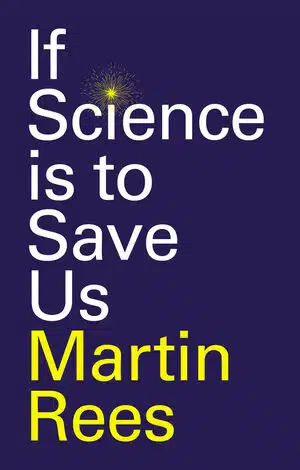
Beyond his hundreds of research publications, Lord Rees has written many books aimed at a general readership. I spoke with him earlier this month about his new book, If Science is to Save Us.

Martin Rees: Can I just say, at the start, that my book is not very homogeneous; the first half is concerned with big global issues, and the second half is the more personal perspective of a scientist, and interaction with the scientific community, with the public, with the government and politicians, etc. So the book’s really in two halves, and those who don’t like it say it is a dog’s breakfast; those who like it more will say it’s a smorgasbord.

John Mecklin: I enjoyed both parts of it. But could you quickly for our readers summarize the part at the beginning that is less personal: What was the main point you were trying to make with If Science is to Save Us?

Rees: I was making the point that more and more of the issues which concern us or determine our future have a scientific dimension. And therefore, people need to have a feel for science, to understand what these issues are, and to participate actively in democratic debates. And the scientists themselves have an obligation to ensure that if their discoveries have manifest applic

ations, they should do all they can to ensure that the benign applications are developed, and to issue appropriate warnings, and do all they can to minimize the probability of the downsides. Because the stakes are getting higher.

My main theme in the book, which is something I’ve discussed for a number of years in other fora, is that we are in a state where science has greater potential benefits, but greater potential downsides. And indeed, in our evermore interconnected world, there’s a genuine risk of global catastrophes, which could arise through our collective actions, as we’re seeing in the concerns about climate change and loss of biodiversity. But it could also arise from an engineered pandemic, for instance, which could be generated by ill-intended applications of biology.

Mecklin: What you’re proposing are rather large changes in how things are arranged around the world. And at one point, you mentioned that to deal with these many interlocked global risks, there will need to be—well, I’ll just read the quote: “[N]ations may need to cede sovereignty to more international bodies, like the WHO (World Health Organization).” But the WHO kind of did a poor job with COVID. And some of the other international regulatory bodies have not been huge successes, like the COP series of climate meetings, which have been very slow and not really effective.

Do you think there needs to be some new thinking about what world regulation of these problems looks like?

Rees: I think you’re a bit hard on the WHO; it wasn’t that bad, really. But I think you’re quite right in saying that these bodies may not be adequate. But I do think we need more. We have the International Atomic Energy Agency, and we have the World Health Organization. But I think we are going to need something to regulate IT [information technology] and the Internet and to regulate energy, and also for other purposes.

And you’re quite right that nations normally don’t take [international regulatory agencies] seriously enough, and they’re ineffective and slow. And I think this leads to another theme of the book, which is, how do we get the politicians to prioritize issues which are global and long-term. Politicians tend to prioritize things that affect their immediate constituency, obviously, and which are urgent. If we come to address an issue which is global, and maybe affects people in remote parts of the world more than people locally, then, of course, naturally, politicians won’t put it high on the agenda. And they won’t prioritize making the international discussions that are necessary, effective.

So that’s why one point I make is that the whole public has to be aware of these issues. Because if the politicians know that voters care, then the politicians will be activated and will do more to ensure that the international body is effective. And, of course, one obvious issue, you mentioned the COP 27 [climate change conference in Egypt], the meetings like that were not very effective. But that’s really because politicians don’t prioritize it.

I think, in the context of climate change, there is reason for a bit of good cheer, in that I think the public is more aware of this issue than it was a few years ago. And therefore, the voters take it more seriously, so politicians will. And the reason for that is that I think scientists have done a better job of presenting their work. But more important, there are charismatic figures wh

o have gotten through to a wide public. And I mentioned in my book four rather disparate people who, in their different ways, have had big effects.

The first is Pope Francis, whose encyclical in 2015 was very influential; he got a standing ovation at the UN. And he has a billion followers in Latin America, Africa, and East Asia. And he therefore indirectly helped to forge a consensus at the Paris conference in 2015. So he is one global figure who has raised this issue on the agenda.

A second is David Attenborough, who is British, of course, but I think his influence spreads wider. As we’re making people aware of natural hazards—and particularly loss of biodiversity and pollution of the oceans and things like that—he’s had a big effect.

The third I would say, is Bill Gates, who is a hugely respected figure who talks about the more technical aspects and how we can if we try hard enough deal with these global problems.

And the fourth is Greta Thunberg, who has been an influence on the younger generation and led to welcome campaigning by the young. And of course, we expect the young to be especially committed because they will be alive at the end of the century, when the consequences of mishandling environmental issues will be starker.

That’s a long answer to your question. Sorry about that.

Mecklin: In your book, you mention educating the public, so that they will influence politicians to pay attention to long-term issues, and you mentioned journalism. And you’re talking to a journalist, but I think you would admit that it’s a problematic situation; there are journalists, and there are journalists. There’s a lot of really bad stuff out there, and some good stuff. I’d just like to hear you talk about how you decide how to interface with journalists. And what advice do you have for other scientists on how they should approach this?

Rees: Well, I think scientists should be willing to address journalists and speak directly to the public or write directly to the public. Not all of them have the capacity for this, but those who are able to do it should. But I think at this point you have the public confused by the prevalence of fake news, etc. And I do think that social media has made things more difficult, because in the old days, most of the public got their news and their opinions from people like yourself, established journalists, who would, in general, sort of muffle the crazy stuff and moderate what is said. On the other hand, what happens now is the crazy stuff from extremists on any wing can get directly to the wide public. And of course, people click on that and get sent to something even more extreme.

One thinks that this is a problem of the Trump era, but I think it’s more generic than that, and this is going to make it harder for the public—and indeed, politicians who are not experts—to decide what to believe. I’m not too pessimistic, but I think it’s hard now, because although social media has its upsides, it does have the downside of raising the noise level as it were and, therefore, drowning out the best evidence.

I know scientists who have been government advisors, and they have a hard job getting much traction with politicians in general, for the reasons I mentioned—namely, parties have an urgent and local agenda, and don’t think about these long-term problems. But I think politicians need to be aware that the scientists don’t always know the answers; they give the best answers they can. And we saw during the pandemic, that idea has firmed up; things like whether it’s a good idea to wear masks or not were controversial initially, but there was a consensus later on about when they were useful. And so, I think in those contexts, we expect that politicians should be somewhat skeptical of scientists, but they should have a feel for when they can believe them, and when they can’t. And the scientists, on their side, have to realize that any actual decision—whether it’s on health, on medicine, on the environment, on energy—has a scientific component, but it also has other components, economic and social and political, where the scientists have no special expertise and speak only as citizens.

So I think scientists have to realize that the advice they give to politicians is just one element of the input the politicians need in coming to a decision.

Mecklin: I had a wise man tell me when I was talking to him about some brilliant policy or other, he just looked at me and said, “There is no policy without politics.”

Rees: That is true.

Mecklin: I found it interesting that in talking about the need for better education at all levels, your book specifically mentioned that the humanities should remain part of major research universities. And it seemed like there was an element of nostalgia for the days when you were educated. Why don’t you explain why you think, even today in a major research institution, the humanities are important.

Rees: I think for students who are still undergraduates there should be a broad curriculum. And I think we can learn from the US in this sense, in that your system, where you have minors and majors, allows people to focus on the science and do some humanities as well, or vice versa. That’s actually harder in the UK university system, because we have too much early specialization.

So I think it’s important that people should have a broad perspective and keep their career options open. One problem in the UK, for instance, is that some people drop science at the age of 16, because there’s enforced specialization, even in the last two years of high school. And if they drop science at 16, that forecloses going to a university course and majoring in science. And that’s unfortunate. So that’s just saying that we want to ensure that most people who have any kind of post-18 education, and even more creative education, are exposed to science and humanities.

When we think of politicians themselves, scientists often bemoan the fact that very few of them have a scientific background. I think we’d like a few more of them to have a scientific background. But I’m not sure we want to go quite as far as, say, China and Singapore, where most of the top politicians have expertise in engineering, etc. And I think I say in my book that if there are politicians who have graduate-level expertise, I’d rather have it be in history than in dentistry, for instance, because history obviously gives them a relevant perspective, whereas a single specialized science doesn’t.

And incidentally, I’ve noticed that in the UK, where I’m privileged to be in the House of Lords, which is part of Parliament, the politicians who have the best perspective on science, and the best appreciation of its scope and limits, are not necessarily scientists themselves. They are people with a broad education; they may be journalists, or they may have studied humanities, but they nonetheless, understand enough about science to be able to appreciate when it’s important, when it’s reliable, etc. And I think that’s the most important thing—to ensure that the public realize when science is going to be an important contributor to a decision and know who to ask if that’s the case.

Mecklin: In part of your book, you mention the concept of responsible innovation, that there needs to be greater investment in research fostering that kind of innovation. What did you mean by responsible innovation? How do you foster it?

Rees: This is easier to do when there’s a public-private partnership. Let me give two examples. One example is research and development of efficient, clean energy. One thing that I bang on about if I ever have the chance is that countries like yours and mine ought to be expanding their research and development into clean, carbon-free energy and all of the things that go with it: energy storage, cheaper batteries, and smart grids, and things of that kind. And if we do this, then we can achieve net zero [greenhouse gas emissions] by mid-century, which is the goal of our countries.

But more important than that, we can help the Global South to achieve the same thing, because the Global South will contain four billion people by mid-century. And if they are going to develop, then we would like them to be able to shift directly to clean energy, and not trace out the path where they go through a coal-burning phase like China and India. And that can only happen if there is affordable, clean energy. And a top priority for countries like ours is to accelerate the development of affordable clean energy for the Global South, so that they can leapfrog directly to it, just as they’ve leapfrogged directly to smartphones, without ever having had landlines. That’s my first example.

The second example is a different one. There are some kinds of experiments, which are manifestly potentially dangerous, so-called gain-of-function experiments on viruses, where you can make a virus more virulent, or more transmissible, or both. Experiments of this kind were done 10 years ago, on the influenza virus. And this stimulated debate among the scientists themselves, and among scientific academies, about whether research of this kind should be done, and whether if it’s done, it should be published or not. Indeed, the US federal government did stop funding experiments on these so-called gain-of-function techniques, at least for a certain period. I think that’s an example where it’s irresponsible, perhaps, to do certain kinds of research, unless you’re confident that you can control the way it’s made use of.

And my worst nightmare, really, is of the misuse of technologies like biotech, which are widely available. It’s not like making an H-bomb, where you use special-purpose facilities which can be monitored. You need only the kind of facilities available in many industrial labs and university labs. And I worry very much about how we can be sure that some bad actor, as it were, doesn’t secretly develop some very dangerous pathogen and release it. It’s unlikely that many people wish to do this. But when the release of a pathogen could lead to a global pandemic, one such person is too many. As I put it, the global village will have its village idiots, but they will have global range.

And I think, accepting this fact—and accepting, similarly, that cyberattacks can have catastrophic, wide-ranging consequences—is going to pose a big challenge to governance, generally. Because there are three things that we want to preserve: one is freedom; another is security; and there’s privacy. And I think it’s going to be very hard to have all three. Because if we don’t have some sort of surveillance, we’re not going to be able to rule out the possibility that some bad actor is going to create and release a dangerous pathogen that could spread globally. And I think this is going to be a real challenge. I suspect that we have to give up privacy, as the Chinese already have.

Mecklin: I actually wrote down the village idiot quote from your book, because it seems that’s a big problem to me—just the person who’s completely crazy. There are a couple of other things I wrote down from the book that I wanted to ask you about. I’ll just read the quote, and you can respond as you wish: “But don’t ever expect mass migration from Earth. It’s a delusion and a dangerous one to think that space offers an escape from Earth’s problems.” Why do you think it’s dangerous? It obviously has some relevance to a line of thought that’s been out there in certain circles for a while now.

Rees: Well, I just think it’s so unrealistic. In fact, I wrote another book earlier this year, called The End of Astronauts, which was suggesting that the case for publicly funded astronauts is getting weaker all the time, as robots get better. And robots could do exploration of Mars, they could assemble big structures in space without the need for humans. And so I think, if I was an American taxpayer, I wouldn’t support NASA’s human spaceflight program at all. The reason I wouldn’t is that, first of all, it’s of no practical need, because we have robots, which get better all the time. But secondly, if NASA does something, it has to be very risk-averse. I mean, you remember the space shuttle, which crashed twice, killing seven people in it in both cases, but that was in 135 launches. That’s a less than 2 percent failure rate. And even that was something which was thought barely acceptable.

Now, if you’re even sending one person to Mars, it’s most unlikely that you could ever make the risk as small as 2 percent; 50 percent chance of coming back might be the best you could do. And there are many adventurers who would happily accept these risks. And I think the scenario for the future of human spaceflight, certainly of spaceflight to Mars, is to leave it to the billionaires, as it were, and sponsors. Because if it’s funded privately, then they can perfectly well launch people who are prepared to accept this high risk. Elon Musk himself has said that he’d like to die on Mars, but not on impact. And I think he’s now 51. So 40 years from now, good luck to him if he does this.

And so I think there will be people on Mars by the end of the century, but they will be people who are adventurers, who would have been prepared to take a high risk, and will not be funded by NASA, because I think NASA would try very hard to lower the risk before it sent anyone. And it would never succeed and make the risk low enough to be acceptable to the public. So I think there’ll only be a few people who will go to Mars. And of course, living on Mars is very, very tough; these guys will have a hard time. And as I say in my book, terraforming Mars to make it habitable for ordinary people is far, far harder than dealing with climate change on the Earth.

And so it’s a dangerous delusion to think that’s an alternative—to think that there’s a planet B for all the risk-averse people, where we can all emigrate to if we screw up on the Earth. A few people will go to Mars. But ordinary people, we’ve got to stay on the Earth, and we have to cherish this Earthly home. It’s the only one we’ll ever have.

Mecklin: If Elon wants to go to Mars, I’ll be glad to watch him. Just a couple of other questions, though. One thing I’d like to hear you talk about: There are two frames of reference on the artificial intelligence situation. There’s the set of people who worry greatly and at great length about an artificial general intelligence, a super intelligence that takes over and discards us humans. And there are others who tend to think that’s way far off, if it could ever be.

I was just wondering: What’s your thinking on that? Which way are you leaning?

Rees: I should say I’m not an expert, but I think I lean toward the latter side. I’m aware of the idea of machines taking over the world and having goals misaligned with what humans want—it’s been discussed extensively, of course, but I’m more with Rodney Brooks, the inventor of Baxter robots, who doesn’t take that all seriously and says it’ll be a long time before we have to worry more about artificial intelligence than about real stupidity. That’s his line, and I tend to align with him.

But of course, having said that, I do in my book discuss the downsides of AI already. I think there are problems if we delegate decisions to machines, because even though on average they may seem to make good decisions, there may be some hidden bugs, etc. And I think if we are being recommended for parole, if we’re in prison, or for surgery, or even for a credit rating, then we would like to feel that there were some human in the loop doing this. It’s not enough to say that on average the machine does a better job than the human; I think we need to have both.

Machines can of course, be very helpful. For instance, in radiology, they can have studied, because of their speed, tens of thousands of lung x-rays more than a surgeon can in an hour, but we still need to have the surgeon in the loop. So I think, for that reason, we have to be cautious about where we accept the decisions of AI without it being moderated by a human.

Incidentally, if you think of the effect on the labor market, which is of course, ongoing, I think the jobs that are going to be replaced will be some of the more mindless jobs that are done now—say [operating] Amazon warehouses, or telephone call centers, things like that. If those mind-numbing jobs can be taken over by robots, that’s fine, provided that the people consequently unemployed can be redeployed into areas where being human is important. And I argue in my book, that we need to tax quite heavily the international conglomerates that control AI and hypothecate those taxes to employ far more people as carers for the young and old, teaching assistants, custodians in public parks, and things where you need to be a human being—jobs which certainly in my country are underrated and in very short supply. There are far too few carers for old people, for instance.

So this will be a redeployment from jobs where humans can be replaced to those where being a human is crucial. That’s one thing. And also, if you think of which jobs can be most readily replaced, they will include not just simple manufacturing jobs, but some white-collar jobs—legal conveyancing, for instance, computer coding, and to some extent radiology and things like that. But among the jobs hardest to mechanize will be non-routine, blue-collar jobs, in particular plumbing and gardening. The idea of having a robot go to a strange house and immediately find his way around and do what a plumber does—that’s, I think, very futuristic. So there’s going to be redistribution, but there could be an added benefit, provided that there’s appropriate taxation to ensure that there is funding for the socially valuable jobs, to redeploy those who are usurped by machines.

Mecklin: It would be wonderful if we could depend on government to make that kind of redistribution. I question whether that would happen, based on other technology advances.

Rees: I suspect that’s because you’re an American. I argue as a Brit that we should learn less from America and more from Scandinavia. Scandinavians are the happiest people in the world by most good polls, and they have higher taxation rates, a better welfare state, less inequality, etc. So I think a country that’s governed more like Scandinavia could do this. And I hope America will go that way. And I certainly hope that Britain will go to the Scandinavian route and not the American route, which is why the sooner we can get rid of our present, incompetent government in Britain, the better.

Mecklin: I join you in wishing we were more Scandinavian. I’ve burned 36 minutes of your life here, so let me move on to a last question for you. You’re an optimistic person. I mean, this just comes across, right through via video screen. Why are you optimistic that violent, greedy, flawed humanity can keep from destroying itself with its own technology?

Rees: Well, not that optimistic. That’s why I co-founded a center to study these extreme threats, which indeed are growing. Because, as I put it in my book, the Earth’s been around for 45 million centuries. But this is the first of those centuries when one species, namely the human species, can destroy or degrade the entire planet. And so we are at an especially dangerous time. And I’m not optimistic, because there’s a nonzero threat of some irreversible catastrophe happening. And I think we are likely to have a bumpy ride through the century, because of misapplication of some technology.

But we can reduce the threat. And the center that I helped to set up in Cambridge is addressing this—as are a few other centers around the world, but not enough. We’re focusing on minimizing these really catastrophic, global threats. And I like to say that, even if we could only reduce the probability by one part in 1,000, the stakes are so high, that we will have more than earned our keep, because only about 100 people in the world are really thinking full-time about these really extreme situations.

I’m optimistic that the world can escape the worst catastrophes which science fiction can speculate about. But I do think that we are going to have a rather bumpy ride through the century. One does hope that we will end up in the second half of the century with having controlled climate change, avoided mass extinctions, and hopefully reduced the huge inequalities not only within nations, but more importantly, between the Global North and the Global South, particularly sub-Saharan Africa. I think science is part of that story. We’ve seen that, despite the rise in the world’s population by more than a factor of two in the last 50 years, the mass starvation predicted by people like Paul Ehrlich at Stanford in the late 1960s has not come about. There’s still malnutrition and even starvation, but it’s a consequence of maldistribution or wars, not overall scarcity. And I think science can provide enough nourishment for the world’s population throughout the century. And also can provide, I think, for everyone a life at least as good as the life that we in fortunate countries enjoy today.

Postagem em destaque

Livrarias, de todos os tipos… - livro de Jorge Carrión

 Carmen Licia acaba de me presentear com este livro, sobre todos os tipos de livrarias, antigas, modernas, existentes, desaparecidas, renasc...