Diplomatizzando

Temas de relações internacionais, de política externa e de diplomacia brasileira, com ênfase em políticas econômicas, viagens, livros e cultura em geral. Um quilombo de resistência intelectual em defesa da racionalidade, da inteligência e das liberdades democráticas. Ver também minha página: www.pralmeida.net (em construção).

terça-feira, 17 de dezembro de 2019

Consequências econômicas de Mister Keynes: a ascensão de Hitler - Edward W. Fuller (Mises Wire)


The Economic Consequences of the Peace: 100 Years Later

Edward W. Fuller
Mises Wire, December 16, 2019

Introduction

December 12, 2019 is the hundred-year anniversary of The Economic Consequences of the Peace by John Maynard Keynes. This work has been described as “one of the most influential books of the twentieth century.”1 It made Keynes the most famous economist in the world, and it was the basis of his massive influence on twentieth-century economics. Many of Keynes’s harshest critics view it as his one good book. However, the case can be made that The Economic Consequences of the Peace is his worst book. On its centenary, it is proper to reassess the work and its influence.

Britain’s War-Debt Problem

To truly understand The Economic Consequences of the Peace, it must be realized that the First World War devastated Britain financially. Britain was the world’s financial superpower prior to 1914, but the war changed this. During the war, Britain assisted her European allies by making massive war loans. At the end of the war, France, Russia, Italy, Belgium, and Serbia were deeply indebted to Britain.
Given the scope of the Great War, however, Britain did not have the financial capacity to finance the Allied war effort by herself. Consequently, the British became totally dependent on the United States for financing. In effect, the British borrowed from the United States and re-lent the money to her riskier allies. According to Keynes, “Almost the whole of England’s indebtedness to the United States was incurred, not on her own account, but to enable her to assist the rest of her Allies.”2
At the end of the war, the Allies were heavily indebted to Britain, while Britain was heavily indebted to the United Stated. As Keynes wrote, “the war ended with everyone owing everyone else immense sums of money. … The Allies owe a large sum to Great Britain; and Great Britain owes a large sum to the United States.”3 In The Economic Consequences of the Peace, Keynes estimated the net debt position of the Allies using official Treasury figures.4
Keynes Chart
As the table above shows, the British were in a perilous financial position at the close of the war. Britain had to repay the United States, but the shattered Allies could not repay Britain. This debt-vice is the key to The Economic Consequences of the Peace.
Keynes’s defenders neglect a vital question: who was responsible for orchestrating Britain’s war-debt problem? The answer is Keynes. He started work at the British Treasury in January 1915, and he was transferred to the First Finance Division in May of that year. In May 1917, he became chief of the A Division, newly created to manage all of Britain’s inter-allied lending and borrowing. By the end of the war, he was the third-highest-ranking official in the British Treasury. 
Keynes boasted, “I was in the Treasury throughout the war and all the money we lent or borrowed passed through my hands.”5 He reported, “I happen to have been during the war the Treasury official most directly concerned with the borrowing and the spending of the money.”6  Roy Harrod, an unabashed defender of Keynes, admits: “He occupied the key position at what was without challenge the centre of the inter-allied economic effort, he thought out the policy, and in effect bore the ultimate responsibility for the decisions.”7
Keynes was the British Treasury’s chief representative at the Paris Peace Conference of 1919. His overarching goal at the conference was to solve the war-debt problem he had masterminded. As will become clear, his main solution was war-debt cancellation. On November 29, 1918, he submitted an official memorandum called “The Treatment of Inter-Ally Debt Arising out of the War.” Unfortunately, this crucial document was not published in Keynes’s collected writings. The document is reproduced in the appendix below. We read,
At the opening of the Peace Conference, this country should propose to the United States that all debts incurred between the Governments of the Associated countries prior to January 1st, 1919, should be cancelled. … Failing such a settlement the war will end with a net-work of heavy tributes payable from one Ally to another. A certain amount of indemnity will be recoverable from the enemy, but this is likely to be of a less amount than the indemnities which the Allies will be paying to one another. This is an improper conclusion to such a war as the present one. … Indeed, failing a readjustment, the financial sacrifice of the United States will have been disproportionately small, and Germany will be the only Power free from the financial grip of the U.S.8
Keynes was obsessed with war-debt cancellation at the conference. His American counterpart, Thomas W. Lamont, reported: “The question [of cancelling war-debts] in one form or another constantly arose. It was always ‘stepped on’ by the American delegates.”9 Naturally, the Americans violently opposed war-debt cancellation, for it would shift the financial burden of the war from Europe to America. Austen Chamberlain, the Chancellor of the Exchequer, wrote to Keynes:
No doubt it would be a very good thing if the United States would propose or support a universal cancellation of debt, but my information from Paris is that they show no inclination to do anything of the kind. … To propose the mere cancellation of debt looks as if we were trying to shift the whole burden on to America.10
Keynes left Paris in June 1919 and published The Economic Consequences of the Peace in December. Again, his main policy was war-debt cancellation. He described the “Settlement of inter-Ally indebtedness” as “an indispensable preliminary.”11 He wrote,
If all the above Inter-Ally indebtedness were mutually forgiven, the net result on paper (i.e. assuming all the loans to be good) would be a surrender by the United States of about $10,000,000,000 and by the United Kingdom of about $4,500,000,000. France would gain about $3,500,000,000 and Italy about $4,000,000,000. But these figures overstate the loss of the United Kingdom and understate the gain to France. … [T]he relief in anxiety which such a liquidation of the position would carry with it would be very great. It is from the United States, therefore, that the proposal asks generosity.12
Keynes was desperate to cancel war debts throughout the 1920s and early 1930s.13 However, his cancellation scheme was doomed to repeated rejection. The Americans were afraid that the massive losses from cancellation would devastate the US financial system. But Keynes was incapable of seeing the problem from the American perspective. To his insular mind, anything that was good for Britain must be good for the world.  

German Reparations

According to the conventional wisdom, Keynes was a great opponent of German reparations. In reality, he was the single most important reparations planner at the Paris Peace Conference.
Before the conference, Keynes split the reparations liability into two parts: (1) an upfront payment and (2) a series of long-term payments made over a period of decades. First, Keynes demanded a large upfront reparations payment from the Germans. His main concern was to obtain Germany’s gold reserves, merchant marine, and imperial possessions. He wrote,
Germany is liable up to the full extent of the injury she has caused to the Allied and Associated Nations. … The Allied and Associated Governments demand accordingly that Germany render payment for the injury which she has caused up to the full limit of her capacity. … Germany shall hand over immediately (a) the whole of her mercantile marine, (b) the whole of her gold and silver coin and bullion in the Reichsbank and all other banks; (c) the whole of the foreign property of her nationals situated outside Germany, including all foreign securities, foreign properties and business and concessions.14
On top of the large upfront payment, Keynes recommended imposing a long-term liability. In fact, the evidence shows that Keynes originated the idea of imposing long-term reparations on Germany. He first recommended a long-term liability in a joint memorandum with William J. Ashley dated January 2, 1916 and entitled “Memorandum on the Effect of an Indemnity.”15 Lloyd George confirmed, “Professor Ashley and Mr. Keynes are thus the joint authors of the long-term indemnity which was incorporated in the Treaty.”16
Keynes conceived the plan to impose long-term reparations on the Germans, and he started estimating Germany’s capacity to pay long before the end of the war.17 But at the conference, he concluded that it was impossible to estimate Germany’s capacity to pay each year. His solution was to leave the amount of reparations unfixed in the treaty. Instead, he called for the establishment of a committee to set the annual reparations bill year by year. In short, it was Keynes’s disastrous idea to not fix the amount of reparations in the treaty.18
In the armistice, the Germans agreed to restore the territory they had invaded. Since the entire war on the Western front was fought in France and Belgium, the armistice gave these nations a legal basis for imposing reparations on Germany. By contrast, the Armistice did not entitle Britain to German reparations. Thus, at the conference, the British contrived the notorious war-guilt clause, Article 231 of the Treaty of Versailles, to provide a legal basis for British claims to reparations. Along with John Foster Dulles, Keynes was the author of Article 231.19
As noted, Keynes recommended war-debt cancellation in The Economic Consequences of the Peace. This would solve the war-debt problem. But he also advocated imposing short- and long-term reparations on the Germans. This means the reparations he advocated in The Economic Consequences of the Peace were not designed to alleviate Europe’s financial problems. Instead, the reparations were punitive: 
(1) The amount of payment to be made by Germany in respect of Reparation and the costs of the Armies of Occupation might be fixed at $10,000,000,000
(2) The surrender of merchant ships … war material … State property … public debt, and Germany’s claims against her former Allies, should be reckoned as worth the lump sum of $2,500,000,000
(3) The balance of $7,500,000,000 should not carry interest pending its repayment, and should be paid by Germany in thirty annual installments of $250,000,000, beginning in 1923.20

The Transfer Problem

Clearly, it is absurd to claim that Keynes opposed German reparations; he was the single most important architect of the reparations settlement. Beyond that, he continued advocating German reparations after the treaty. So why is he so commonly considered an opponent of German reparations? The answer is the transfer problem.
Advocates of the transfer problem argued that Germany’s annual reparations payments would stimulate her exports. In this view, Germany could only raise the money needed to pay reparations by exporting her goods abroad. But Britain was Germany’s chief competitor in export markets. To those who believed in the transfer problem, a large annual reparations liability posed a threat to British export industries. Keynes wrote,
Two eventualities have to be sharply distinguished; the first, in which the usual course of trade is not gravely disturbed by the payment. … The second, in which the amount involved is so large that it cannot be paid without a drastic disturbance of the course of trade and a far-reaching stimulation of the exports of the paying country. … An indemnity high enough to absorb the whole of Germany’s normal surplus, for investment abroad and for building up foreign business and connections must certainly be advantageous to this country and correspondingly injurious to the enemy.21
Keynes’s belief in the transfer problem led him to play a balancing act. On one hand, he wanted the British to receive enough from Germany each year to cover Britain’s annual debt payments to the United States. On the other, he did not want the annual payments to be too large, for this would to stimulate German exports at Britain’s expense. To Keynes, the best strategy was
to obtain all the property which can be transferred immediately or over a period of three years, levying this contribution as ruthlessly and completely, so as to ruin entirely for many years to come Germany’s overseas development and her international credit; but having done this … to ask only a small tribute over a term of years.22
He wrote later,
We can secure from her moderate [annual] payments, on the sort of scale, for example, on which she might have been building up new foreign investments, without stimulating her exports as a whole to a greater activity than they would enjoy otherwise. This is the correct course for Great Britain from the standpoint of her own self-interest only.23
Superficially, it looks like Keynes recommended modest annual payments out of humanitarian concern for the Germans. But once the transfer problem is considered, it is clear that he recommended modest payments to stifle Germany’s international development. Paradoxically, for a believer in the transfer problem, large annual reparations payments would have helped Germany recover from the war. This was not Keynes’s goal, however. Instead, his goal was to prevent Germany from reemerging as an economic rival to the British Empire. He wrote,
We, who are imperialists … think that British rule brings with it an increase of justice, liberty, and prosperity; and we administer our Empire not with a view to our pecuniary aggrandizement. … Germany’s aims are not such. … [S]he looks rather to definite material gains. … [W]e distrust her diplomacy, we distrust her international honesty, we resent her calumnious attitude towards us. She envies our possessions; she would observe no scruple if there was any prospect of depriving us of them. She considers us her natural antagonist. She fears the preponderance of the Anglo Saxon race.24   
The transfer problem was the economic theory underlying all of Keynes’s work on reparations before, during, and after the Paris Peace Conference. But Keynes’s theory of the transfer problem is a fallacy; the transfer problem does not exist. Even Robert Skidelsky, a zealous Keynesian, confesses, “If we stick to the pure theory of the matter, Keynes was wrong.”25 Ludwig von Mises explains,
An excess of exports is not a prerequisite for the payment of reparations. The causation, rather, is the other way round. The fact that a nation makes such payments has the tendency to create such an excess of exports. There is no such thing as a “transfer” problem. If the German Government collects the amount needed for the payments (in Reichsmarks) by taxing its citizens, every German taxpayer must correspondingly reduce his consumption either of German or of imported products. In the second case the amount of foreign exchange which otherwise would have been used for the purchase of these imported goods becomes available. In the first case the prices of domestic products drop, and this tends to increase exports and thereby the amount of foreign exchange available. Thus collecting at home the amount of Reichsmarks required for the payment automatically provides the quantity of foreign exchange needed for the transfer. … The inflow of Germany’s payments necessarily rendered the receiving countries’ balance of trade “unfavorable.” Their imports exceeded their exports because they collected the reparations. From the viewpoint of mercantilist fallacies this effect seemed alarming.26
The transfer problem is the economic theory on which The Economic Consequences of the Peace is based. However, Keynes’s mercantilist theory of the transfer problem is incorrect. In the end, The Economic Consequences of the Peace was rooted in a tissue of mercantilist fallacies.   

Reassessing the Mythology

According to the conventional wisdom, Keynes valiantly resigned from the British delegation in protest against the severe reparations imposed on the German underdogs. As Skidelsky claims, “He resigned in June 1919, just before the Versailles peace treaty was signed, in protest against the allied determination to extract huge reparations from Germany.”27 This rosy interpretation is pure mythology.
Keynes’s significant role in planning for reparations dispels any notion that he resigned over reparations. He recommended imposing a large upfront payment on the Germans; he originated the idea of a long-term indemnity; it was his idea to leave the amount of reparations unfixed in the treaty; and he drafted Article 231. Keynes did not oppose the reparations settlement; he was its chief architect.
More fundamentally, those who assert that Keynes resigned out of concern for Germany seriously misconstrue the man. He was a die-hard British “nationalist.”28 His overriding concern was to protect and advance the British Empire’s position in the postwar world. It is absurd to argue that Keynes resigned over German problems. Surely, British problems led to his resignation.
So why did Keynes resign? He devised the system of inter-allied war loans, and he understood that his system had passed financial hegemony from Britain to the United States. He wrote in October 1916, “The American executive and the American public will be in a position to dictate to this country.”29 By 1917, President Wilson recognized that Britain was “financially in our hands” and “when the war is over we can force them to our way of thinking.”30 Keynes acknowledged that Britain was in the “financial grip of the U.S.” just before the conference:   
The sum we ourselves owe to the United States must undoubtedly be regarded as very real debts. … Such a burden will cripple our foreign development in other parts of the world, and will lay us open to future pressure by the United States of a most objectionable description.31
Keynes went to the Paris Peace Conference to reclaim Britain’s financial supremacy from the United States. Of course, this meant the Americans were his great opponents at the conference. As Skidelsky admits, “What has not been sufficiently appreciated is the extent to which Keynes was anti-American. … He wanted to keep America out of Europe”.32 The Paris Peace Conference was just the beginning of Keynes’s failed lifelong crusade to win back Britain’s financial hegemony.
Keynes played the key role in creating Britain’s “difficult and embarrassing” war-debt problem.33 He went to the conference to solve the problem, but he failed. He resigned in protest against American opposition to war-debt cancellation. In other words, Keynes resigned because he could not solve the war-debt problem he had masterminded.

The Consequences of Keynes

The economic consequences of Keynes’s war-debt problem were significant. Britain’s war-debt plagued her after the war and, in the early 1930s, Keynes advised the British government to default.34 The government obliged after 1933. The result was the Johnson Act of 1934, which prohibited the United States from making loans to any country in default.
When the Second World War broke out, the Johnson Act prohibited the United States from assisting Britain with war loans. Consequently, Britain became totally dependent on the Lend-Lease Program, and “During World War II, Keynes, from the British Treasury, spearheaded the United Kingdom’s lend-lease financing.”35 Throughout the war, the United States used the Lend-Lease Program to dismantle the British Empire. Given his central role in the war-debt problem and Lend-Lease, Keynes deserves much credit for the demise of his beloved empire.36
Also, the war-debt problem had significant economic consequences internationally. It was a major factor in the trade and currency wars of the 1920s and 1930s. This economic warfare contributed to the Great Depression of the 1930s, and it played a neglected role in the outbreak of Second World War. Although many of today’s financial problems are traced to the 1930s and 1940s, they have their ultimate origins in the financial pandemonium created by the First War World. And Keynes was at the center of the chaos.
Like the economic consequences, the political consequences of Keynes were disastrous. As Thomas Lamont put it, Keynes “paved the way for Hitler’s rise.”37 Of course, Keynes did not make Hitler inevitable. But he played a significant role in creating the political conditions that made Hitler possible.
German resentment of the Treaty of Versailles was the major cause of Hitler's rise to power. It was Keynes’s idea to not fix the amount of reparations in the treaty. This gave the Germans an unlimited theoretical liability, and they felt condemned to indefinite slave labor. Keynes’s idea of a “blank check” enraged the Germans, and it was a serious source of German opposition to the treaty.
More importantly, Keynes was a lead author of Article 231 of the treaty, and this clause became the focus of German opposition to the treaty. Article 231 was one of Hitler’s most important propaganda weapons during his rise to power. Given his central role in drafting Article 231, Keynes certainly contributed to the rise of Hitler.
The Economic Consequences of the Peace only incited the Germans after the war. In hindsight, his attack on the treaty was fatally flawed. Regardless, The Economic Consequences of the Peace greatly amplified German opposition to the treaty. By stimulating German opposition to the treaty, Keynes helped launch Hitler into power.
The Economic Consequences of the Peace is not Keynes’s one good book, his saving grace. Rather, it must be considered his most tragic book. No doubt, Keynes knew that he helped set the stage for Hitler. In 1933, he admitted his remorse to the German-born Cambridge historian Elizabeth Wiskemann. Keynes regretted The Economic Consequences of the Peace, and so should we.
On the morning after the German election, I travelled to Basle; it was an exquisite liberation to reach Switzerland. It must have been only a little later that I met Maynard Keynes at some gathering in London. I do wish you had not written that book, I found myself saying (meaning The Economic Consequences, which the Germans never ceased to quote) and then longed for the ground to swallow me up. But he said, simply and gently, So do I.38

Notes
1.  Robert Skidelsky, John Maynard Keynes: Hopes Betrayed (New York: Viking, 1983), p. 384.
  • 2. The Collected Writings of John Maynard Keynes, vol. 2, p. 175.
  • 3. The Collected Writings of John Maynard Keynes, vol. 2, pp. 177–78.
  • 4. The Collected Writings of John Maynard Keynes, vol. 2, p. 172.
  • 5. The Collected Writings of John Maynard Keynes, vol. 16, p. 3.
  • 6. The Collected Writings of John Maynard Keynes, vol. 18, pp. 383–84.
  • 7. Roy Harrod, The Life of John Maynard Keynes (London: Macmillan, 1951), p. 206.
  • 8. “Memorandum on the Treatment of Inter-Allied Debt Arising Out of the War,” The John Maynard Keynes Papers (Cambridge, UK: King’s College, PT/7/11–21), p. 16.
  • 9. In Edward M. House and Charles Seymour, What Really Happened at Paris: The Story of the Peace Conference, 1918–1919 (New York: Charles Scribner’s Sons, 1921), p. 289.
  • 10. In The Collected Writings of John Maynard Keynes, vol. 16, p. 437.
  • 11. The Collected Writings of John Maynard Keynes, vol. 2, pp. 176–77.
  • 12. The Collected Writings of John Maynard Keynes, vol. 2, pp. 172–73.
  • 13. The Collected Writings of John Maynard Keynes, vol. 3, p. 113, vol. 18, pp. 377, 381–82.
  • 14. “Reparation and Indemnity,” The John Maynard Keynes Papers (Cambridge, UK: King’s College, RT/14/31–34). Available at https://mises.org/wire/keynes-and-versailles-treatys-infamous-article-231.
  • 15. The Collected Writings of John Maynard Keynes, vol. 16, pp. 314–34.  
  • 16. David Lloyd George, The Truth about the Peace Treaties (London: Victor Gollancz, 1938), p. 446.
  • 17. The Collected Writings of John Maynard Keynes, vol. 16, pp. 344–83.
  • 18. Charles Hession writes, “when the conference became bogged down on the amount of reparations to be demanded of the defeated nation, it was his suggestion that the exact sum be left undetermined.” John Maynard Keynes (New York: Macmillan, 1984), p. 147. For documentation, see https://mises.org/wire/keynes-and-versailles-treatys-infamous-article-231.
  • 19. Donald Moggridge writes, “The significant draftsman of the clause were Keynes and John Foster Dulles.” Maynard Keynes: An Economist’s Biography (New York: Routledge, 1992), pp. 308, 331, 346. For documentation, see https://mises.org/wire/keynes-and-versailles-treatys-infamous-article-231.
  • 20. The Collected Writings of John Maynard Keynes, vol. 2, p. 166.
  • 21. The Collected Writings of John Maynard Keynes, vol. 16, pp. 379–81.
  • 22. Ibid., p. 382.
  • 23. The Collected Writings of John Maynard Keynes, vol. 3, p. 109.
  • 24. “Speech to the Cambridge Union, 20 January 1903,” The John Maynard Keynes Papers (Cambridge, UK: King’s College, OC/5/4–26), p. 24.
  • 25. Robert Skidelsky, John Maynard Keynes: Economist as Savior (New York: Viking, 1992), p. 311.
  • 26. Ludwig von Mises, Omnipotent Government (1944; repr. Indianapolis: Liberty Fund, 2011), p. 241.
  • 27. Robert Skidelsky, "Commanding Heights," p. 6. Available at https://www.pbs.org/wgbh/commandingheights/shared/pdf/int_robertskidelsky.pdf.
  • 28. Robert A. Mundell, in Bertil Ohlin: A Centennial Celebration (Cambridge, MA: Massachusetts Institute of Technology Press, 2002), p. 259n17; Benjamin Steil, The Battle of Bretton Woods (Princeton: Princeton University Press, 2013), p. 149.
  • 29. The Collected Writings of John Maynard Keynes, vol. 16, 198.
  • 30. Keynes, quoted in Niall Ferguson, The Pity of War (New York: Basic Books, 1999), pp. 327, 329.
  • 31. The Collected Writings of John Maynard Keynes, vol. 16, p. 418.
  • 32. Skidelsky, John Maynard Keynes, p. 20.
  • 33. The Collected Writings of John Maynard Keynes, vol. 16, p. 419.
  • 34. The Collected Writings of John Maynard Keynes, vol. 18, pp. 373–76, 382–86, 387–90.
  • 35. In Harold L. Wattel, The Policy Consequences of John Maynard Keynes (Basingstoke: Macmillan, 1986), p. 117.
  • 36. Benjamin Steil writes, “[the US] would for years use Lend-Lease to press the British relentlessly for financial and trade concessions that would eliminate Britain as an economic and political rival in the postwar landscape.” He continues, “This would necessarily involve dismantling the structural supports of the empire. No Briton read the U.S. Treasury’s intentions better, and resented them more bitterly, than Maynard Keynes.” See Battle of Bretton Woods (Princeton: Princeton University Press, 2013), pp. 108, 110.
  • 37. Ron Chernow, The House of Morgan (New York: Grove Press, 2010), p. 208.
  • 38. Elizabeth Wiskemann, The Europe I Saw (New York: St. Martin’s Press, 1968), p. 53.
Author:
Contact Edward W. Fuller
Edward Fuller, MBA, is a graduate of the Leavey School of Business.
às dezembro 17, 2019 Nenhum comentário:
Enviar por e-mailPostar no blog!Compartilhar no XCompartilhar no FacebookCompartilhar com o Pinterest
Marcadores: Edward W. Fuller, John Maynard Keynes, Mises Wire, The Economic Consequences of the Peace

A Igreja Universal do Reino de Deus fez muito bem ao país?!?!

Difícil acreditar na sinceridade ou equilíbrio dessas palavras. Trata-se de uma incapacidade de verificar a realidade ou de um oportunismo conveniente?
Ou apenas confusão mental e adesismo inconsequente?
Difícil dizer, sem a ajuda de uma banca especializada...
Paulo Roberto de Almeida

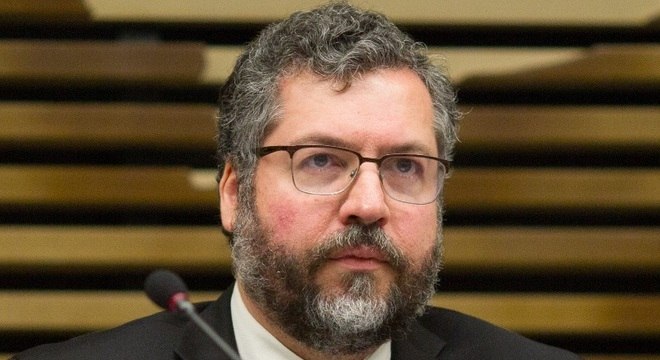
Igreja Universal fez muito pelos brasileiros, diz Ernesto Araújo 

Em agenda na Angola, chanceler concedeu entrevista a canal de notícias português. Ministro participou nesta sexta (13) de palestra sobre a política externa 

  • Do R7
     
  •  
  • 13/12/2019 - 14h25 (Atualizado em 13/12/2019 - 14h28) 
Ministro está desde o início da semana na África

Ministro está desde o início da semana na África

Suamy Beydoun/ AGIF/ Estadão Conteúdo - 08.04.019
A IURD (Igreja Universal do Reino de Deus) é uma entidade credível que teve impacto positivo na vida de milhões de brasileiros, defendeu Ernesto Araújo, o ministro de Relações Exteriores. Em entrevista à Lusa, da RTP, canal de notícias de Portugal, Araújo salientou que a experiência dos brasileiros com a IURD "é a melhor possível".
O ministro ainda afirmou que a igreja "fez a diferença para melhor" e é uma "entidade extremamente importante no Brasil", assim como em Angola, onde conta com cerca de 500 mil fiéis.
O ministro Ernesto Araújo está em Angola atualmente, depois de passar desde o início desta semana por Cabo Verde, Senegal e Nigéria, em agenda de encontros com autoridades locais e assinaturas de acordos. Nesta sexta-feira (13), ele participou de uma palestra sobre a "Nova Política Externa Brasileira".
às dezembro 17, 2019 Nenhum comentário:
Enviar por e-mailPostar no blog!Compartilhar no XCompartilhar no FacebookCompartilhar com o Pinterest

Brasil: fuga de cérebros revela oafundamento do futuro nacional

Pela primeira vez em nossa história, pessoas bem postas na vida, cientistas de alta qualificação, gente de recursos, cidadãos dotados de grande potencial e dispondo de recursos, materiais e científicos, resolvem deixar o Brasil definitivamente: cansaram de lutar, desistiram do país, não aguentam mais ver tanta burrice e estupidez no comando da nação.
Isso é gravíssimo!
Paulo Roberto de Almeida
Brasília, 17/12/2019

Brasil 

Novo fôlego da fuga de cérebros do país acende sinal de alerta

Violência, falta de verba para pesquisa e clima político explicam saída de profissionais qualificados

Por Anaïs Fernandes e Marcos de Moura e Souza — De São Paulo e de Belo Horizonte
16/12/2019 05h01  Atualizado há 23 horas


Foi uma espécie de tempestade perfeita que fez o economista e professor carioca Claudio Ferraz deixar o Rio de Janeiro em julho deste ano, com a família, para morar e trabalhar em Vancouver, no Canadá, sem data para voltar. Limitações para desenvolver pesquisa, polarização política, mudanças no governo e escalada da violência estão entre os motivos que levaram Ferraz a aceitar um posto de professor na University of British Columbia - além, claro, da possibilidade de intercâmbio profissional.
Ferraz, que tem artigos publicados em periódicos internacionais de prestígio como a “American Economic Review” e o “Quarterly Journal of Economics”, já havia recebido convites para sair do Brasil anteriormente, mas preferiu ficar. “Meu foco para analisar o mundo é através do Brasil, trabalhando com dados, analisando políticas públicas. Sempre tive a vantagem de estar perto de onde as coisas acontecem. E tem aquilo de fazer pesquisa com algum impacto no país, você sente que tem dimensão útil. Isso sempre me atraiu ao Brasil”, diz.
Seguir uma carreira acadêmica no Brasil é, segundo Ferraz, estar “sempre lutando contra uma série de barreiras”
O que aconteceu nos últimos anos que o levou, desta vez, a uma decisão diferente? “A primeira coisa foi a mudança política que começou no governo da Dilma [Rousseff], depois com o impeachment, que é essa crescente polarização e as várias consequências no dia a dia, desde brigas familiares até o estresse diário”, diz Ferraz.
A polarização foi seguida por um governo, sob a liderança de Jair Bolsonaro, que, na visão do economista, torna difícil acompanhar os jornais. “Ter que acordar todos os dias e ler o que tem sido feito em ambiente, educação, para quem trabalha com educação superior, pesquisa, é deprimente. O sentimento é de um país que está indo para baixo.”
A história de Ferraz é representativa de um fenômeno de captação pouco trivial, mas que se acentuou durante a última crise econômica e tem deixado especialistas em alerta a respeito de um novo fôlego neste ano: a fuga de cérebros, isto é, a saída definitiva do país de profissionais de alta qualificação.
Desde 2015, quando a economia mergulhou em recessão, o número de saídas definitivas do Brasil está acima dos 20 mil a cada ano. Antes disso, vinha subindo, mas não passava de 15 mil. Em 2018, 22,4 mil pessoas entregaram declarações de saída definitiva do Brasil, segundo apuração dos técnicos da Receita Federal até novembro deste ano - ainda não existem dados para 2019.
Há cinco anos que a fotógrafa Renata Saldanha, 40, e o marido Wanderley, 41, administrador, pensavam em se mudar para os Estados Unidos, apesar de viverem situação confortável no Brasil. O plano se acelerou após a adoção, em 2016, dos gêmeos Bernardo e Benício, hoje com três anos, mas a mudança para Weston, na Flórida, só se concretizou em julho de 2019. "O turbilhão político e econômico foi um fator que contou muito para a nossa decisão, mas teve peso igual buscar uma educação melhor e mais segurança para os nossos filhos", diz Renata. Eles gastaram cerca de US$ 130 mil para abrir um estúdio fotográfico na cidade. A mudança, considerando, por exemplo, compra de casa e carro, exigiu outros US$ 400 mil.
O casal se encaixa no perfil de migrantes observado por Vinícius Bicalho, advogado que trabalha em Orlando, na Flórida, assessorando brasileiros nos trâmites de vistos para os Estados Unidos. “São pessoas de sucesso e que se mudam do Brasil em razão, principalmente, da insegurança”, afirma. “São famílias de classe média e média alta, muitos profissionais liberais e empresários. O que eu vejo é que o Brasil vem perdendo um tipo de mão de obra importante.”
Daniel Rosenthal, que também presta assessoria a brasileiros que querem investir ou migrar para os EUA, tem a mesma leitura. Ele diz que, entre seus clientes, houve um aumento claro nos últimos anos de pessoas mais qualificadas. “Pessoas com mestrado, doutorado, com carreira sólida no Brasil, com filhos e que parecem que deixaram de acreditar no Brasil”, define. Sua carteira de clientes inclui executivos de multinacionais, engenheiros, profissionais da área médica e especialistas em comércio exterior.
A Flórida continua sendo o destino favorito dos brasileiros. O Estado da Califórnia e também a região de Boston, no Estado de Massachusetts, são outros dois destinos tradicionais.
Para quem tem dupla cidadania, como Renata, que detém passaporte italiano, uma alternativa tem sido requerer o visto para habitantes de países com os quais os EUA têm acordo comercial. Segundo Bicalho, o Congresso americano estuda incluir Portugal nessa lista, o que, aposta o advogado, aumentaria muito a aplicação de brasileiros.
Outro grupo busca vistos como o EB-5, que dá direito de residência permanente a estrangeiros que investirem no país. Dados do Departamento de Estado americano mostram que as concessões a brasileiros subiram para 230 de janeiro a outubro deste ano, ante igual período de 2018, uma alta de 58%. Em novembro, o investimento mínimo exigido passou de US$ 500 mil para US$ 900 mil.
Aumentou também a procura de brasileiros por vistos de emprego como o EB-2, para “trabalhadores com habilidades excepcionais”. “Ele tem crescido muito porque os requerimentos são mais atingíveis do que aqueles do EB-1”, diz Jorge Botrel, sócio da JBJ Partners, especializada em expatriação para os EUA. A concessão de EB-2 a titulares brasileiros e seus familiares saltou para 192 de janeiro a outubro deste ano, ante 44 em 2018. O EB-3, para “trabalhadores qualificados, profissionais e outros trabalhadores”, avançou 47%, de 129 para 190.
“Tem muita gente do Brasil que migra com ensino superior, mas vai atuar em parte administrativa de empresas ou eventualmente até em empregos que não são de ensino superior”, diz Ana Maria Carneiro, pesquisadora do Centro de Estudos de Políticas Públicas (NEPP) da Unicamp. Ela coordena um projeto de pesquisa, em fase inicial, para buscar compreender a trajetória de cientistas brasileiros radicados nos EUA. Segundo Carneiro, em comparação com outros países, como Índia e China, a diáspora de cérebros brasileira não é tão expressiva numericamente.
Luiz Davidovich, presidente da Academia Brasileira de Ciências (ABC) e professor da Escola de Física da Universidade Federal do Rio de Janeiro (UFRJ), observa que, no campo científico, a fuga de cérebros é uma questão mais qualitativa. Ele cita a saída recente de quatro jovens pesquisadores da UFRJ, que tinham liderança em suas áreas, para países como Chile, Holanda, Austrália e Portugal. “São jovens em idade muito boa para criar. Perder esse pessoal é ruim, prejudica o investimento que o Brasil faz nesses jovens, que agora vão usar suas capacidades para outros países. Pode ser que depois eles voltem, mas o prejuízo é grande no curto e médio prazos”, afirma.
Seguir uma carreira acadêmica no Brasil é, de acordo com Ferraz, estar “sempre lutando contra uma série de barreiras”. São dificuldades, por exemplo, de obtenção de recursos e de planejamento de longo prazo por parte das agências de fomento. ”Aqui [no Canadá] é o contrário, o gasto com pesquisa científica é significativo, entidades se dedicam a isso, a pesquisa está acontecendo, as pessoas estão produzindo”, afirma.
Como economista, Ferraz reconhece a necessidade de reforma fiscal do governo brasileiro e que “a bonança dos altos gastos em ciência acabou”. “Mas alinhado a isso vem o pouco caso do governo em relação à importância da ciência em todas as dimensões.”
às dezembro 17, 2019 Nenhum comentário:
Enviar por e-mailPostar no blog!Compartilhar no XCompartilhar no FacebookCompartilhar com o Pinterest

segunda-feira, 16 de dezembro de 2019

COP-25: frustrações e lacunas - Resultado; algumas declarações (FSP Veja)

Matéria da FSP (16/12/2019)

Encontro do clima fracassa com bloqueio do Brasil
A COP-25, conferência climática da ONU, terminou na madrugada de domingo (15) em Madri, sem alcançar seu principal objetivo: regulamentar o artigo 6 do Acordo de Paris, que trata sobre a criação de um mercado de carbono para incentivar ações de mitigação dos efeitos das mudanças climáticas. O Brasil foi o principal bloqueador do consenso. Embora o Itamaraty não tenha mudado os posicionamentos brasileiros, a mudança de tática de negociação imposta pelo comando do ministro do Meio Ambiente, Ricardo Salles, dificultou as negociações, segundo observadores e também diplomatas de delegações de países desenvolvidos. Chefe da delegação brasileira na COP, Salles usou as reuniões bilaterais com países desenvolvidos para pedir dinheiro ao Brasil, como contrapartida para desbloquear a negociação, conforme a Folha revelou na sexta-feira (13). Mensagens trocadas entre negociadores de diferentes países qualificaram a tática brasileira como uma ‘chantagem imatura’. O Brasil também se opôs, de forma inédita, à inclusão das conclusões científicas no texto final da conferência. O Brasil foi o único país a se opor à menção dos estudos, mas acabou cedendo ao final.

Notas da Veja (15/12/2019)

Carlos Rittl, secretário-executivo do Observatório do Clima:

Brasil foi à COP25 negociar mercado de carbono e saiu sem recursos, diz Carlos Rittl 
“O Brasil chegou aqui dizendo que viria buscar financiamento inclusive para as ações da Amazônia, as ações que não existem, a gente não tem plano, política em curso para a região, para proteger a floresta, combater o desmatamento. Saiu sem nenhum recurso. Enquanto isso temos a Indonésia, saiu com 1 bilhão de dólares, Colômbia, mais de 300 milhões de dólares, a partir de modelos inspirados no nosso Fundo Amazônia, ou seja, que está gerando resultados. Enquanto a gente não usa recursos que estão disponíveis e não contrata novos projetos, outros países estão seguindo o modelo do Brasil", afirmou em entrevista à GloboNews.

Fabiana Alves, especialista em clima do Greenpeace Brasil:

"A delegação brasileira estava em Madri, o ministro Ricardo Salles ficou as duas semanas, mas mostrou pouco conhecimento sobre o tema." 

Fernanda Viana de Carvalho, gerente de políticas de clima e energia, da WWF:

"O resultado da COP25 mostra uma lacuna entre os representantes do governo e a sociedade que eles deveriam representar. Uma parte dos países dos quais o Brasil é membro infelizmente trabalhou para minar o escopo e o poder dos textos que estão sendo negociados. Isso em um ano em que jovens e outras pessoas tomaram as ruas ao redor do mundo pedindo mais ação climática, quando o IPCC divulgou novos e alarmantes relatórios sobre o futuro, se não agirmos de modo rápido e ambicioso."
às dezembro 16, 2019 Um comentário:
Enviar por e-mailPostar no blog!Compartilhar no XCompartilhar no FacebookCompartilhar com o Pinterest
Marcadores: COP-25, frustrações

domingo, 15 de dezembro de 2019

Book reviews on environment and sustainability - Christopher Caldwell (WSJ)

From Saving the Earth to Ruling the World

The transformation of the environmental movement.

Christopher Caldwell
The Wall Street Journal, December 15, 2019

The year 1989 brought not only the end of the Cold War but also The End of Nature, one of the first books to address global warming, by the New Yorker journalist and climate activist Bill McKibben. Its title quickly crept into the folklore of environmentalism, overturning much inherited common sense about man’s relationship to nature. The legal philosopher Jedediah Purdy, for example, while not denying that there was such a thing as a “natural world,” nonetheless told an interviewer in 2015 that “‘nature’ no longer exists independent of human activity. From now on, the world we inhabit will be one that we have helped to make, and in ever-intensifying ways.”
Intellectuals have grown ever more confident that man is calling the shots. Some have taken to calling our epoch “the Anthropocene,” on the model of a geological epoch, like the Pleistocene or the Holocene. One is reminded of the wiseacre high-school-yearbook quotation that was popular in the middle of the last century:
God is dead.
     —Nietzsche
Nietzsche is dead.
             —God
For surely the relevant problem is not that man has done away with nature but that nature might do away with him. We have courted danger in so many ways, with pesticides and disease research, with genetic manipulation, cloning, and nuclear fission. It was quite natural that, once the Cold War’s distractions had passed, our relationship with nature would move to the center of our political life. Less expected was that the specific obsession that would seize the imagination of political activists was the weather.

A New Ideology
Worrisome rudiments had long been known. Carbon dioxide (CO2) absorbs heat. Swedish chemist Svante Arrhenius warned at the turn of the 20th century that, as coal and oil burned and CO2 accumulated, the atmosphere would warm. In 1958 the oceanographer Charles Keeling set up a U.S. Weather Bureau observatory in Mauna Loa to measure atmospheric CO2 concentrations, which have shown a steep and almost perfectly linear rise ever since. Measurements taken of the Arctic ice cap in the 1960s showed alarming melting. But it was only at the end of the 1980s that scientists’ data came to preoccupy politicians, bringing hearings by Democratic senators Tim Wirth of Colorado (who sought a “New Deal for global warming”) and Al Gore of Tennessee. In 1988 an Intergovernmental Panel on Climate Change (IPCC) was founded at the United Nations. Ever since, the IPCC, backed by a hard core of professors and political agitators worldwide, has been locked in battles with the American, Chinese, Indian, Russian, Brazilian, and other national governments over how serious a problem global warming is, what measures must be taken to correct it, and who must pay for them. A “Green New Deal,” going far beyond Wirth’s early proposals, may soon be part of the Democratic Party platform.
The novelist Nathaniel Rich, in a new history, Losing Earth, has focused on the late Cold War origins of climate consciousness. His claim is that we might have stopped global warming in its tracks back then, had we been bold enough to act. “[I]n the decade that ran between 1979 and 1989, we had an excellent chance,” he writes. “The world’s major powers came within several signatures of endorsing a binding framework to reduce carbon emissions…. [W]e came so close, as a civilization, to breaking our suicide pact with fossil fuels.”
No, we didn’t. We didn’t even come into the general neighborhood of doing that. A faithful reporter and a stylish writer, one with a gift for seeing complexity, Rich nonetheless has trouble thinking his way into the very different kind of environmentalism that existed before global warming became a global cause. But what did happen in those years is just as interesting, and visible at the margins of his book: a new internationalist ideology was born out of the ashes of the one that had just been vanquished.
The hero of Rich’s tale is Rafe Pomerance, grandson of the financier, philanthropist, and New Deal architect Maurice Wertheim, son of an important nuclear disarmament activist, and himself a welfare agitator until his awakening to environmentalism. That is fitting. Just as the “Christian Right” at the end of the 20th century was invigorated by imports from other, not conspicuously religious branches of the Republican Party, the climate movement is full of people from various non-meteorological walks of progressive life. To take just intellectuals, the anti-capitalist activist Naomi Klein writes increasingly about global warming. So do the prison reformer Michelle Alexander and the Indian novelist and literary radical Arundhati Roy. The novelists Jonathan Safran Foer, Amitav Ghosh, and (in France) Fred Vargas have all put their fiction careers on hold to write short, urgent non-fiction books about global warming—Ghosh, strangely, wondering why more people aren’t devoting their lives to writing about global warming. Rich’s own “climate fiction” (or cli-fi, as it is called) includes a love story set in a submerged Manhattan of the future.
It is fitting, too, that Pomerance should be not a scientist but a lobbyist. It is an article of faith today among those who deplore global warming that the debate on it is closed. They are right to say there is a scientific consensus around rising CO2 concentrations and increasing temperatures. But confidence in their own scientific rightness has made them science’s enemies as often as its friends. Many in the anti-global-warming movement are so confident about their science that they do not think they need scientists. They need uncomplicated activists, such as the Swedish high-schooler Greta Thunberg. “The climate crisis already has been solved,” the 16-year-old Thunberg said at a TED Talk in Stockholm this year. “We already have all the facts and solutions. All we have to do is wake up and change.”

Politics and Pollution
So it has been from the beginning. If there is a low point for environmentalists’ hopes in Rich’s book, it comes with the 500-page National Academy of Sciences report Changing Climate, commissioned by Jimmy Carter in 1979 but not published until 1983, well into the Reagan Administration. Rich describes the moment as “lethal” to the climate activists’ cause. The report gathered dozens of the nation’s most distinguished oceanographers (including Roger Revelle of U.C. San Diego), economists (including William Nordhaus of Yale), climatologists and mathematicians—and lined them up behind a painstakingly documented case for the existence of global warming. So where is Rich’s problem with that? Not so much in anything the report argued but rather in the reluctance of most of its authors, at the press conference rolling out the study and thereafter, either to hector the public or propose remedies. They were scientists, not politicians.
Conversely, the giddy high point in the 1980s climate struggle came when television networks alerted the public to the “hole in the ozone layer” over Antarctica in the course of a debate over aerosols and chlorofluorocarbons (CFCs). It was a poor description of ozone’s place in the atmosphere—“[f]or there was no hole,” as Rich puts it, “and there was no layer.” But it resulted in a such a broad nationwide unease (albeit more over skin cancer than global warming) that Ronald Reagan, theretofore a skeptic, called for a 95% reduction in CFCs and signed the 1987 Montreal Protocol to limit greenhouse gases. The Antarctic ozone “hole” is now shrinking rapidly. If climate change (the science) is an “inconvenient truth,” climate change (the cause) frequently advances through convenient half-truths and even falsehoods.
Much of Pomerance’s work was in goading the climatologists he worked with (for example, the NASA computer modeler Jim Hansen) to be more attentive to P.R., and to recognize that “[p]olitics offered freedoms that the rigors of the scientific ethic denied.” These freedoms have always lain temptingly within the grasp of scientists, but Rich misses the Faustian aspect to them. The authority of science wanes in equal measure as the political engagement of the individual scientist deepens. In recent years the same rules have applied, mutatis mutandis, to political journalism and journalists.
One of the reasons Rich believes the 1980s could have been a watershed moment for climate activists is that many industry-affiliated bodies had shown themselves ready to investigate and solve ecological problems. In 1968, the American Petroleum Institute (API) commissioned a study from the Stanford Research Institute—“Sources, Abundance and Fate of Gaseous Atmospheric Pollutants”—in which the authors alluded to the possibility of “significant temperature changes” before 2000. Temperatures did indeed rise by just under 1°F over that period, according to NASA. Rich is not alone among climate-change activists in treating this API report as a “smoking gun”—evidence of oil-industry foreknowledge, and thus culpability. But to examine the original document, which is available online, is to see that it is no such thing. The report is tentative and deferential, citing Revelle’s warming theories, yes, but also research that warned of cooling.
The API did call it “ironic” that so much attention was then being paid to incidents of pollution here and there, so little to the overarching climate. They were right about this: in the early 1980s only seven of the 13,000 employees at the Environmental Protection Agency worked on climate. Yet you can see why an “abatement” approach, a mix of public-sector regulation and private-sector offshoring of dirty industries, was attractive in the 1980s. It was producing extraordinary results: the Charles River in Boston, so dirty at the start of the Reagan Administration that university rowing crews were required to get tetanus shots if they capsized, is swimmable a generation later. Today, wolves have returned to the woods around Washington, D.C., and bald eagles to the coast of Maine. That is one reason why the country was not clamoring for a climate-change program at the end of the 1980s. If the problem was a form of “pollution,” then why risk upsetting the economy to fix a situation that was visibly improving?
There is no inherent reason why a scientific question such as climate should divide one political party from another. There is no Democratic and no Republican position on the temperature at which water boils. If today Republicans welcome climate skeptics more than Democrats do, their differences are probably over policy, not science. Just under half of Republicans agree that there is a scientific consensus that global warming is happening.
This statistic infuriates Rich. It ought to be unanimous, as he sees it, and the 1980s mark the moment when Republicans descended from the reasonableness of those API studies to Reagan’s “thuggish” deregulation, on their way to the “mustache-twirling depravity” of today’s party. George H.W. Bush’s chief of staff, John Sununu, whom Rich accuses of politicizing science, argues that no climate-change agreement was ever a possibility back then: “It couldn’t have happened,” he tells Rich in an interview,” because the leaders in the world at that time were all looking to seem like they were supporting the policy without having to make hard commitments that would cost their nations serious resources.”
Rich does not believe him, but Sununu is correct. When Bill Clinton signed the Kyoto Protocol in 1997, the Senate, by a vote of 95-0, refused even to consider ratifying it. Barack Obama chose a different route after the 2015 United Nations Climate Change Conference in Paris. He ignored the constitutional requirement for Senate ratification altogether. Instead, Obama “ratified” the agreements reached in Paris by signing a personal “deal” with Chinese Premier Xi Jinping on a visit to Hangzhou in September 2016, promising (promising whom?) to “accept the said agreement and every article and clause thereof on behalf of the United States of America.” That bit of legerdemain did not make the Paris accords the law of the land. It did make them government policy—albeit for a much shorter while than had been anticipated in the autumn of 2016.
Rich ends his book on a “woke” note, if we can use that word to mean orotund, incendiary, and blind to any possibility of good faith in those who disagree with him. He accuses any politician who so much as claims to be unsure about climate change of “crimes against humanity,” the offense that was established as a grounds for hanging Nazis at the Nuremberg trials. “There will eventually emerge a vigorous, populist campaign to hold to account those who did the most to block climate policy over the last forty years,” he writes, and today’s lawsuits “may seem tentative compared with the vengeance to come.” At this point, the reader who has been nodding off will snap alert and ask: am I reading too much into this, or is he proposing to string a few of these people up?

From Ecology to Environmentalism
Rich, perhaps without intending to, charts a shift of paradigms— from the “ecological” perspective common to hippies and other nature-lovers at the start of the 1980s to today’s hard, “environmentalist” perspective, which is in some ways diametrically opposed to it. In the 1960s and ’70s, almost everyone had thought as an ecologist. It was understood that problems were accumulating in the “outdoors”: smog, junk floating down rivers, broken glass. A frequently aired public-service ad showed an Indian in tribal dress paddling his canoe out of a primeval forest, beaching it on a pile of garbage, then having a paper bag full of fast food heaved onto his moccasins from the window of a speeding car. The old “ecological” paradigm conformed to a long Western ethical and intellectual tradition. Its manifesto, to the extent it had one, was Small Is Beautiful: Economics as if People Mattered (1973), a collection of essays by E.F. “Fritz” Schumacher, refugee from Hitler, head of planning at the British National Coal Board, and brother-in-law of the theoretical physicist Werner Heisenberg. Schumacher’s message was simple: The earth’s resources are limited and, in many cases, unrenewable. We are wasting them.
The countercultural theorist Theodore Roszak placed Schumacher alongside Tolstoy, Gandhi, William Morris, and Lewis Mumford in the tradition of “anarchism, if we mean by that much-abused word a libertarian political economy that distinguishes itself from orthodox socialism and capitalism by insisting that the scale of organization must be treated as an independent and primary problem.” So while Schumacher was a kindred spirit to this hero of the hippie movement, he was also someone whose vision could inspire anyone who thought about life in a traditional or religious way. It might be necessary, Schumacher argued, to take a step back and reconsider whether our position is sufficiently respectful of nature, or sufficiently respectful of God. Our problem was that we were “inclined to treat as valueless everything that we have not made ourselves.”
This was particularly the case with fossil fuels. As people in the 21st century would, Schumacher worried that we were using them too much—although part of his worry was that we were using them up. Modern man, like a dissolute heir, was burning through his inheritance, treating his capital as if it were income. Schumacher noted especially that we were burning through “a certain kind of irreplaceable capital asset, the tolerance margins which benign nature always provides.” While this perspective vindicates the global-warming concerns of our time, it also repudiates our time’s simple solutions. Because if Schumacher is right that fossil fuels are capital, then once we have run through them, we will have run through them. Abandoning fossil fuels will not necessarily mean carrying on modern life in a wiser, saner way. It might mean giving up modern life altogether. We will either find another source of stored energy, such as nuclear power, or we will revert more or less to the way we got energy before: water, and the labor of animals, including ourselves.
Schumacher’s “ecology” was a system that ordinary citizens could understand by looking at it. Ecological damage consisted of things that citizens could pick up and filter out. People could thus judge the severity of the problem of pollution and instruct their elected representatives on how much they wanted done to fix it. The evidence from history is that they wanted quite a lot. That is why you can swim in the Charles today. The “ecological” understanding of nature and what it requires from us is compatible with democracy.
Modern “environmental” climate activism is less obviously so. Its science is mysterious to people, and science sometimes seems far from its main focus. To read almost any of the contemporary books that try to give an overview of climate change is to be struck by their non-scientific obsession with “capitalism.” Princeton English professor Roy Scranton, in Learning to Die in the Anthropocene (2015), describes the environmental crisis as “the collapse of carbon-fueled capitalism” and warns that “global decarbonization is effectively irreconcilable with global capitalism.” Similarly, the Harvard historian of science, Naomi Oreskes, co-authored a science-fiction dystopia about climate change, The Collapse of Western Civilization (2014). She and Erik M. Conway of the California Institute of Technology cast the enemy as the “carbon-combustion complex,” backed not just by energy companies but also by those who profit from them (advertisers, public relations, marketing firms). As Oreskes and Conway envision the future, only China will succeed at managing climate change, owing perhaps to a sensible program of environmental regulation under Communism, and vindicating “the necessity of centralized government.”
These books are cult favorites among global-warming activists. The authors may be right that non-capitalist countries have a better chance of addressing climate change. But if so that is not because non-capitalist economic systems are better or cleaner: during the Cold War, Communist East Germany was the most polluted country on the European continent. The advantage of non-capitalist countries is rather in their greater willingness to command and interfere. As for the carbon complex, any industry that controls a dominant energy source in a free economy risks turning into a “complex.” If all our cars were solar, then advertisers, public relations companies, and marketing firms would shill for sunshine just as ardently as they now do for oil. Industry lobbyists and other insiders will fight for special favors, too. That is one of the lessons of the Obama stimulus package of 2009. It was notoriously a boon to the now-bankrupt California solar-cell maker Solyndra. Plenty of extravagantly expensive products appeared on the scene, like the solar-powered “smart” trash cans made by Bigbelly, which cost thousands of dollars apiece. (Eighty of them were scheduled for installation in San Francisco last fall.)
If Schumacher’s way of fighting pollution follows the pattern of a religion, Oreskes’s follows that of an ideology. It proposes not that we hesitate, or doubt ourselves and our present structures, but that we work through their contradictions to some new synthesis, as Karl Marx envisioned. Our overuse of carbon (which it requires esoteric expertise to quantify) calls for a new economic order (which it will require esoteric expertise to design). The case does not lack for supporting evidence. With a world population headed towards 10 billion, many of them in places with a precarious food supply, we might not have the luxury of a global economy subject to great fluctuation. But Oreskes and Conway have an additional gripe. Like Rich, they are frustrated that so many scientists resist being politicized. The scientists have been “hamstrung by their own cultural practices,” they write, “unable…to act upon what they knew. Knowledge did not translate into power.” More power to experts: perhaps this has been the real climate agenda all along, whether the world is ending or not.

First World Problems
“Today,” writes Scranton, “global power is in the hands of a tiny minority, and the system they preside over threatens to destroy us all.” However true that might be as a description of economic privilege, it is diametrically wrong as a description of the politics of global warming. The problem is rather that access to (carbon) power has been democratized and decolonized, and that coal mining, traffic jams, and air-conditioned malls are now widespread in the most teeming parts of what used to be called the Third World. China accounts for 29% of global carbon emissions, the U.S. for 14%, Britain and other major European countries for a mere percent or two each.
If the United States still dominated the consumption of fossil fuels, we could make a dent in the world’s carbon footprint by setting off on a jag of self-abnegation, however out of the national character such an impulse might be. But as Americans were aspiring to clean energy, the rest of the world began to aspire to the lifestyle that we had acquired (and maintain) through carbon energy. Our old profligacy had passed almost unnoticed as long as there were only a few tens of millions of us living this way; but as Asia and Africa caught up, the whole carbon game threatened to become unsustainable.
We have little to do for poor countries except lecture them. Oreskes’s novel records that “a different version of denial emerged in non-industrialized nations, which argued that the threat of climate change was being used to prevent their development.” Is this really so unreasonable? The average Indian observing this Western paroxysm of climate moralism has reason to be suspicious about its timing. And since global-warming ideology always arrives with a spring-loaded, fully elaborated governing and regulatory agenda, “denial” might be the wrong word for what is more accurately described as a reluctance to pay with Eastern prosperity to solve a Western problem. Americans and Europeans not of the governing classes might have similar misgivings. What they are “denying” is not reality but the will of their rulers.
Solving the problem of global warming in the manner activists desire would require not only that we put our own moral house in order but also that we threaten those countries that insist on, say, burning coal to achieve the same lifestyle we already have. It would mean the equivalent of a non-proliferation treaty, to deny not weaponry but comfort and sustenance. (Although the weaponry would be denied, too, because to de-carbonize a society is essentially to disarm it.) Short of war, or statesmanship of the least democratic kind, it is hard to see how the anti-warming agenda can be carried out. Today’s climate politics are incompatible not just with this or that state but with the continuation of the state system in general.
At root, climate change is a Malthusian problem. The Canadian energy scientist Vaclav Smil said, in a recent New York magazine interview with the climate author David Wallace-Wells, that the depopulation of advanced countries might be a plus for the earth’s future. “Partially there is a ‘hope,’ I would say, in the sense that we are dying out,” Smil said. “As we have seen over the past three decades, once you get to 1.3 or 1.4 [children per woman per lifetime, the rate in many countries of Europe], there’s no…chance in hell that it could ever recover. Japan is losing now half a million people every year.” But this is a “hope” only so long as the green space freed up by depopulation does not get filled with migrants. If it does, then the level of economic sophistication will likely fall, and energy efficiency will fall along with it. More, not less, energy use will be the result. Most solutions to climate change are of this nature—miscalculation or poor execution can exacerbate the problem.
“As our technology grew more sophisticated,” Nathaniel Rich writes, “our behavior grew more childish.” It is a true and profound insight. Climate change is one of a family of crises of modernity involving Promethean hubris and unfunded externalities. It connects to all kinds of conflicts between nature and culture, or between barbarism and civilization, or between (to use Bertrand Russell’s dialectic) freedom and organization. Naomi Oreskes and Erik Conway speak for many climate-change activists when they imagine that future generations will marvel at “how we—the children of the Enlightenment—failed to act on robust information about climate change.” They probably won’t marvel at it so much if they recall that the Enlightenment has many aspects. It is the source of certain values, the source of a new type of domination by experts, and the source of energy-extracting technologies that have brought wealth beyond man’s wildest dreams. Like many problems the Enlightenment gets called in to solve, this is one of its own making.

Christopher Caldwell is a contributing editor of the Claremont Review of Books and the author of the forthcoming The Age of Entitlement: America Since the Sixties (Simon & Schuster).
às dezembro 15, 2019 Nenhum comentário:
Enviar por e-mailPostar no blog!Compartilhar no XCompartilhar no FacebookCompartilhar com o Pinterest
Marcadores: Book reviews, Christopher Caldwell, Claremont Review of Books, environment, sustainability, The Wall Street journal
Postagens mais recentes Postagens mais antigas Página inicial
Assinar: Comentários (Atom)

Postagem em destaque

Livro Marxismo e Socialismo finalmente disponível - Paulo Roberto de Almeida

Meu mais recente livro – que não tem nada a ver com o governo atual ou com sua diplomacia esquizofrênica, já vou logo avisando – ficou final...

  • 673) A formacao e a carreira do diplomata
    Uma preparação de longo curso e uma vida nômade Paulo Roberto de Almeida A carreira diplomática tem atraído número crescente de jovens, em ...
  • 561) Informações sobre a carreira diplomatica, III: desoficiosas...
    FAQ do Candidato a Diplomata por Renato Domith Godinho TEMAS: Concurso do Instituto Rio Branco, Itamaraty, Carreira Diplomática, MRE, Diplom...
  • Países de Maior Acesso aos textos PRA em Academia.edu - Paulo Roberto de Almeida
    Países de Maior Acesso aos textos PRA em Academia.edu (apenas os superiores a 100 acessos) Compilação Paulo Roberto de Almeida (15/12/2025) ...
  • Mercado Comum da Guerra? Acordo Militar EUA-Paraguai
    Mercado Comum da Guerra? O Mercosul deveria ser, em princípio, uma zona de livre comércio e também uma zona de paz, entre seus próprios memb...
  • Um prefácio meu sobre um livro de Dennys Xavier apresentando a obra de Thomas Sowell (2020) - Paulo Roberto de Almeida
    Reproduzo novamente uma postagem minha de 2020, quando foi publicado o livro de Dennys Xavier sobre Thomas Sowell   quarta-feira, 4 de março...
  • 'Memórias', do embaixador Marcos Azambuja, é uma aula de diplomacia - Elio Gaspari (FSP)
      Itamaraty   'Memórias', do embaixador Marcos Azambuja, é uma aula de diplomacia Embaixador foi um grande contador de histórias, ...
  • Las nuevas ultraderechas conservadoras y reaccionarias - José Antonio Sanahuja Perales
      Desde el post de José Antonio Sanahuja Persles (Linkedin) Con Camilo López Burian, de la Universidad de la República, estudiamos el ascens...
  • Israel Products in India: A complete list
      Israel Products in India: Check the Complete list of Israeli Brands! Several Israeli companies have established themselves in the Indian m...
  • Conversando com os Brics? Talvez, mas sem deixar de pensar… - Paulo Roberto de Almeida
     O Brics vai de vento em popa, ao que parece. Como eu nunca fui de tomar as coisas pelo seu valor de face, nunca deixei de expressar meu pen...

O que é este blog?

Este blog trata basicamente de ideias, se possível inteligentes, para pessoas inteligentes. Ele também se ocupa de ideias aplicadas à política, em especial à política econômica. Ele constitui uma tentativa de manter um pensamento crítico e independente sobre livros, sobre questões culturais em geral, focando numa discussão bem informada sobre temas de relações internacionais e de política externa do Brasil. Meus livros podem ser vistos nas páginas da Amazon. Outras opiniões rápidas podem ser encontradas no Facebook ou no Threads. Grande parte de meus ensaios e artigos, inclusive livros inteiros, estão disponíveis em Academia.edu: https://unb.academia.edu/PauloRobertodeAlmeida

Site pessoal: www.pralmeida.net.

Pesquisar este blog

Quem sou eu: Paulo Roberto de Almeida

Minha foto
Paulo Roberto de Almeida
Brasília, DF, Brazil
Ver meu perfil completo

Últimas Postagens:

  • ▼  2025 (1528)
    • ▼  dezembro (113)
      • Revista Será?: edição de 20 de dezembro de 2025: O...
      • Três impérios, dois imperadores e um candidato ao ...
      • Textos sobre guerra e paz, numa perspectiva histór...
      • "No One is Safe" Ukraine Strikes Putin's Palace as...
      • “A Paz como Projeto e Potência”, 4º seminário do C...
      • Madame Inteligência Artificial me corrige mais uma...
      • A paz como projeto e potência, com André Magnelli ...
      • Do que o chanceler acidental escapou: "1ª Turma do...
      • Quando a desgraça é bem-vinda… - Paulo Roberto de ...
      • The Berlin Leaders' Statement on Ukraine (December...
      • Book by Dani Rodrik: "Shared Prosperity in a Fract...
      • Efeitos a longo prazo do colonialismo português na...
      • Política externa e diplomacia do Brasil: convergê...
      • UM GRITO PELA DEMOCRACIA!, Manifesto pela Democrac...
      • Trabalhos selecionados sobre temas de paz e segura...
      • O quadro da produtividade latino-americana - Estud...
      • Las nuevas ultraderechas conservadoras y reacciona...
      • Conversando com os Brics? Talvez, mas sem deixar d...
      • Como diplomata, confesso que tenho vergonha da pol...
      • Uma paz não kantiana?: Sobre a paz e a guerra na e...
      • Mercado Comum da Guerra? Acordo Militar EUA-Paraguai
      • RECHERCHES INTERNATIONALES, FISSURES DANS L’ATLANT...
      • A Paz como Projeto e Potência! - Ciclo de Humanida...
      • Uma paz não-kantiana? Sobre a paz e a guerra na er...
      • FORÇA, MINISTRO FACHIN EDITORIAL DO ESTADÃO, 15/1...
      • Países que mais acessaram os trabalhos PRA em Aca...
      • Países de Maior Acesso aos textos PRA em Academia....
      • A luta contra a corrupção na China: algo como os 1...
      • O Decálogo dos Cansados - Restaurante Pecorino, Br...
      • O grande historiador do totalitarismo assassino do...
      • Um prefácio meu sobre um livro de Dennys Xavier ap...
      • Um debate sobre a política externa brasileira a pr...
      • O filósofo francês Pascal Bruckner recebe o prêmio...
      • Ucrânia encontrou tesouro contra a Rússia no lugar...
      • 'Memórias', do embaixador Marcos Azambuja, é uma a...
      • Com disputa entre Poderes, Brasil vive baderna ins...
      • The speed of the Russian offensive in Ukraine is t...
      • Russia Burns, under Kyiv missiles and drones - The...
      • A nova Questão Alemã, submetida à Madame Inteligên...
      • O fim e o começo de uma época: outra vez a Alemanh...
      • A inteligência da Ucrânia contra a violência estúp...
      • Conversas sobre os Brics? - Coord. emb. José Vicen...
      • Numéro special de Recherches internationales, cons...
      • A New Cold War? Worse than that - McFaul
      • George Orwell on Nationalism (1945)
      • La tradición liberal venezolana Gabriela Calderón ...
      • O pequeno manual prática da decadência, examinado ...
      • Pequeno manual prático da decadência (recomendável...
      • Pequeno manual prático da decadência (recomendável...
      • Rato de Biblioteca: memórias intelectuais de um di...
      • Putin Eradicates Officials as FSB CANNIBALIZES Kre...
      • Trump: the end of Freedom in the U.S. and the Betr...
      • A estratégia de Trump para o ‘quintal’ do Hemisfér...
      • Vergonha diplomática: governo Lula se recusa a con...
      • A resistência intelectual contra o bolsonarismo di...
      • CREDN repudia abstenção do Brasil sobre devolução ...
      • Minha luta contra o bolsonarismo diplomático conti...
      • Trabalhos mais acessados PRA em Academia.edu (acim...
      • “A Diplomacia Brasileira na Elaboração do Direito ...
      • Política Externa e interesse nacional: três versõe...
      • A internacional dos poderes totalitários no mundo:...
      • Simplifique, simplifique, fica melhor! Nem sempre…...
      • A Europa unida em face da dominação de dois grande...
      • Ironias da história de vida do chanceler acidental...
      • Ucrânia: tempos decisivos numa guerra que não term...
      • A estratégia dos EUA e a Doutrina Monroe - Rubens ...
      • A “doutrina Trump” e o Brasil - Paulo Roberto de A...
      • New Strategic Security Trumpian doctrine and the S...
      • The National Security Strategy of the Trump Admini...
      • Doutrina Trump e a nova desordem global Editorial...
      • Brazilian Foreign Policy beyond Itamaraty’s Insula...
      • ¿Giro a la (extrema) derecha en América latina? - ...
      • O marxismo confuciano de Xi Jinping - Xulio Rios (...
      • Integração Regional e as perspectivas do Mercosul ...
      • A Short History on a K-like style - PRA, seguido d...
      • A Paz como Projeto e Potência - Paulo Roberto de A...
      • “Shame on America”, from Prime Minister of Poland ...
      • Banks of China in Brazil and Brazilian Banks The c...
      • A Short History on a K-like style - By PRA (adora ...
      • Putin deveria ter aceitado o acordo de Trump. Agor...
      • Correspondência secreta de Putin a Trump neste sáb...
      • Could Brazil’s mega-election herald the end of pol...
      • Minas e as formigas - Ary Quintella, sobre o livro...
      • Opinion - Sadly, Trump is right on Ukraine - Alan ...
      • Russia’s Reign of Terror: The Five Worst Atrocitie...
      • O mundo em três tempos: 1925, 1945 e 2025 – Paulo ...
      • O multilateralismo vazio da diplomacia brasileira,...
      • Bertrand Arnaud: avaliação sumária da Estratégia d...
      • A estratégia de Trump para o Hemisfério Ocidental ...
      • Trabalhos publicados por Paulo Roberto de Almeida ...
      • Uma estratégia destinada ao fracasso: a de Trump p...
      • Trajetórias quase Toynbeeanas - Paulo Roberto de A...
      • Trump está recuando os EUA cem anos atrás com sua ...
      • November: more than 81,000 Russian targets DESTROY...
      • Minhas impressões sobre Paulo Guedes e Olavo de Ca...
      • A. Western Hemisphere: The Trump Corollary to the ...
      • O mundo em três tempos: 1925, 1945, 2025 - Paulo R...
      • Revista Será?, o melhor semanário da imprensa inov...
      • Diplomacia telefônica - Rubens Barbosa (Editorial ...
      • ONU: Brasil se abstém sobre volta de crianças sequ...
    • ►  novembro (120)
    • ►  outubro (107)
    • ►  setembro (105)
    • ►  agosto (107)
    • ►  julho (150)
    • ►  junho (87)
    • ►  maio (144)
    • ►  abril (159)
    • ►  março (168)
    • ►  fevereiro (134)
    • ►  janeiro (134)
  • ►  2024 (1681)
    • ►  dezembro (106)
    • ►  novembro (154)
    • ►  outubro (93)
    • ►  setembro (126)
    • ►  agosto (128)
    • ►  julho (103)
    • ►  junho (178)
    • ►  maio (172)
    • ►  abril (186)
    • ►  março (184)
    • ►  fevereiro (132)
    • ►  janeiro (119)
  • ►  2023 (1268)
    • ►  dezembro (119)
    • ►  novembro (92)
    • ►  outubro (89)
    • ►  setembro (105)
    • ►  agosto (93)
    • ►  julho (92)
    • ►  junho (97)
    • ►  maio (118)
    • ►  abril (139)
    • ►  março (119)
    • ►  fevereiro (96)
    • ►  janeiro (109)
  • ►  2022 (1317)
    • ►  dezembro (107)
    • ►  novembro (104)
    • ►  outubro (121)
    • ►  setembro (94)
    • ►  agosto (119)
    • ►  julho (121)
    • ►  junho (132)
    • ►  maio (104)
    • ►  abril (100)
    • ►  março (122)
    • ►  fevereiro (116)
    • ►  janeiro (77)
  • ►  2021 (1250)
    • ►  dezembro (106)
    • ►  novembro (107)
    • ►  outubro (75)
    • ►  setembro (85)
    • ►  agosto (76)
    • ►  julho (88)
    • ►  junho (96)
    • ►  maio (134)
    • ►  abril (139)
    • ►  março (116)
    • ►  fevereiro (87)
    • ►  janeiro (141)
  • ►  2020 (1711)
    • ►  dezembro (162)
    • ►  novembro (165)
    • ►  outubro (147)
    • ►  setembro (128)
    • ►  agosto (129)
    • ►  julho (101)
    • ►  junho (141)
    • ►  maio (171)
    • ►  abril (148)
    • ►  março (138)
    • ►  fevereiro (150)
    • ►  janeiro (131)
  • ►  2019 (1624)
    • ►  dezembro (123)
    • ►  novembro (107)
    • ►  outubro (124)
    • ►  setembro (90)
    • ►  agosto (147)
    • ►  julho (129)
    • ►  junho (176)
    • ►  maio (125)
    • ►  abril (138)
    • ►  março (189)
    • ►  fevereiro (134)
    • ►  janeiro (142)
  • ►  2018 (1134)
    • ►  dezembro (126)
    • ►  novembro (111)
    • ►  outubro (101)
    • ►  setembro (104)
    • ►  agosto (91)
    • ►  julho (102)
    • ►  junho (77)
    • ►  maio (88)
    • ►  abril (80)
    • ►  março (100)
    • ►  fevereiro (89)
    • ►  janeiro (65)
  • ►  2017 (937)
    • ►  dezembro (79)
    • ►  novembro (94)
    • ►  outubro (118)
    • ►  setembro (93)
    • ►  agosto (127)
    • ►  julho (77)
    • ►  junho (52)
    • ►  maio (71)
    • ►  abril (59)
    • ►  março (58)
    • ►  fevereiro (52)
    • ►  janeiro (57)
  • ►  2016 (1203)
    • ►  dezembro (76)
    • ►  novembro (64)
    • ►  outubro (111)
    • ►  setembro (105)
    • ►  agosto (109)
    • ►  julho (88)
    • ►  junho (108)
    • ►  maio (120)
    • ►  abril (123)
    • ►  março (109)
    • ►  fevereiro (86)
    • ►  janeiro (104)
  • ►  2015 (1479)
    • ►  dezembro (118)
    • ►  novembro (93)
    • ►  outubro (132)
    • ►  setembro (114)
    • ►  agosto (107)
    • ►  julho (110)
    • ►  junho (81)
    • ►  maio (103)
    • ►  abril (136)
    • ►  março (147)
    • ►  fevereiro (194)
    • ►  janeiro (144)
  • ►  2014 (3131)
    • ►  dezembro (146)
    • ►  novembro (144)
    • ►  outubro (266)
    • ►  setembro (234)
    • ►  agosto (231)
    • ►  julho (287)
    • ►  junho (339)
    • ►  maio (337)
    • ►  abril (234)
    • ►  março (308)
    • ►  fevereiro (256)
    • ►  janeiro (349)
  • ►  2013 (3297)
    • ►  dezembro (337)
    • ►  novembro (189)
    • ►  outubro (231)
    • ►  setembro (296)
    • ►  agosto (330)
    • ►  julho (322)
    • ►  junho (351)
    • ►  maio (324)
    • ►  abril (293)
    • ►  março (204)
    • ►  fevereiro (282)
    • ►  janeiro (138)
  • ►  2012 (2221)
    • ►  dezembro (186)
    • ►  novembro (162)
    • ►  outubro (152)
    • ►  setembro (172)
    • ►  agosto (174)
    • ►  julho (183)
    • ►  junho (151)
    • ►  maio (170)
    • ►  abril (217)
    • ►  março (205)
    • ►  fevereiro (226)
    • ►  janeiro (223)
  • ►  2011 (2416)
    • ►  dezembro (232)
    • ►  novembro (195)
    • ►  outubro (250)
    • ►  setembro (261)
    • ►  agosto (212)
    • ►  julho (196)
    • ►  junho (188)
    • ►  maio (230)
    • ►  abril (181)
    • ►  março (137)
    • ►  fevereiro (168)
    • ►  janeiro (166)
  • ►  2010 (2336)
    • ►  dezembro (149)
    • ►  novembro (148)
    • ►  outubro (196)
    • ►  setembro (240)
    • ►  agosto (270)
    • ►  julho (235)
    • ►  junho (215)
    • ►  maio (262)
    • ►  abril (189)
    • ►  março (98)
    • ►  fevereiro (152)
    • ►  janeiro (182)
  • ►  2009 (648)
    • ►  dezembro (80)
    • ►  novembro (88)
    • ►  outubro (65)
    • ►  setembro (70)
    • ►  agosto (82)
    • ►  julho (69)
    • ►  junho (53)
    • ►  maio (40)
    • ►  abril (37)
    • ►  março (22)
    • ►  fevereiro (11)
    • ►  janeiro (31)
  • ►  2008 (162)
    • ►  dezembro (33)
    • ►  novembro (19)
    • ►  outubro (12)
    • ►  setembro (6)
    • ►  agosto (6)
    • ►  julho (9)
    • ►  junho (25)
    • ►  maio (11)
    • ►  abril (7)
    • ►  março (10)
    • ►  fevereiro (10)
    • ►  janeiro (14)
  • ►  2007 (146)
    • ►  dezembro (11)
    • ►  novembro (19)
    • ►  outubro (18)
    • ►  setembro (6)
    • ►  agosto (12)
    • ►  julho (8)
    • ►  junho (22)
    • ►  maio (4)
    • ►  abril (9)
    • ►  março (7)
    • ►  fevereiro (17)
    • ►  janeiro (13)
  • ►  2006 (193)
    • ►  dezembro (38)
    • ►  novembro (9)
    • ►  outubro (7)
    • ►  setembro (10)
    • ►  agosto (9)
    • ►  julho (67)
    • ►  junho (53)

Vidas Paralelas (2025)

Vidas Paralelas (2025)
Rubens Ricupero e Celso Lafer nas relações internacionais do Brasil

Intelectuais na Diplomacia Brasileira

Intelectuais na Diplomacia Brasileira
a cultura a serviço da nação

Construtores da nação

Construtores da nação
Projetos para o Brasil, de Cairu a Merquior

Apogeu e demolição da política externa

Apogeu e demolição da política externa
Itinerários da diplomacia brasileira

O Itamaraty Sequestrado

O Itamaraty Sequestrado
a destruição da diplomacia pelo bolsolavismo, 2018-2021

A ordem econômica mundial

A ordem econômica mundial
e a América Latina (2020)

Miséria da diplomacia (2019)

Miséria da diplomacia (2019)
A destruição da inteligência no Itamaraty

Contra a Corrente: ensaios contrarianistas

Contra a Corrente: ensaios contrarianistas
A grande Ilusão do BRICS e o universo paralelo da diplomacia brasileira (2022)

O Homem que Pensou o Brasil

O Homem que Pensou o Brasil
Roberto Campos: trajetória intelectual

Formação da Diplomacia Econômica no Brasil

Formação da Diplomacia Econômica no Brasil
as relações econômicas internacionais no Império

Pesquisar este blog

Obras do autor:

Manifesto Globalista
Plataforma Academia.edu
Nunca Antes na Diplomacia...
Prata da Casa: os livros dos diplomatas
Volta ao Mundo em 25 Ensaios
Paralelos com o Meridiano 47
O Panorama visto em Mundorama
Rompendo Fronteiras
Codex Diplomaticus Brasiliensis
Polindo a Prata da Casa
Livros individuais PRA
Livros editados por PRA
Colaboração a livros coletivos
Capítulos de livros publicados
Teses e dissertações
Artigos em periódicos
Resenhas de livros
Colaborações regulares
Videos no YouTube

Paulo Roberto e Carmen Lícia

Paulo Roberto e Carmen Lícia
No festival de cinema de Gramado, 2016

PRA on Academia.edu

  • PRA on Academia.edu

PRA on Research Gate

  • Paulo Roberto de Almeida on ResearchGate

Works PRA

  • Carreira na diplomacia
  • Iluminuras: minha vida com os livros
  • Manifesto Globalista
  • Sun Tzu para Diplomatas: uma estratégia
  • Entrevista ao Brasil Paralelo
  • Dez grandes derrotados da nossa história
  • Dez obras para entender o Brasil
  • O lulopetismo diplomático
  • Teoria geral do lulopetismo
  • The Great Destruction in Brazil
  • Lista de trabalhos originais
  • Lista de trabalhos publicados
  • Paulo Roberto de Almeida
  • Works in English, French, Spanish

Outros blogs do autor

  • Eleições presidenciais 2018
  • Academia
  • Blog PRA
  • Book Reviews
  • Cousas Diplomaticas
  • DiplomataZ
  • Diplomatizando
  • Diplomatizzando
  • Eleições presidenciais 2006
  • Eleições presidenciais 2010
  • Meu primeiro blog
  • Meu segundo blog
  • Meu terceiro blog
  • Shanghai Express
  • Textos selecionados
  • Vivendo com os livros

Total de visualizações de página

Inscrever-se

Postagens
Atom
Postagens
Comentários
Atom
Comentários

Détente...

Détente...
Carmen Lícia e Paulo Roberto

Links

  • O Antagonista
  • Academia.edu/PRA
  • Mercado Popular
  • Mão Visivel
  • De Gustibus Non Est Disputandum
  • Mansueto Almeida
  • Orlando Tambosi - SC
  • Carmen Lícia Palazzo - Site
  • Carmen Licia Blogspot
  • Foreign Policy
  • Instituto Millenium
  • O Estado de Sao Paulo

Uma reflexão...

Recomendações aos cientistas, Karl Popper:
Extratos (adaptados) de Ciência: problemas, objetivos e responsabilidades (Popper falando a biólogos, em 1963, em plena Guerra Fria):
"A tarefa mais importante de um cientista é certamente contribuir para o avanço de sua área de conhecimento. A segunda tarefa mais importante é escapar da visão estreita de uma especialização excessiva, interessando-se ativamente por outros campos em busca do aperfeiçoamento pelo saber que é a missão cultural da ciência. A terceira tarefa é estender aos demais a compreensão de seus conhecimentos, reduzindo ao mínimo o jargão científico, do qual muitos de nós temos orgulho. Um orgulho desse tipo é compreensível. Mas ele é um erro. Deveria ser nosso orgulho ensinar a nós mesmos, da melhor forma possível, a sempre falar tão simplesmente, claramente e despretensiosamente quanto possível, evitando como uma praga a sugestão de que estamos de posse de um conhecimento que é muito profundo para ser expresso de maneira clara e simples.
Esta, é, eu acredito, uma das maiores e mais urgentes responsabilidades sociais dos cientistas. Talvez a maior. Porque esta tarefa está intimamente ligada à sobrevivência da sociedade aberta e da democracia.
Uma sociedade aberta (isto é, uma sociedade baseada na idéia de não apenas tolerar opiniões dissidentes mas de respeitá-las) e uma democracia (isto é, uma forma de governo devotado à proteção de uma sociedade aberta) não podem florescer se a ciência torna-se a propriedade exclusiva de um conjunto fechado de cientistas.
Eu acredito que o hábito de sempre declarar tão claramente quanto possível nosso problema, assim como o estado atual de discussão desse problema, faria muito em favor da tarefa importante de fazer a ciência -- isto é, as idéias científicas -- ser melhor e mais amplamente compreendida."

Karl R. Popper: The Myth of the Framework (in defence of science and rationality). Edited by M. A. Notturno. (London: Routledge, 1994), p. 109.

Uma recomendação...

Hayek recomenda aos mais jovens:
“Por favor, não se tornem hayekianos, pois cheguei à conclusão que os keynesianos são muito piores que Keynes e os marxistas bem piores que Marx”.
(Recomendação feita a jovens estudantes de economia, admiradores de sua obra, num jantar em Londres, em 1985)

ShareThis

Livros, livros e mais livros

Livros, livros e mais livros
My favorite hobby...

Academia.edu

Follow me on Academia.edu
Powered By Blogger
Paulo Roberto de Almeida. Tema Simples. Tecnologia do Blogger.