A vitória da extrema-direita na Saxônia da Alemanha: chanceler pode estar com seus dias, ou semanas contados. Consequências para o BRASIL e para a FRANÇA?
Germany’s Chancellor Has No Authority Left
Extreme parties on the right and left just cemented the death of the country’s traditional establishment.
YASCHA MOUNK
Substack, SEP 20, 2026
Chancellor Friedrich Merz following the regional elections on September 20.
Two weeks ago, a seemingly minor election in Germany made global headlines: The Alternative for Germany (AfD) took 44 percent of the vote in state elections in Saxony-Anhalt, putting the far right within a stone’s throw of government for the first time since World War II.
A series of elections held today are unlikely to receive the same attention but may be even more revelatory about Germany’s dire state. The AfD once again had a very strong night in the northeastern state of Mecklenburg-Vorpommern. Just as strikingly, the Christian Democrats fell short of five percent of the vote. As a result, the party of Chancellor Friedrich Merz will be denied any representation in the state’s parliament, the first time this has happened in the history of the Federal Republic.
For Merz, this is the last nail in the coffin: He may cling to office for another few weeks or months. But his authority is now gone, his ability to shape the country totally depleted. In political terms, he is a dead man walking.
The importance of this historic rout extends beyond one person. The Christian Democrats are by far and away the most important party in the history of postwar Germany. Its members have ruled the Federal Republic for 53 out of the last 77 years. From Konrad Adenauer to Helmut Kohl to Angela Merkel, they put their imprimatur on every aspect of the country. But the era in which catch-all parties like the Christian Democrats could shape the political landscape is rapidly coming to an end. The void they are leaving behind is quickly filling with extremists of every stripe—not just in Germany, but all around the democratic world.
Here’s the single question I have been asked most often over the course of the last ten years: “Is the populist wave here to stay—or is it about to crest?”
The answer seemed obvious to me in the summer of 2016, when Donald Trump became the Republican nominee and Britain voted to leave the European Union. Now, it has grown undeniable: The populists are here to stay. What seemed abnormal a few years ago has—like it or hate it—become mainstream. Populists are no longer a fringe phenomenon; they are the most important force in today’s politics.
Politicians who fall into this bucket are now in power in the United States, in India, in Turkey, and in many other parts of the democratic world. They have a high chance of taking office in France and Brazil over the course of the coming months.¹ Even in places where they are likely to remain in the opposition for at least a few years, they have now grown sufficiently powerful to destroy any sense of business-as-usual.
The best recent illustration of that reality comes from the country that has resisted the trend the longest. Back in the fall of 2016, leading politicians in Berlin were still privately assuring me that the Alternative for Germany would never manage to enter the Bundestag. Today, the AfD is leading in national polls. In Mecklenburg-Vorpommern, the party once again came out on top, taking about 38 percent of the vote. Because a panoply of other parties failed to clear the five percent hurdle for representation in parliament, a broad left-wing coalition obtained just enough votes to govern the state. But this is an electoral accident which is unlikely to be repeated in the future—and a difference of a few thousand votes would have made the state completely ungovernable.
As in many other countries, the rise of one extreme party is fueling the rise of another. The Linke (Left), which was the big winner in another election held today in the city-state of Berlin, descends from the Socialist Unity Party (SED) which governed East Germany with an iron fist. In the first years after reunification, it mostly spoke to older voters who were nostalgic for the security of the communist regime. Over recent years, the party has refashioned itself in the image of the global illiberal left. It is now broadly comparable to the Green Party of Zack Polanski in the United Kingdom or the more extreme parts of America’s DSA. During the recent electoral campaign in Berlin, some of its supporters were filmed chanting “Yalla, Yalla Intifada!” On the night of the election, the head of an infamous criminal clan visited the Left’s election party, gleefully telling the media about his feeling of kinship with it.
On Sunday, the Left Party won 26 percent of the vote. Though a variety of coalitions remains arithmetically possible, the party’s leader is now likely to become the next mayor of Berlin, the first time that the successors of the SED have captured power in the nation’s capital.
Another notable feature of both elections is the age distribution. Most of the support for the Social Democrats and Christian Democrats who once dominated Germany’s political landscape came from pensioners. Among voters below 35, The Left and the AfD held an unassailable majority in both Berlin and Mecklenburg-Vorpommern. This suggests that an even greater lurch to the extremes is likely in the offing over the course of the coming years.
At the beginning of the 2000s, there was a litany of articles and books about the “crisis of social democracy.” While Germany’s Social Democrats had once enjoyed over 40 percent of support, for example, they were going from record low to record low. In retrospect, it is clear that the fate of the major center-left parties was but a leading indicator for a much broader crisis of the political center: in time, the Christian Democrats duly followed suit.
The era of what Germans still call Volksparteien—catch-all parties capable of mobilizing a large portion of the vote—is effectively over. Instead, the country is now polarizing at rapid speed, with different stripes of populists capturing power in different parts of the country.
Some will be tempted to respond to these developments by counseling surrender. If the political center cannot hold, then perhaps moderates on both the left and the right should finally read the signs of the times—and cast their lot in with the extremists “on their side.”
That is not the right response to these developments. Neither the Linke nor the AfD are capable of solving the very real problems that Germany now faces. In fact, for all of their massive differences, both have some conspicuous similarities—from their flirtations with Moscow to their persistent inability to give the boot to the anti-Semites in their midst.
But nor will it do to deny the gravity of the situation or to keep holding on to the certainties of a bygone era. For ten years, large parts of the political center have told themselves that the success of the extremes is down to foreign interference or social media algorithms or the tactical failings of this or that candidate or perhaps the stupidity or the sexism or the racism of voters.
Those attempts to blind oneself to what is in front of one’s nose may be comforting. But they are also dangerous. Those of us who seek to preserve the values of a free society must stick to our principles. But we must also recognize that there are real reasons why millions upon millions of our compatriots are losing faith in the ability of existing parties and institutions to get to grips with genuine problems. They won’t change their minds unless these parties and institutions show a willingness to listen and learn.
1
The outcome of both the presidential elections in Brazil and in France remains wide open. But according to betting markets, Flávio Bolsonaro is lightly favored to win upcoming presidential elections in Brazil, as is Marine Le Pen in France.
Mostrando postagens com marcador Yascha Mounk. Mostrar todas as postagens
Mostrando postagens com marcador Yascha Mounk. Mostrar todas as postagens
segunda-feira, 21 de setembro de 2026
Germany’s Chancellor Has No Authority Left - Yascha Mounk (Substack)

quarta-feira, 1 de maio de 2019
O povo contra a democracia - Yascha Mounk (livro)

“Qual é exatamente a natureza dessa crise? E o que a impulsiona? Em meio a tantos livros do gênero, O povo contra a democracia destaca-se pela qualidade das respostas a essas perguntas. Mounk fornece uma combinação admirável de experiência acadêmica e senso político.” — The Economist
Inclui prefácio exclusivo à edição brasileira.
Leia um trecho: https://www.companhiadasletras.com.br/trechos/14645.pdf
Confira a repercussão na imprensa
Veja: Civilização em risco
O cientista político Yascha Mounk diz que a ligação histórica entre liberdade individual e instituições democráticas está se esgarçando.
Estadão: “Temo que possa ser o início de uma era populista”, afirma Yascha Mounk em entrevista
Cientista político analisa o fenômeno político em novo livro e diz que discurso de Jair Bolsonaro é preocupante”.
Folha de S.Paulo: “Democracia liberal está sendo corroída”
Para Yascha Mounk, conflito entre vontade popular e direitos individuais ameaça sistema.
BBC News Brasil: “É preocupante depender de militares para manter estabilidade do governo”, diz cientista político de Harvard
Correio Braziliense: Cientista político Yascha Mounk fala sobre as ameaças autoritárias
Em entrevista ao Correio, Yascha Mounk analisou a situação de democracias no Brasil e no mundo.
Folha de S.Paulo: “Se subestimarem o perigo que vem de Bolsonaro, teremos um problema”, diz professor de Harvard
Yascha Mounk, autor de O povo contra a democracia, lançou edição em português na quinta-feira (25).
quinta-feira, 8 de março de 2018
O populismo contra a democracia - Yascha Mounk
 |
Dear reader,
we would like to draw your attention to a new publication by our partners from Harvard University Press.
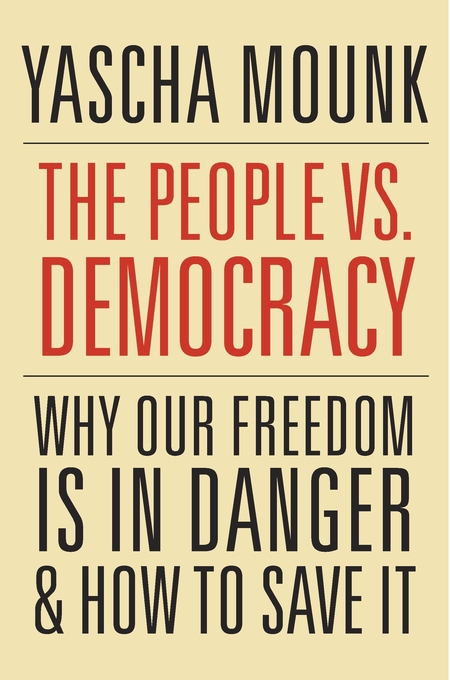 |
The world is in turmoil. From India to Turkey and from Poland to the United States, authoritarian populists have seized power. As a result, Yascha Mounk shows, democracy itself may now be at risk.
Two core components of liberal democracy—individual rights and the popular will—are increasingly at war with each other. As the role of money in politics soared and important issues were taken out of public contestation, a system of “rights without democracy” took hold. Populists who rail against this say they want to return power to the people. But in practice they create something just as bad: a system of “democracy without rights.”
The consequence, Mounk shows in The People vs. Democracy, is that trust in politics is dwindling. Citizens are falling out of love with their political system. Democracy is wilting away. Drawing on vivid stories and original research, Mounk identifies three key drivers of voters’ discontent: stagnating living standards, fears of multiethnic democracy, and the rise of social media. To reverse the trend, politicians need to enact radical reforms that benefit the many, not the few.
The People vs. Democracy is the first book to go beyond a mere description of the rise of populism. In plain language, it describes both how we got here and where we need to go. For those unwilling to give up on either individual rights or the popular will, Mounk shows, there is little time to waste: this may be our last chance to save democracy.
Assinar:
Postagens (Atom)
-
Minha entrevista desta sexta-feira 25/02/2022, sobre a dramática situação da Ucrânia no canal +BrasilNews. 1437. “ Entrevista sobre a Ucrân...
-
Parece que foi ontem: o livro começou a circular com mais facilidades fazem mais ou menos 500 anos. E eu já consegui acumular, creio, uns 5 ...
-
Quase um ano atrás, em viagem de férias entre o final de 2022 e o começo de 2023, eu fazia meus votos de sucesso ao presidente no início do...
-
Natan Elkin: https://natanelkin.wordpress.com/2019/10/20/segunda-contribucion-ilustrada-para-el-centenario-de-la-oit/ Segunda contribuc...
-
FAQ do Candidato a Diplomata por Renato Domith Godinho TEMAS: Concurso do Instituto Rio Branco, Itamaraty, Carreira Diplomática, MRE, Diplom...
-
China and the Rule of Law Leonidas Zelmanovitz 2026, Law & Liberty Liberty Fund , September 8, 2026 https://www.academia.edu/175255097/...
-
Uma preparação de longo curso e uma vida nômade Paulo Roberto de Almeida A carreira diplomática tem atraído número crescente de jovens, em ...
-
Olhando o panorama por cima: da democracia å mediocracia Os militares já não contam quase nada, ou totalmente nada, na política, o que é u...
-
Madame IA avalia criticamente minha avaliação crítica da Declaração do BRICS do Rio de Janeiro, em 2025 (4988/2025), recentemente postado n...


