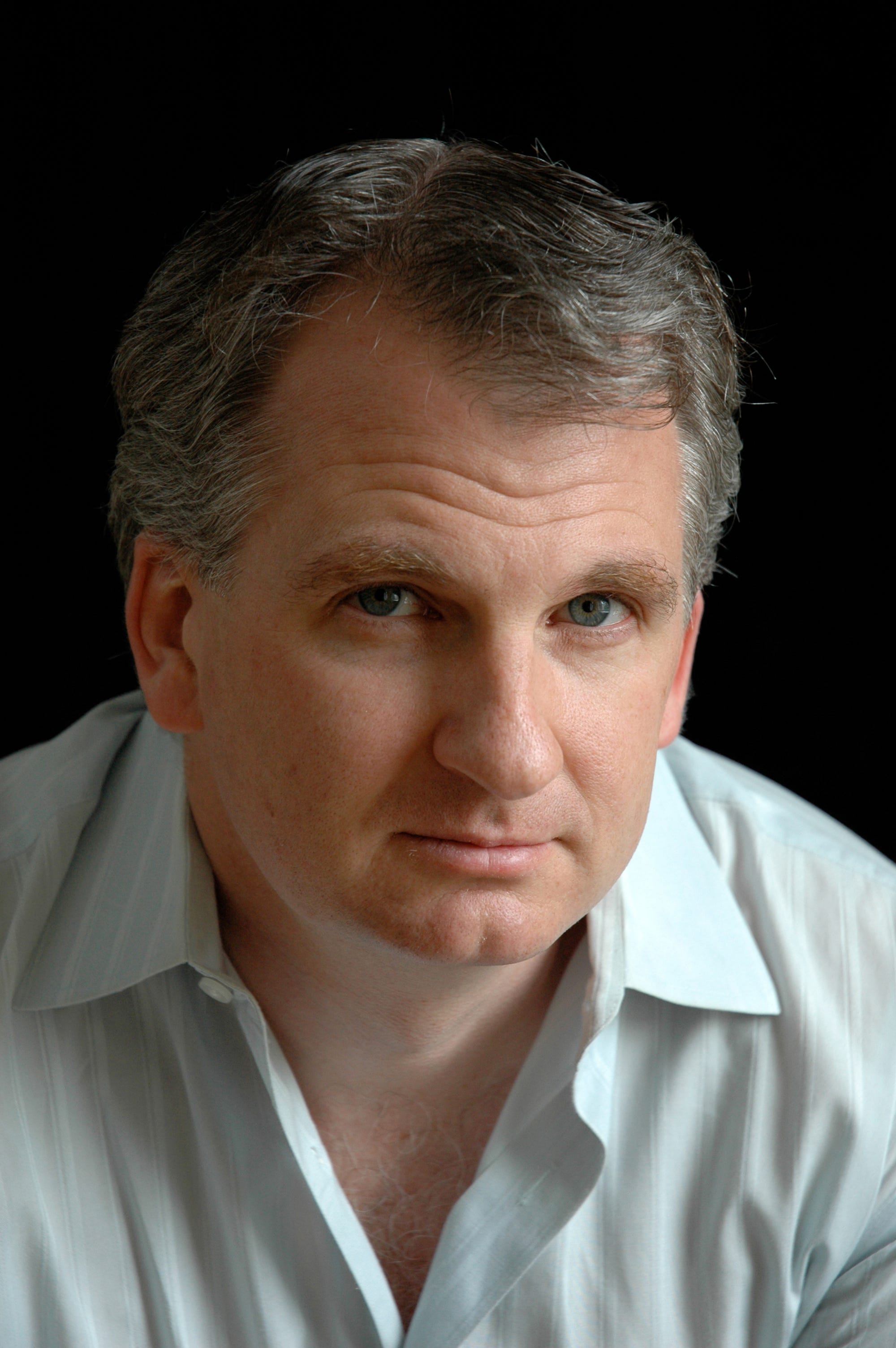
Maksym Butkevych, the Ukrainian human rights activist, was held in Russian captivity for more than two years. I had the pleasure of listening to his thoughts about freedom a couple of times recently, last month in Ukraine and this month in Canada. I was struck by an experience he had with books and a thought he had about choice.
He explained that prison had changed his thinking about violence. It was not, he decided, about making a person do this thing or that thing. It was about the abolition of the capacity for choice. Torture was about the undoing of personhood itself, about turning a person into an object. He was a realist about this, in a tradition of east European prison writers.
The Polish writer Gustaw Herling-Grudziński spent two years in the Soviet Gulag. in his memoir, A World Apart, wrote that “when the body has reached the limit of its endurance, one cannot, as was once believed, rely on strength of character and conscious recognition of spiritual values; that there is nothing, in fact, which man cannot be forced to do by hunger and pain.”
This was the point Maksym made in terms of the loss of agency. Predictable suffering makes a predictable human. Herling-Grudziński defined the goal of interrogation as the thorough dismantling of a personality into its component parts. The prisoner becomes predictable, even to himself.
Listening to him, I was struck by the importance of books to Maksym while he was in captivity. He made appeals to prison authorities for access to certain books. In the Gulag, Herling-Grudziński was able to read a few novels, thanks to the kindness of a fellow prisoner. These novels enabled him to believe that he could understand the thoughts of others, that he was not entirely alone. The person who gave him books is one of the few who appears in his memoir by name. Is it by chance that I remember her name? Natalia.
Today Russian missiles target publishing houses, libraries, and archives. Today, in the parts of Ukraine occupied by Russia, the Russians collect books that are in the Ukrainian language to be burned. This is work, and work can be done by prisoners. So Ukrainian prisoners-of-war, such as Maksym, found themselves forced to destroy the Ukrainian-language books that Russian occupiers had taken from libraries, schools, and universities.
The burnings of millions of Ukrainian books an action designed to destroy a culture, and could certainly be seen as evidence of a larger project of genocide. Maksym, however, defined the loss in terms of individual agency. People should be able to read the books that they want to read, in the language in which they want to read them. From a shelf of books in a library a human being does the choosing. In selecting a book with eye and hand, we make a choice for ourselves; but we also enter into the choices of the author.
 |
Listening to Maksym, I could remember books that I read, make connections, assemble thoughts.
We are not, most of us who will read this, ourselves in captivity. But we are, if we are Americans, citizens of a country in which librarians spend their time reviewing books and removing them from shelves. This is not so dramatic, of course, as Ukrainian prisoners being forced to burn Ukrainian books during a criminal war of aggression. But the difference is of degree and not of kind. Those librarians are not doing what they want to do. And books, once purged, cannot be seen, cannot be chosen.
Sometimes basic truths only come clear in extreme conditions. Maksym’s point that we choose books has relevance that goes beyond captivity, and even beyond the censorship of libraries. The internet is also a world apart in which things are chosen for us. That which is most predictable about is known, collected, magnified, exploited. We are set before options, but these are generated by algorithmic non-entities who must treat us objects because they are objects themselves.
This problem, in one way or another, was anticipated by writers of the twentieth century. Two years after Herling-Grudzinski’s memoir appeared in English, Ray Bradbury (to take one example among many) published Fahrenheit 451, in which firemen seek and burn books while the rest of society is expected to remain in front of screens. The free people in the novel are those who preserve books by memorizing them. Books figure here as “mediators of freedom,” to quote the French philosopher Simone Weil.
In Ukraine, a couple of mutual friends asked whether Maksym and I talked about my book On Freedom while I was writing it. We couldn’t have; he was at the front and in captivity. When Maksym volunteered to serve in the Ukrainian armed forces, I was beginning a class on freedom inside an American maximum security prison. When he was taken prisoner by the Russians, I was at the end of a semester in which I had learned from others who were reading in captivity. In one seminar, my student Dwayne quoted a wartime note from Simone Weil: freedom means substituting “devotion for obedience.” We might be devoted to a book, and author, a friend. But that is a choice.
Weil also called freedom “a loan that must be constantly renewed” -- a deep thought that turns my eyes to the overdue library books on my desk. A book whisks us into an unpredictable world, a world no longer apart, but renewed. We choose and then we find ourselves altered, expanded, capable of further choices. At some point, I chose to read Herling-Grudziński and Bradbury and Weil, and then they can return to me, thanks to others, in this case thank to Maksym. I find it extraordinary that he is able to speak about captivity, and appreciate the generosity that allows his own thinking about freedom to inform ours. I hope that he writes his own book.


Nenhum comentário:
Postar um comentário