Temas de relações internacionais, de política externa e de diplomacia brasileira, com ênfase em políticas econômicas, viagens, livros e cultura em geral. Um quilombo de resistência intelectual em defesa da racionalidade, da inteligência e das liberdades democráticas. Ver também minha página: www.pralmeida.net (em construção).
Anne Applebaum sobre os "amores" (se essa é a palavra) de Trump por Putin:
Russia, Russia, Russia Trump’s relationship with Moscow remains very weird OCT 14 In the past few days, Donald Trump has dropped all pretense, torched a couple decades of American policy, and undermined 18 months of his own diplomacy. I summed up his new policy in the Atlantic:
He has threatened to stop sharing intelligence with Ukraine, unless Ukraine agrees not to target Russian refineries, thus demanding that Kyiv give up its most effective weapon while asking nothing from Russia in exchange. He has not criticized Russian attacks on Ukrainian power plants or factories, even those owned by American companies. He has offered no condolences for the recent deaths of Ukrainian children in Russian bombing raids.
He has lied repeatedly. He declared that Ukraine and Russia had agreed to an “energy cease-fire,” an announcement that surprised the Ukrainians and that in any case the Russians immediately broke, hitting a power plant in Kharkiv only hours later. He accused Ukraine of blocking negotiations, when in reality the Ukrainians have repeatedly proposed cease-fires and Russia has never agreed to a cease-fire or any meaningful negotiation at all.
He has described Ukraine’s democratically elected president as an obstacle to negotiations and told him to leave office. But on Friday, before making these new decisions, he held yet another long, friendly telephone conversation with the Russian dictator, who really could end the war today. All Vladimir Putin has to do is tell his soldiers to stop fighting, and then the war is over, bar some territorial negotiations. The Ukrainians cannot stop fighting because, if they do, their country will be conquered and they will suffer the fate of their occupied territories: leaders murdered, children kidnapped, repression and concentration camps for everyone else. If Trump knows this, then he does not care.
And yet…large parts of this story don’t make sense:
The president has implied that the point of his new policy is to lower fuel prices for Americans. Perhaps he wants to convince voters that the cause of high prices is Ukraine and not his own war of choice in Iran. But this is not a sufficient explanation or justification for these dramatic actions. The amount of fuel that Russia could export is too small, the impact on pricing too slight, the narrative too late to shape electoral outcomes.
This looks, instead, like something very different: an abrupt, Hail Mary attempt to force Ukraine to surrender and to save the Russian economy, perhaps in order to finally complete the multiple business deals that the Russians are known to have discussed with American negotiators and others in Trump’s orbit. These include deals involving the Nord Stream gas pipelines, mineral mining in the Arctic, the Russian assets frozen in European banks, and more.
But Trump cannot make things happen simply by saying them, and he cannot make Ukraine stop fighting either. The US gives no weapons to Ukraine, except those that are purchased by Europeans. I am told that the US intelligence contribution to Ukraine is now minimal, mostly involving defensive, not offensive operations. Certainly the Ukrainians do not need American intelligence, or Starlink, to hit Russian refineries. If Elon Musk limits the range of Starlink inside Ukraine (some say he did so on Wednesday morning) he will pay a high price. European governments and other big customers will take this as a warning: Musk’s technology is unreliable because Musk is unreliable, and they should end their contracts and not sign new ones.
But if this diesel deal won’t stop the Ukrainian strikes on refineries, won’t have an impact on the election, isn’t popular among Americans, will further alienate allies and won’t stop the Ukrainians, why is Trump doing it? There can only be one answer: because Russia has been so important to him for so long.
Periodically, an interviewer or interlocutor asks me why Donald Trump is so obsessed with Russia. Why does he allow himself to be humiliated by Putin, who did not even pretend to respect his “ceasefire”? Why does he parrot Russian propaganda? I don’t really understand why anyone still poses these questions, because they were answered long ago.
I wrote about Trump’s Russian connections as long ago as July 2016, in the Washington Post. In subsequent months and years, there were multiple investigations into Trump’s business links with Russia, extending back to the 1980s. These include links to people affiliated with the Russian mafia, some of whom owned condos in his buildings; his broader reliance on Russian clients, as well as anonymous purchasers of condos, many of whom are believed to come from Russia. Famously, a Russian oligarch purchased a property from Trump for tens of millions of dollars over the previous price, at a time when Trump needed the money.
Equally well documented is Trump’s fondness for Russian propaganda narratives. Upon returning from his first trip to Moscow in 1987, he took out full-page advertisements in three newspapers, attacking American alliances in Europe and Asia:
For nearly 40 years, he has been saying much the same thing. He has changed his mind about abortion and crypto, he has supported different political parties at different times, but his dislike of America’s democratic allies and his preference for Russia have remained remarkably consistent.
The Mueller report and a subsequent bipartisan Senate Select Committee on Intelligence demonstrated multiple Russian attempts to contact Trump during the 2016 campaign and to sway the election, through the release of hacked data from the DNC as well as major investments into American social media. But because Trump succesfully mocked and minimized this story (“Russia, Russia, Russia,” he says, as if that were an argument) and because the Republican party went along with this lie, it seems as if Americans have to be constantly reminded anew: yes, Trump’s relationship with Russia is intense, longstanding, and deeply weird.
It also contradicts the views of the American military and American intelligence, as well as majorities in the country and in Congress. Immediately after his statement on diesel and his comments about Volodymyr Zelensky, a bipartisan cohort of U.S. representatives and senators attacked the deal and vowed to reverse it. On Monday, U.S. Air Force General Alexus Grynkewich, America’s highest-ranking soldier in Europe and the top NATO commander—a job always held by an American—delivered a very different message to Russia.
Speaking at a security conference in Warsaw, Grynkewich said that any attack on NATO, something many now genuinely fear, would be met with overwhelming force: “We will stop the attack and deny them the ability to achieve their objectives, whatever those might be. We will, in short, ensure any attack, against any ally, proves utterly futile.” He implied that there would be massive retaliation targeting “anything and everything that supports, sustains, and controls” an aggressive force.
This is the kind of language that, if it also came from the White House, might deter Russia from expanding its current campaign of sabotage and cyberattacks in Europe, from continuing to aid Iran, or from committing war crimes in Ukraine. But this president absolutely refuses to use it, and at this point, we have to assume he never will.
Os EUA de Trump contra o mundo: o mundo precisa se defender de Trump
Paulo Roberto de Almeida
Donald
Trump sanciona o TPI; os países membros precisam defender esse avanço civilizatório
125 Estados aderiram ao Estatuto de Roma e apoiam o TPI em seu trabalho de proteger os direitos humanos, não diretamente contra Estados que os atacam, como Israel na Faixa de Gaza, mas os individuos que permitem que se pratique genocídio contra um povo, como Netanyahu autorizando esses ataques contra civis em Gaza.
Os EUA assinaram o Estatuto de Roma mas não o ratificaram. Agora Trump e Marco Rubio introduziram sanções contra o próprio TPI, praticamente inviabilizando o seu trabalho de denúncia e defesa dos DH perpetrados por indivíduos como Putin (pelo sequestro de crianças ucranianas) e como Netanyahu (pelo genocidio em Gaza).
O TPI deveria, provavelmente, a partir dessas sanções contra si próprio, cogitar de processar o presidente americano e seu Secretário de Estado por tentativa de obstruir o trabalho de defesa dos DH em âmbito internacional.
Os EUA se colocaram CONTRA 125 Estados que apoiam o trabalho do TPI, inclusive o Brasil, assim como Trump, em sua insanidade tarifária contra o mundo inteiro, ataca indiretamente os DH de milhões de habitantes da Terra, inclusive contra os próprios americanos (ou estadounidenses), obrigados a pagar mais caro pelos produtos que importam, por culpa do seu próprio presidente.
Trump é um perigo e uma ameaça ao mundo inteiro. O mundo precisa se precaver contra, e se defender de Trump.
Esta deve ser uma ação não apenas dos 125 membros do TPI, mas de todos os demais Estados do sistema da ONU.
A humanidade está sendo atacada pela insanidade de um único individuo. Uma situação inédita na História mundial.
This week, my train in Ukraine was almost hit by a Russian drone. It sent the same message that aggressors have been sending since the earliest days of siege warfare: Be afraid.
KYIV, Ukraine — I did not take it personally that a Russian drone destroyed the train behind ours as we neared the Polish border with Ukraine on Sunday. Indeed, I wasn’t aware of what had happened until a few hours later. I had taken it for granted that going to Ukraine amid a relentless aerial bombardment would have its risks. But I had also assumed that I’d probably be all right if I was traveling with such luminaries as the former UK prime minister Boris Johnson, the former director of the CIA David Petraeus, and multiple current or former leaders of Scandinavian and Baltic states—not forgetting the editor of The Economist.
I don’t think the Russians intended to hit our train. I do think they intended to send us all a message. And it is the same message that aggressors have been sending since the earliest days of siege warfare: Be afraid. It says much about the war in Ukraine that President Vladimir Putin believes he can send such a message to eminent Westerners with impunity. He is probably right about that. It dovetails with his current strategy of drone incursions, sabotage, and cyberattacks directed at multiple NATO (North Atlantic Treaty Organization) members.
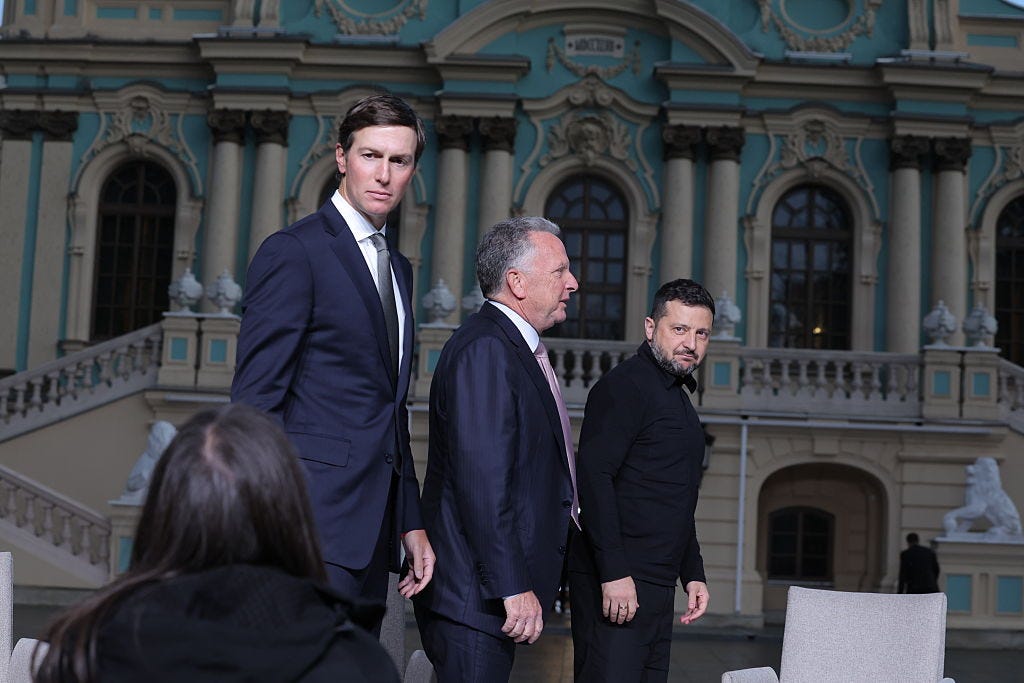
My annual visit to Kyiv for the Yalta European Strategy (YES) meeting was faintly encouraging about the chances of some diplomatic progress, but grimly sobering about Ukraine’s economic and political situation. Just over a week ago, President Donald Trump’s diplomatic representatives, his son-in-law Jared Kushner, and his friend Steve Witkoff, visited Moscow and Kyiv for meetings with the leaders of Russia and Ukraine, President Putin, and President Volodymyr Zelensky. This was not long after Director of Central Intelligence John Ratcliffe had also visited Moscow on August 26.
Contrary to generally negative media coverage, some progress was made. Speaking via video link at the opening of the YES conference in Kyiv on Friday, Kushner said that the key elements of a peace agreement were largely in place, with the exception of “territory,” an allusion to the Donbas region.The other elements—security guarantees for Ukraine and a “deconfliction mechanism”—had been in place since the last trilateral meeting of Russian, Ukrainian, and U.S. representatives in Abu Dhabi in January.“If Ukraine were willing to move back to Putin’s desired line,” Kushner said, “the rest of the deal would be ready.”
That is, of course, a very big “if,” given the consistent refusal of the Ukrainian government to accept territorial cessions. Kushner said he expected there to be new trilateral talks, again in Abu Dhabi, later this month or in early October, following the Russian Duma elections on September 18 to 20. He elicited incredulous laughter when he said Putin was sincere about peace talks. However, he responded: “Everything looks impossible until right before it’s achieved.”
I have no illusions that Zelensky is eager to cede the remaining 21 to 22 percent of Donetsk that Ukraine still controls. This is not out of sentimentality about square miles. The territory in question includes the so-called “Fortress Belt,” anchored by the key cities of Sloviansk, Kramatorsk, Druzhkivka, and Kostyantynivka. On the other hand, both sides do appear to have stronger incentives to end their war than at any time since late 2022, the nadir of Russia’s fortunes, when Western leaders misguidedly urged Ukraine to keep fighting rather than seek peace.
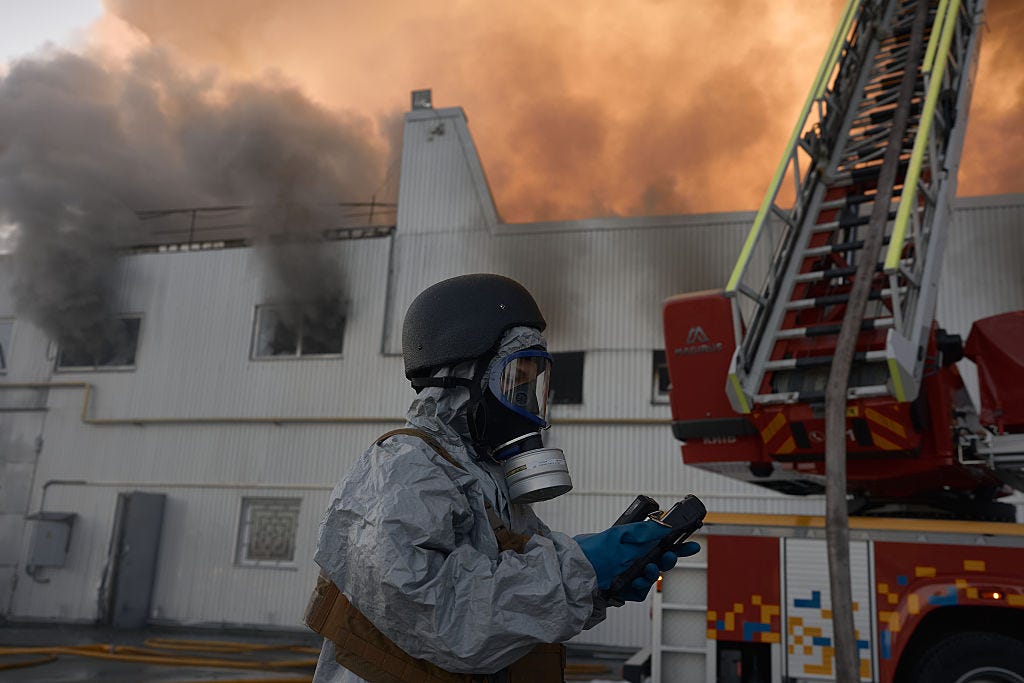
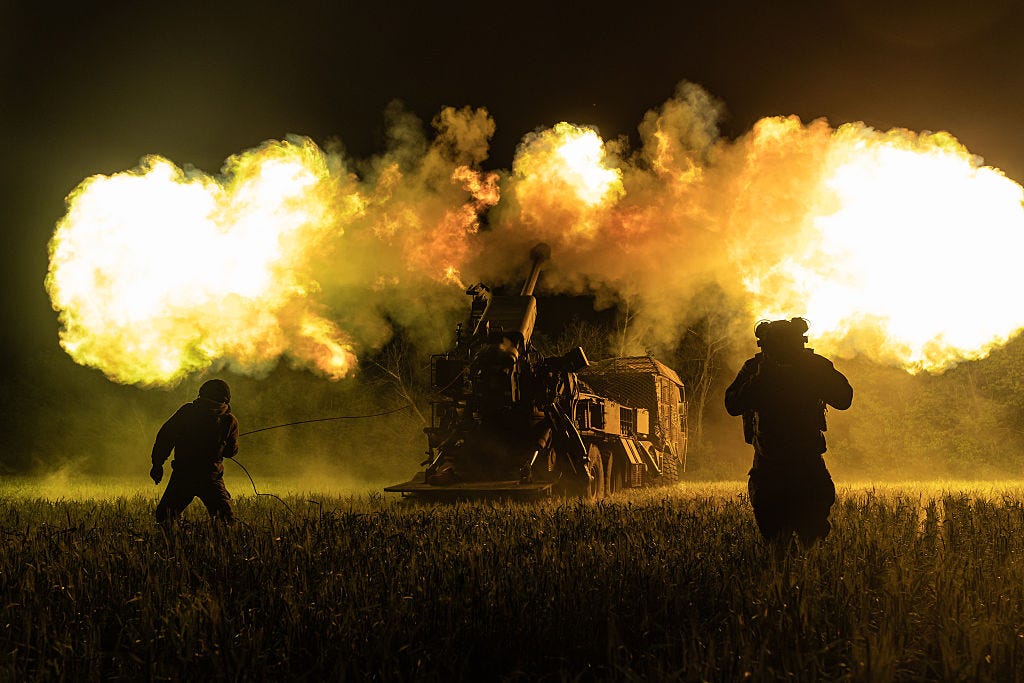
A year ago, I was quite concerned about Ukraine’s thinly stretched armed forces. However, Ukraine’s advances in military technology have more than compensated for these vulnerabilities. The evidence is visible in Russian casualty figures, running at more than 40,000 in July and August according to the Ukrainian General Staff, as well as in the minimal territorial gains Russia made this spring and summer, compared with March through August last year. It is also apparent in the damage done by Ukrainian deep strikes on Russian energy infrastructure, especially oil refineries.
A year ago, I was quite concerned about Ukraine’s thinly stretched armed forces. (Diego Herrera Carcedo/Anadolu via Getty Images)
On September 9, Ukrainian forces struck the Novy Urengoy Gas Condensate Treatment Plant and the Purovsky Gas Processing Plant in Yamalo-Nenets Autonomous Okrug—both more than 2,700 kilometers from the Ukrainian border. On the same night, Ukraine hit Russian ports along the Black and Caspian Sea coasts. Ukrainian successes have been partly due to assistance from U.S. intelligence in targeting. However, the principal credit goes to the speed and creativity with which the Ukrainian Armed Forces have innovated in their use of drones, software, and artificial intelligence. Asked if Ukraine already had autonomous AI weapons systems in which no human decision-maker played a part, Artem Martynenko, deputy commander in chief of Armed Forces of Ukraine, conspicuously avoided giving a reply.
Nevertheless, Russia has responded in ways that dispel any notion of a Ukrainian victory. Russia continues to strike Ukrainian cities every day with drones and missiles, while Ukraine’s air defenses are much less effective than a year ago. Not only is there a shortage of Patriot interceptors; Russia has also switched to jet-powered strike drones that are much harder to intercept. Moreover, the Ukrainians are fearful that Russia is close to deploying its own version of Starlink. At the same time, Russian attacks on Ukraine’s biggest port on the Danube and on cargo ships in the Black Sea have brought Ukrainian agricultural exports from its Black Sea ports to a standstill.
Both the Ukrainian and Russian economies are showing signs of strain, but the strain is greater in Ukraine.
From the outset, this war has been a contest between David and Goliath. The International Monetary Fund estimates that the Russian population is 4.4 times larger than Ukraine’s and the Russian economy is 11.8 times larger (on a current dollar basis). Ukraine’s growth has stalled this year. The Black Sea escalation began in July. According to Ukraine’s Infrastructure Ministry, in July, Russia carried out 67 attacks on port infrastructure, 35 attacks on civilian vessels in ports, and 22 attacks on vessels using Ukraine’s maritime corridor. The result has been an effective commercial blockade of Ukraine’s Black Sea ports. Ukraine is trying to reroute agricultural exports to the Danube, but capacity is far lower. Russia has also started attacking Ukraine’s overland export routes. At the same time, Russian air raids on power infrastructure and commercial distribution nodes are causing severe disruption to both the manufacturing and the retail sectors. Last winter was bitter in Ukraine. This one will be worse.
As in Ukraine, the costs of war have caused an economic slowdown in Russia. High interest rates are the main reason for the slowdown. Fixed capital investment declined sharply in the first half of the year. Overall industrial production flatlined. Preliminary estimates suggest Russian seaborne grain exports fell 62 percent in August compared with a year ago. However, the decline in agricultural exports is far less significant for Russia than for Ukraine.
Russia’s fiscal situation is ugly but workable. Despite higher oil prices from the Gulf crisis, oil and gas revenues are down. But the budget deficit is currently 2.5 percent of GDP. Unemployment was just 2.3 percent in July. Inflation peaked at 10.3 percent in March 2025 and is now 6.3 percent. Real wage growth remains robust. Although there are signs of financial stress (e.g., signs of trouble at VTB Bank; the sharp decline of Gazprom’s share price), those who continue to talk about the outcome of the war being determined by a Russian economic crisis are missing the point. It is Ukraine that is much closer to a crisis.
Both sides appear to have stronger incentives to end their war than at any time since late 2022.
Both combatants rely on foreign support, though it takes different forms. Calculating all aid allocations (financial, humanitarian, and military) to Ukraine by the EU and its member states since 2022, the total comes to €195 billion ($224 billion)—52 percent of the amount from all donors—compared with the U.S. figure of €115.4 billion ($132.6 billion). Including committed (but not yet allocated) aid, the EU’s contribution is €326.5 billion ($375 billion)—59 percent of the total—compared with a U.S. figure of €119 billion ($136.7 billion). In other words, total EU aid to Ukraine is now nearly three times more than U.S. aid to Ukraine. And that gap will only widen as U.S. aid to Ukraine effectively ceased early last year, following President Trump’s second inauguration.
Europe will continue to prop up Ukraine’s budget through at least the first half of next year. The EU’s main financing vehicle, the €90 billion ($103.4 billion) Ukraine Support Loan, runs through 2027 but will need to be front-loaded to cover Ukraine’s faster-than-anticipated spending. Thereafter, Ukraine will be at the mercy of European politics.
By contrast, Russia’s war effort relies increasingly on China, but it is made available on commercial terms, not as aid. Bilateral trade between Moscow and Beijing is on track to hit an all-time high of roughly $280 billion this year. Russia now relies on China for roughly 57 percent of its total imports, compared with 13 to 14 percent before the war. China supplies around 90 percent of Russia’s sanctioned tech imports. While Beijing stops short of sending finished military hardware, it provides billions in dual-use goods—microchips, drones, and tools. And China buys about 50 percent of all Russian crude oil exports, 37 percent of its exported coal, and 31 percent of its pipeline gas. It has even defied U.S. sanctions by ramping up imports from Russia’s newer Arctic LNG 2 project. Over the last two decades, Russia has also accumulated $169.3 billion in total debt to China.
To an extent that is underappreciated, the war in Ukraine is now a proxy war between the EU and China. The difference is that China makes a profit from backing Russia.
Intertwined with Ukraine’s deteriorating economic situation is the unraveling of wartime political unity. This is a war between a fledgling democratic nation-state and a fascist empire. In this regard, too, it is not a fair fight. Putin’s opposition is either dead, in jail, or in exile. Not so Zelensky’s.
Russia’s full-scale invasion came roughly halfway through Volodymyr Zelensky’s first term, several months after his party, Servant of the People (Sluha Narodu), lost its parliamentary majority. The invasion prevented a rebalancing of parliamentary power. The war has also postponed the next presidential election. The result has been a narrowing political upper echelon, growing friction between its more powerful members, and a series of conflicts that are impossible to solve without an election. Yet holding an election in wartime is legally and logistically extremely difficult.
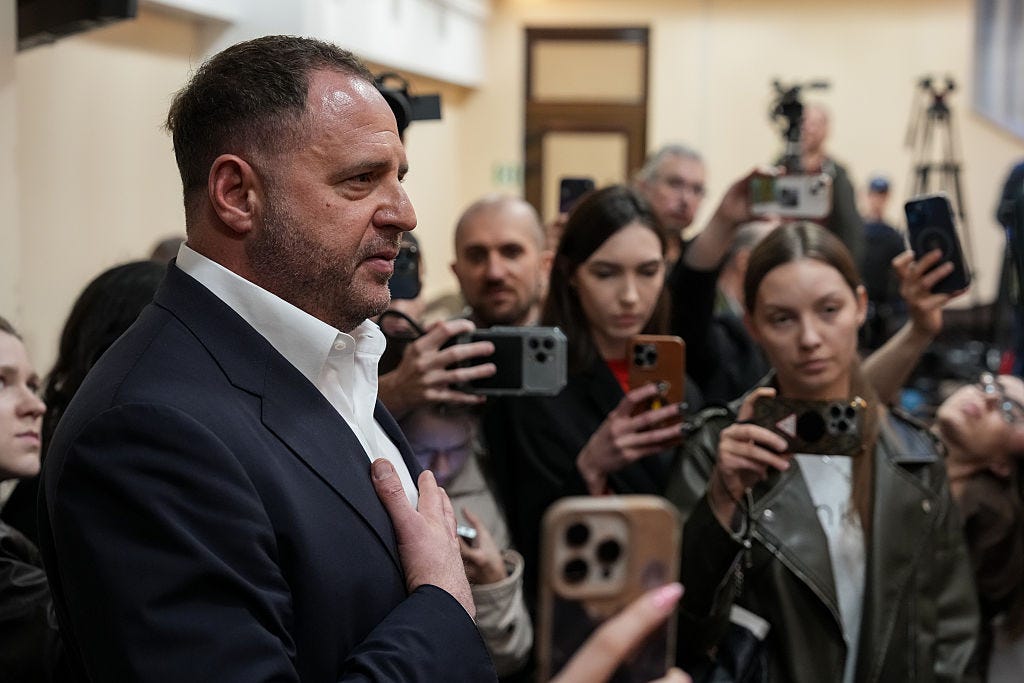
The main opposition to Zelensky is now the Anti-Corruption Bloc, a coalition of disparate elements that includes Ukraine’s anti-corruption institutions, civil-society activists, and individual members of parliament. Last November they claimed the scalp of Andriy Yermak, the head of the Office of the President of Ukraine (OPU). As Zelensky’s right-hand man, Yermak was feared, not loved. But his system ensured all key decisions were taken, delegated, and executed quite effectively. That system collapsed when Zelensky was forced to remove Yermak after he became implicated in the widening corruption investigation known as Operation Midas.
As Zelensky’s right-hand man, Andriy Yermak was feared, not loved. (Ivan Antypenko/Suspilne Ukraine/JSC “UA:PBC”/Global Images Ukraine via Getty Images)
Following Yermak’s removal, Zelensky tried to create a team of rivals. Kyrylo Budanov came from the Main Directorate of Intelligence (HUR) to OPU. Denys Shmyhal moved from defense to energy. Rustem Umerov, Yermak’s last surviving protégé, moved to the Ukrainian National Security Council. And the mercurial Mykhailo Fedorov went from minister for digital transformation to defense minister. However, Fedorov had wanted to run the OPU, aspiring to take over Yermak’s old role—and perhaps even to replace Zelensky. He repeatedly pressed for elections, even in wartime, during multiple strategy meetings in the early summer. His removal from government in July and his subsequent attack on Zelensky has created a situation of extreme tension.
Earlier this week, allegations of money laundering surfaced against Budanov. If Ukraine’s anti-corruption institutions were to release evidence of Zelensky’s direct knowledge of the corruption scheme exposed by Midas over the winter, there could be protests. Kyiv mayor Vitali Klitschko and former president Petro Poroshenko would likely support them.
Ordinary Ukrainians are thoroughly sick of this war and filled with foreboding as winter approaches. The government continues to insist that Ukraine will fight on to victory. In the words of Yuri Fedorenko, the handsome, decorated commander of the Brigade Achilles, “The war will continue as long as Russia exists.” But I heard very different views at a rehabilitation center for war wounded at one of Kyiv’s municipal hospitals.
One officer—a big, bearded, powerful man, his body covered in tattoos—had lost a leg when he stepped on a Russian land mine. He said the war would end only when “they” (meaning the Ukrainian oligarchs) could make no more money out of it. And yet he said he would return to the army after his rehabilitation was complete. A second younger man, whose foot had been severely damaged by a mine, said the war would only end when Putin decided to end it. A third, who had lost an arm to a Russian drone and was confined to a wheelchair by his leg injuries, said the war would be ended with negotiation, and Ukraine would have to make concessions.
Ukraine has never published credible statistics on its military casualties. As Russia’s now likely exceed 1.5 million, of which roughly one-third were killed in action or died of wounds, a reasonable estimate would put Ukraine’s mutilés de guerre at above 200,000. Mass bereavement and disability are the less obvious costs of a large-scale conventional war such as this.
Under these circumstances, the obvious path for Putin is simply to press on through the winter, waging total war against Ukraine and exploiting his advantages, as Eric Schmidt has recently warned. However, there are other forces at work.
First, as the situation in the Gulf deteriorates—with exchanges of fire between U.S. and Iranian forces disrupting the Strait of Hormuz, and Houthi attacks compromising the Red Sea route for Saudi oil—the Trump administration is casting around for any kind of relief for energy markets.
Second, progress toward ending the Russia-Ukraine conflict, no matter how tentative, could be presented by Trump as a major diplomatic breakthrough—a modest October surprise ahead of the November midterms.
Third, the U.S. has worked out a better way of involving European countries in the Russia-Ukraine peace process. Rather than being exposed to the divergent arguments of all the various EU member states, which derailed diplomatic efforts last year, Washington now appears to be dealing only with Berlin, London, and Paris. National security advisers from those capitals, France’s Emmanuel Bonne, the UK’s Jonathan Powell, and Germany’s Günter Sautter, were directly involved in the recent U.S.-led talks in Kyiv. How far they were working alongside Kushner and Witkoff and how far they were merely “props” was unclear.
How far France and Germany were working alongside Kushner and Witkoff in negotiations was unclear. (Yan Dobronosov/Global Images Ukraine via Getty Images)
This is a striking turn of events. Now that they are the principal source of aid and lending to Ukraine, the Europeans ought to have much more diplomatic leverage. In practice, however, the British, French, and German governments prefer to let the U.S. take the lead in negotiations. Other European governments may well view this development with unease, as Kersti Kaljulaid, the former president of Estonia, pointed out—especially if they find themselves committed by the “E3” to security guarantees for Ukraine as part of a trilateral peace deal. The problem is that European initiatives such as the “Coalition of the Willing”—an Anglo-French initiative launched last year—lack the military resources to make credible commitments to the proposed postwar multinational force in Ukraine.
Moreover, the trends in European politics are not friendly to Ukraine. In France, Rassemblement National leader Marine Le Pen is the favorite to succeed Emmanuel Macron as French president. In Germany, the chancellorship of Friedrich Merz is crumbling as the Alternative für Deutschland gains ground in regional elections. In Italy, Giorgia Meloni risks being outflanked by the neo-fascist Roberto Vannacci’s Futuro Nazionale. All the European populist parties are skeptical about the war in Ukraine, if not overtly pro-Russian.
The recent U.S. visitors to Moscow offered Putin a stark choice: “Press on with the war and we will continue to provide the Ukrainians with targeting intelligence; or settle this diplomatically and we can give you the kind of economic rehabilitation you will not get from anyone else.” As usual, the Kushner-Witkoff team approaches a classic diplomatic problem—how to end a war—with the techniques of the New York real estate market. In effect, the Ukrainians are being told to sell the remaining territory they control in Donetsk at an attractive price in the form of postwar funding for reconstruction and investment. Note that much of this is supposed to come from private-sector entities such as Blackrock, whose CEO, Larry Fink, has not been reticent in pledging to invest in Ukraine.
The Russians, meanwhile, will get sanctions relief if they renounce their earlier demands for regime change in Ukraine. The presence of a representative of the U.S. Treasury in Moscow and Kyiv was significant in this regard: Gene Lange, who accompanied Kushner and Witkoff, is the acting head of the U.S. Treasury Department’s sanctions unit.
The Americans believe Putin is more open to this argument than previously. They are also hoping to secure European support for a compromise peace by offering a path to lower natural gas prices. At least some in Kyiv share his assessment. Davyd Arakhamia, who was Ukraine’s negotiator in Istanbul early in the war, stated confidently at YES that the Russians would come to the negotiating table after their Duma elections.
The backdrop for the YES stage this year was a Banksy mural of a David versus Goliath judo contest, with the heroic boy easily tossing the giant over his shoulder. Certainly, Ukraine has done some serious defense-technology judo to Russia in the past year. But the sheer economic preponderance of Russia, and its leader’s seeming readiness to ramp up his military mobilization, are exerting strong pressure on Ukraine to negotiate a compromise peace. The Americans seem to think Putin is finally ready for serious talks in which he would effectively concede the rump Ukraine’s right to a continued independent existence, minus Crimea and Donbas.
I remain doubtful that such a compromise peace can be signed and successfully implemented. Putin may play along, but he will continue to hammer the Ukrainians in the belief that further battlefield gains are achievable. Zelensky may need a ceasefire, but he would surely not survive politically if he relinquished territory Ukraine has succeeded in defending. Nevertheless, I would not be surprised by an announcement that “peace is at hand.” As my train made it across the Polish border, I recollected that Henry Kissinger used that phrase in October 1972—about Vietnam.
This essay was first published in The Free Press on September 17, 2026.
Sobre obsessões pessoais e tragédias políticas nacionais
Paulo Roberto de Almeida
Existe, na presente conjuntura politica nacional, uma tragédia quase cômica, que è o fato dos dois candidatos à presidência no segunfo turno, serem igualmente os que carregam seus respectivos índices de rejeição nas alturas de uma negação recíproca, que seria, em condições normais, praticamente terminal.
A eleição de um ou outro elevaria ainda mais o grau de animosidade politica já existente, ao ponto de inviabilizar a condução normal dos assuntos mais importantes da administração pública (com excessão do Centrão, que se acomodaria com um ou outro, pois vive da barganha mais oportunista, sem qualquer pudor ou princípio).
Nesse ponto da nossa tragédia cômica, remeto à “Observação Interessante” que recolho desta postagem de Walmyr Buzatto, que parece derivar do argumento de Paulo Motoryn. Transcrevo:
“Uma observação interessante!
“Tem algo importante a ser dito para quem não aguenta mais ter que escolher entre Lula e Bolsonaro.
Se Lula vencer, não poderá disputar outra reeleição e a família Bolsonaro perderia muita força.
Se Flávio vencer, poderá tentar a reeleição em 2030 quando Lula também poderia voltar a concorrer. [O que eu acho altamente improvável. PRA]
Quem não quer mais Lula nem os Bolsonaro, só tem uma opção: Lula.”
Fim de transcrição.
Pois bem, aqui entra a obsessão pessoal de Augusto De Franco, numa campanha tão acirradas contra a reeleição de Lula, sem muita lógica politica e sem qualquer constatação prática sobre a verdadeira tragédia nacional que representaria a submissão completa da política externa (e de outras consequências derivadas na política interna) caso seja entronizado o filhote miliciano do “I love you Trump”, com sua adesão já anunciada ao novo imperador hemisférico.
Não poderia haver “catástrofe geopolítica maior no século XXI” — retomando a observação de Putin para o século XX — que a entrega do maior país da América do Sul aos designios tresloucados do mais mediocre e desequilibrado dirigente americano dos últimos 250 anos (ou seja, em toda a história da primeira república da era contemporânea).
Augusto De Franco assumiu para si uma tal ojeriza da continuidade do lulopetismo no poder que desconhece completamente essa outra tragédia nacional e continental que decorreria da entrega de mão beijada do Brasil ao mais demencial autocrata do trio atual de superpotências quase em perfeita coalizão de intenções geopolíticas.
Parece uma outra dimensão da tragédia cômica na qual vivemos atualmente.
Considero essa possibilidade de sermos entregues atados ao delirante projeto do “Escudo das Américas” muito mais grave na história nacional do que a eventual continuidade das politicas populistas, econômicas e sociais, do lulopetismo declinante.
O Brasil pode deixar de existir como nação independente e autônoma nos principais capitulos de suas pilitnacionais caso seja eleito o medíocre “rei das rachadinhas” (e de muitas rachadonas).
Não concebo, como diplomata, tragédia maior em nossa história dos últimos 204 anos.
Volto, portanto, à única opção política admissível no atual quadro existente de nossa tragédia quase cômica.
Uma "mensagem" de mais de
um ano atrás, mas que considero ainda válida.
“Putin e Trump se preparam para oferecer ao mundo um
Munique 2, uma repetição da vergonhosa entrega de parte da Tchecoslováquia a
Hitler em 1939.
Depois, eles pretendem consolidar uma aliança espúria
para dividir entre eles um país soberano da Europa central, o que seria uma
repetição do pacto Stalin-Hitler, formalizado por seus respectivos chanceleres,
Molotov e Ribbentrop.
A única coisa que pode impedi-los de repetir os crimes
de 1938-39 seria uma declaração prévia, conjunta da Ucrânia e da UE, rejeitando
in limine e preliminarmente, qualquer acordo feito sem a participação dos
principais interessados na paz e segurança da Europa e do mundo.
Paulo
Roberto de Almeida
Brasília,
10/08/2025"
Agrego em 2026:
Além de um Munique 2, Trump e Putin gostariam de ter
um Yalta 2, o encontro de três autocratas de três superpotências para definir
suas respectivas zonas de influência. As potências médias – e aqui incluo toda
a UE, alguns nórdicos fora da UE, o Canadá, o Japão, a Índia, os tigres
asiáticos,latino-americanos como México, Brasil, talvez Aergentina (mas seu
status atual é muito incerto), África do Sul, Nigéria, Argélia, Indonésia e
vários outros países independentes de alinhamentos com essas três superpotências
– precisam se juntar, discutir os problemas e os interesses comuns, como forma
de defesa contra a arrogância e a prepotência das três grandes potências, que
costumam atuar de forma unilateral, passado o direito da força, antes da força
do Direito.
Madame IA analisa as razões de Lula para apoiar Putin e sua guerra de agressão contra a Ucrânia
Brazilian President Luiz Inácio Lula da Silva’s foreign policy toward Russia and Vladimir Putin is often framed in Western media as direct support, though Brazilian diplomats define it aspragmatic non-alignmentandstrict national interest.
Several key economic, historical, and geopolitical factors explain why Lula maintains close ties with Moscow:
1. Agriculture and Fertilizer Dependence
Brazil is an agribusiness superpower, producing vast amounts of global soy, corn, and beef. However, Brazilian soil requires heavy fertilization, and the countryimports over 85% of its fertilizers—with Russia being its top supplier. Alienating Putin risks disrupting these shipments, which would devastate Brazil’s agricultural supply chain, drive up domestic food inflation, and cripple its economy. Russia is also a key supplier of diesel to Brazil.
2. BRICS and the Vision of a Multipolar World
Lula has long been a strong advocate formultipolarity—a global system where global power is decentralized rather than dominated by the United States and NATO.
BRICS Alignment:As a co-founding member of BRICS (Brazil, Russia, India, China, South Africa), Brazil views Russia as a essential partner in building alternative trade mechanisms, reducing global reliance on the US dollar, and reforming institutions like the UN Security Council.
Global South Coalition:Maintaining relations with Russia allows Brazil to position itself as a leading voice for the Global South, independent of Western diplomatic mandates.
3. Diplomatic Tradition of Neutrality and Mediation
Brazil’s foreign ministry (Itamaraty) has a deeply rooted, constitutional tradition ofnon-intervention, peaceful dispute resolution, and strict neutrality.
Balanced Stance:While Brazil voted at the UN General Assembly to condemn the violation of Ukraine’s territorial integrity, Lula has consistently refused to send weapons or join Western sanctions against Russia.
Peace Negotiations:Lula positions Brazil as a potential peace broker, arguing that joining sanctions or supplying arms eliminates a nation's ability to serve as a neutral mediator.
4. Ideological Roots on the Left
Within Lula’s Workers' Party (PT) and the broader Latin American left, there is historically deep skepticism toward US foreign policy and NATO interventionism.
Many left-wing figures in the region view NATO’s eastern expansion as a key catalyst for the conflict in Ukraine.
While Lula has at times criticized Putin's invasion, he has also drawn controversy by claiming that Western powers and Ukraine shared responsibility for failing to prevent the war through negotiation.
5. Domestic Continuity
Maintaining relations with Russia is not exclusive to Lula’s administration. His predecessor, the far-right Jair Bolsonaro, also maintained close ties with Putin and visited Moscow shortly before the 2022 invasion of Ukraine to secure fertilizer agreements. This highlights that Brazil's relationship with Russia is driven primarily by core national interests rather than purely party politics.
Lula’s stance on Russia and the war in Ukraine creates a complex balancing act, driving friction indiplomatic political relationswhile having a far more resilient impact ontrade and economic ties.
1. Diplomatic Friction with the United States
Diplomatically, Lula’s refusal to align with Washington on Ukraine has been a persistent point of tension.
Narrative Clash:The U.S. has criticized Lula’s statements that Ukraine and NATO share responsibility for the conflict, framing his "peace mediator" stance as moral equivalence that favors Moscow.
BRICS & De-dollarization:Lula’s push within BRICS to move away from the U.S. dollar in international trade frustrates Washington, which views Brazil's coordination with Russia and China as undermining Western economic sanctions.
Pragmatic Dialogue:Despite these diplomatic clashes, bilateral relations have avoided a breakdown. Strategic communication remains open—highlighted by high-level engagements where Lula and U.S. leadership focus on shared regional priorities, climate action, and global stability rather than letting European security politics stall all progress.\
2. Tensions and Alignment with the European Union
Lula's rhetoric on Russia initially angered key European partners, but broader geopolitical interests have prevented a rift.
Sovereignty vs. Neutrality:Central and Eastern European nations, as well as core EU leadership, initially reacted strongly against Lula’s reluctance to explicitly condemn Russian aggression or supply defense material to Ukraine.
The EU-Mercosur Trade Agreement:Far from derailing economic ties, the changing global landscape—partly driven by broader geopolitical shifts—pushed the EU and Mercosur to finalize their historic trade deal. EU leaders recognized that isolating Latin America over Ukraine would push Brazil further into the economic orbits of Beijing and Moscow.
Environmental Common Ground:Lula’s environmental policies (such as curbing Amazon deforestation) provided the political capital needed in Europe to keep the trade deal viable, largely offsetting the friction caused by his foreign policy on Russia.
3. Trade Relations: Economics Over Ideology
Trade between Brazil, the U.S., and the EU has remained largely insulated from geopolitical rhetoric.
Agricultural Realities:The EU and the U.S. remain indispensable economic partners for Brazil. Neither the U.S. nor Western European nations have targeted Brazilian exports over Lula’s non-aligned stance, recognizing Brazil’s vital role in global food security.
Pragmatic Non-Alignment:Western powers understand that Brazil’s reliance on Russian fertilizers (making up over 85% of imports) is a domestic necessity, not an ideological endorsement. Consequently, Washington and Brussels have refrained from imposing secondary sanctions or trade penalties on Brazil’s trade with Russia.
Summary
Lula’s foreign policy createsshort-term diplomatic annoyancein Washington and European capitals, butdoes not cripple core trade or strategic cooperation. The U.S. and the EU view Brazil as a critical global actor on climate, food security, and democratic stability in Latin America, choosing to manage disagreements over Ukraine pragmatically rather than risk losing a vital partner in the Global South.
This video features press remarks from President Lula discussing Brazil's diplomatic position, international trade relations, and engagement with major global powers.