quarta-feira, 16 de março de 2022

FMI: War-Fueled Surge in Food Prices to Hit Poorer Nations Hardest (IMF bulletin, March 16, 2022)

War-Fueled Surge in Food Prices to Hit Poorer Nations Hardest

food

(PHOTO: IMF PHOTO/YAM G JUN)

By Christian BogmansJeff KearnsAndrea Pescatori and Ervin Prifti

Global food prices are poised to keep climbing even after jumping to a record in February, placing the heaviest burden on vulnerable populations while adding to headwinds for the global economic recovery.

Food commodity prices rose 23.1 percent last year, the fastest pace in more than a decade, according to inflation-adjusted figures from the United Nations Food and Agriculture Organization. February’s reading was the highest since 1961 for the gauge tracking prices for meat, dairy, cereals, oils, and sugar.

Now, the war in Ukraine and sanctions on Russia are upending shipments and possibly production for two of the world’s largest agricultural producers. The two countries account for nearly 30 percent of world wheat exports and 18 percent of corn, most of which is shipped through Black Sea ports that are now closed. Wheat futures traded in Chicago, the global benchmark, recently rose to a record.

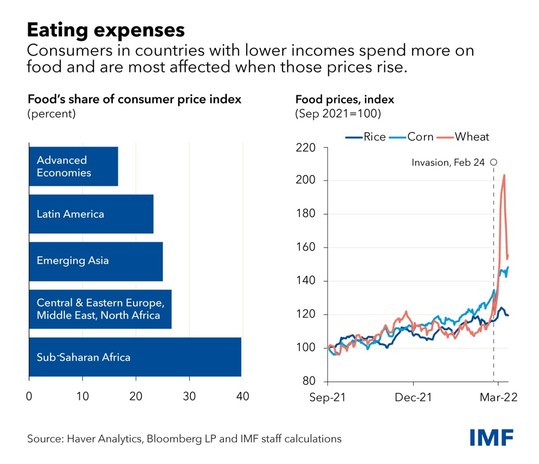
The Chart of the Week shows how price shocks will have worldwide impact, especially on poor households for whom food is a higher share of expenses. Food costs account for 17 percent of consumer spending in advanced economies, but 40 percent in sub-Saharan Africa. Though this region is highly import-dependent for wheat, the grain constitutes only a minor share of the total caloric needs.

charts

Differences in diet are also significant. In Europe, where bread is deeply embedded in many aspects of its culture, wheat makes up about a quarter of diets. In Southeast Asia, wheat accounts for only 7 percent versus 42 percent for rice, for which price increases so far have been relatively contained. Country-level averages, however, mask substantial differences within nations as poor households tend to eat more cereals but less meat, vegetables, and fruits compared with middle-income households.

Finally, disruption may be even greater for countries with close trade links to Russia and Ukraine, including in Eastern Europe, the Caucasus, and Central Asia. High wheat prices will weigh even more on economies in the Middle East and North Africa, such as Egypt, which are especially reliant on Russian exports.

Looking forward, reduced fertilizer supplies and higher oil prices will increase costs for harvesting, transporting and processing food. Policymakers must prevent those pressures from fueling food insecurity by avoiding protectionism and increasing social assistance for the poorest.

The world may also call upon the two largest economies if the situation worsens. In the United States, where about 40 percent of corn production goes to ethanol, policymakers could reassess that use. And China, which holds more than half of global wheat and corn reserves, could consider releasing supplies to lower prices.

******


Os Lusíadas: épico português, completa 450 anos de publicação - BBC News Brasil

 'OS LUSÍADAS': A OBRA QUE 'FUNDOU' A LÍNGUA PORTUGUESA HÁ 450 ANOS!


BBC News Brasil, 12/03/2022 

"As armas e os barões assinalados,
Que da ocidental praia Lusitana,
Por mares nunca de antes navegados,
Passaram ainda além da Taprobana,
Em perigos e guerras esforçados,
Mais do que prometia a força humana,
E entre gente remota edificaram
Novo reino, que tanto sublimaram."

Assim começa a obra que pode ser considerada a certidão de nascimento da língua portuguesa. Publicada em 12 de março de 1572, há 450 anos, a célebre criação do poeta Luís Vaz de Camões (nascido provavelmente no ano de 1524 e morto provavelmente em 1580) é formada por dez cantos, 1.102 estrofes e 8.816 versos, todos em oitavas decassilábicas, sempre arranjados em um esquema rímico fixo.

Trata-se do poema épico Os Lusíadas, que narra a descoberta, pelo navegador português Vasco da Gama (1469-1524), da rota marítima para a Índia — um marco nas relações comerciais e exploratórias do século 15 e, de certa forma, a consolidação de um momento historicamente relevante para Portugal.

Ao longo de seu texto, o poeta, que se dirige ao rei Sebastião I (1554-1578), evoca episódios da história lusitana de forma épica, sempre buscando glorificar o povo português.

Mas a grandeza de Os Lusíadas não se resume ao engenhoso e esmerado formato adotado por Camões, nem pelo grande número de versos, tampouco pelas próprias histórias de heroísmo ali narradas.

Os Lusíadas se tornou um marco pelo uso da língua portuguesa — na época chamada apenas de "linguagem", quase como de modo pejorativo quando comparada ao jeito culto de se expressar por escrito, ou seja, o latim.

E, protagonista e fruto de um momento histórico de valorização de tais identidades, a obra é reconhecida como uma espécie de literatura fundadora do idioma hoje oficialmente praticado em Portugal e em outros oito países, inclusive o Brasil.

Doutor em estudos literários pela Universidade Estadual Paulista (Unesp) e criador do canal no YouTube Elite da Língua, o professor Emerson Calil Rossetti situa Os Lusíadas como "a maioridade e a identidade poética da língua portuguesa".

"Constituem de fato uma referência para e sobre a língua portuguesa. Não somente por ser uma obra-prima, o que é hoje consensual, mas por ser a primeira produção do idioma que alcança prestígio para além das fronteiras de Portugal ou dos países lusófonos", argumenta ele.

"Camões captou com precisão o espírito da Renascença, tomando como base as epopeias antigas e construindo seu longo poema com soluções estéticas típicas da perfeição formal da época mas a partir das possibilidades expressivas da nossa língua, como jamais se havia visto", analisa Rossetti.

"É o caso, por exemplo, do ritmo bem marcado e regular dos decassílabos heroicos e, num universo repleto de alusões históricas, mitológicas e cristãs, as combinações de rimas que caracterizarão, igualmente, as 1102 estrofes da epopeia."

Professora livre-docente da Universidade de São Paulo (USP), onde é pesquisadora do Departamento de Línguas Clássicas e Vernáculas, a linguista Marcia Maria de Arruda Franco contextualiza a obra como parte de um momento de "dignificação da língua portuguesa como língua de cultura".

"Até o século 16, era muito raro que um autor em Portugal escrevesse em português. E mesmo ao longo do século 16, as línguas de cultura preferidas dos letrados, tanto os humanistas puros que usavam o latim, como os impuros que usavam as línguas vulgares, era o castelhano em vez do português", esclarece ela.

Arruda lembra que esse movimento vinha sendo experimentado por alguns escritores, como é o caso de Sá de Miranda (1481-1558), "que ousavam essa aventura de descobrir o valor letrado da língua portuguesa, de trabalhar sobre sua elocução, de escrever em português".

"Ao longo do século 16, vários vão levar a cabo essa tarefa de escolher a língua portuguesa como língua de cultura. Não só no discurso poético, mas também no discurso histórico. [O idioma está presente] nos cronistas que escrevem sobre as grandes descobertas, quando a língua portuguesa é a preferida", conta ela.

Vale ressaltar que já desde o reinado de Manuel I (1469-1521), médicos portugueses eram obrigados a efetuar suas prescrições em língua portuguesa. "Em 'linguagem', como eles diziam. Naquela língua falada, que todo mundo entendia", comenta a professora.

Era um período de ebulição acadêmica, na qual os linguistas se propunham a entender e explicar a organização daquilo que se falava. "Começa a surgir a filologia portuguesa, uma série de gramáticas em defesa da língua portuguesa como língua de cultura, e não mais apenas como 'linguagem'", contextualiza Arruda. "'Os Lusíadas' culminam esse processo, fazem com que esse processo se consolide."

"Porque 'Os Lusíadas' são escritos em gênero épico, sublime. Relaciona-se às épicas da cultura clássica ocidental, da cultura antiga, que era modelizada pelos renascentistas. 'Os Lusíadas' estão em linha direta com outras épicas, de Homero [da Grécia Antiga] e de Virgilio [da Roma Antiga]", diz a linguista.

Para o escritor Ênio César Moraes, professor de língua portuguesa e assessor pedagógico do Colégio Presbiteriano Mackenzie Brasília, a importância de Os Lusíadas pode ser dividida entre os aspectos literário e histórico.

No primeiro quesito, o mérito recai sobre "o fato de se tratar de uma epopeia, obra épica que, no plano artístico-literária, põe Portugal ao lado de nações como Grécia e Roma". Moraes observa que, não à toa, o próprio narrador do poema "afirma, altaneiro": "Cessa tudo o que a Musa antiga canta/ Que outro valor mais alto se alevanta". "[Está] enaltecendo a temática da obra, em comparação às produções grega e romana", interpreta.

Já o segundo ponto está no fato de que o texto de Camões é a "narrativa de grandes feitos do povo português, na pessoa de Vasco da Gama, à época das grandes navegações".

"Virgílio [o poeta romano] é o grande interlocutor de Camões. E com esse trabalho ['Os Lusíadas'], ele engrandeceu o português e o consolidou como língua de cultura. Fez isso graças ao seu trabalho de escrever com tropos, figuras, imagens, um todo. Realizou um trabalho sobre a prosódia dos versos, escolhendo os decassílabos, a oitava para urdir o seu poema, sua épica… Trabalhou a elocução da língua portuguesa", complementa Arruda.

A obra garantiu a Camões o mesmo lugar na língua portuguesa ocupado por William Shakespeare (1564-1616) no inglês, Dante Alighieri (1265-1321) no italiano, François Rabelais (1494-1553) no francês, e France Prešeren (1800-1849) no esloveno. Em suma, cada língua considerada moderna tem no trabalho de um grande escritor a consolidação de suas bases e a matriz de suas normas.

"Camões representou esse movimento de defesa e ilustração das línguas ditas vulgares, faladas no dia a dia. Que foi geral na Europa, quando todas as línguas nacionais dos reinos passaram a ser utilizadas também na língua de cultura, em detrimento do latim", diz a linguista Arruda.

"Em Portugal, havia a opção entre duas línguas vulgares: o castelhano e o português. Mas cada vez mais os letrados preferiram escrever em português", acrescenta ela.

Camões mesmo já havia escrito poemas em espanhol. Decidiu utilizar o português para Os Lusíadas e, logo em seguida, sua obra também foi traduzida — ainda no século 16, ganhou três traduções para o castelhano e pelo menos uma publicação em latim, conforme pesquisas de Arruda.

"Do ponto de vista da história da evolução da língua, o português atinge seu estágio moderno exatamente no século 16", ensina Rossetti. "É quando o idioma se uniformiza e adquire as características básicas que ainda hoje se reconhecem nas nossas gramáticas."

"A obra de Camões assimila essa nova feição e legitima as potencialidades da nossa língua como expressão poética de temas universais e aspectos atemporais acerca da condição humana. Por meio dos recursos fônicos, morfológicos e sintáticos, o escritor confirma o potencial também inventivo: a natureza literária do idioma. Nesse sentido, a língua portuguesa torna-se, pela sua pena, uma herança cultural, modelo de possibilidades de exploração criativa", diz ainda o professor. "Por isso, Camões é patrimônio, como também Shakespeare e Dante."

Rossetti lembra que a partir das letras de Camões abriu-se um "espaço para outros gênios do pensamento ocidental" em língua portuguesa. "É um novelo de muita linha, e a primeira ponta desse fio se chama Camões", resume.

Professor Moraes ressalta que a época em que o poeta viveu, o Renascimento, foi marcada por efervescência científica e artístico-cultural. Assim, com Os Lusíadas, ele "deu visibilidade ao povo português, ao ressaltar feitos grandiosos do presente, as grandes navegações" e também garantiu "importante referência para os estudos filológicos e linguísticos promovidos nos séculos seguintes".

"Como sabemos, a língua é um dos principais elementos de identidade nacional, e o excelso caráter nacionalista da sua narrativa exalta, para além do conteúdo, a língua portuguesa. Não é à toa que, até hoje, o poeta português figura como um dos maiores nomes da literatura lusófona", pontua ele.

Quatrocentos e cinquenta anos depois, por que vale a pena ler Os Lusíadas ainda hoje? Para os especialistas, não se trata apenas de uma obra "para o vestibular" — o livro pode e deve ser lido como cultura geral, principalmente por pessoas lusófonas.

"[Seus versos] são uma aula de retórica. Quem quiser aprender retórica que leia 'Os Lusíadas', entenda toda aquela estrutura persuasiva", defende Arruda.

"Sua estrutura persuasiva, ele [o poeta-narrador] quer convencer o rei [português] de alguma coisa, convencê-lo a continuar essa aventura, essa luta dos portugueses para manter seu império", explica a linguista.

"Bem, os clássicos são os clássicos. E isso responderia à questão [sobre as razões para se ler Camões hoje] de forma simplista mas eficiente", acrescenta Rossetti. "Para ser, então, mais exato e pontual, diria que obras como 'Os Lusíadas' têm a ver com a nossa história: a cultura, as crenças, as reflexões, os valores, a memória."

Para o professor, "não se pode construir um projeto futuro sem o conhecimento e a devida compreensão do passado, sobretudo quando ele ainda faz tanto sentido nos dias de hoje". "Afinal, continuamos seres desbravadores, vibramos com as conquistas que ampliam os limites da geografia e do conhecimento, sentimos emoção diante das histórias de amor ainda que com cores trágicas", analisa.

Além disso, ele ressalta a questão da lusofonia. "Principalmente, falamos a mesma língua e precisamos, provavelmente mais que no século 16, de exemplos inteligentes, admiráveis e sensíveis: necessitamos sempre de boa poesia, de qualquer período, visto que os clássicos não envelhecem", conclui.

Moraes defende que "ter contato com os clássicos" é fundamental para a "construção do repertório artístico-cultural do indivíduo". "Nenhuma obra se torna um clássico por mero trabalho de marketing", argumenta.

"No caso das epopeias, ainda mais", compara. "Como se não bastasse a magnitude da forma, tem-se a maravilha do conteúdo, que nos conduz 'por mares nunca dantes navegados'. Ademais, propicia o estudo do passado histórico, sob a perspectiva poética. Inclusive, pode proporcionar um interessante trabalho comparativo entre os ofícios do historiador e do escritor-artista."

Problematizações contemporâneas também são possíveis, é claro. E, se compreendidas dentro de cada contexto histórico, podem gerar reflexões sem cair em anacronismos. Arruda frisa que não se pode esquecer que, em seu conteúdo, Os Lusíadas "sublinham essa coisa que a gente considera horrível: a ideologia imperialista, cruzadista".

"É um monumento ao poder e não deixa de ser um pouco chocante para nossos ouvidos, por exemplo, o modo preconceituoso como os mouros são apresentados na obra", exemplifica. "Isso não é do poeta. É do gênero [épico] e é da época. Por isso que a crítica contemporânea brasileira apresenta uma leitura de 'Os Lusíadas' que salienta sua contradição, justamente o elogio e o questionamento da posição invicta e hegemônica portuguesa."

Por outro lado, também é importante ressaltar que a obra é um retrato daquilo que pode ser considerada a primeira globalização. "Essas 'descobertas' dos navegadores se tornaram importantes como a primeira ligação planetária da Terra, a primeira vez que todas as culturas entram em contato e se tem essa visão do globo. Isso vai ser sempre importante", diz Arruda.

"Podemos dizer que são questionáveis, já que no encontro de culturas a diversidade acabou esquecida e apagada, reprimida pelo eurocentrismo que doutrina o mundo… Mas 'Os Lusíadas' vão sempre ter a importância de relatar esse primeiro contato entre culturas, ainda que em confronto de poder entre o europeu hegemônico e os outros povos subjugados."

Russia: a nova “cortina de ferro digital” — Martin Untersinger (Le Monde)

Guerre en Ukraine : avec les sanctions et les mesures de rétorsion, la menace d’un « rideau de fer numérique » en Russie

En quelques jours, l’espace numérique russe a atteint un niveau d’isolement inédit, sous l’effet des mesures d’interdiction prises par le Kremlin mais aussi du contrecoup des sanctions internationales. Beaucoup craignent que cette ostracisation s’accentue encore, au risque de favoriser un peu plus les politiques drastiques de Moscou. 
Par Martin Untersinger
Le Monde, 16/03/2022
SÉVERIN POUR « LE MONDE »

Des plates-formes comme Instagram jusqu’aux médias traditionnels, un « rideau de fer numérique » menace de s’abattre entre la Russie et le reste du monde, depuis le début de l’invasion de l’Ukraine, le 24 février. Derrière cette ligne, des réseaux sociaux et des médias abreuvés de propagande, muselés par une législation de fer bannissant l’usage même du mot « guerre » et une population d’internautes soumis à l’influence et au contrôle de Moscou.

D’un point de vue technique, l’Internet russe n’a pas fait sécession du reste du réseau. Il est encore possible de se connecter à un site Web aux Etats-Unis ou en Europe ou bien d’envoyer un e-mail. La Russie, même si elle s’en approche, est encore loin de la Chine, maîtresse dans l’art d’isoler son espace numérique du reste du monde. Mais des pans entiers de l’activité numérique des Russes sont désormais inaccessibles et cet isolement numérique se combine à d’autres formes d’autarcie, notamment économique et financière.

Offensive contre les réseaux sociaux occidentaux

Lorsque, le 4 mars, le régulateur des médias ordonne le blocage de Facebook, accusé d’avoir pénalisé certains médias russes, la décision est spectaculaire politiquement, mais reste limitée sur le terrain. Facebook n’est pas autant utilisé en Russie qu’ailleurs dans le monde. Le Kremlin a cependant passé un cap, le 11 mars, en annonçant le blocage, effectif trois jours plus tard, d’Instagram. Le réseau social spécialisé dans la photo et la vidéo est beaucoup plus populaire que Facebook, et est utilisé dans toutes les couches de la population.


(...)

A China sob enorme pressão econômica por causa da guerra de agressão da Rússia contra a Ucrânia - Adam Tooze

Chartbook #99 China under pressure

 There is a changing of the guard in Beijing. Premier Li Keqiang is retiring and Vice Premier Liu He cannot be far behind. Once they were Xi’s point men on the economy. They leave the main stage amongst considerable turmoil. 

Ukraine has thrown Xi’s geopolitics off balance and rallied the United States and its allies. 

The dramatic transition in China’s domestic economic policy is continuing to cause a major shakeout. Last year China was dealing with an energy crunch. Now growth has slumped in Q4 2021 to 4 percent. For a few months the US actually grew faster than China. 

The mood in the stock market is further worsened by rumors of impending fines to be levied on leading Chinese tech firms and an alarming surge in Omicron cases in Shenzhen and Shanghai, the heart of China’s manufacturing economy. Huawei, Oppo, TCL, Foxconn and Unmicron - key nodes in the smartphone supply chain - are all based in the zone affected by COVID lockdowns. The sanctions imposed on Russia are an alarming indicator of what might lie ahead in a future clash between China and the West. 

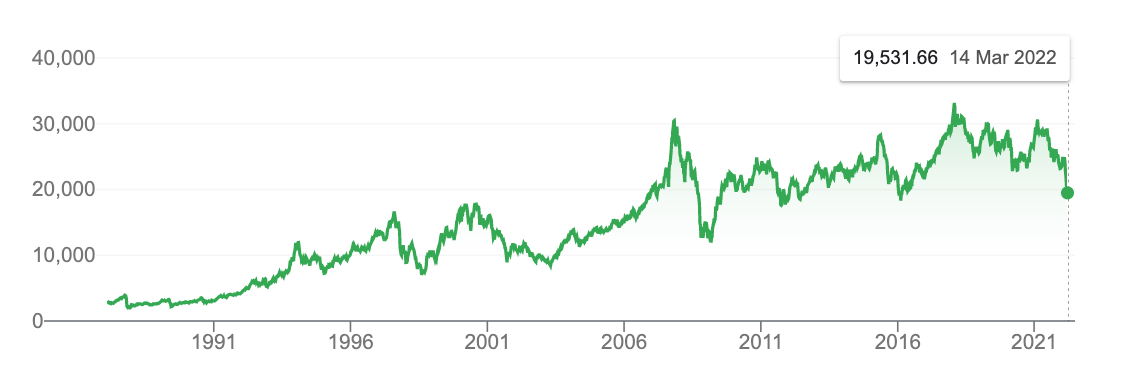
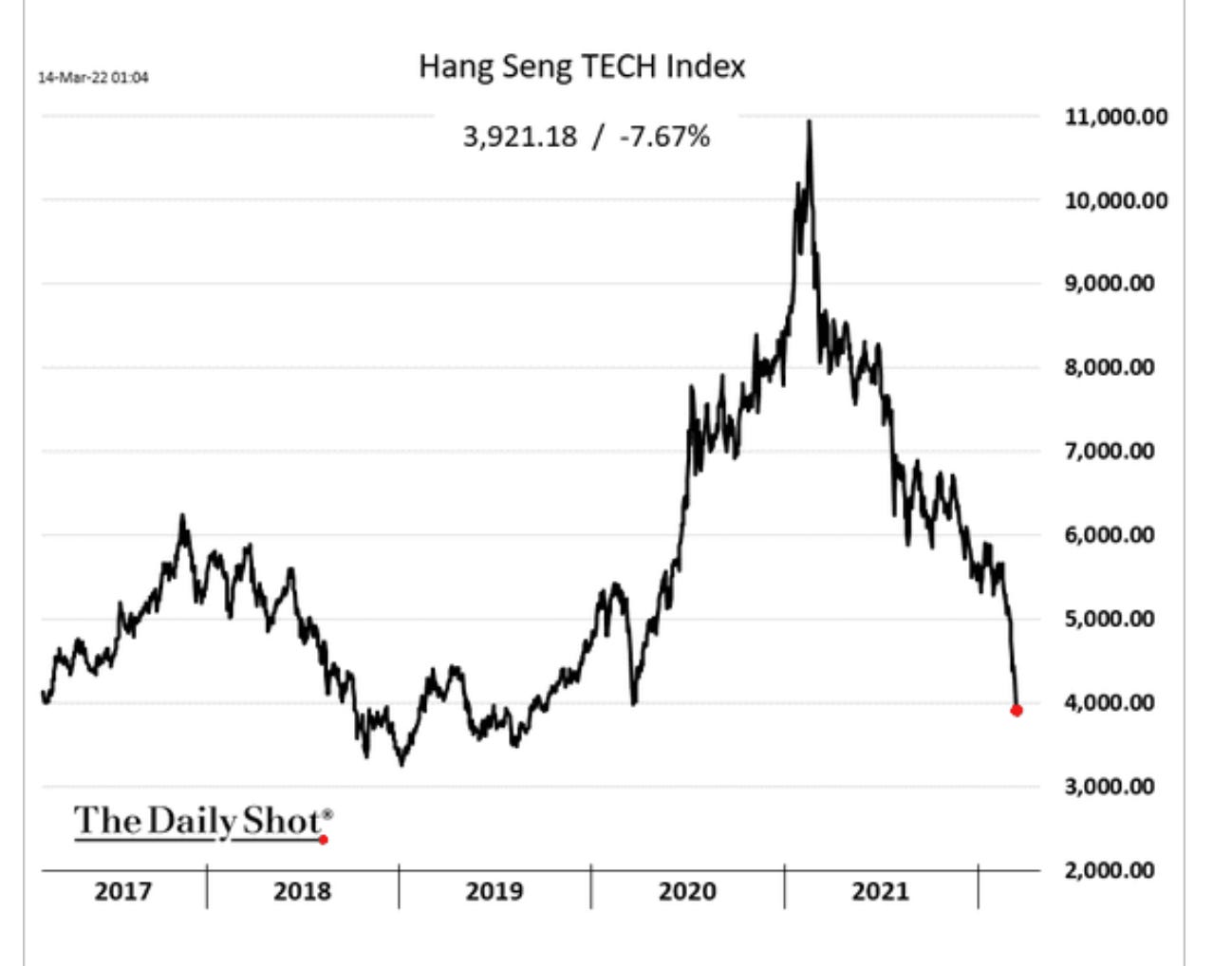
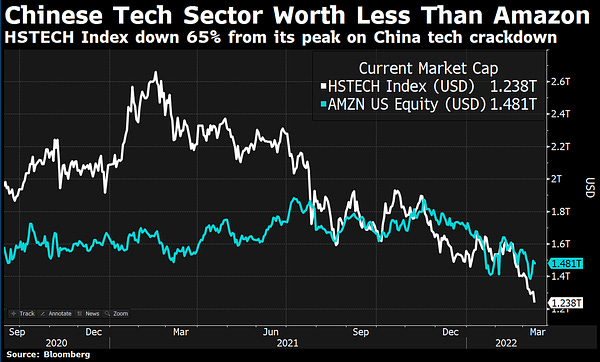
The impact on the stock market has been brutal.

This thread by Rebecca Choong Wilkins vividly described the “carnage” in the Chinese markets earlier this week.

By Monday March 14th the collapse in Chinese tech stocks amounted to a rout.

It is cold comfort under these circumstances that Chinese trade with Russia surged 38.5% on the year in January and February, far outpacing Beijing's 15.9% increase in total trade for the period.

Since the Central Economic Work Conference in December 2021 the talk in party circles has been of the “triple pressure” facing the Chinese economy, ranging from weakening expectations, shocks to supply, and a contraction in demand. 

But to get a grip on China’s current situation, let us wind the clock back a little further, to the “before times”. 

Remember January 2019 when Xi was warning officials to beware “grey rhinos” - the threats that become so familiar that we actually end up ignoring them - as well as truly unexpected “black swans”? Risk management was the order of the day for cadres. Xi warned that they faced “changes not seen in a century”. 

Remember the "Six major effects” driving heightened global risk identified by CCP-thinker Chen Yixin in 2019 - Backflow, Convergence, Layering, Linkage, Magnification, Induction?

COVID was a classic grey rhino. But so too are the consequences of China having adopted a no-covid policy in a world which unlike China went the route of herd immunity and vaccination. It should not be surprising that Beijing now finds itself backed into a corner. 

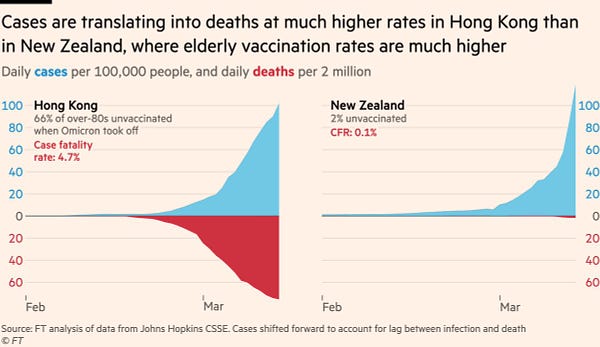
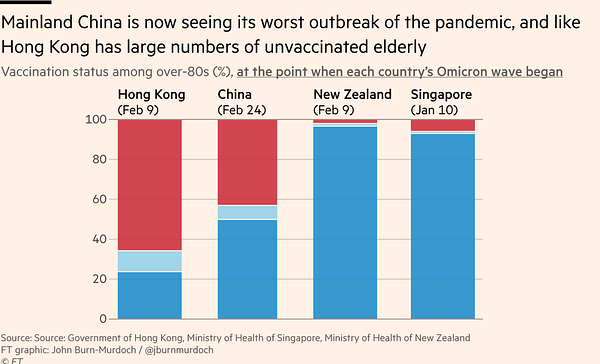
What is surprising is the failure to properly vaccinate the elderly population in a city like Hong Kong. 

And the situation on the mainland is only little better. Omicron poses an acute risk to the vulnerable, unvaccinated and immuno-naive elderly population of China. Hong Kong is currently setting a record for a surge in mortality. Worse might be about to follow. Imagine the deaths in the nursing homes of England or New York State, multiplied ten times or more. 

The threat posed by China’s real estate bubbles has long been discussed and the challenge posed by the tech oligarchs was no secret either. These are the kind of crises that the West has regularly sleepwalked into. In this regard China’s regime is impressive precisely for the fact that it is acting in anticipation of emerging threats.

To prick the bubble is risky. It certainly isn’t good for stock markets, or growth figures. But you have to appreciate Beijing’s strategic foresight in deciding that it was time to do something about dangerous developments that were headed in the wrong direction. 

The clash with the US too is no black swan. It was long foretold. It is predictable that China’s aggressive diplomacy should has unleashed a reaction from Washington. But it is not obvious what kind of diplomacy on China’s part could have avoided an eventual confrontation. To avoid antagonizing the Pentagon, China’s defense spending would have had to have been continuously reduced as a share of GDP. 

Faced with the likelihood of an escalating confrontation with the US, an alliance with Russia looked like a good option. It added strategic depth, raw materials and energy supplies. It wasn’t Xi who cooked up the idea or the wolf warriors. It is an option that both China and Russia had been exploring since the 1990s. 

What neither Beijing or anyone else truly reckoned with was Putin’s willingness to launch an all out invasion. Geopolitical tension over Ukraine was to be expected. China’s backing for Russia helped to foster it. But all out war with all its attendant risks is another matter altogether. From Beijing’s point of view, Putin’s extraordinary decision is no doubt a major shock. 

Did China help to encourage Putin, if so that is a case of what Chen Yixin dubbed “backflow”. 

In global opinion it has induced induction and magnification effects even more dramatic than the BLM moment. Ukraine has become a global symbol of popular resistance and self-empowerment. 

Given the huge swing in global public opinion against China in the wake of COVID, the last thing Beijing needs is to be associated with a blood soaked and repressive Putin. 

Furthermore, Russia’s aggression has rallied a coalition of hostile forces - convergence, layering and linkage in Chen Yixin’s terms. 

As Gideon Rachman remarks in the FT

The fact that the EU, UK, Swiss, South Koreans, Japanese and Singaporeans have joined in the financial sanctions on Russia has created a united front of developed economies that should concern Beijing. China has repeatedly measured itself directly against the US, ticking off milestones as it goes: largest trading power, largest economy measured by purchasing power, largest navy. Yet if China now has to measure itself against not just the US, but also the EU, UK, Japan, Canada and Australia, its relative position looks much less powerful. … The idea of an economic severance of China from the west, once unthinkable, is beginning to look more plausible. It might even appeal to the growing constituency of economic nationalists in the west who now regard globalisation as a disastrous error.

To exert pressure on Russia, the Western coalition has deployed its most dramatic weapon - a targeted attack on Russia’s national currency reserves.

The move against Russia’s fx reserves is a surprise. But, as far as China is concerned, this too ought to be considered a grey rhino rather than a black swan. Though the extent of the measures against Russia is certainly surprising, it has long been discussed that China will have difficulty escaping the grip of the dollar. Add the Europeans and you have a “Western bloc” that monopolizes 80 percent or more of reserve assets. A country like China that has used giant export surpluses to drive a lopsided pattern of growth will, in the end, find itself boxed in. 

This is compounded by the entanglement of Chinese business with western financial markets and the dollar system. It was telling that President Xi Jinping's in his address to the WEF in January warned Western economies not to "slam on the brakes or take a U-turn in their monetary policies." A sudden tightening of US policy would squeeze the entire global economy. In light of the recessionary tendencies inside China, it would be most unwelcome in Beijing. 

Russia faces a Eurodollar trap. China has to contend also with the pivotal role of Japan’s financial system as a conduit for dollars into the East Asian economy. 

As Andrew Hunt and Ben Ashby write in Nikkei Asian Review, Japan’s megabanks perform a “vital but little understood function” in supplying dollars to the Asian economy. 

Despite the growth of China's banking system, much of it remains domestically focused. China's banks also lack the creditworthiness and international connections that Japan's financial institutions enjoy.

With the financing of much of Asia's trade and the flows in and out of its various financial centers still heavily dependent on Japan, Japan's bankers, squeezed between an overheating U.S. and an increasingly troubled China, have a difficult balancing act to perform…..

With the Fed now worried about inflation, likely to lead to a tightening of global liquidity, Japanese banks must now make some tough decisions over what to do with the more than $5 trillion worth of overseas claims they have amassed.

Do they cut back on risk and reduce their Eurodollar borrowing, charge a higher interest rate to borrowers, or become more selective in their lending? Our guess is that they will do a mixture of all three.

With $166 billion of direct exposure to mainland China and Hong Kong, and with huge problems beginning to surface in Chinese real estate, this sector will be a prime candidate for risk reduction. It will be a difficult balancing act and, if Tokyo's bankers do not pull it off, it may add to China's own problems at an already difficult time.

The Ukraine crisis has seen Japan aligned squarely with the United States. Rising tension with China points in the same direction. 

As far as Beijing is concerned, Minxin Pei writing in Nikkei Asia Reviewcomes to a bleak conclusion. 

For China, which might have benefited from a prolonged period of tensions between Russia and the West, the paths ahead have suddenly become far more treacherous. Instead of being a net beneficiary of a conflict between Russia and the West, China now finds itself perilously close to being collateral damage. While the crippling economic blows against Russia are applauded in the West, Chinese leaders watch them with great alarm. Their country is far more economically tied to the West than Russia is. Although the same type of economic sanctions leveled at Russia would unavoidably hurt Western economies, they could be catastrophic for China in the event of a war across the Taiwan Strait.

But talk of Beijing becoming collateral damage seems exaggerated. 

Ukraine is ultimately a European problem. A prolonged period of high tension between the West and Russia will be hard for America and its allies to sustain. It will be surprising if the current sense of purpose in the West endures. 

The domestic problems of the Biden administration continue and will likely intensify in the course of 2022. His nominations for the Fed board are in trouble along with the rest of his domestic agenda. 

Whether Europe will actually back decisive action against Russia remains to be seen. In Germany there are huge political obstacles to taking decisive steps against Russia. Whatever the EU decides to do, it has a bona fide energy crisis to deal with. 

No doubt Russian energy is hard to do without, but it if can hold its nerve, Beijing might well conclude that there are limits to the kind of economic pressure it should expect. 

Furthermore, the G7 front against Russia does not negate the basic diagnosis of growing multipolarity. In abstaining on the UN vote of censure against Russia, China had the company of India and governments representing more than half the world’s population. 

With relations between Saudi Arabia and the US frosty,  Xi is weighing an invitation to meet with MBS in Riyadh in April. Whatever Europe and America’s concerns, it is China remains the world’s number one fossil fuel importer and that earns it respect. 

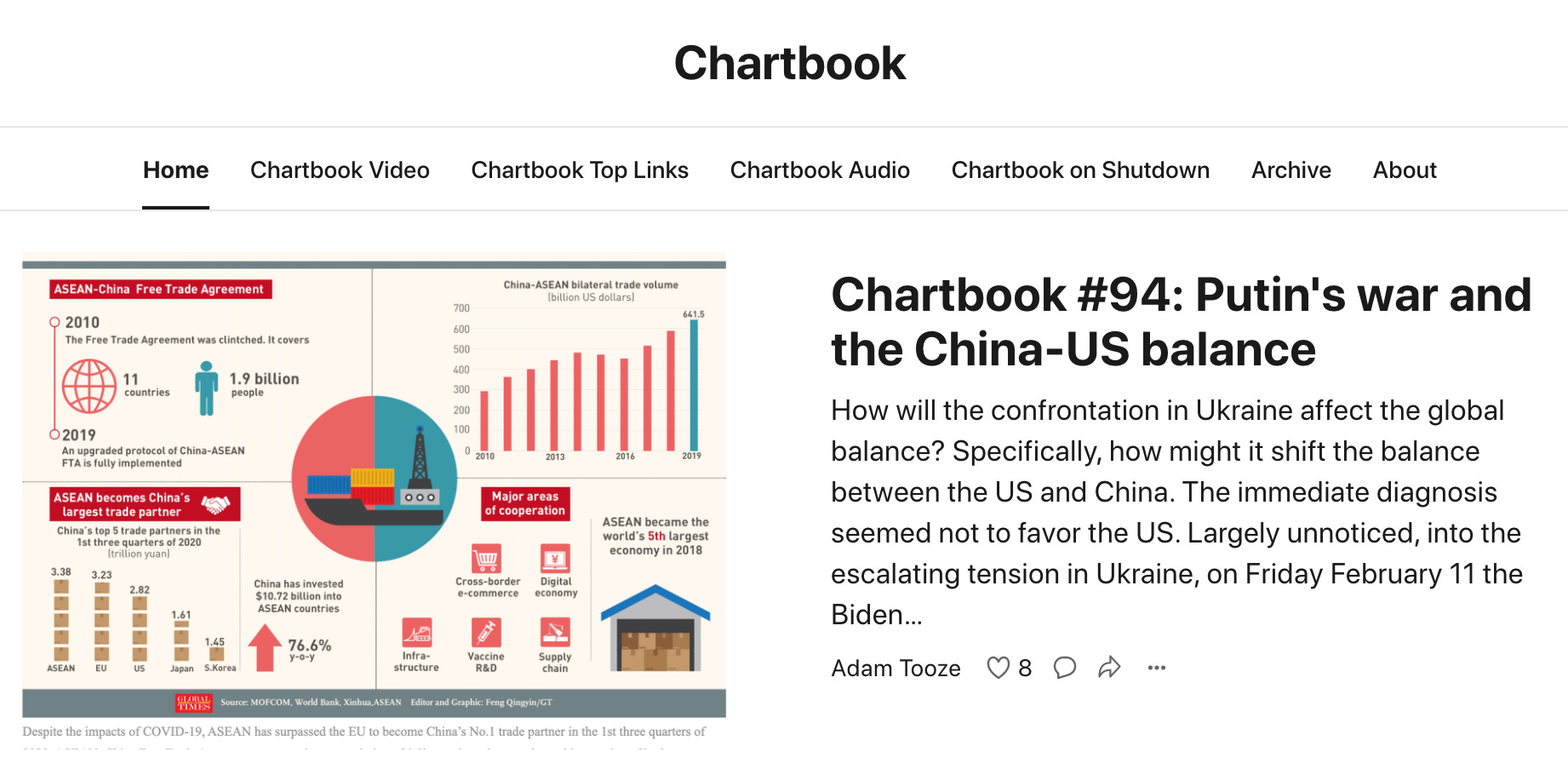
And if you turn the gaze back to the US, the fact remains - as discussed in Chartbook #94 - that the US does not truly have a policy to offer in the Indo-Pacific strategy. It has published a blueprint. But is concerns are overwhelmingly domestic - fashioning a trade policy that is acceptable to America’s “middle class”. Whether that will suit any major partners in Asia is another matter altogether. The war in Ukraine is not going to persuade major Asian players that their future belongs in an anti-China camp masterminded by Washington. They do not want to have to choose. 

Ultimately, what matters most is that China sustain its position as the leading driver of global economic growth. It needs to be better balanced in economic, social and environmental terms. That will tend to reduce the growth in China’s appetite for raw materials and industrial components. But it may result in even larger and more diversified imports from the rest of Asia. 

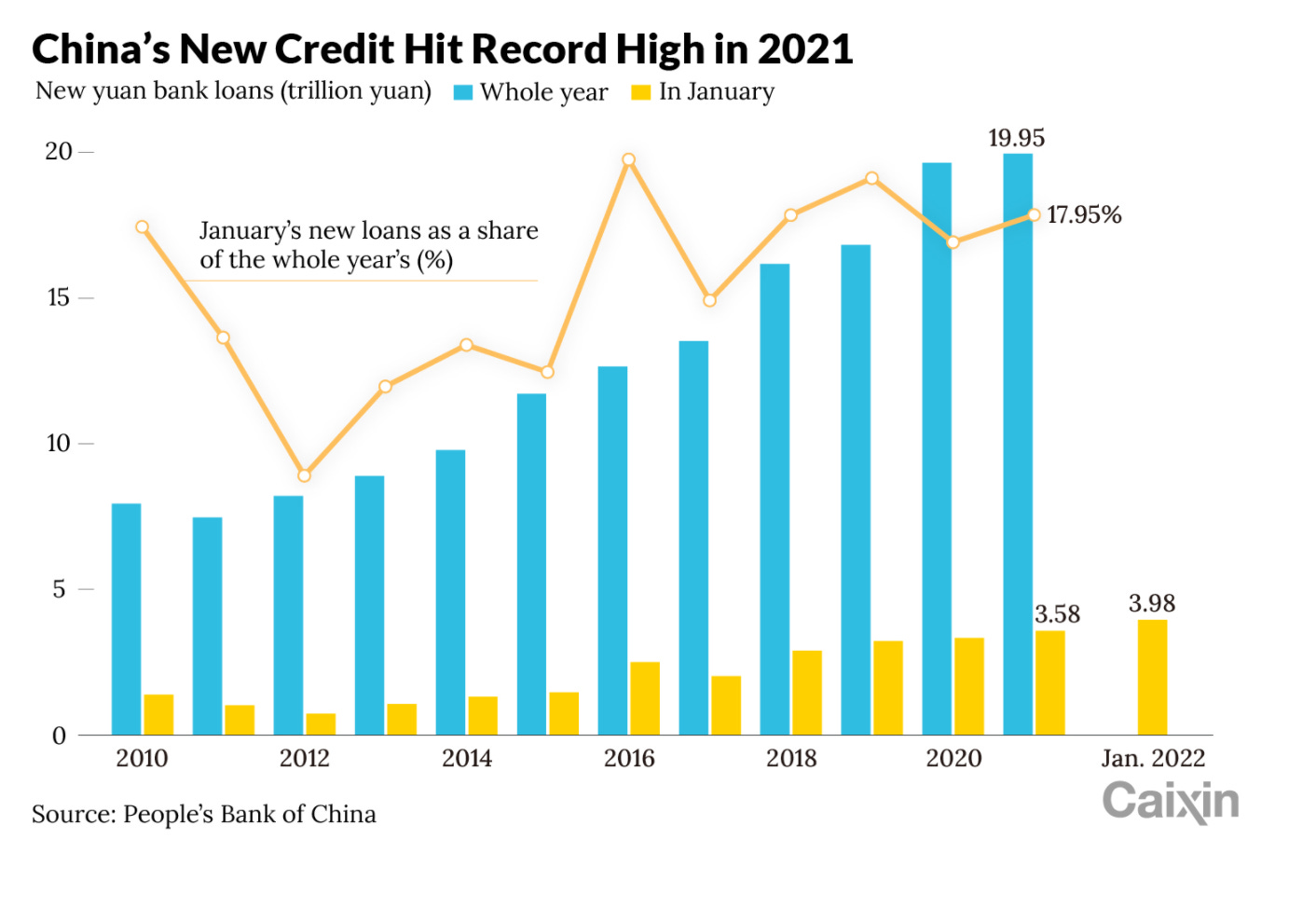
What Beijing is currently planning to stimulate its economy seems to be a blend of different policy tools. It is expanding social credit, the basic driver of demand. New total social financing hit a record high of 6.17 trillion yuan in January, beating market expectations of around 5.4 trillion yuan. New bank loans also rose to a record high of nearly 4 trillion yuan in January. But the February numbers were disappointing, indicating how much work Beijing may need to do to hit its growth target of 5.5%. 

On January 18 Liu Guoqiang, a deputy governor of the PBOC promised that the central bank will “open the monetary policy toolbox wider, maintain stability in the money supply and avoid a collapse in credit.” 

As in 2012, 2016 and 2019 one analyst noted, Beijing is in a “race between slowdown and stimulus”. But the real challenge for Beijing is to find new sources of growth. 

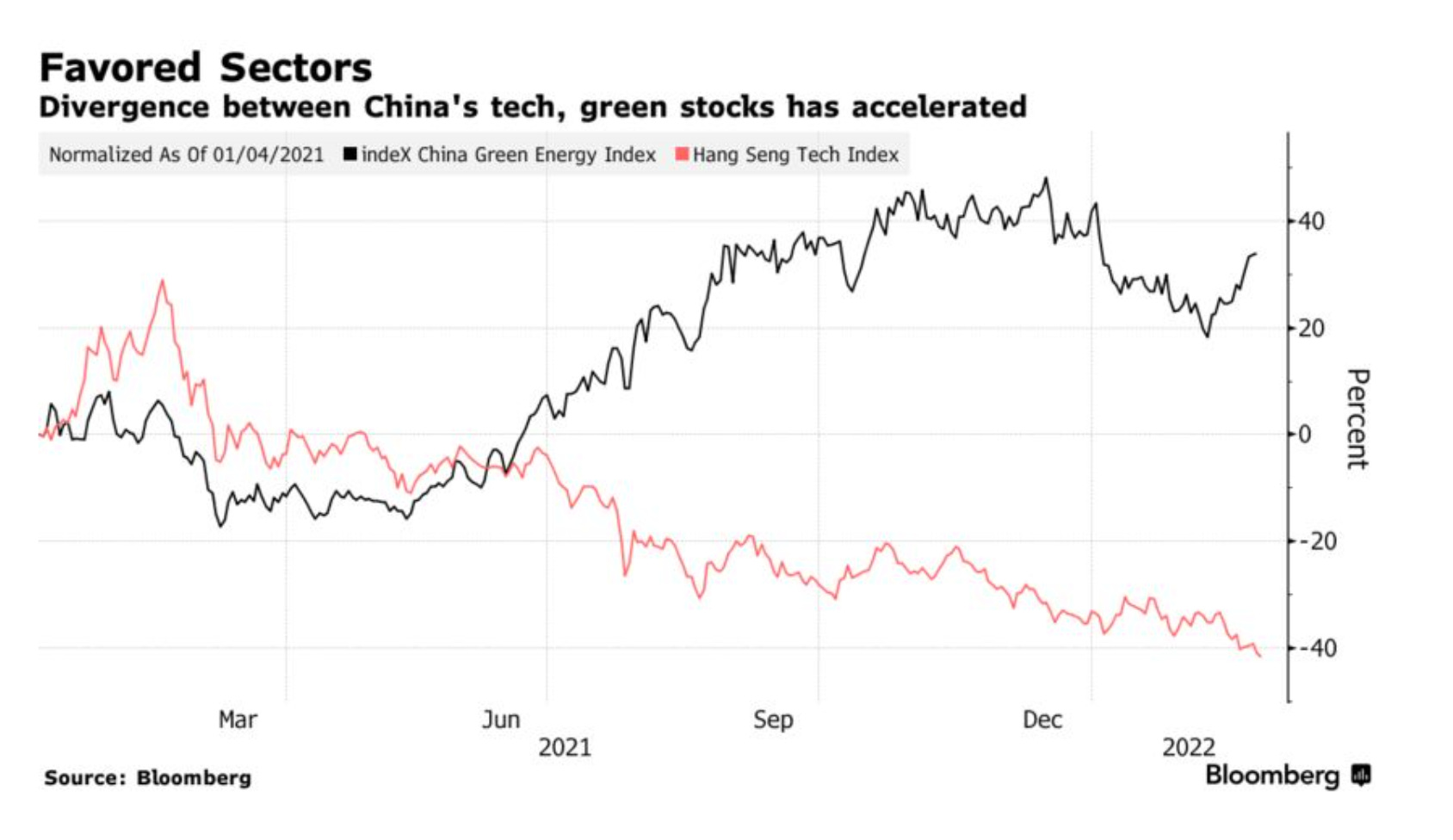
Authorities in recent months have rolled out cash subsidies for high-end manufacturing, affordable housing and sustainable energy. Not all Chinese stocks are selling off. So-called Chinese red chips -- Hong Kong-listed Chinese companies with significant state control -- climbed 20% in six months. Since Xi pledged in late 2020 that China would hit carbon neutrality by 2060 renewable energy funds have in some cases returned more than 40%.

The regime is clamping down on excessive lending in private real estate, but at the same time the government had announced plans to build 6.5 million low-cost rental apartments by 2025. If this is realized it will mean that an estimated 26% of new home supply will be offered at 30% below the market rate. In early February lending for such projects was exempt from limits on property lending, prompting talk of the “next big thing”. 

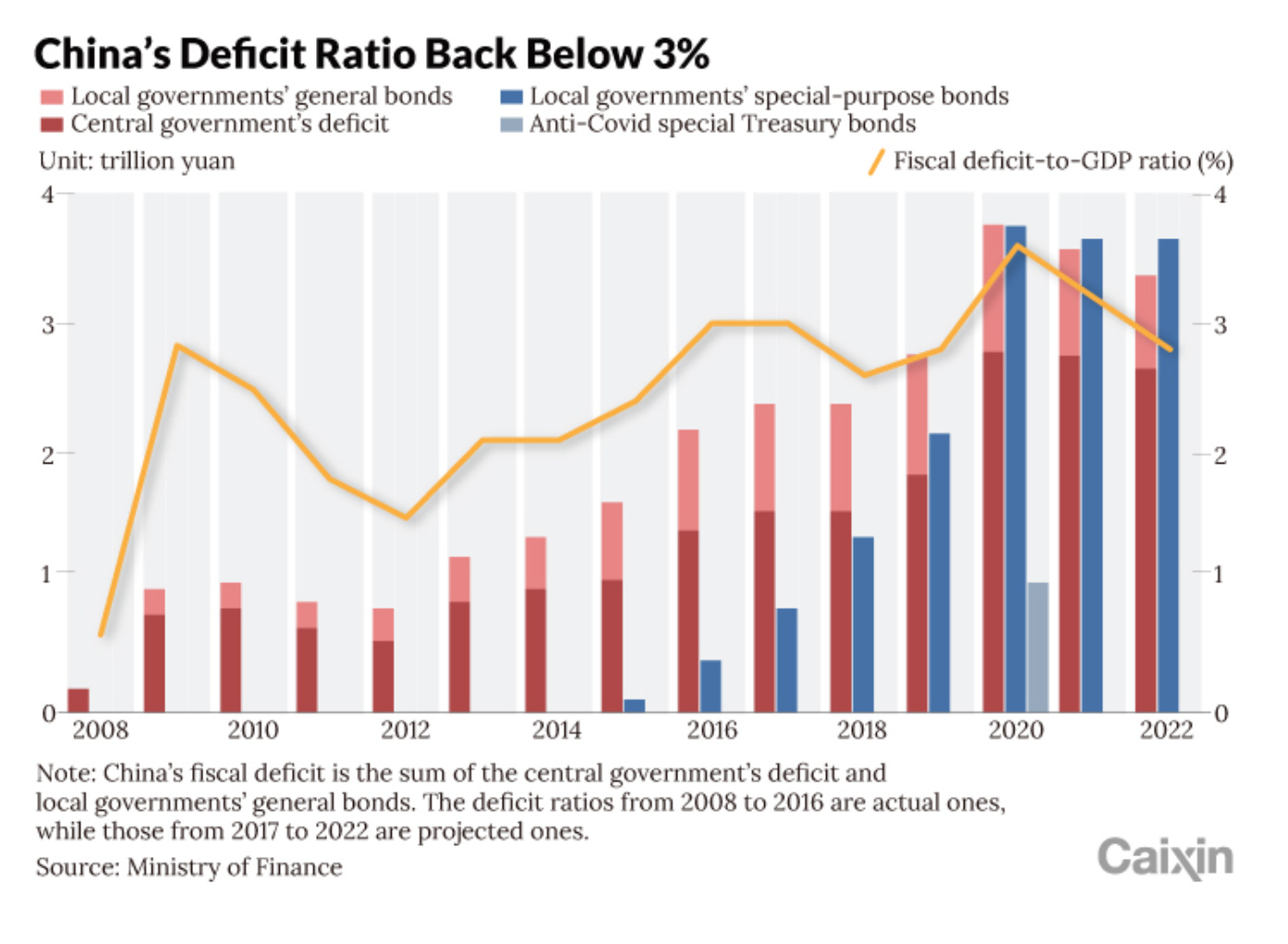
The annual Two Sessions closed last week with a commitment to a 5.5 percent growth rate. If realized this will be well below the growth in public spending which is expected to rise by 8.4 percent and result in a deficit of just below 3 %.

Source: Caixin

Within Chinese public expenditure, infrastructure investment will continue to play a key role, with central government expenditure rising by 5% to 640 billion yuan. But on top of that the central government will transfer 9.8 trillion yuan to local governments, up 18% from 2021, much of which will go towards funding investment spending.

This frankly sounds like relatively marginal adjustments to the familiar growth formula. How far “common prosperity” is really a comprehensive new formula and new vision of growth remains to be seen. But that is truly the decisive question also as far as China’s global standing is concerned. 

Putin’s attack on Ukraine has shifted the international balance. It has, to say the least, not been a success for Russia so far. In a protracted struggle with the West, Russia might still end up sliding into China’s more or less reluctant embrace. But China won’t rush to take up that role and it will surely guard against getting sucked into a further escalation of US sanctions. What is clear, is that above all its future depends on facing domestic challenges both in the medium and the short-term. 

If Beijing suffers a devastating Omicron outbreak in the next few months the entire narrative of the period since 2020 will have to be rewritten. 

***
Postagem em destaque

Livro Marxismo e Socialismo finalmente disponível - Paulo Roberto de Almeida

Meu mais recente livro – que não tem nada a ver com o governo atual ou com sua diplomacia esquizofrênica, já vou logo avisando – ficou final...