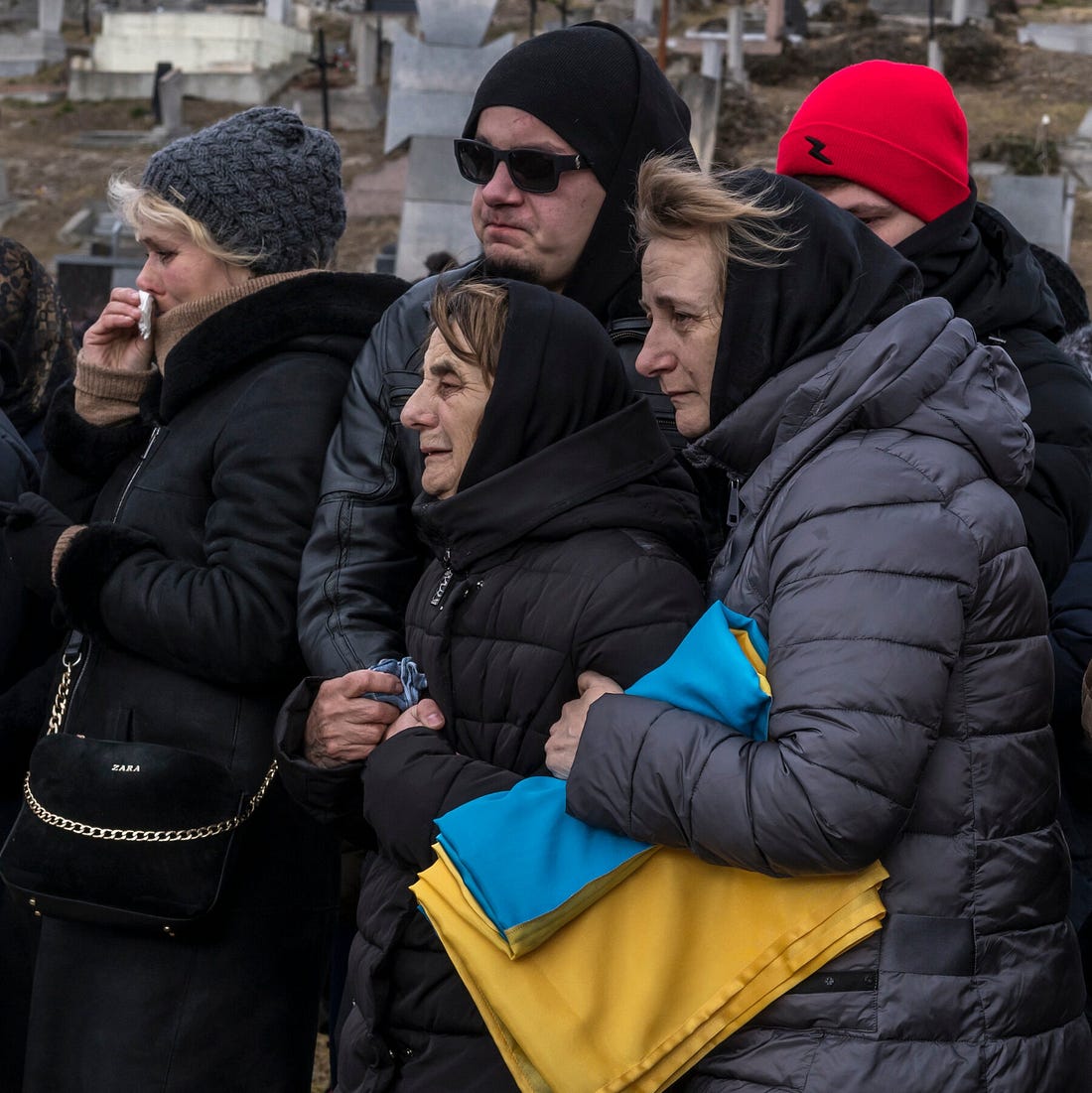
terça-feira, 18 de março de 2025

Trump está servilmente a serviço de Putin, não só na Ucrânia, mas principalmente na Ucrânia - Viktor Kravchuk

A Ceasefire of Shame

A deal written in cowardice, signed in blood

They talked about Ukraine, but Ukraine wasn’t at the table. They spoke of peace, but the bombs kept falling.

They called it a ceasefire, but it’s nothing more than a gift to a war criminal.

Donald Trump and Vladimir Putin had their little phone call, their moment of mutual admiration. Trump, a convicted felon. Putin, a wanted war criminal. And together, they came to an agreement: a ceasefire that Ukraine never asked for, that Ukraine was never even consulted on.

As they spoke, Ukraine was under massive missile attack. This is the "result" of their negotiations.

Trump calls it peace. But do you call it peace when entire families are buried under rubble? When stolen Ukrainian children are still trapped in Russia, renamed, brainwashed, erased? When the invader still occupies your home, your city, your country?

That is not peace. That is submission.

Zelensky accuses Russians of 'cowardly silence' over Dnipro attack

Trump says the war "should never have started", as if it was some tragic accident. As if Ukraine had a choice in whether its cities were bombed, its women raped, its people abducted. 

The war didn’t merely "start." Russia attacked. Putin attacked.

And now Trump wants to reward him with a deal. Not a deal for Ukraine. Not a deal for justice. A deal for Putin, so he can stabilize his economy, sell his gas, stockpile his weapons, and prepare for the next round of war.

Can you believe that?

A ceasefire doesn’t mean Russian troops leave. It doesn’t mean war criminals face trial. It doesn’t mean justice for Bucha, for Mariupol, for every city turned to rubble by Russian bombs.

It means Russia gets time. Time to regroup, time to rearm, time to prepare for another slaughter, another invasion, another genocide.

Because let’s take things clear: this is a war of extermination.

Russia doesn’t just want land. It wants Ukraine erased. Our culture, our people, our history. Russia wants Ukraine to stop existing.

And Trump, whether through cowardice or corruption, probably both, is handing Putin exactly what he wants.

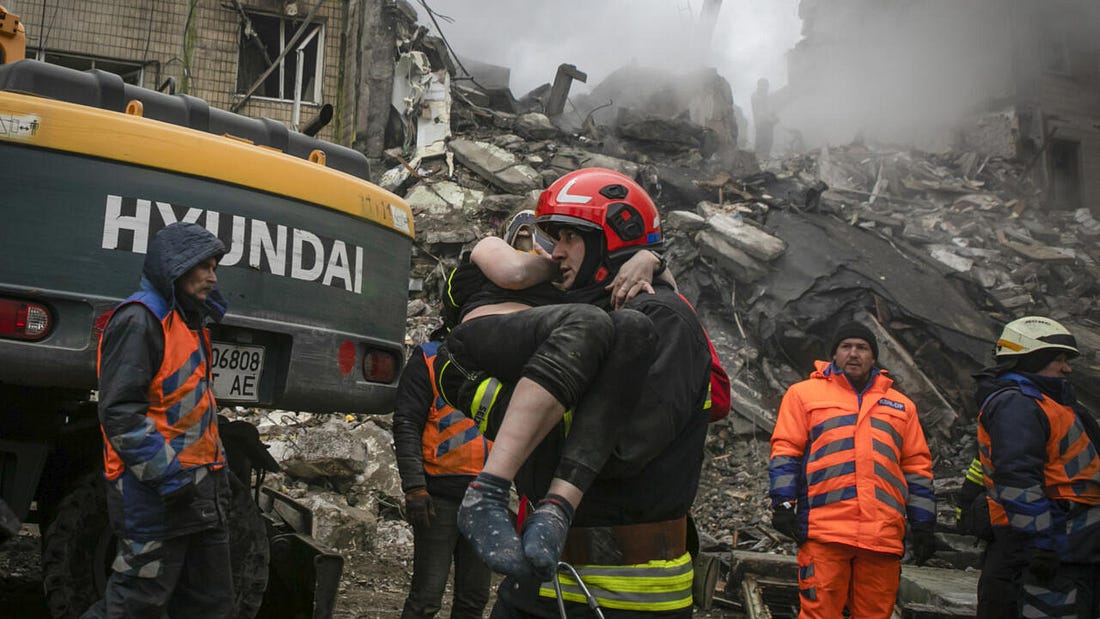
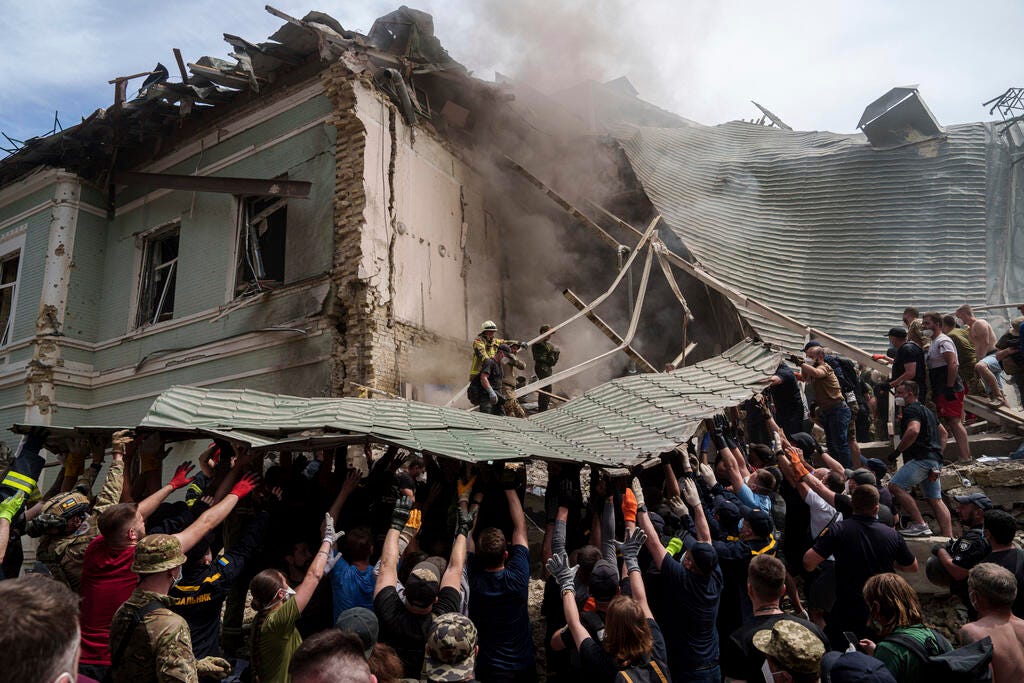
Kyiv mourns as rescuers sift piles of rubble at a children's hospital hit  by a Russian missile - The Press Democrat

Trump’s plan is simple: protect Russian oil and gas so Putin can keep funding his war. 

Not a word about returning abducted Ukrainian children. Not a word about stopping Russian missile strikes on civilians. Not a word about justice for those tortured in the occupied territories.

Because this was never about peace. It was about business.

About "huge economic deals." About Trump’s personal interests.

About the wealthy few who stand to profit from Russian gas, from war, from suffering.

The mask is off. There is no diplomacy, no neutrality here. This is Trump openly doing Putin’s bidding, propping up a dictator who has spent the last 25 years waging war, silencing dissent, assassinating opponents, killing anyone who stands in his way.

What Happened on Day 13 of Russia's Invasion of Ukraine - The New York Times

We don’t need a ceasefire. We need Russian troops out of Ukraine.

We need war criminals on trial in The Hague. We need the return of every stolen Ukrainian child.

A ceasefire without withdrawal is surrender. Would you call it peace if an intruder broke into your home, killed your family, stole your belongings, then sat down at your table and told you to move on?

A ceasefire without justice tells every dictator that war crimes work. 

That genocide is just a phase of war, not a crime.

A ceasefire without Ukraine at the table is an insult. As if Ukraine is some distant land, not a country of millions of people fighting for their lives.

No, we will not accept a "peace" that lets Russia keep its stolen land, its mass graves, its war crimes. 

No, we will not pretend that Trump and Putin are negotiating peace when they are simply negotiating how best to carve up a nation that refuses to die.

They are making their choices. To accept occupation, to let war crimes go unpunished. But we also need to make our choice. 

We have already chosen to fight.

If this were your land, what choice would you make?


The Fragile Axis of Upheaval (China, Iran, North Korea, and Russia) - Christopher S. Chivvis (Foreign Affairs)

The Fragile Axis of Upheaval

Christopher S. Chivvis


Foreign Affairs, March 18, 2025


CHRISTOPHER S. CHIVVIS is Director of the American Statecraft Program and a Senior Fellow at the Carnegie Endowment for International Peace.


Even regional wars have geopolitical consequences, and when it comes to Russia’s war on Ukraine, the most important of these has been the formation of a loose entente among China, Iran, North Korea, and Russia. Some U.S. national security experts have taken to calling this group “the axis of upheaval” or “the axis of autocracy,” warning that the United States must center this entente in its foreign policy and focus on containing or defeating it. It is not only Washington policymakers who worry about a new, well-coordinated anti-American bloc: in a November 2024 U.S. public opinion poll by the Ronald Reagan Institute, 86 percent of respondents agreed that they were either “extremely” or “somewhat” concerned by the increased cooperation between these U.S. adversaries.

There is no question that these countries threaten U.S. interests, or that their cooperation has strengthened lately. But the axis framing overstates the depth and permanence of their alignment. The coalition has been strengthened by the Ukraine war, but its members’ interests are less well fitted than they appear on the surface. Washington should not lump these countries together. Historically, when countries roll separate threats into a monolithic one, it is a strategic mistake. U.S. leaders need to make a more nuanced and accurate analysis of the threats that they pose, or else the fear of an axis of autocracies could become a self-fulfilling prophecy. When the war ends, the United States and its allies should seize opportunities to loosen the coalition’s war-forged bonds.

INTERIM ORDER

Cooperation among these four countries is not entirely new. North Korea has been dependent on China for almost 75 years. Moscow’s relationships with both Beijing and Tehran were often rocky during the Cold War, but the Soviet Union’s 1991 collapse opened the door to rapprochements. During Donald Trump’s first presidency, signs that China and Russia were deepening their partnership began emerging. Russia and Iran, meanwhile, found themselves on the same side of the Syrian civil war after Moscow intervened in 2015 to support Bashar al-Assad’s regime.

The war in Ukraine, however, has poured high-octane accelerant on these embers of cooperation, and the resulting collaborations have damaged Western interests. There is no question that Russia’s recent cooperation with China, Iran, and North Korea has helped the Kremlin resist the West’s military and economic pressures. Iran’s provision of drones and medium-range ballistic missiles in return for Russian intelligence and fighter aircraft allowed Russia to hammer Ukraine’s military and civilian infrastructure without depleting its stocks of other weapons and weakening its defenses against NATO. By contributing 11,000 troops as well as munitions, artillery, and missiles to Russia’s war effort, North Korea has helped Russia gradually push back the Ukrainian occupation of Kursk; Russia’s compensations of oil, fighter aircraft and potentially other weapons blunt the effect of international sanctions on North Korea and may embolden Pyongyang to further provoke Seoul. And Beijing’s decision to look the other way as Chinese firms supply Moscow with dual-use goods (in exchange for certain defense technologies and less expensive energy) has helped Russia produce advanced weaponry despite Western sanctions.

In June 2024, Russia and North Korea signed a mutual defense treaty. Iran and Russia have promised to strengthen their economic cooperation and, in January, signed their own defense agreement. China, Iran, and North Korea—like many other countries around the world—have also refused to join U.S.-led sanctions on Russia. Meanwhile, Russia has blocked UN sanctions monitors from continuing their work in North Korea.

These four countries will no doubt continue to parrot one another’s criticisms of the United States well after the war in Ukraine ends. For the most part, however, the forms of cooperation that have most worried Washington have directly involved that war, and its end will attenuate the coalition’s most important new bonds. It is not at all uncommon for wartime coalitions to fall apart once a war ends, and after the war, the Kremlin is likely to renege on some of its wartime promises. Russia will have less need to pay off Iran, for example. Likewise, as the pressure to refill its depleted supply of troops dissipates, the Kremlin will become less keen to get entangled in North Korea’s conflicts in East Asia.

Beijing’s wartime support for Moscow was already restrained and conditional: going too far to back Russia’s war would have damaged China’s relations with Europe and exposed it to secondary sanctions. China’s support has also been driven by fear that a Russian defeat could yield a Western-oriented Kremlin or chaos on the Chinese-Russian border. Once the war ends, however, that fear will recede, and with it, China’s enthusiasm for materially supporting Russia. If Russian energy begins to flow back toward Europe, that would also loosen the economic bond the war generated between these two powers.

REVERSE TIDES

When the wartime closeness of these countries is projected linearly into the future, their divergent national interests become obscured. China, for example, has long sought closer relations with the EU; deepening its partnership with Russia impedes this strategic objective. China and Ukraine once had a productive bilateral relationship, and both may wish to return to it once the war is over. Russia, meanwhile, is suspicious of China’s growing economic influence in Central Asia, which the Kremlin considers its own privileged sphere. These tensions are likely to resurface once the war is over. Notably, China almost certainly would prefer to be at the center of a reformed global order, not at the center of a coalition whose other three members are economic and political pariahs.

Some analysts claim that a common autocratic ideology will bind China, Iran, North Korea, and Russia together in the long term. But autocracy is not an ideology. During the Cold War, the Soviet Union and its Marxist-Leninist allies were bound by a real ideology that not only called for revolution across the liberal capitalist world but also offered a utopian vision for a new global order. No such common cause binds Iran’s religious theocracy, Russia’s neoimperialist nationalism, the hereditary despotism of North Korea’s regime, and the blend of nationalism, Confucianism, and Marxism-Leninism that animates the Chinese Communist Party. Instead, this coalition is bound by a fear of the United States and an objection to an international order that they believe reflects U.S. preferences. Although many other states share this critique of the international order, the varied ideologies of this coalition offer no positive vision that could replace the existing system.

Furthermore, although Washington has conceived of its autocratic adversaries as a cohesive unit, almost all their cooperation has been through bilateral channels. If the war in Ukraine continues, some military institutionalization might grow out of it, but right now, the institutional foundations of the autocracies’ relationships are very weak. What has been cast as an axis is actually six overlapping bilateral relationships. Since 2019, for example, China, Iran, and Russia have occasionally conducted joint military exercises in a trilateral format, but these exercises had little strategic relevance. These states have not congealed into anything remotely resembling the Warsaw Pact. In the absence of new institutions, coordinated action will be much more difficult.

DIVIDE AND NEUTRALIZE

Even though the bonds that unite China, Iran, North Korea, and Russia are currently weak, they could still strengthen with time. Western countries need to adopt a statecraft that reduces this risk. Their first step should be to focus on ending the war in Ukraine. Trump has initiated an ambitious and controversial opening to Moscow that may result in a cease-fire and a negotiated settlement. Trump has indulged in overly optimistic rhetoric about Moscow’s sincerity, and questions about his true aims linger. Nevertheless, a cease-fire would greatly reduce the pressures that bind the so-called axis of upheaval together. If U.S. leaders negotiate with Moscow, that would also signal to Beijing that they are willing to consider wider-ranging negotiations with it, and these could further disrupt the coalition.

Indeed, the second way to loosen the coalition’s bonds is for the United States to stabilize or improve its own relations with China, by far the most powerful member of the group. Steering the U.S.-Chinese relationship toward more stability will be hard, but—perhaps as part of a larger deal on trade and investment—Trump could reassure Beijing that the United States does not want outright economic decoupling or to change the status quo on Taiwan. China needs the other three coalition powers far less than they need China, which means it may be the most willing to make its own deal with the United States.

Stabilizing relations with Beijing is thus a more realistic near-term goal than trying to bring Russia swiftly back into the European fold. Too sudden and dramatic a U-turn in U.S.-Russian relations would alienate key U.S. allies in Europe and needlessly entrench a transatlantic rift. It would be similarly unwise for the United States to take the Kremlin’s assurances about Ukraine or Europe at face value, given Russia’s deep grievances toward the West and its leaders’ proclivity for deception. With a cease-fire in place, however, the United States and Europe could consider making limited improvements to their economic relations with Russia, which would help attenuate Russia’s ties with China. And just as an end to the war in Ukraine would almost certainly weaken the coalition’s bonds, so would a new nuclear agreement between the United States and Iran that reduces the need to launch military strikes against Tehran’s nuclear program and allows the country to find outlets for its oil other than China.

UNTIE THE KNOT

If, however, the United States insists on treating this new coalition’s emergence as if it were a revival of the Warsaw Pact, the putative axis of autocracies will probably coalesce and end up posing a much greater danger. Russia and China once supported international nonproliferation efforts, including attempts to prevent Iran and North Korea from acquiring nuclear weapons. China and Russia should not want a global nuclear cascade, but if the United States remains implacably hostile to them, that might lead Moscow to adopt an “if you can’t stop them, help them” approach and back Pyongyang’s and Tehran’s nuclear programs. Both Iran and North Korea could then use Russian nuclear and missile technology to develop advanced weapons that would hamper the U.S. military’s response options in East Asia and the Middle East—and even threaten the American homeland.

Of equal concern is the possibility that China, Iran, North Korea, and Russia will use their wartime cooperation as a model for opportunistic coordination in the future. In general, autocratic countries struggle to make the kind of credible commitments that joint military planning requires, but a coordinated attack on U.S. interests in multiple regions might still emerge through improvisation. For example, if China attacks Taiwan, and the United States comes to the island’s defense, Russia could take advantage of Washington’s distraction to seize a slice of the Baltic states, and Iran could see an opportunity to attack Israel. Such a multifront assault on U.S. allies would stretch American resources to the maximum or beyond it.

These possibilities make it important for the United States to get its strategy right today. Bundling the threats the four so-called axis states pose is politically convenient in Washington, because it placates interest groups in the U.S. national security ecosphere that would otherwise compete for resources. But the hidden costs will be high.

Fear generates an impulse to fight back against U.S. adversaries on all possible fronts. But if a country gives in to the impulse to fight everywhere all at once it sows the seeds of its own decline. Before World War I, for example, Germany tried to challenge the United Kingdom at sea while also dominating France and Russia on the European continent. It ended up fatally overstretched. Likewise, when Japan in the 1930s attempted to meet both its army’s aspirations for an Asian empire and its navy’s demands for a Pacific fleet, it ended up bogged down in China and at war with the world’s foremost industrial power, the United States. Instead of treating China, Iran, North Korea, and Russia as an inexorable bloc, the United States and its allies should work to loosen their ties by exploiting the fissures that the war in Ukraine has concealed.


Vídeos (no YouTube) em ordem cronológica [crescente] de publicação - Paulo Roberto de Almeida (via Airton Dirceu Lemmertz)

Vídeos (no YouTube) em ordem cronológica [crescente] de publicação

PAULO ROBERTO DE ALMEIDA

Ordenamento e apresentação feita por Airton Dirceu Lemmertz


IPRI - Relações Internacionais em Pauta - Entrevista com o Ministro Paulo Roberto de Almeida: https://www.youtube.com/watch?v=As78ES-kFSk (descrição: “O Ministro e Professor Paulo Roberto de Almeida é entrevistado pelo Ministro Alessandro Candeas, Diretor substituto do Instituto de Pesquisa de Relações Internacionais (IPRI), da Fundação Alexandre de Gusmão (FUNAG), vinculada ao Ministério das Relações Exteriores.”; canal: IPRI – arquivo; 10/06/2016);


Bastiat entrevista: Prof. Paulo Roberto de Almeida: https://www.youtube.com/watch?v=SZYneYwri8M (descrição: “Inaugurando o nosso canal, entrevistamos o Prof. Paulo Roberto Almeida, que explica como gradativamente tomou conhecimento das contradições inerentes ao socialismo, tanto em seus aspectos econômicos quanto sociais. Inclui também um breve relato sobre a situação atual da América Latina, em particular da Venezuela. E, aproveitando o momento, fez um ótimo resumo sobre a importância de Roberto Campos para o Brasil.”; canal: Clube Bastiat; 24/04/2017);


Entrevista com Paulo Roberto de Almeida - Semana Especial RBPI: https://www.youtube.com/watch?v=JibvvjOnAgw (descrição: “Paulo Roberto de Almeida, editor associado da RBPI, discorre sobre a trajetória do periódico e as relações internacionais.”; canal: SciELO; 25/04/2017);


Paulo Roberto de Almeida e os aloprados da diplomacia: https://www.youtube.com/watch?v=nDPX7iKpI9o (descrição: “diplomata demitido do Itamarati aponta as loucuras do bolnarismo”; canal: TV GGN; 7/03/2019);


Olavo de Carvalho é uma farsa | LivresCast 29: https://www.youtube.com/watch?v=ildRyyEmd1Y (descrição: “Os mitos ideológicos que estão dominando a política externa brasileira sob influência do filósofo Olavo de Carvalho foram dissecados pelo embaixador Paulo Roberto de Almeida, mais novo membro do Conselho Acadêmico do Livres. Por defender suas convicções liberais, Paulo Roberto pagou com isolamento durante toda era petista e também voltou a ser perseguido na era bolsonarista. Nesta edição nº 29 do #LivresCast, falamos sobre a trajetória do nosso novo conselheiro e comentamos os temas mais importantes da agenda internacional do momento, inclusive a crise na Venezuela.”; canal: LIVRES; 3/05/2019);


Entrevista com o embaixador Paulo Roberto Almeida: https://www.youtube.com/watch?v=gfZ4EPaiJv4 (descrição: “Eumano Silva entrevista o embaixador Paulo Roberto de Almeida”; canal: Metrópoles; 21/07/2019);


"Miséria da Diplomacia", com o Professor Paulo Roberto de Almeida: https://www.youtube.com/watch?v=RhjPCoG9uRM (descrição: “Bate-papo sobre a publicação "Miséria da Diplomacia: a Destruição da Inteligência no Itamaraty", do Professor Paulo Roberto de Almeida. "Este livro começa por perguntar onde está a política externa do Brasil, pois nunca tivemos, antes ou nos primeiros seis meses de governo, qualquer explanação sistemática sobre as prioridades, os fundamentos e os grandes objetivos da atual administração. O que tivemos, até aqui, foram combates de retaguarda sobre os supostos inimigos do Brasil, entre eles essa coisa estranha chamada globalismo. O livro submete então a uma crítica acirrada as contradições filosóficas dessa diplomacia, a ideia exagerada de uma suposta decadência do Ocidente, o útil espantalho do marxismo cultural para outros objetivos, a dialética regressista no Itamaraty, a adesão ridícula a teorias conspiratórias sobre ameaças do globalismo à soberania brasileira, terminando por um exame da revolução cultural em curso na diplomacia brasileira. Com base nas bizarrices já reveladas, é certo que em breve futuro não faltará matéria prima para novas incursões nesta reedição do 'nunca antes na diplomacia'." O Embaixador Paulo Roberto de Almeida é mestre em economia do desenvolvimento, doutor em ciências sociais e diplomata de carreira desde 1977. Ensinou na UnB, no Instituto Rio Branco e é professor convidado em várias instituições brasileiras e estrangeiras. Em 2004 tornou-se professor de Economia Política nos programas de mestrado e doutorado em Direito do Centro Universitário de Brasília (Uniceub) e, em agosto de 2016, assumiu o cargo diretor do Instituto de Pesquisa de Relações Internacionais (IPRI) da Fundação Alexandre de Gusmão, vinculada ao Itamaraty.”; canal: Tapera Taperá; 10/08/2019);


Paulo Roberto de Almeida: A Constituição contra o Brasil: https://www.youtube.com/watch?v=RdH3N7XNjtQ (descrição: “O autor e diplomata Paulo Roberto de Almeida, esclareceu quantas constituintes o Brasil teve e porque a Constituição age contra o desenvolvimento do país.”; canal: Divas Da Opressão; 21 de out. de 2019);


Mudanças na política externa brasileira: https://www.youtube.com/watch?v=xrs5p0NKBEQ (descrição: “Aproximação dos Estados Unidos e Israel; conflitos com França, Alemanha e Chile; respostas duras a críticas na questão ambiental, tom diferente em discurso na ONU: a nova postura do Brasil nas relações internacionais é analisada pelo professor e diplomata Paulo Roberto Almeida.”; canal: TV Senado; 22/10/2019);


Como Ernesto, o idiota, se tornou Ministro das Relações Exteriores: https://www.youtube.com/watch?v=tvg4qaG80W8 (descrição: “Entrevista com Paulo Roberto de Almeida, diplomata”; canal: TV GGN; 3/04/2020);


Atitude TCE Entrevista 72 - Paulo Roberto de Almeida: https://www.youtube.com/watch?v=ArHDFztC7Ng (descrição: “O Atitude TCE Entrevista é transmitido pela TV Assembleia (canal 16 da NET e 25 UHF), às 11h de sábado, com reprises no domingo às 21h30min, na segunda-feira às 12h, na terça-feira às 22h e na sexta-feira, às 19h.”; canal: tcegaucho; 21/09/2020);


O discurso de Bolsonaro na ONU | LivresNotícia com Paulo Roberto de Almeida AO VIVO - 22/09/2020: https://www.youtube.com/watch?v=qxP4SDMsiaM (descrição: “Destaques do #LivresNotícia de hoje: 00:00 Abertura, 03:17 Bolsonaro quer um ministro do STF que “beba cerveja com ele”, 05:25 CNPq perde verbas para 2021, 10:49 STF finaliza audiência pública sobre Fundo Clima, 15:00 #Bolsonaro discursa na ONU, 52:50 GiroLivres, 01:03:00 Encerramento”; canal: LIVRES; 22/09/2020);


Perspectivas para as Relações Internacionais do Brasil, com Paulo Roberto de Almeida: https://www.youtube.com/watch?v=xoOyjqahJRI(Nenhuma descrição foi adicionada ao vídeo; canal: IBDebates; 28/10/2020);


18º CBDI - 27/08/2020 | Augusto Jaeger Junior - Paulo Roberto de Almeida: https://www.youtube.com/watch?v=rTNToMPy8dA (descrição: “Paulo Roberto de Almeida (São Paulo, 1949) é Doutor em Ciências Sociais pela Universidade de Bruxelas (1984), Mestre em Planejamento Econômico pela Universidade de Antuérpia (1977), e diplomata de carreira desde 1977. Foi professor no Instituto Rio Branco e na Universidade de Brasília, diretor do Instituto Brasileiro de Relações Internacionais (IBRI) e, desde 2004, é professor de Economia Política nos programas de mestrado e doutorado em Direito no Centro Universitário de Brasília (Uniceub). Como diplomata, serviu em diversos postos no exterior e na Secretaria de Estado. De 3/08/2016 a 4/03/2019 foi Diretor do Instituto de Pesquisa de Relações Internacionais (IPRI), da Fundação Alexandre de Gusmão (FUNAG)”; canal: Academia Brasileira de Direito Internacional; 18/03/2021);


Demissão de Ernesto Araújo: diplomata Paulo Roberto de Almeida fala sobre saída do ministro: https://www.youtube.com/watch?v=wFspiDeY-5U (descrição: “Neste trecho do Almoço do MyNews, em #entrevista à jornalista Myrian Clark, o professor e diplomata Paulo Roberto de Almeida fala sobre os acontecimentos que envolvem o pedido de #demissão do ministro das Relações Exteriores #ErnestoAraújo.”; canal: MyNews; 29/03/2021);


Paulo R. de Almeida: por um país desenvolvido: https://www.youtube.com/watch?v=Ko0xV4aYuNk (descrição: “"A tragédia brasileira é a não educação". Para o diplomata Paulo Roberto de Almeida, entre outros aspectos, essa condição impede o desenvolvimento econômico e social do país. No episódio que encerra a terceira temporada de "Crônica para um futuro imaginado", o doutor em Ciências Sociais apresenta um apanhado da trajetória econômica do país e reflete outros motivos que impedem o Brasil de se integrar ao mercado internacional, tarefa que ele considera necessária para a superação dos nossos problemas. Almeida ainda analisa "discursos contra a globalização" e sugere o que é preciso ser feito para o país recuperar o caminho do desenvolvimento.”; canal: Assembleia de Minas Gerais; 28/06/2021);


Palestra "Estadistas e diplomatas na construção do Brasil, do século XIX ao XXI": https://www.youtube.com/watch?v=YzQla4f5mgw(descrição: “O Centro de Estudos Globais da Universidade de Brasília promoveu, em 13/09/2021, palestra proferida pelo diplomata e pesquisador Paulo Roberto de Almeida, sob o tema "Estadistas e diplomatas na construção do Brasil, do século XIX ao XXI", moderado pelo Prof. Antônio Carlos Lessa (Centro de Estudos Globais - Universidade de Brasília). Desde a independência, estadistas e diplomatas brasileiros se empenharam, primeiro na construção do Estado soberano, depois na edificação das bases da prosperidade nacional, com maior ou menor sucesso, segundo os resultados efetivos alcançados pelos esforços desses construtores da nação, cada um deles com propostas e ideias, ações planejadas ou resultados ad hoc, nem sempre atingido os fins almejados A palestra, seguida de diálogo, pretende repassar as grandes etapas, ideias e linhas condutoras do processo brasileiro de construção de uma nação avançada e socialmente inclusiva, através dos projetos de grandes estadistas, vários diplomatas, que contribuíram com essa obra ainda inacabada. Paulo Roberto de Almeida é diplomata e professor, com vasta obra nos terrenos da história econômica e das relações internacionais do Brasil. Paulo Roberto de Almeida é diplomata de carreira e senior research fellow do Centro de Estudos Globais. Dono de uma vastíssima obra que versa sobre história da política externa e da economia brasileira e história internacional, tem dezenas de trabalhos publicados no Brasil e no exterior. É professor de Economia Política no Programa de Pós-Graduação (Mestrado e Doutorado) em Direito do Centro Universitário de Brasília (Uniceub).”; canal: Centro de Estudos Globais; 13/09/2021);


Alca & Mercosul - com Paulo Roberto de Almeida: https://www.youtube.com/watch?v=E9UnrKtboTY (Nenhuma descrição foi adicionada ao vídeo; canal: IBDebates; 6/10/2021);


Palestra - Embaixador Paulo Roberto de Almeida: https://www.youtube.com/watch?v=xpMbR6cQxWo (descrição: “Neste último encontro do nosso Curso de Direito para o Concurso de Admissão à Carreira de Diplomata (CACD), o diplomata Paulo Fernando Pinheiro Machado recebe o Embaixador Paulo Roberto de Almeida que apresenta as grandes etapas da política externa brasileira desde 1945.”; canal: Grupo Ubique; 13/04/2022);


Alcolumbre e a proposta indecorosa | Eduardo Bolsonaro | Cúpula das Américas | Caso Bruno e Dom: https://www.youtube.com/watch?v=fwASxtmOyU4 (descrição: “No Almoço do MyNews do dia 16 de junho, a jornalista Myrian Clark conversa com o diplomata Paulo Roberto Almeida sobre uma PEC que tramita na CCJ do Senado. Se aprovada, a PEC vai autorizar parlamentares a chefiar embaixadas sem perder o mandato. Hoje, parlamentares podem ser indicados, mas se assumirem postos diplomáticos, perdem o mandato. A medida poderia beneficiar Eduardo Bolsonaro, que ambiciona chefiar a embaixada do Brasil em Washington. No papo, a participação de Bolsonaro na Cúpula das Américas e o caso Bruno Pereira e Dom Phillips.”; canal: MyNews; 16/06/2022);


”O PT tem essa mania de se achar o líder da América Latina”, diz Paulo Roberto de Almeida | Latitude: https://www.youtube.com/watch?v=pZ6I78fplEI (descrição: “Cadastre-se para receber nossa newsletter: https://bit.ly/2Gl9AdL Confira mais notícias em nosso site: https://www.oantagonista.com Acompanhe nossas redes sociais: https://www.fb.com/oantagonista”; canal: O Antagonista; 24/11/2022);


“Uma ordem mundial surge com grandes catástrofes”, diz Paulo Roberto de Almeida | Latitude: https://www.youtube.com/watch?v=21jP70kzLVU (descrição: “Cadastre-se para receber nossa newsletter: https://bit.ly/2Gl9AdL Confira mais notícias em nosso site: https://www.oantagonista.com Acompanhe nossas redes sociais: https://www.fb.com/oantagonista”; canal: O Antagonista; 25/11/2022);


“Os relatórios da Oxfam são hipócritas", diz Paulo Roberto de Almeida | Latitude: https://www.youtube.com/watch?v=cssPH_lTXJY (descrição: “Cadastre-se para receber nossa newsletter: https://bit.ly/2Gl9AdL Confira mais notícias em nosso site: https://www.oantagonista.comAcompanhe nossas redes sociais: https://www.fb.com/oantagonista”; canal: O Antagonista; 28/11/2022);


Governo Lula contraria história da diplomacia brasileira: https://www.youtube.com/watch?v=EDATwl8wbcg (descrição: “O embaixador Paulo Roberto de Almeida analisa a diplomacia do governo Lula.”; canal: O Antagonista; 8/04/2023);


“BRICS é uma pedra no caminho da diplomacia brasileira”, diz Paulo Roberto de Almeida: https://www.youtube.com/watch?v=pxQaBsr7PhU(descrição: “O embaixador Paulo Roberto de Almeida analisa a diplomacia do governo Lula.”; canal: O Antagonista; 8/04/2023);


Videocast Rio Bravo - As Instituições Estão Funcionando? | Paulo Roberto de Almeida: https://www.youtube.com/watch?v=1JJC4Q9eB7E(descrição: “No terceiro episódio da série #AsInstituiçõesEstãoFuncionando, do Videocast Rio Bravo, o diplomata Paulo Roberto de Almeida fala a respeito do Itamaraty, nome que é tradicionalmente chamado do Ministério das Relações Exteriores, órgão político administrativo encarregado de auxiliar a presidência da República na formulação e execução da política externa brasileira. Num momento em que os assuntos internacionais já fazem parte do cotidiano da sociedade brasileira, consequência natural de um mundo globalizado, a atuação do corpo diplomático brasileiro é percebida não apenas pela classe política e pela mídia, mas, também, pela opinião em pública em geral. Nesse sentido, cabe à pergunta: quais são as características do Itamaraty? Paulo Roberto de Almeida assinala que a atuação do Itamaraty remonta a nomes como o de Alexandre de Gusmão, responsável por “aumentar” o Brasil “do território de Tordesilhas para mais ou menos o território que tem hoje”; Visconde do Rio Branco, que deu o sentido de política numa época de transição dos impérios colonialistas europeus para o novo império americano; e Rui Barbosa, uma das bases da diplomacia brasileira quando defendeu na segunda conferência de Paz de Haia (1907) a igualdade soberana dos Estados, um eixo central da diplomacia brasileira e do próprio multilateralismo contemporâneo. Para além dessa abordagem histórica, tão importante para a formulação da diplomacia brasileira, Paulo Roberto de Almeida responde, também, acerca da atuação do Itamaraty frente às pressões políticas. “Quando se tem um presidente normal, seja de direita ou de esquerda, a classe diplomática se adapta àquilo com simpatia ou apenas profissionalismo”. O entrevistado do Videocast Rio Bravo, no entanto, comenta como foi o período marcado pela presença do Bolsonarismo, quando, influenciado pelas ideias de Olavo de Carvalho, o Itamaraty e a Fundação Alexandre de Gusmão contaram com a presença de personalidades que destoavam da tradição itamarateca: “Os diplomatas se enclausuraram sob si mesmos e ficou um silêncio um completo. Os diplomatas preferiram servir em consulados no exterior a ir para as embaixadas, onde eles teriam de seguir as instruções de Brasília, muitas vergonhosas”.”; canal: Rio Bravo; 13/09/2023);


Antonio Risério entrevista Paulo Roberto de Almeida: https://www.youtube.com/watch?v=U_SV0vc9Vy0 (descrição: “Antonio Risério entrevista o diplomata Paulo Roberto de Almeida. Júlio Mendonça, coordenador da Casa das Rosas, lê dois poemas de Risério.”; canal: Antonio Risério; 2/10/2023);


Os improvisos da política externa de Lula | Paulo Roberto de Almeida no Bate-Papo com Guilhon: https://www.youtube.com/watch?v=IJKxTQgO0_A (descrição: “Olá. Eu conversei aqui no meu canal com Paulo Roberto de Almeida, professor e ex-diplomata brasileiro. Falamos dos desafios da política externa do Brasil. Paulo Roberto de Almeida afirma que a diplomacia brasileira tem tido desempenho satisfatóriom mas ressalta que há "improvisos e passos em falso" de Lula.”; canal: Jose Augusto Guilhon Albuquerque; 5/12/2023);


Embaixador Paulo Roberto de Almeida - Trajetórias para Diplomacia: https://www.youtube.com/watch?v=MCSusUE73bI (Nenhuma descrição foi adicionada ao vídeo; canal: Ius Gentium UFSC; 17/09/2024).


O Brasil se tornou irrelavante, precisamos agir - Jair Ribeiro

 OPINIÃO.

 O Brasil se tornou irrelevante. Precisamos reagir

Jair Ribeiro

Brazil Journal, 16 de março de 2025

São Paulo, agosto de 2010. O Cristo acabara de decolar na capa da Economist. Eu liderava uma empresa de tecnologia quando iniciamos mais uma rodada de captação para nossa expansão. O banqueiro enviou o deck a estratégicos nos EUA e na Euro (...)

Leia mais em https://braziljournal.com/opiniao-o-brasil-se-tornou-irrelevante-precisamos-reagir/


Trump acima da lei, contra a lei - Estadão

Justiça questiona Casa Branca por rejeitar ordem que barrou deportação e tensão entre poderes cresce

Governo nega resposta a juiz que mandou voo com deportados para San Salvador dar meia-volta; para especialistas, episódio marca escalada na disputa entre Poderes

https://www.estadao.com.br/internacional/justica-questiona-casa-branca-por-descumprir-ordem-que-barrou-deportacao-de-imigrantes-a-el-salvador-nprei/

WASHINGTON — O juiz federal James Boasberg cobrou nesta segunda-feira, 17, o governo de Donald Trump a dar explicações sobre o descumprimento de uma ordem judicial que exigia o retorno aos EUA de voos de deportação de imigrantes para El Salvador, no caso que se converteu em uma queda de braço entre poderes em Washington e elevou o grau de tensão constitucional no país.


O voo carregava mais de 200 deportados expulsos dos EUA sem o devido processo legal. Para expulsá-los, a Casa Branca invocou uma legislação de guerra de 1798 e negou agir fora da lei.


No fim de semana, Boasberg bloqueou temporariamente as deportações para considerar as implicações do uso da lei e disse no tribunal que quaisquer aviões já no ar com os migrantes deveriam retornar aos EUA. Mas o governo Trump respondeu que os 250 deportados já estavam sob custódia de El Salvador, que se ofereceu para recebê-los.


Segundo o Washington Post, os dois primeiros voos partiram do Texas durante a audiência que discutia o uso da Lei de Inimigos Estrangeiros para deportar venezuelanos, acusados de pertencer ao grupo narcotraficante Trem de Arágua. O terceiro avião decolou, também do Texas, após a decisão da Justiça, que foi proferida às 18h47 e entrou no sistema às 19h26, pelo horário de Washington.


Mais cedo, o chamado czar da fronteira do presidente Trump, Thomas Homan, indicou que o governo planejava continuar tais deportações apesar da ordem do tribunal. “Não me importa o que os juízes pensam, não me importa o que a esquerda pensa. Estamos chegando”, disse ele em uma entrevista na Fox News.


O juiz Boasberg então marcou uma audiência ontem para avaliar se a Casa Branca havia violado a ordem do tribunal. O governo pediu que a audiência fosse cancelada. O juiz rejeitou imediatamente o pedido e exigiu que o governo comparecesse para explicar suas ações. Faltando apenas duas horas para o início da audiência no Tribunal Distrital Federal em Washington, os procuradores enviaram a posição do governo em um documento e disseram que não havia razão para ninguém comparecer à Corte porque a administração não forneceria mais informações sobre os voos de deportação.


O juiz deu um novo prazo para que eles se apresentem na terça-feira, 18, ao tribunal. Ao mesmo tempo, o Departamento de Justiça escreveu uma carta ao tribunal de apelações que supervisiona Boasberg, pedindo que o retirasse completamente do caso, por considerar seus “procedimentos altamente incomuns e impróprios”, que ameaçavam se tornar uma crise constitucional.


As duas iniciativas ocorreram em um dia de resistência extraordinária ao tribunal por parte do governo, que disse não ter violado a ordem do juiz, mas também que ele não tinha, em primeiro lugar, autoridade para emiti-la.


A batalha jurídica sobre a remoção dos imigrantes foi o mais recente – e segundo jornais americanos, um dos mais sérios – ponto crítico até agora entre os tribunais federais, que tentam coibir muitas das ações executivas de Trump, e um governo que chegou perto de se recusar a cumprir ordens judiciais em várias ocasiões.


O próprio Trump expressou ceticismo sobre uma decisão da semana passada de um juiz federal na Califórnia ordenando que a administração recontratasse milhares de trabalhadores em estágio probatório demitidos. Trump disse no domingo que o juiz estava “se colocando na posição do presidente dos EUA, que foi eleito por quase 80 milhões de votos”.


Para especialistas jurídicos americanos, os voos de deportação marcam uma escalada dramática na resistência do governo aos tribunais. Para eles, elas representam um colapso no frágil equilíbrio entre os poderes em Washington.


Steve Vladeck, professor de direito da Universidade de Georgetown, disse que o país está vendo “um grau sem precedentes de resistência, intencional ou não, a mandatos judiciais contra o governo federal”. “É difícil imaginar que isso vai melhorar antes de piorar”, disse Vladeck. “Se o governo estiver correto de que essas ordens são legalmente falhas, ele deveria apelar, não resistir a elas.”


Michael J. Gerhardt, professor de direito constitucional na Faculdade de Direito da Universidade da Carolina do Norte, disse que a resposta do governo ontem era o início de uma batalha desafiadora contra o Judiciário. “Agora, temos funcionários do governo que estão operando sem lei.” /NYT e WP

segunda-feira, 17 de março de 2025

The Key to Ukraine’s Survival: How a United Europe Can Help Kyiv Keep Up the Fight - Celeste A. Wallander (Foreign Affairs)

 The Key to Ukraine’s Survival

How a United Europe Can Help Kyiv Keep Up the Fight

Celeste A. Wallander

Foreign Affairs, March 17, 2025


https://www.foreignaffairs.com/ukraine/key-ukraines-survival


CELESTE A. WALLANDER oversaw U.S. military assistance to Ukraine as Assistant Secretary of Defense for International Security Affairs during the Biden administration. She is a Senior Adviser at WestExec Advisors and an Adjunct Senior Fellow at the Center for a New American Security.


The United States’ sudden, although ultimately temporary, suspension of all security assistance to Ukraine in early March raised alarms about Ukraine’s ability to defend itself. A lasting suspension of the aid would certainly have changed the course of the war. But even a complete stop to U.S. assistance would not have reversed the progress that Ukrainians have made over the past three years. With its existing stocks and production, Ukraine would be able to sustain its defense for months on its own. Although U.S. aid is again flowing, at least for now, Ukraine does not need to surrender if Washington slows or pauses its support again.

But the pause in U.S. aid served as a dramatic wake-up call: the most crucial factor in determining how long and how effectively Ukraine will be able to defend against Russian attacks in the coming months will be the extent to which European powers step up to fill in any gaps.

No one country in Europe has the financial and industrial resources to replace the United States, but together they can add up to formidable support to Ukraine. With or without Washington, European powers will need to surge financing, procurement, and production of Ukraine’s most urgent resupply needs: ammunition and air defense interceptors. Denmark, Germany, Norway, the United Kingdom, and many others are already doing so. Over the past three years, Europe has increasingly provided Ukraine with capabilities that the United States has not, such as maritime strike assets, sustainable battle tanks, short- and medium-range air defense interceptors, cybersecurity systems, and industrial components. At the same time, Ukraine’s own production of strike drones and ammunition has expanded, accounting now for at least 40 percent of Ukraine’s daily operational requirements. Ukraine has also proved adept at fighting asymmetrically and capitalizing on Russian disadvantages, as demonstrated by its use of drones to find and destroy Russian units and equipment. Moreover, as Russian tactics have adapted, Ukraine has been ahead of the curve in building more lethal and silent drones within months and even weeks, rendering Russia’s adaptations rapidly out of date.

Even with limited U.S. assistance, Ukraine could, with Europe’s support, still achieve advantages that would strengthen its hand against Russia and thwart the Kremlin’s intention to outlast Ukraine and force Kyiv to surrender to Putin’s demands.

THE PAST IS PRESENT

The structure of U.S. security assistance to Ukraine over the past three years has ensured that the aid has not only supplied the country’s weekly battlefield needs but also helped strengthen its military force for the longer term. The aid has been funneled through three different programs, each authorized and appropriated by Congress. The most prominent program—and the most affected by the temporary U.S. hold on aid—is the Presidential Drawdown Authority, which Washington first employed to meet Ukraine’s urgent, immediate battlefield needs. PDA allows the Department of Defense to pull U.S. systems from its military stocks and deliver them swiftly to partners and allies in need—sometimes within weeks, sometimes within months. Ukraine is not the only recipient of PDA: the United States has used the authority to supply both Israel and Taiwan with weapons systems. But after the full-scale Russian invasion in 2022, Ukraine has become by far the largest recipient of this aid. Congress massively enhanced the scale of PDA support to Ukraine from $200 million in 2021 to a total of $33.3 billion for 2022 through 2024. In January 2022, U.S. weapons deliveries surged, with Javelin and Stinger missiles, armored personnel carriers, battle tanks, radars, unmanned aerial vehicles (UAVs), artillery systems, artillery rockets, ammunition, missiles, and air defense systems and interceptors all making their way to Ukraine. The donations—reinforced by comparable donations from European militaries—not only provided ammunition for immediate defense against Russia’s invasion and occupation but also enabled Ukraine to amass the core of a modern and durable NATO-style military.

In addition, in 2022, Congress authorized the creation of the Ukraine Security Assistance Initiative, providing $33.3 billion in funding from 2022 to 2024 to defend Ukraine against the longer-term threats that Putin poses to European security. Unlike PDA, USAI does not draw from U.S. military stocks—it is a fund to contract and procure military capabilities for Ukraine that the United States itself does not have on hand to donate in sufficient quantities or exportable types. For example, USAI has funded the procurement of resources with longer lead times, including hundreds of thousands of rounds of ammunition, hundreds of air defense interceptors, UAVs, coastal defense systems, and air defense systems. It has also funded investments in Ukraine’s defense industrial production and the maintenance and sustainment of military equipment that has already been donated so that Ukraine can build on U.S. and European donations instead of driving them broken and useless into the ground, as Russia has been doing. Europe, for its part, has also invested in similar contracting and procurement of resources for Ukraine, with states participating in such efforts both individually and through the European Union.

Finally, the Foreign Military Financing program has strengthened Ukraine’s medium- to longer-term security. The program allows the United States to work with partners across the globe on missions that address a host of defense issues, including counterterrorism and threats from common adversaries such as China, Iran, and Russia. A country’s FMF funding usually ranges in the tens or hundreds of millions of dollars, but since the full-scale Russian invasion began, Congress has provided Ukraine with $6.7 billion in funding through FMF. The funding has been used for new contracts and procurement from U.S. defense companies of big-ticket items, including air defense, armored vehicles, anti-armor systems, and radars.

These programs have massively boosted Ukraine’s defenses for the past three years—enough so that a temporary pause in assistance would not cripple the country’s military. Indeed, in late 2024, U.S. officials assessed that Ukraine’s existing stocks, the delivery of the fourth-quarter PDA packages and USAI contracts, European donations, and, most important, Kyiv’s own surging domestic production of ammunition and UAVs could sustain Ukraine’s plans for defense through mid-2025. Russia is a brutal aggressor, but its military method of relentless assaults, sacrificing masses of personnel and equipment, produces only incremental gains over weeks and months, and its attacks on civilian targets and critical infrastructure with missiles and UAVs has not broken Ukrainians’ will to continue fighting. Ukraine is suffering, but it is unlikely to face imminent defeat.

UNITED FRONT

Continued U.S. support is key to Ukraine’s long-term survival, but Kyiv and its European partners should not undersell their independent capabilities and concede too quickly to Russian demands during negotiations. By all indications, Europe has the determination to meet Ukraine’s defense requirements, and it could take up the task. Over the past three years, the standard flow of U.S. assistance sufficient to keep Ukraine supplied with ammunition, interceptors, rockets, and UAVs was valued at biweekly packages of $300 million to $400 million (the last two U.S. PDA packages were larger than usual, to prepare Ukraine for the likely uptick in Russian assaults in the spring and summer of this year). Although Europe is already spending a great deal on its own assistance to Ukraine, it still has additional financial, procurement, and industrial production means that could fill potential future gaps in Kyiv’s defense. In addition to drawing from its own weapons stocks and production capabilities, Europe can also procure ammunition and components for Ukraine on international arms markets, as the United States has done over the past three years.

A few billion euros to sustain Ukraine’s resources for active defense in 2025 is well within Europe’s means. In early March, the European Union announced plans to create new defense financing mechanisms that enable members to devote more resources to defense production and procurement, generating as much as $840 billion in defense spending that addresses domestic spending requirements and assistance to Ukraine. Individual European countries (including Norway and the United Kingdom in recent weeks) have also announced new aid packages and others are preparing to do so. Kyiv, for its part, has demonstrated significant resolve and capacity for innovation. Together, Europe and Ukraine can present a strong enough front in support of U.S.-led negotiations to push Putin to the table.

Ukraine and the United States will be in a better position to negotiate peace and to deny Russia’s unacceptable demands for a settlement with Washington committed diplomatically and financially to Kyiv’s defense. But if that path becomes lost, all will not be lost to Ukraine. After withstanding repeated Russian aggression that began in 2014, building an army that repelled Russia’s full-scale invasion in 2022, and maintaining a strong defense in the three years since, it seems very unlikely that Ukrainians will unilaterally surrender now. And with Europe heeding the call to a united defense, they may not need to.


Postagem em destaque

Livro Marxismo e Socialismo finalmente disponível - Paulo Roberto de Almeida

Meu mais recente livro – que não tem nada a ver com o governo atual ou com sua diplomacia esquizofrênica, já vou logo avisando – ficou final...