sábado, 18 de abril de 2020

Trabalho mais recente publicado: Energia no Brasil e no mundo - Paulo Roberto de Almeida

O quadro global das questões energéticas: o Brasil e o mundo

Paulo Roberto de Almeida
Contribuição a livro coletivo. Publicado in: 
José Alexandre Altahyde Hage (org.): Política energética no Brasil: sua participação no desenvolvimento e no relacionamento internacional (Curitiba: Editora Appris, 2020, 370 p.; ISBN: 978-85-473-4201-2; ISBN digital978-85-473-4202-9), pp. 13-40; disponível no site da Editora (link: https://www.editoraappris.com.br/produto/3756-poltica-energtica-no-brasil-sua-participao-no-desenvolvimento-e-no-relacionamento-internacional).
Relação de Publicados n. 1343.


Apresentação da Editora: 
A energia é uma promissora forma de o Brasil obter ganhos na economia internacional. Petróleo, gás natural e etanol podem trazer ao país recursos tão necessários ao necessário desenvolvimento, à criação de empregos de qualidade, pesquisa e industrialização em base avançada tecnológica. Além disso, a dimensão da energia não é apenas nacional, que interessa apenas ao Brasil; é também questão internacional, pois depende de acordos diplomáticos que o país integra.


Sumário 

PREFÁCIO, 7
Paulo Cesar Manduca, Núcleo Interdisciplinar de Planejamento Energético, Unicamp

INTRODUÇÃO, 11
José Alexandre Altahyde Hage

1. O QUADRO GLOBAL DAS QUESTÕES ENERGÉTICAS: O BRASIL E O MUNDO, 13
Paulo Roberto de Almeida
2. BALANÇO SUL-AMERICANO: O GÁS NATURAL COMO VETOR DE INTEGRAÇÃO ENERGÉTICA DO CONE SUL, 41
Edmilson Moutinho dos Santos
Bruna Eloy de Amorim
Drielli Peyerl
Hirdan Katarina de Medeiros Costa
3. A CONSTRUÇÃO DA POLÍTICA ENERGÉTICA NO BRASIL: AVANÇOS E IMPASSES EM UM ESTADO EM DESENVOLVIMENTO, 77
José Alexandre Altahyde Hage
Paulo Cesar Manduca
Ronaldo Montesano Canesin
4. SEGURANÇA ENERGÉTICA E REGIMES JURÍDICOS REGULATÓRIOS NO SEGMENTO DE E&P DO SETOR DE HIDROCARBONETOS, 99
Carolina Leister
José Raymundo N. Chiappin
5. CONTROVÉRSIAS ACERCA DOS SIGNIFICADOS E DAS PRÁTICAS POLÍTICAS DE SEGURANÇA ENERGÉTICA, 145
Iure Paiva

6. CONTEÚDO LOCAL NO SETOR DE PETRÓLEO E GÁS: DEBATE E PRÁTICA NO BRASIL DE 2000 A 2017, 173
Giorgio Romano Schutte
7. POLÍTICA DE DUTOS NO BRASIL, 209
Alencar Chaves Braga
Carolina Leister
8. POLÍTICAS PARA BIOCOMBUSTÍVEIS NO BRASIL, 235
Glória Pinho
Arnaldo Cesar da Silva Walter
9. O ETANOL NO MUNDO: POTENCIAIS DESAFIOS, 263
Eduardo L. Leão de Sousa
Geraldine Kutas
Leticia Phillips
10. A CONSTRUÇÃO DO BRASIL ATÔMICO: DE 1950 ATÉ 1971, 285
Helen Miranda Nunes
11. O PROGRAMA NUCLEAR BRASILEIRO A PARTIR DE 1975: CONCEPÇÃO ESTRATÉGICA E DESTINO ENERGÉTICO, 307
Vanessa Braga Matijascic

SOBRE OS AUTORES, 331
(...)

Paulo Roberto de Almeida, doutor em Ciências Sociais pela Universidade Livre de Bruxelas, Bélgica, e diplomata de carreira. 
Email: pralmeida@me.com 
Orcid: 0000-0003-4324-6863

 ===============

Disponível nos seguintes sites: 


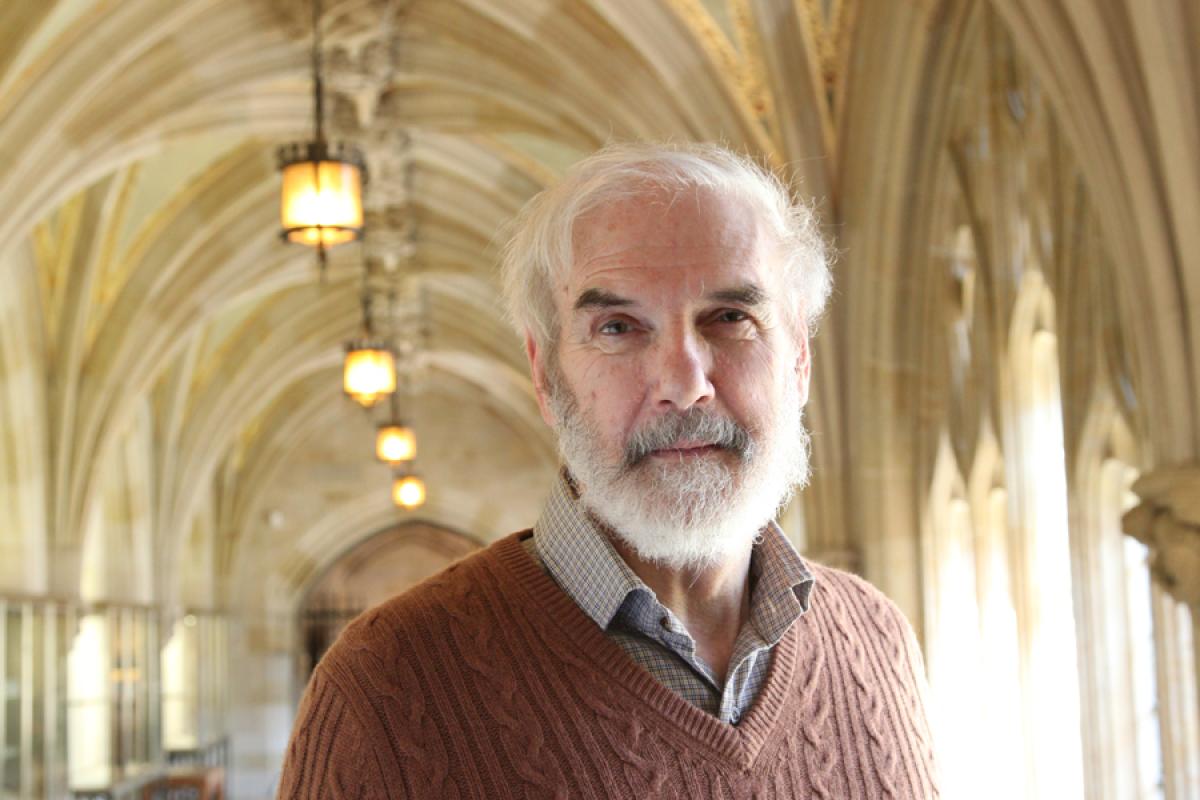
Jonathan Spence: uma vida devotada à história da China

Jonathan Spence

Jefferson Lecture

2010

Jonathan Spence
Photo caption
For over fifty years, Jonathan Spence has been studying and writing about China. His books and articles form a body of work notable for groundbreaking research, fine literary quality, and extraordinary public value. If the West understands the culture and history of China better now than it did a half century ago, Jonathan Spence is one of the people to be thanked.
He was born in Surrey, England, in 1936. His father worked in publishing and edited one of Joseph Conrad’s books. His mother was a lover of French literature. He followed his brothers—one of whom became a classicist, the other a chemical engineer—to Winchester College, where he won the History Prize. At Clare College, Cambridge, he became a coeditor of the storied undergraduate magazine Granta, editor of the student paper, and a writer of parodies. When he graduated in 1959, an academic career seemed certain, though he had not yet settled on a field of study.
A fellowship established by Paul Mellon brought Spence to Yale University, where he encountered the China scholar Mary Wright. She and her husband, Arthur Wright, also a China scholar, had just accepted professorships at Yale. While talking to the Wrights, Spence recently recalled in Humanities magazine, “I suddenly thought this would be fun to explore. So I plunged into the equivalent of Chinese History One and Basic Chinese Language One.”
Mary Wright became his mentor and sent the young scholar off to Australia to study with Fang Chao-ying, an important Chinese historian. Spence then became the first Western scholar to use secret Qing dynasty documents collected at the Palace Museum in Taiwan. His prizewinning dissertation was published as Ts’ao Yin and the K’ang-hsi Emperor: Bondservant and Master. As recalled by his late colleague and longtime friend Frederic E. Wakeman Jr., the China scholar Joseph R. Levenson remarked of this work, “Qing historical studies will never be the same. Besides, the man writes like an angel.”
Spence’s next book was a compelling review of Western attempts “To Change China,” as the title put it, from the Italian Jesuits who came in the late sixteenth century to American military experts in World War II. A historian of great breadth, Spence also showed he was capable of important research and elegant writing on discrete figures and events. Emperor of China: Self-Portrait of K’ang-Hsiused the seventeenth-century Qing emperor’s own words from public and private documents to create a kind of autobiography in translation, a marked example of Spence’s light and yet generous hand with quoted material. Nor was his writing to be limited to a cast of the great and the famous. In The Death of Woman Wang, published in 1978, Spence wrote the annals of the Chinese county of T’an-ch’eng in the seventeenth century, as it suffered through a terrible string of famines, floods, plagues, and bandit attacks.
Even as he has ventured further into both large and subtle aspects of Chinese history, Spence has shown a remarkable talent for addressing the larger public. “His greatest achievement,” notes Professor David Mungello of Baylor University, “has been to blend careful scholarship with beautifully crafted books on China. In the process, he has attracted the greatest reading audience of any China historian in the United States. Perhaps in part because of his origins in Britain, he is a historian in the nineteenth-century grand style of British historians, which is to say that he seeks to make history meaningful and fascinating to the broadest range of readers.”
Spence’s writings over the years have ranged from the life and missionary career of Matteo Ricci (1552–1610) to works on the Taiping Rebellion, the Chinese Revolution, and Mao Zedong. If China is his first subject, then perhaps Western understanding of China is his second, and to it he returned in his 1998 work The Chan’s Great Continent. Spence’s magnum opus, however, remains a book that took shape in the lecture hall at Yale, where his survey lectures on Chinese history drew hundreds of students, some not even enrolled in the course. The Search for Modern China, a New York Times bestseller published in 1990, begins with the last days of the Ming dynasty and ends, almost four centuries later, in the 1980s amidst the economic reforms of Deng Xiaoping and student demonstrations in Tiananmen Square.
Spence, who became an American citizen in 2000, has received numerous accolades in his long career. He won a Guggenheim fellowship in 1979, received the Harold D. Vursell Award from the American Academy of Arts and Letters in 1983, and a MacArthur fellowship in 1988, the same year he was appointed to the Council of Scholars for the Library of Congress. In 1993, Yale named him a Sterling Professor of History. He has received honorary degrees, from, among others, the Chinese University of Hong Kong and Oxford University. Spence was made a corresponding member of the British Academy in 1997, and Queen Elizabeth II named him, in 2001, a Companion of the Order of St. Michael and St. George. In 2003, he received the Sidney Hook Award from the Phi Beta Kappa Society. In 2004 and 2005, he served as president of the American Historical Association.
The Making of Jonathan Spence
BY FREDERIC E. WAKEMAN JR.
Jonathan D. Spence, Sterling Professor of History at Yale University, was born in England on August 11, 1936, the son of Dermot and Muriel Crailsham Spence. His was a lettered family. Professor Spence’s maternal grandfather taught at Clifton College in Bristol during the Great War, and his mother, who attended secondary school in London, was a passionate student of French language and literature. Dermot Spence had attended Oxford and Heidelberg universities in the late 1920s and spoke excellent German. He also worked at a publishing house and art gallery, and was editor of one of Joseph Conrad’s works. One of Jonathan Spence’s two older brothers was a classicist and the other a chemical engineer. His sister, a filmmaker, is also a professional translator of French, German, and Italian.
When he was thirteen, Professor Spence matriculated at Winchester College, one of the oldest public schools in England, founded by William of Wykeham, Bishop of Winchester and High Chancellor of England. As Jonathan once pointed out to me, in 1382, the very year Winchester College was established in Hampshire, on the other side of the world in Jiangnan, the Hongwu Emperor (r. 1368–98) was suppressing the Hu Weiyong uprising and abolishing the post of chief councilor of the Ming dynasty. Somehow Jonathan’s world-spanning historical consciousness seemed all the more appropriate when I remembered that another global historian, Arnold J. Toynbee, had been an Old Wykehamist as well.
Raised in the “soft” Anglicanism of the college, he attended compulsory chapel eight times a week, amusing himself by reading the services in French and German psalters that he slipped into the oratory. Summer holidays were typically spent in France with an exchange family, living in a rural chateau where he spent long afternoons at tennis and watched the bats swoop for insects in the dusk.
Back at school he pursued his studies passionately. Even now, Spence remembers Winchester as an intellectual hothouse, a kind of “high-octane preparation for Oxford and Cambridge.” Though only a fees-paying “commoner,” while his father and older brother were stipended “scholars” (to use the college’s own medieval distinction), Jonathan survived at Winchester, winning the History Prize. He read widely and composed poetry, but considered himself a better literary critic than a creative writer. By the time he graduated from the college in 1954 and completed a two-year tour of military duty as a second lieutenant stationed in Germany, he was ready to go up to Clare College at Cambridge.
Clare College was “magical.” “Excited and reckless,” young Spence quickly became a member of the top intellectual stratum of the university. Not only was he a coeditor of the literary magazine Granta; in his second year he was also named editor of Cambridge’s student newspaper, Varsity. The outgoing editor facetiously wrote of him: “Jonathan Spence is slim, sallow and vague.” At that time he wanted most to be a novelist. He later modestly claimed that he realized he had “nothing to say,” and instead turned to writing parodies, a form he had mastered at Winchester. He was not yet clear about his métier by the time he took his BA degree in 1959.
Spence arrived at Yale University with a Mellon fellowship that supported an exchange of top-ranking students between Yale and Clare College. Though mainly working in history, he was still uncertain about his calling until he took a course with Professor Mary Wright. Arthur and Mary Clabaugh Wright had only recently left Stanford for Yale, where they each accepted professorships in Chinese history. John King Fairbank later described the intellectual dynasty that was being formed at that time:
When I began teaching Chinese history at Harvard in 1936, my first students turned out to be the brightest I would ever have—Theodore White as an undergraduate and Mary Clabaugh as a PhD candidate. Mary Clabaugh was a Vassar graduate from Tuscaloosa who came to study international history but turned to China when she heard about it. She married another Harvard graduate student in Chinese history, Arthur F. Wright. Twenty years later, when both Wrights were invited from Stanford to come to Yale as professors of history, Mary Wright found her brightest student in the person of Jonathan Spence, a young Englishman from Winchester College and Cambridge University, who had just come to Yale. Hearing Mary Wright’s lectures, he chose Chinese studies, and she arranged for his unusual talent to be specially trained under the master of Ch’ing (Manchu) dynasty biography, Fang Chao-ying. Fang was then in Australia, where Jonathan Spence was sent to work with him.
Under Fang Chao-ying’s guidance, Spence became the first scholar in the West to make use of the Qing secret memorials collected in the National Palace Museum in Taiwan. His PhD dissertation received the John Addison Porter Prize in 1965 and was published by the Yale University Press under the title Ts’ao Yin and the K’ang-hsi Emperor: Bondservant and Master. I remember how excited my own mentor, Joseph R. Levenson, was by Jonathan’s precocious masterpiece. “Qing historical studies,” he told me, “will never be the same.”
“Besides,” he added, “the man writes like an angel.”
Spence joined the Yale faculty in 1966 as an assistant professor of history. In 1968, he was appointed an associate professor; and, in 1971, after publishing a second book, To Change China: Western Advisers in China, 1620–1960, he was promoted to professor. Five years later, he was named George Burton Adams Professor of History.
In 1974 and 1978, Spence published two extraordinary books, nearly back to back. Chinese historians had long hoped for a personal portrait of one of the great Qing emperors. Professor Harold L. Kahn had written a striking study of the Qianlong Emperor (r. 1736–96), but it was more about the monarch’s persona than the individual himself. In Emperor of China: Self-Portrait of K’ang-hsi (Knopf, 1974), Jonathan gave us the monarch in his own words. Kangxi spoke directly to the reader—or so it seemed. The book was controversial, because the emperor’s speech was a collage from myriad sources in different contexts. But Kangxi’s voice was vivid and compelling, and the book broke out of the confines of a conventional audience of Chinese specialists to reach a much larger public. The same was true for The Death of Woman Wang, published in 1978, which soon was featured on most college reading lists in Chinese history. Students were not only introduced to a more vivid and colorful China than they expected; they also were privileged to view Qing society from the bottom up, as Spence gave voice to those who left no written records and whose lives had to be reconstructed from local gazetteers, magistrates’ handbooks, and storytellers’ tales.
Like many fine historians who combine narrative description and critical analysis, Spence has a special and unique eye for the telling detail. Often he begins with an image that has captured his imagination. I remember one evening with him, walking across the Wesleyan campus in Middletown, Connecticut. When I asked him what he was working on at the moment, Jonathan’s eyes narrowed, as though he were looking into the distance. “I’ve discovered a marvelous source,” he murmured. “About the murder of a woman née Wang: a body crumpled in the snow. . . .” Or later, as he was writing The Question of Hu, the figure of a hapless man from Foshan locked up like a lunatic in the asylum at Charenton materialized in his mind’s eye. Jonathan simply sees what most of us overlook. In one of the opening chapters of God’s Chinese Son: The Taiping Heavenly Kingdom of Hong Xiuquan, published in 1996, he describes the foreign factories along Canton’s bustling waterfront. Much of this was familiar to me, as I had perused the same sources for an earlier work of my own. But I realized when I read Spence’s narrative that I lacked his sensitivity to many of the sights and sounds that struck contemporaries, and especially to the frisson of seeing a baby abandoned in a basket under the pedestrians’ feet.
Spence combines his critical imagination with a scrupulous attention to the sources. Whether in the collection of essays on the Ming-Qing transition he edited with John E. Wills, or in The Gate of Heavenly Peace: The Chinese and Their Revolution, 1895–1980, published in 1981, or in The Memory Palace of Matteo Ricci, published in1984, Spence bases his work on solid and sedulous reading—especially of newly discovered archival materials. One of the best examples of this is his 1996 study of Hong Xiuquan and Taiping Christianity, God’s Chinese Son. As he explains in his preface, the book was born of the recent discoveries of heretofore unknown Taiping sources in the British Library by our mutual colleague Wang Qingcheng, the former director of the Modern History Institute of the Chinese Academy of Social Sciences. In 1996, the same year God’s Chinese Sonappeared, Professor Spence and his wife Chin Annping, who earned her PhD at Columbia in classical Chinese philosophy, also published The Chinese Century: A Photographic History of the Last Hundred Years.
At Yale, Spence is famous for his undergraduate lecture course in Chinese history, which has regularly been one of the humanities offerings in the college with the highest enrollments. Although it is impossible to reproduce Spence’s dazzling lecture style in book form, the content of the course reached a much larger audience when he published in 1990 his Search for Modern China, now perhaps the most widely used Chinese history textbook in American universities.
As a fervent admirer of Professor Spence, I envy his extraordinary discipline as a writer, which helps account for his prolific output. I happened to be his and Annping’s dinner guest at their house in West Haven the day he put the finishing touches on God’s Chinese Son. After toasting the new book, I idly asked Jonathan what he planned to write next. I was surprised when he responded without hesitation. In that uniquely ruminative way of his, he said, almost dreamily: “I want to write about cold. I see a Manchu warrior skating on a frozen pond. And the steam of a war horse’s panting in the dry cold of a North China winter.” The picture was so immediately vivid that I halfway expected him to leave me at the dinner table and go upstairs to write, picking up a fresh sheet of paper for his sprawling longhand even before the latest manuscript had been sent off to the publisher. Other books have intervened since then, but I am still waiting confidently for him to bring that cold landscape to life one way or another.
Spence has earned his writing time on his own. That is, he has “bought” most of his triennial research leaves with his administrative contributions to Yale University. From 1973 to 1975, he was director of graduate studies in history. From 1977 to 1979, he served as chair of the Council on East Asian Studies, and also as director of the Division of Humanities from 1980 to 1982. He chaired the Department of History from 1983 to 1986, and during the 1988–89 academic year, he was acting director of the Whitney Humanities Center. Named Sterling Professor of History in 1993, he currently serves on the governing board of Yale University Press. By dint of such superb university citizenship, Jonathan was able to earn leaves three years apart; if those did not suffice, he often took advances or leave without pay. For at least twenty years he has never applied for a grant. During the interim between leaves, he typically reads for the next book: The Chan’s Great Continent: China in Western Minds appeared in 1998, Mao Zedong in 1999, and Treason by the Book in 2001.
The world has recognized Professor Spence’s eminence. He has received eight honorary degrees from various colleges in the United States and from the Chinese University of Hong Kong. In 2003, Spence received an honorary degree from Oxford University. He was also invited to become a visiting professor at Peking University and an honorary professor at Nanjing University. In 2001, he was named CMG (Companion of the Most Distinguished Order of St. Michael and St. George) on the Queen of England’s Birthday Honours List.
In 1978, he received the William C. DeVane Medal of the Yale Chapter of Phi Beta Kappa; in 1979, a Guggenheim Fellowship; in 1982, the Los Angeles Times History Prize; and in 1983, the Vursel Prize of the American Academy and Institute of Arts and Letters. Spence was elected to the American Academy of Arts and Sciences in 1985 and was named a MacArthur Fellow in 1988, the same year he was appointed to the Council of Scholars at the Library of Congress. In 1993, he was elected a member of the American Philosophical Society, and in 1997 was named a corresponding fellow of the British Academy.

quinta-feira, 16 de abril de 2020

Pandemic geopolitics: Is China winning? - The Economist (April 16, 2020

Pandemic geopolitics
Is China winning?

The geopolitical consequences of covid-19 will be subtle, but unfortunate

The Economist, April 16, 2020
https://www.economist.com/leaders/2020/04/16/is-china-winning?cid1=cust/ednew/n/bl/n/2020/04/16n/owned/n/n/nwl/n/n/NA/452381/n
Editor’s note: The Economist is making some of its most important coverage of the covid-19 pandemic freely available to readers of The Economist Today, our daily newsletter. To receive it, register here. For our coronavirus tracker and more coverage, see our hub
This year started horribly for China. When a respiratory virus spread in Wuhan, Communist Party officials’ instinct was to hush it up. Some predicted that this might be China’s “Chernobyl”—a reference to how the Kremlin’s lies over a nuclear accident hastened the collapse of the Soviet Union. They were wrong. After its initial bungling, China’s ruling party swiftly imposed a quarantine of breathtaking scope and severity. The lockdown seems to have worked. The number of newly reported cases of covid-19 has slowed to a trickle. Factories in China are reopening. Researchers there are rushing candidate vaccines into trials (see Briefing). Meanwhile, the official death toll has been far exceeded by Britain, France, Spain, Italy and America.
China hails this as a triumph. A vast propaganda campaign explains that China brought its epidemic under control thanks to strong one-party rule. The country is now showing its benevolence, it says, by supplying the world with medical kit, including nearly 4bn masks between March 1st and April 4th (see article). Its sacrifices bought time for the rest of the world to prepare. If some Western democracies squandered it, that shows how their system of government is inferior to China’s own.
Some, including nervous foreign-policy watchers in the West, have concluded that China will be the winner from the covid catastrophe. They warn that the pandemic will be remembered not only as a human disaster, but also as a geopolitical turning-point away from America.
That view has taken root partly by default. President Donald Trump seems to have no interest in leading the global response to the virus. Previous American presidents led campaigns against hiv/aids and Ebola. Mr Trump has vowed to defund the World Health Organisation (who) for its alleged pro-China bias (see article). With the man in the White House claiming “absolute power” but saying “I don’t take responsibility at all”, China has a chance to enhance its sway.
Even so, it may not succeed. For one thing, there is no way to know whether China’s record in dealing with covid-19 is as impressive as it claims—let alone as good as the records of competent democracies such as South Korea or Taiwan. Outsiders cannot check if China’s secretive officials have been candid about the number of coronavirus cases and deaths. An authoritarian regime can tell factories to start up, but it cannot force consumers to buy their products (see article). For as long as the pandemic rages, it is too soon to know whether people will end up crediting China for suppressing the disease or blaming it for suppressing the doctors in Wuhan who first raised the alarm.
Another obstacle is that China’s propaganda is often crass and unpleasant. China’s mouthpieces do not merely praise their own leaders; some also gloat over America’s dysfunction or promote wild conspiracy theories about the virus being an American bioweapon. For some days Africans in Guangzhou were being evicted en masse from their homes, barred from hotels and then harassed for sleeping in the streets, apparently because local officials feared they might be infected. Their plight has generated angry headlines and diplomatic rebukes all over Africa.
And rich countries are suspicious of China’s motives. Margrethe Vestager, the eu’s competition chief, urges governments to buy stakes in strategic firms to stop China from taking advantage of market turmoil to snap them up cheaply. More broadly, the pandemic has fed arguments that countries should not rely on China for crucial goods and services, from ventilators to 5g networks. The World Trade Organisation expects global merchandise trade to shrink by 13-32% in the short run. If this turns into a long-term retreat from globalisation—which was already a worry before covid-19—it will harm China as much as anywhere.
More fundamental than whether other countries are willing to see China supplant America is whether it intends to. Certainly, China is not about to attempt to reproduce America’s strengths: a vast web of alliances and legions of private actors with global soft power, from Google and Netflix to Harvard and the Gates Foundation. It shows no sign of wanting to take on the sort of leadership that means it will be sucked into crises all across the planet, as America has been since the second world war.
A test of China’s ambitions will be how it acts in the race for a vaccine. Should it get there first, success could be used as a national triumph and a platform for global co-operation. Another test is debt relief for poor countries. On April 15th the g20, including China, agreed to let indebted nations suspend debt payments to its members for eight months. In the past China has haggled over debt behind closed doors and bilaterally, dragon to mouse, to extract political concessions. If the g20’s decision means the government in Beijing is now willing to co-ordinate with other creditors and be more generous, that would be a sign it is ready to spend money to acquire a new role.
Perhaps, though, China is less interested in running the world than in ensuring that other powers cannot or dare not attempt to thwart it. It aims to chip away at the dollar’s status as a reserve currency (see article). And it is working hard to place its diplomats in influential jobs in multilateral bodies, so that they will be in a position to shape the global rules, over human rights, say, or internet governance. One reason Mr Trump’s broadside against the who is bad for America is that it makes China appear more worthy of such positions.
China’s rulers combine vast ambitions with a caution born from the huge task they have in governing a country of 1.4bn people. They do not need to create a new rules-based international order from scratch. They might prefer to keep pushing on the wobbly pillars of the order built by America after the second world war, so that a rising China is not constrained.
That is not a comforting prospect. The best way to deal with the pandemic and its economic consequences is globally. So, too, problems like organised crime and climate change. The 1920s showed what happens when great powers turn selfish and rush to take advantage of the troubles of others. The covid-19 outbreak has so far sparked as much jostling for advantage as far-sighted magnanimity. Mr Trump bears a lot of blame for that. For China to reinforce such bleak visions of superpower behaviour would be not a triumph but a tragedy. 
Dig deeper:
For our latest coverage of the covid-19 pandemic, register for The Economist Today, our daily newsletter, or visit our coronavirus tracker and story hub
This article appeared in the Leaders section of the print edition under the headline "Is China winning?"

O Brasil tem política externa? NÃO; o chanceler manda? NÃO - Paulo Roberto de Almeida

O Brasil tem política externa? NÃO;
o chanceler manda? NÃO

Paulo Roberto de Almeida

5 O que pensa a respeito da diplomacia brasileira hoje, sob a influência de Olavo de Carvalho; o voluntarismo dos filhos presidenciais; a estreita (subserviente?) relação com os EUA; o aceno a conflitos que não são nossos, como a questão de Israel; e, em especial, o recente desconforto com a China?
PRA: Cabe começar por uma precisão: NÃO existe, atualmente, NENHUMA diplomacia digna desse nome, pelo simples fato de que não tivemos, nunca tivemos, desde o início e até agora, uma EXPOSIÇÃO clara, explícita, do que seria essa diplomacia, ou do que deve ser uma POLÍTICA EXTERNA para o Brasil Isto por algumas razões muito simples: está claro que o capitão é um inepto total para formular e apresentar qualquer ideia coerente a esse respeito; seu guru expatriado também é um completo inepto nessas questões; o conselheiro internacional do PSL, guindado à condição de assessor presidencial, é um mero aprendiz, um fanático olavista, totalmente despreparado em questões diplomáticas. O único indivíduo que poderia formular algumas ideias em política externa e diplomacia, o chanceler acidental, é um completo boneco nas mãos (e nos pés) da Bolsofamília e, sobretudo, do Rasputin da Virgínia. Ele se revelou incapaz de expressar qualquer postura coerente na sua área, se contentando apenas em agradar e obedecer a seus amos, além de apresentar alguns traços pessoais de desequilíbrio emocional merecedores de registro. Ou seja, estamos atuando completamente no vácuo absoluto, a não ser pelos poucos instintos primitivos dos antimarxistas no poder e por sua adesão sabuja e incompreensível (já que contrária aos seus próprios interesses no comando de um país com postura própria nas relações internacionais), não aos Estados Unidos em geral, mas à figura do Trump em particular, ademais dos arautos da nova direita que ascende em alguns países, os poucos parceiros da diplomacia atual.
Todas as escolhas, opções e orientações determinadas por esse bando de alucinados foram invariavelmente equivocadas e prejudiciais aos interesses nacionais, tanto é que foram sabotadas, contidas ou revertidas e amenizadas pelos indivíduos racionais do governo e pela pressão dos lobbies econômicos interessados mais em defender seus negócios do que as políticas ou doutrinas consistentes com aqueles objetivos. O fato é que vivemos, no Brasil dos Bolsonaros, um apagão da inteligência e uma destruição de qualquer base racional para uma política externa razoável, como já tive a oportunidade de expor em meu livro Miséria da diplomacia: a destruição da inteligência no Itamaraty(2019, livremente disponível no blog).
Mas esse livro ainda é uma crítica “intelectual” da esquizofrenia diplomática, e não uma exposição pragmática dos problemas por ela acarretados, o que talvez eu faça numa obra futura. Em síntese, existe, sim, uma influência nefasta do sofista expatriado sobre o que se poderia chamar de “diplomacia olavo-bolsonarista”, mas cabe registrar, mais uma vez, que não existe nenhuma coerência nos seus fundamentos e diretrizes de atuação, pois ninguém ali está em condições de fazê-lo, e o chanceler acidental treme de medo de expor qualquer ideia própria. Daí que esses “incidentes” criados erraticamente pelos bolsonaristas mais radicais é apenas a expressão da completa indigência de raciocínio desses elementos, pois não se lhes pode imputar nenhum conhecimento ou inteligência a respeito de questões internacionais.
Resumindo: não existe NENHUMA política externa atualmente no Brasil, e se formos admitir que existe alguma diplomacia – o que também é algo duvidoso, embora o Itamaraty não pode deixar de funcionar – ela simplesmente representa um ponto fora da curva, de fato, algo JAMAIS visto em toda a nossa história bissecular. Vai ficar no registro histórico como o período mais sombrio da diplomacia profissional e o ponto mais baixo da credibilidade do Brasil no exterior, atualmente já rebaixada de forma indigna em função dos néscios, loucos e submissos que temos atuando em torno de ambas no momento.

6 Por fim: o senhor tem sofrido represálias do ministro Ernesto Araújo? De alguma maneira, sua atuação crítica lhe tem trazido prejuízo ou complicações? 
PRA: Como, por espírito e vocação, eu sou o único “contrarianista de plantão” no Itamaraty – e isso desde sempre, daí a longa travessia do deserto que me foi imposta pelos lulopetistas –, era inevitável que eu fosse sancionado pela tribo de alucinados que se apossou do controle do Itamaraty. Registro que o chanceler acidental se situa apenas em terceiro ou quarto escalão da cadeia decisória naquele ministério, pois todas as ordens veem de fora, e ele só requer submissão (pois sabe que nunca terá adesão) aos novos déspotas temporários. Eu já deveria ter sido expurgado desde o primeiro dia do governo, e só não o fizeram porque não tinham um substituto para o cargo; fui, contudo, proibido, desde o dia 2/01/2019, de empreender qualquer atividade, até a aprovação de nova chefia. Sempre soube que seria exonerado. Alguns colegas me diziam, em 2018, para requerer um posto no exterior, como fizeram vários outros, prevendo a tempestade. Não quis fazê-lo, pois nunca fui de pedir nada a ninguém. Na verdade, gosto do mundo das ideias e de leituras, de reflexão e de produção intelectual. Era o que pretendia fazer, até o chanceler ordenar “retaliação maciça”.
Com efeito, o chanceler e o seu chefe de gabinete deram ordens à administração para seguir escrupulosamente minha “catraca eletrônica”. Sem qualquer aviso prévio ou demanda de compensação, publicaram no Boletim de Serviço “faltas injustificadas” e “atrasos e saídas antecipadas”, para a partir daí passar a ordenar descontos punitivos no contracheque, assim como “reposição ao Erário” por “pagamentos a maior” por “horas não trabalhadas”. A ironia de toda essa história é que estou lotado, mas apenas formalmente, na Divisão do Arquivo – respondendo a um primeiro secretário, a quem tenho de pedir autorização para sair de férias ou qualquer outra providência administrativa; sem qualquer função precisa, as “horas não trabalhadas” seriam para ficar olhando as paredes oito horas por dia, cinco dias por semana. 
Por todas essas razões, meu caso pode ser assimilado ao de K, no Processo de Franz Kafka, como sugeriu o embaixador Rubens Ricupero: deu o título ao meu artigo “Kafka no Itamaraty (ler aqui: https://diplomatizzando.blogspot.com/2020/04/kafka-no-itamaraty-paulo-roberto-de.html). Como os descontos já foram feitos, e outros se prenunciam – sendo que a intenção real, do chanceler acidental e do chefe de gabinete, seria um processo administrativo para demissão sumária por “inassiduidade habitual” –, meu único recurso, na presente fase, foi o de abrir uma ação na Justiça para obstar às manobras intimidatórias e punitivas da dupla. 
Parafraseando o camponês da Prússia, acredito que ainda existam juízes em Brasília. 
Paulo Roberto de Almeida
Brasília, 9 de abril de 2020
Entrevista concedida ao jornalista Gustavo Nogy

Postagem em destaque

Livro Marxismo e Socialismo finalmente disponível - Paulo Roberto de Almeida

Meu mais recente livro – que não tem nada a ver com o governo atual ou com sua diplomacia esquizofrênica, já vou logo avisando – ficou final...