Uma tradição milenar:
Xuan Paper: Where A Thousand Years of Ink Still Breathe
Shanghai Daily, https://www.citynewsservice.cn/shine/452d9b45-d4a8-4163-8fe4-8969d57a1893
Editor's note:
The United Nations has officially designated 45 Chinese traditions as world cultural heritage. This series examines how each of them defines what it means to be Chinese.
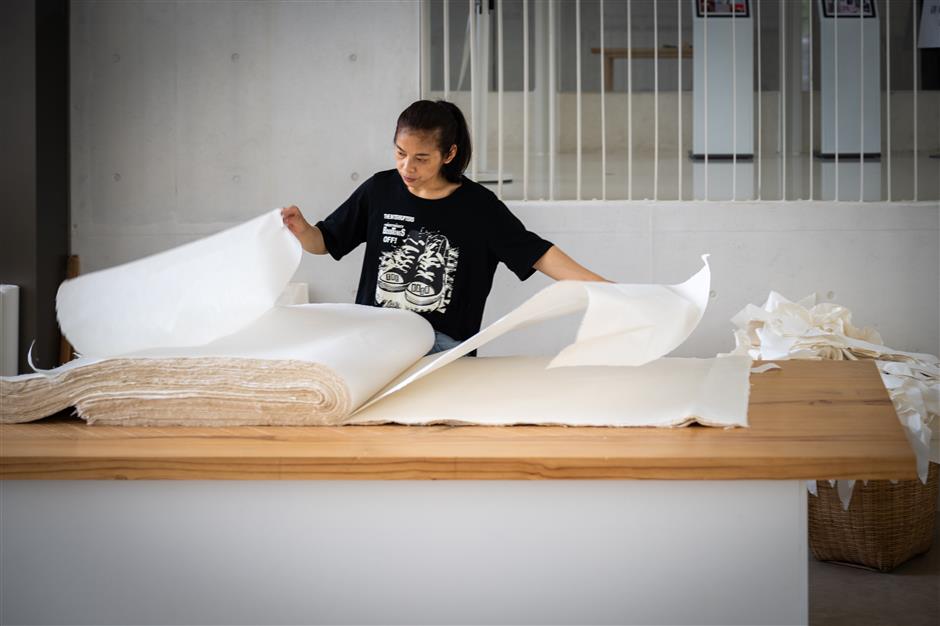
Soft yet resilient, pure white yet richly textured, Xuan paper has carried China's written words and painted worlds for more than 1,000 years.
Favored by calligraphers and painters for its remarkable ability to absorb ink while preserving clarity and depth, Xuan paper, also known as rice paper, is often praised as the "king of papers" and renowned for its longevity — so enduring that a single sheet can last a millennium.
The long history of Chinese papermaking is perhaps best illustrated by "Five Oxen," painted by Tang Dynasty (AD 618-907) artist Han Huang (AD 723-787). Created nearly 1,300 years ago, it is the earliest extant paper painting in China and is now regarded as one of the top 10 masterpieces in the nation's art history. That the work remains vivid today is inseparable from the qualities of the paper beneath the brush.

The name "Xuan paper" first appeared in the ninth century in "Records of Famous Paintings through the Ages," written by scholar Zhang Yanyuan. By the Song Dynasty (960-1279), as painting and calligraphy flourished, demand for Xuan paper surged. Xuanzhou, today's Xuancheng in east China's Anhui Province, struggled to keep pace with orders arriving from across the country.
From the late Song to the early Yuan Dynasty (1271-1368), papermaking families, most notably the Cao clan, migrated to Jingxian County in Xuancheng and settled there permanently. Building their livelihoods around the craft, they refined techniques over generations and at one point dominated Xuan paper production. During the Yuan Dynasty, as economic and cultural exchanges expanded and painting reached new artistic heights, Xuan paper gained even greater prominence.
By the late 18th century, Jingxian-made Xuan paper had traveled far beyond China's borders. It won awards at international exhibitions and was exported to Europe and North America, causing a sensation overseas. Annual output at its peak approached 1,000 tons. In 1915, Xuan paper earned a gold award at the Panama-Pacific International Exposition in San Francisco, the United States.
After the founding of the People's Republic of China, the government moved to revive and protect the craft, establishing the first state-supported Xuan paper factory in Wuxi Village, east of the Jingxian County seat.
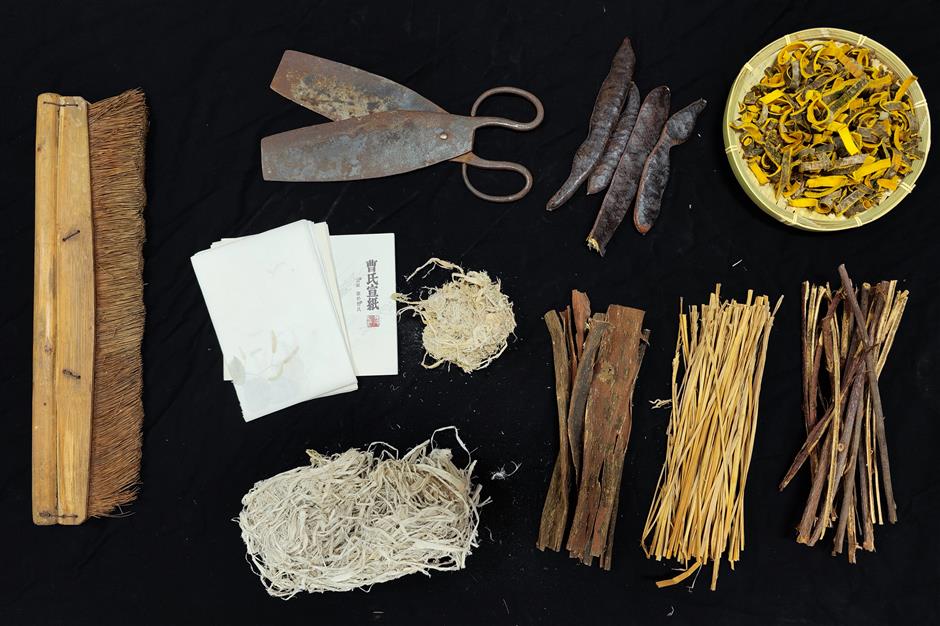
Traditional Xuan paper is crafted primarily from the bark of the blue sandalwood tree, supplemented with carefully processed rice straw. The process follows an ancient method involving 108 distinct steps. The final stage alone — drying the sheets — includes seven meticulous procedures, transforming fragile, water-laden stacks into finished paper.
Dense yet flexible, smooth but not slippery, resistant to insects and decay, Xuan paper is the perfect medium for conveying the spirit of Chinese calligraphy and painting.
Mastering the craft demands years of practice. Bark fibers and straw fibers are prepared separately through dozens of steps — peeling, soaking, steaming, sun-drying and bleaching — before being mixed in precise ratios. Juice extracted from kiwi vines is added as a natural sizing agent.
From pulping and sheet forming to pressing, drying, trimming and inspection, every stage matters. Even after the paper is formed, only flawless sheets are selected, cut, polished, stamped and packaged before reaching the market.
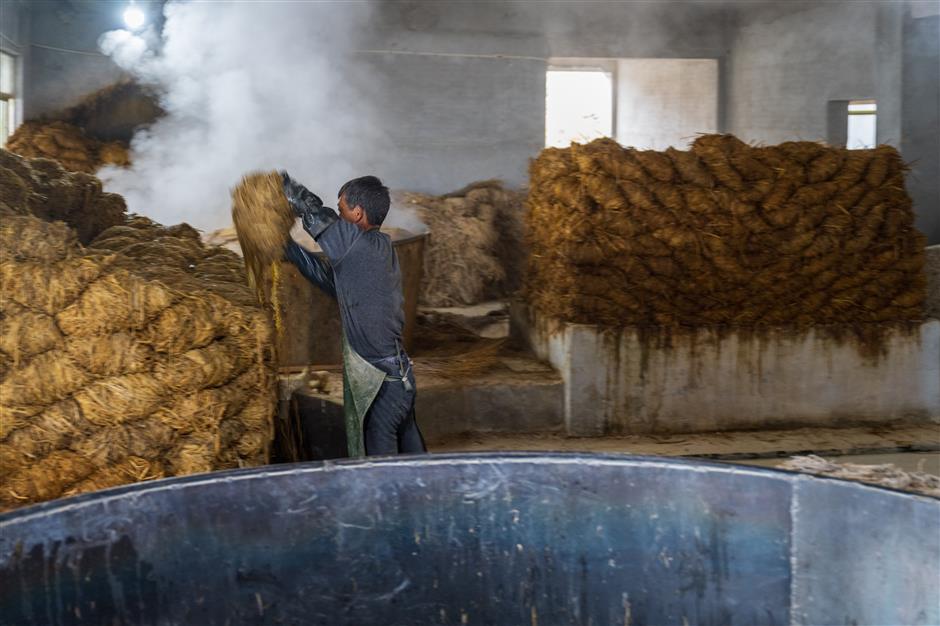
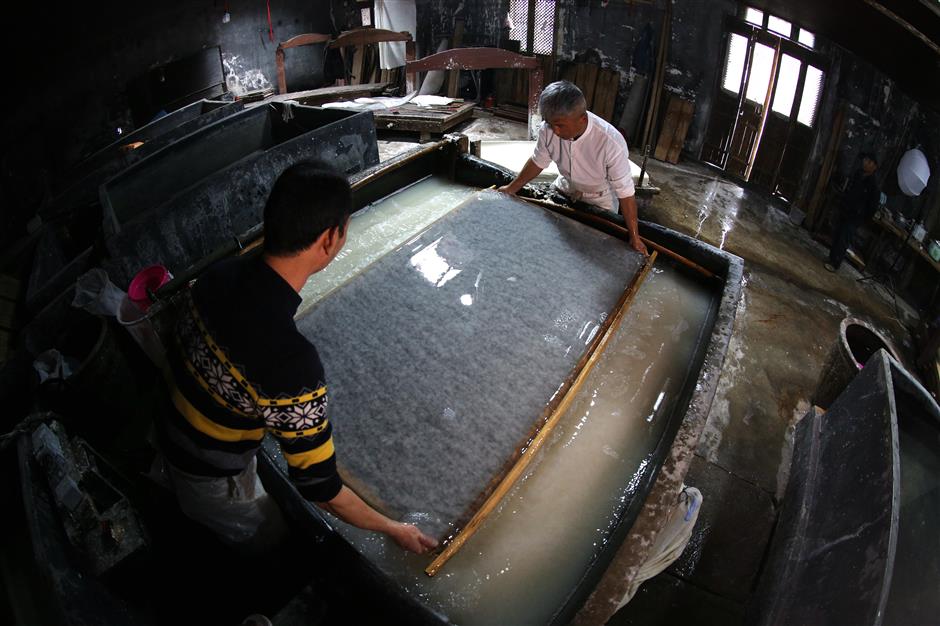
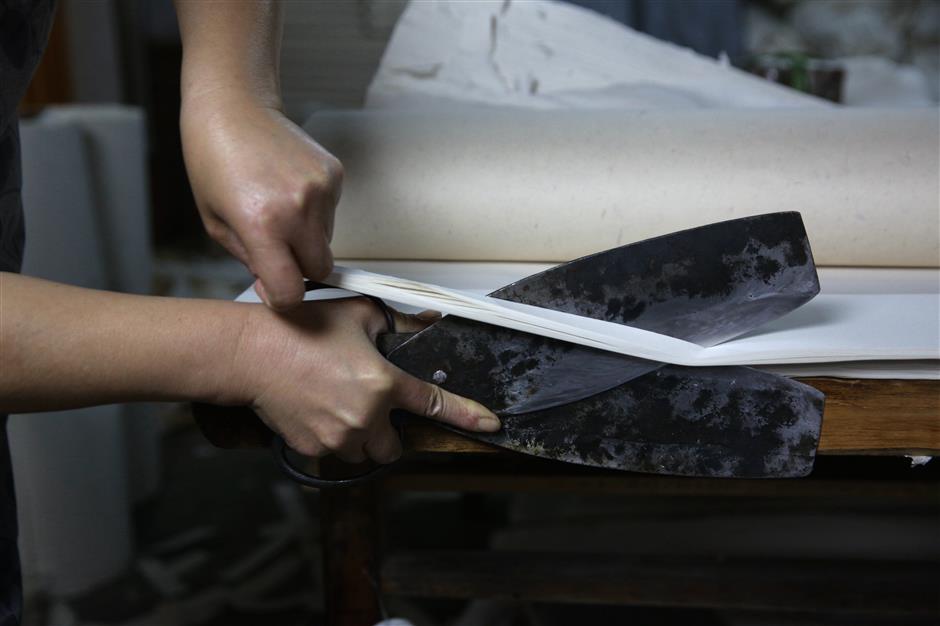
Xuan paper comes in many varieties. Based on fiber composition, it is generally divided into cotton-type, pure bark and extra-pure bark papers. Papers made primarily from wood fibers absorb ink strongly, producing soft, spreading effects favored for expressive brushwork. Those with higher bamboo fiber content absorb less, allowing ink to sit on the surface with brighter colors and sharper lines. This diversity gives artists remarkable freedom of expression.
In modern times, the craft has gained renewed international recognition. In 2006, the traditional handicraft of making Xuan paper was listed among China's first national intangible cultural heritage items.
In 2009, the United Nations Educational, Scientific and Cultural Organization inscribed it on the Representative List of the Intangible Cultural Heritage of Humanity.
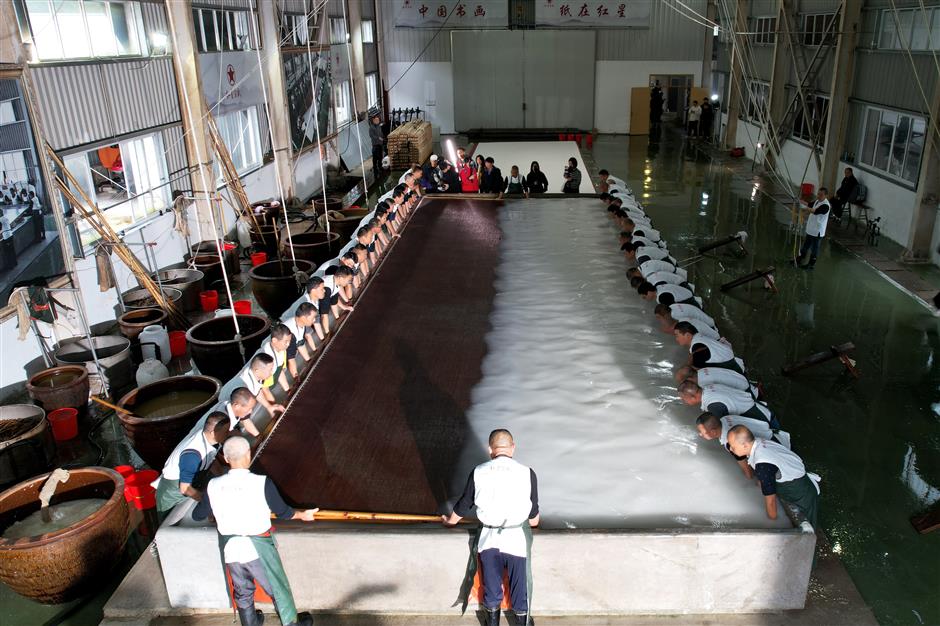
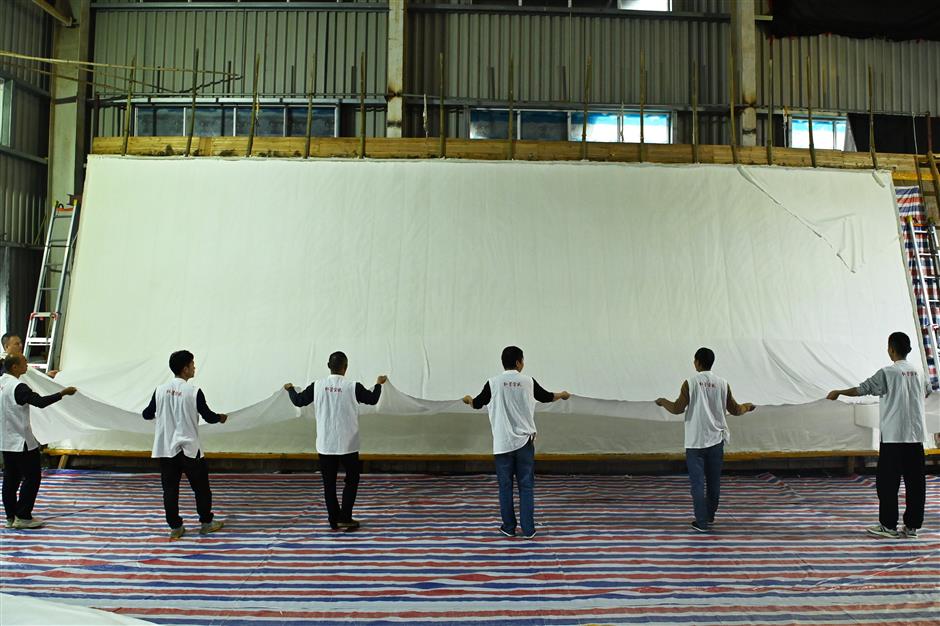
One striking example of both preservation and innovation is the production of the "super Xuan paper," measuring 11 meters by 3.3 meters. Each sheet, weighing over 1.5 tons when wet, requires the coordinated effort of more than 40 artisans working in unison, guided by rhythmic chants to synchronize their movements. Though monumental in scale, these sheets are still made using the traditional 108-step process and are designed for large-scale calligraphy and painting.
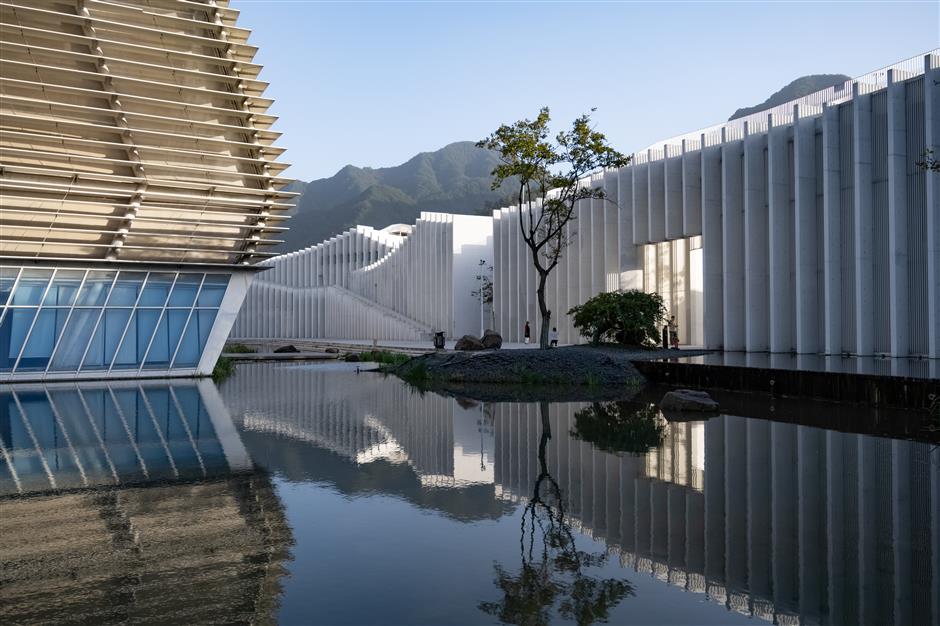
Today, Jingxian County has transformed its heritage into new vitality. China Xuan Paper Town — built around the China Xuan Paper Museum and cultural parks — blends tradition with modern creativity. In 2025, it welcomed more than 472,000 visitors, a year-on-year increase of 13 percent, according to local authorities.
The Xuan paper industry has grown into a complete chain encompassing raw material cultivation, papermaking and cultural product development, generating an annual output value exceeding 2 billion yuan (US$285.7 million) and supporting the livelihoods of more than 7,000 people.


Nenhum comentário:
Postar um comentário