A Revista Brasileira de Política Internacional e uma divulgação pedagogicamente instruída
Antônio Carlos Lessa
Mundorama, 9/12/2014
A equipe da Revista Brasileira de Política Internacional – RBPI vem investindo ao longo dos últimos anos no desenvolvimento de novas formas de comunicação e de divulgação das suas edições, mas também de eventos e de notícias relacionadas com os ciclos editoriais do veículo. Nesse sentido, tanto o site do Instituto Brasileiro de Relações Internacionais – IBRI (que publica a Revista desde 1958) quanto os seus perfis nas redes sociais tem repercutido intensamente os artigos veiculados, press releases, chamadas para contribuições, perfis, e também entrevistas realizadas com os autores de alguns dos trabalhos publicados.
Na preparação do lançamento da edição especial “China rising – strategies and tactics of China’s growing presence in the world”, o Editor da RBPI apresentou ao time de estudantes que compõe o Programa de Educação Tutorial do Instituto de Relações Internacionais da Universidade de Brasília o desafio da produção da série de entrevistas que foi publicada entre outubro e novembro do corrente ano.
O PET-REL funciona desde o final dos anos noventa e foi o primeiro programa dessa natureza na área de Relações Internacionais no Brasil. O Programa de Educação Tutorial é uma iniciativa do Ministério da Educação que tem por objetivo propiciar a uma seleção de alunos, em geral com rendimento acadêmico destacado e com potencial para o desenvolvimento de estudos avançados, formação complementar que levem ao seu aperfeiçoamento acadêmico, na forma de atividades extracurriculares coordenadas por um professor tutor. Funciona no PET-REL já há alguns anos o Laboratório de Análise de Relações Internacionais, no qual os participantes são levados a construir análises de conjuntura sobre temas da agenda internacional contemporânea.
O exercício proposto pela Editoria da RBPI não era trivial: pressupunha a leitura crítica dos artigos selecionados, a eventual consulta a fontes e recursos de informação adicionais, o estudo dos perfis dos autores, a contextualização do trabalho escrito na literatura da área, a elaboração de roteiros e de perguntas originais, bem redigidas e sequenciadas e, finalmente, a realização das entrevistas.
Sob a orientação do tutor do PET-REL, Alcides Costa Vaz, professor do Instituto de Relações Internacionais da Universidade de Brasília, a equipe de estudantes se entregou a esse trabalho com dedicação. Foram produzidas doze entrevistas, cobrindo boa parte dos trabalhos publicados na edição especial da RBPI (que publicou quinze artigos inéditos – a edição especial pode ser lida aqui). As entrevistas foram publicadas no site do IBRI (seção Foco no Autor), no Boletim Mundorama e no Blog Scielo em Perspectiva – Humanas.
Os resultados desse esforço, podem ser acessados abaixo:
The international implications of the Chinese model of development in the Global South: Asian Consensus as a network power`an interview with the authors – Veja a entrevista concedida a Gabriela Araújo;
“China’s Proposing Behavior in Global Governance: the Cases of the WTO Doha Round Negotiation and G-20 Process”, an interview with Hongsong Liu – Veja aentrevista concedida a Bruno Basílio Rissi;
“Chinese and Brazilian Ideas and Involvement in Sub-Saharan Africa”, interview with the authors – Veja a entrevista concedida a Mariana Barros Nóbrega Gomes;
“The role of China in the Greater Mekong Sub-region”, an interview with Truong-Minh Vu – Veja a entrevista concedida a Banvasten Araújo;
“The tale of a Trojan horse or the quest for market access? China and the WTO”, an interview with Sven Van Kerckhoven – Veja a entrevista concedida a Laís Bueno Sachs;
“Chinese energy policy progress and challenges, 2006 – 2013”, an interview with Larissa Basso – Veja a entrevista concedida a André Vicente Pintor;
“Macau in China’s relations with the lusophone world”, an interview with Carmen Mendes – Veja a entrevista concedida a Vanbasten Noronha;
“Peaceful Rise and the Limits of Chinese Exceptionalism”, an interview with Raquel Vaz-Pinto – Veja a entrevista concedida a Joana Soares;
“The role of rhetoric in constructing China-Africa relations”, an interview with Lucy J. Corkin – Veja a entrevista concedida a Isabela Ottoni Penna do Nascimento;
Interview about the article “Chinese engagement for Global Governance: aiming for a better room at the table”, with Henrique Altemani – Veja aentrevista concedida a Pedro Simão Mendes;
Interview about “Japan and India: soft balancing as a reaction to China’s rise?”, with Wellington Amorim & Antonio Lucena – Veja a entrevista concedida a Rafael Monteiro Manechini;
Interview about “Swords into Ploughshares? China’s Soft Power Strategy in Southeast Asia and Its Challenges”, an interview with Tung-Chieh Tsai – Veja aentrevista concedida a Mila Pereira Campbell.
Antônio Carlos Lessa é professor do Instituto de Relações Internacionais da Universidade de Brasília - iREL-UnB e editor da Revista Brasileira de Política Internacional - RBPI
terça-feira, 9 de dezembro de 2014

Ah, esse capitalismo financeiro predatorio: de olho nos nossos pobres...
O capitalismo financeiro monopolista internacional, como gostam de dizer os companheiros, está de olho nos nossos pobres, que, como diz a matéria abaixo, podem não ter conta em banco mas têm celulares, e portanto são vítimas potenciais dos especuladores e outros monopolistas financeiros de Wall Street para novos sistemas de pagamentos via celular.
Mas, como os companheiros no poder estão sempre alertas, e detestam os estadunidenses, sobre o fato de que eles pretendem manter o mercado fechado, para um pequeno grupo de monopolistas nacionais -- que os financiam generosamente -- eles não vão permitir a entrada no país de concorrência predatória, que de resto não pagaria pedágio para eles como fazem os nossos bons capitalistas nacionais.
A matéria foi publicada no principal órgão do capitalismo financeiro monopolista internacional, o boletim diário de American Banker.
Paulo Roberto de Almeida
For the last decade, year-on-year the payments industry has predicted the shift of mobile payments to the mainstream.
The fact that the uptake of mobile financial services is finally experiencing a global surge is no longer under debate, however some regions are more equipped to rollout widespread engagement initiatives than others.
Enter Latin America, where countries like Peru, Costa Rica, Mexico and Brazil are all taking measures to ensure the interoperability of their payments systems by leveraging the mobile device as a means of reducing the heavy reliance on cash.
As a BRIC country, Brazil is one of the fastest growing payments markets in the world, with the most developed card market in Latin America and boasting 70% of the total ecommerce transactions in the region.
While the government has been actively involved in financial inclusion initiatives, there is still a high population of unbanked consumers at 65 million adults. According to Mercator Advisory Group, more than 40% of the country's population is currently under the age of 24 and it has the sixth largest population in the world. Though still technically falling under the developing country status, this combination of factors, twinned with a growing economy and relatively new technology infrastructure, makes Brazil an exciting contender in the payments market.
There are more mobile phones in Brazil than people, with 272.4 million subscriptions amongst a population of 199 million (Anatel/Teleco) making it the fourth largest mobile market in the world (GSMA). Despite the extensive mobile device penetration and substantial unbanked population, mobile payments have been relatively slow to catch on.
This is all set to change in the next couple of years. While the payments landscape has been likened to that of Kenya pre-MPesa, Brazil has a set of unique qualities that could lead to it taking the mantle in leading the mobile banking space.
Aside from a young, tech savvy population and increasingly favorable economic conditions, Brazil also boasts new regulations that encourage competition within the mobile payments space (for both mobile providers and payment services providers); creating a system of interoperability with the fees and commissions carefully overseen by the Central Bank. Add to the equation that smartphones outsold feature phones for the first time in 2013, and that Visa is pushing contactless technology for the 2016 Olympic games, and Brazil is looking set to take a very different route into the widespread adoption of mobile payments than Kenya.
The smartphone route into mobile adoption will undoubtedly see a slower penetration rate than the path of feature phones, as it is a much more costly initiative and will rely on merchant uptake. However, there has been a heavy emphasis on NFC and contactless in the region, with the rollout of numerous pilot projects and this is set to continue.
This ongoing concerted effort between different players in the mobile payments space to make the infrastructure primed for large scale consumer acceptance means that the future of payments in Brazil could be much more weighted towards the mobile than any other payment method. When it comes to mobile, it is not a question of if, but when, and Brazil is undoubtedly the country to watch.
Bethan Cowper is head of international marketing for Compass Plus. This article is online at paymentssource.com.
Mas, como os companheiros no poder estão sempre alertas, e detestam os estadunidenses, sobre o fato de que eles pretendem manter o mercado fechado, para um pequeno grupo de monopolistas nacionais -- que os financiam generosamente -- eles não vão permitir a entrada no país de concorrência predatória, que de resto não pagaria pedágio para eles como fazem os nossos bons capitalistas nacionais.
A matéria foi publicada no principal órgão do capitalismo financeiro monopolista internacional, o boletim diário de American Banker.
Paulo Roberto de Almeida
Brazil Is the Country to Watch for Mobile Payments
Payments Source, December 8, 2014 12:00pm ET
The fact that the uptake of mobile financial services is finally experiencing a global surge is no longer under debate, however some regions are more equipped to rollout widespread engagement initiatives than others.
Enter Latin America, where countries like Peru, Costa Rica, Mexico and Brazil are all taking measures to ensure the interoperability of their payments systems by leveraging the mobile device as a means of reducing the heavy reliance on cash.
As a BRIC country, Brazil is one of the fastest growing payments markets in the world, with the most developed card market in Latin America and boasting 70% of the total ecommerce transactions in the region.
While the government has been actively involved in financial inclusion initiatives, there is still a high population of unbanked consumers at 65 million adults. According to Mercator Advisory Group, more than 40% of the country's population is currently under the age of 24 and it has the sixth largest population in the world. Though still technically falling under the developing country status, this combination of factors, twinned with a growing economy and relatively new technology infrastructure, makes Brazil an exciting contender in the payments market.
There are more mobile phones in Brazil than people, with 272.4 million subscriptions amongst a population of 199 million (Anatel/Teleco) making it the fourth largest mobile market in the world (GSMA). Despite the extensive mobile device penetration and substantial unbanked population, mobile payments have been relatively slow to catch on.
This is all set to change in the next couple of years. While the payments landscape has been likened to that of Kenya pre-MPesa, Brazil has a set of unique qualities that could lead to it taking the mantle in leading the mobile banking space.
Aside from a young, tech savvy population and increasingly favorable economic conditions, Brazil also boasts new regulations that encourage competition within the mobile payments space (for both mobile providers and payment services providers); creating a system of interoperability with the fees and commissions carefully overseen by the Central Bank. Add to the equation that smartphones outsold feature phones for the first time in 2013, and that Visa is pushing contactless technology for the 2016 Olympic games, and Brazil is looking set to take a very different route into the widespread adoption of mobile payments than Kenya.
The smartphone route into mobile adoption will undoubtedly see a slower penetration rate than the path of feature phones, as it is a much more costly initiative and will rely on merchant uptake. However, there has been a heavy emphasis on NFC and contactless in the region, with the rollout of numerous pilot projects and this is set to continue.
This ongoing concerted effort between different players in the mobile payments space to make the infrastructure primed for large scale consumer acceptance means that the future of payments in Brazil could be much more weighted towards the mobile than any other payment method. When it comes to mobile, it is not a question of if, but when, and Brazil is undoubtedly the country to watch.
Bethan Cowper is head of international marketing for Compass Plus. This article is online at paymentssource.com.
Meridiano 47: relacao de artigos publicados por Paulo Roberto de Almeida
Boletim Meridiano 47: lista
de artigos publicados
Colaborações de Paulo
Roberto de Almeida
Diplomata de carreira; Professor
universitário
Atualizada em 9 de dezembro de 2014
O que é Meridiano 47:
Meridiano 47 - Boletim de Análise de Conjuntura em Relações
Internacionais é uma publicação periódica digital que publica análises breves
sobre temas candentes da agenda internacional contemporânea.
O Boletim foi fundado em março de 2000 e o seu título é uma
homenagem que o Instituto Brasileiro de Relações Internacionais - IBRI faz a
Brasília, cidade cortada por aquela linha e na qual está sediado desde 1993.
Com a publicação de Meridiano 47, o IBRI renova o seu compromisso com a análise
de alto nível na área de Relações Internacionais, firmado em 1958 com a
publicação da Revista Brasileira de Política Internacional - RBPI.
Apresento abaixo, na ordem
inversa de sua elaboração ou divulgação, minhas colaborações ao boletim Meridiano
47, desde o ano de 2001.
54)
53) “O Instituto Brasileiro de Relações Internacionais e a Revista Brasileira de Política Internacional:
contribuição intelectual, de 1954 a 2014”, Meridiano
47 (vol. 15, n. 146, novembro-dezembro 2014, p. ; link para o boletim: ;
link: para o artigo: ). Relação de Originais n. 2724; Publicados n. .
52) “A Arte de NÃO Fazer a Guerra:
novos comentários à Estratégia Nacional de Defesa”, Meridiano 47 (vol. 11, n. 119, junho 2010, p. 21-31; ISSN:
1518-1219; link para o boletim: http://periodicos.unb.br/index.php/MED/issue/view/76;
link para o artigo: http://periodicos.unb.br/index.php/MED/article/view/638/407).
Relação de Originais n. 2066; Publicados n. 972.
51) “Mudanças
na economia mundial: perspectiva histórica de longo prazo”, em Meridiano 47
(vol. 11, n. 118, maio 2010, p. 27-29; ISBN: 1518-1219; link para o boletim: http://periodicos.unb.br/index.php/MED/issue/view/93;
link para o artigo: http://periodicos.unb.br/index.php/MED/article/view/643/386).
Relação de Originais n. 2124; Publicados n. 956.
50) “O Fim da História, de Fukuyama, vinte anos depois: o que ficou?”, Meridiano 47 (vol. 11, n. 114, janeiro
2010, p. 8-17; ISSN: 1518-1219; link para o boletim: http://periodicos.unb.br/index.php/MED/issue/view/77;
link para o artigo: http://periodicos.unb.br/index.php/MED/article/view/476/291).
Relação de Originais n. 2101; Publicado n. 949.
49) “O Brasil e o G20 financeiro: alguns elementos analíticos”, Meridiano 47 (n.
110. Setembro 2009, p. 5-8; ISSN: 1518-1219; link para o boletim: http://periodicos.unb.br/index.php/MED/issue/view/82;
link para o artigo: http://periodicos.unb.br/index.php/MED/article/view/520/337).
Relação de Originais n. 2044; Publicados n. 922.
48) “Estratégia Nacional de Defesa:
comentários dissidentes”, Meridiano 47 (n. 104, março de 2009, p. 5-9; ISSN:
1518-1219; link para o boletim: http://periodicos.unb.br/index.php/MED/issue/view/90;
link para o artigo: http://periodicos.unb.br/index.php/MED/article/view/741/456).
Relação de Originais n. 1984; Publicados n. 895.
47) “Pequena lição de Realpolitik”, Meridiano 47 (Brasília: n. 95, junho 2008, p. 2-4; ISSN: 1518-1219;
link para o boletim: http://periodicos.unb.br/index.php/MED/issue/view/100;
link para o artigo: http://periodicos.unb.br/index.php/MED/article/view/922/584).
Relação de Trabalhos n. 1895; Publicados n. 842.
46) “O legado de Henry Kissinger”, Meridiano 47 (n. 94, maio de 2008, p. 29-31; link para o boletim: http://periodicos.unb.br/index.php/MED/issue/view/101;
link para o artigo: http://periodicos.unb.br/index.php/MED/article/view/1020/689).
Relação de Originais n. 1894; Publicados n. 838.
45) “Teses sobre o novo império e
o cenário político-estratégico mundial: os Estados Unidos e o Brasil nas
Relações Internacionais”, Boletim
Meridiano 47 (Brasília: Irel-UnB; n. 93, abril 2008, p. 5-14; link para o
boletim: http://periodicos.unb.br/index.php/MED/issue/view/102;
link para o artigo: http://periodicos.unb.br/index.php/MED/article/view/1031/694).
Relação de Originais n. 1679; Publicados n. 829.
44) “Relações Internacionais do
Brasil: versão academia”, Resenha de: Relações Internacionais do Brasil: temas e agendas, organizado por Henrique Altemani de Oliveira e Antônio
Carlos Lessa São Paulo: Saraiva, 2006, vol. 1: 368 p., ISBN:
85-02-06042-2; vol. 2: 508 p., ISBN: 85-02-06040-6), Meridiano 47 (n. 85, agosto 2007; p. 14-22; link para o boletim: http://periodicos.unb.br/index.php/MED/issue/view/137;
link para o artigo: http://periodicos.unb.br/index.php/MED/article/view/1126/795).
Relação de Originais n. 1753; Publicados n. 790.
43) “Fórum
Social Mundial: nove objetivos gerais e alguns grandes equívocos”, Meridiano 47 (n. 78, janeiro 2007; p.
7-14; link para o boletim: http://periodicos.unb.br/index.php/MED/issue/view/129;
link para o artigo: http://periodicos.unb.br/index.php/MED/article/view/1084/745).
Relação de Originais n. 1708 e 1712; Publicados n. 741.
42) “Mercosul:
uma revisão histórica e uma visão de futuro”, Meridiano 47 (n. 77, dezembro 2006; p. 7-17; link para o boletim: http://periodicos.unb.br/index.php/MED/issue/view/143;
link para o artigo: http://periodicos.unb.br/index.php/MED/article/view/1432/1068).
Relação de Originais n. 1710; Publicados n. 723.
41) “O contexto geopolítico da América do Sul: visão estratégica da integração”,
Meridiano 47 (n. 76, novembro 2006,
p. 15-23; link para o boletim: http://periodicos.unb.br/index.php/MED/issue/view/181;
link para o artigo: http://periodicos.unb.br/index.php/MED/article/view/1440/1075).
Relação de Originais n. 1437 e 1709; Publicados n. 722.
40) “Caminhos da convergência na
globalização”. Apresentação ao livro de Leonardo de Almeida Carneiro Enge: A Convergência Macroeconômica
Brasil-Argentina: regimes alternativos e fragilidade externa (Brasília: IRBr, 2006; ISBN: 85-7631-048-1), publicado em Meridiano 47 (Brasília, n; 75; outubro
2006, p. 22-26; link para o boletim: http://periodicos.unb.br/index.php/MED/issue/view/182;
link para o artigo: http://periodicos.unb.br/index.php/MED/article/view/1448/1082).
Relação de Originais n. 1562; Publicados n. 705.
39) “Os acordos
regionais e o sistema multilateral de comércio: o caso da América Latina”, Meridiano 47
(Brasília, n. 75, outubro 2006, p. 5-14; link para o
boletim: http://periodicos.unb.br/index.php/MED/issue/view/182;
link para o artigo: http://periodicos.unb.br/index.php/MED/article/view/1444/1078).
Relação de Originais n. 1500; Publicados n. 716.
38) “A distribuição mundial de renda:
caminhando para a convergência?”, Meridiano
47 (Brasília, n. 74, setembro 2006, p. 20-30; link
para o boletim: http://periodicos.unb.br/index.php/MED/issue/view/183;
link para o artigo: http://periodicos.unb.br/index.php/MED/article/view/1457/1089).
Relação de Originais n. 1574; Publicados n. 703.
37) “Problemas
conjunturais e estruturais da integração na América do Sul: a trajetória do
Mercosul desde suas origens até 2006”, Meridiano 47 (Brasília, n. 68, março 2006, p.
4-9; link para o boletim: http://periodicos.unb.br/index.php/MED/issue/view/193;
link para o artigo: http://periodicos.unb.br/index.php/MED/article/view/1636/1259).
Relação de Originais n. 1550; Publicados n. 626.
36) “As relações
internacionais como oportunidade profissional: Respostas a algumas das questões
mais colocadas pelos jovens que se voltam para as carreiras de relações
internacionais”, Meridiano 47 (Brasília, n. 67, fevereiro 2006, p. 5-10; link para o boletim: http://periodicos.unb.br/index.php/MED/issue/view/195;
link para o artigo: http://periodicos.unb.br/index.php/MED/article/view/1661/1289).
Relação de Originais n. 1563; Publicados n. 617.
35) “Perguntas
impertinentes a um amigo antiglobalizador”, Meridiano
47 - Boletim de Análise da Conjuntura em Relações Internacionais (Brasília:
Instituto Brasileiro de Relações Internacionais, ISSN 1518-1219, n. 65,
dezembro 2005, p. 2-4; link para o boletim: http://periodicos.unb.br/index.php/MED/issue/view/199;
link para o artigo: http://periodicos.unb.br/index.php/MED/article/view/2569/2123).
Relação de Originais n. 1530; Publicados n. 607bis.
34) “Mercosul para
principiantes, Instituições e regras básicas”, Meridiano 47 - Boletim de Análise da Conjuntura em Relações
Internacionais (Brasília: Instituto Brasileiro de Relações Internacionais, ISSN
1518-1219, n. 64, novembro 2005, p. 2-3; link para o boletim: http://periodicos.unb.br/index.php/MED/issue/view/329;
link para o artigo: http://periodicos.unb.br/index.php/MED/article/view/2574/2130).
Relação de Originais n. 1459; Publicados n. 606.
33) “Mercosul para
principiantes, II: Custos e benefícios”, Meridiano
47 - Boletim de Análise da Conjuntura em Relações Internacionais (Brasília:
Instituto Brasileiro de Relações Internacionais, ISSN 1518-1219, n. 63, outubro
2005, p. 9-10; link para o boletim: http://periodicos.unb.br/index.php/MED/issue/view/330;
link para o artigo: http://periodicos.unb.br/index.php/MED/article/view/2587/2139).
Relação de Originais n. 1459; Publicados n. 601.
32) “Prometeu
desacorrentado: transformação tecnológica e desenvolvimento”, Resenha de David
S. Landes: Prometeu Desacorrentado:
transformação tecnológica e desenvolvimento industrial na Europa ocidental, de
1750 até os dias de hoje (2ª ed.; Rio de Janeiro: Campus, 2005, 628 p.). Meridiano 47 - Boletim de Análise da
Conjuntura em Relações Internacionais (Brasília: Instituto Brasileiro de
Relações Internacionais, ISSN 1518-1219, n. 61, agosto 2005, p. 16-17; link para
o boletim: http://periodicos.unb.br/index.php/MED/issue/view/332;
link para o artigo: http://periodicos.unb.br/index.php/MED/article/view/2638/2188).
Relação de Originais n. 1420; Publicados n. 574.
31) “As relações entre
o Brasil e os Estados Unidos em perspectiva histórica, 2. problemas das
relações bilaterais na fase contemporânea”, Meridiano
47 - Boletim de Análise da Conjuntura em Relações Internacionais (Brasília:
Instituto Brasileiro de Relações Internacionais, ISSN 1518-1219, n. 61, agosto
2005, p. 6-7; link para o boletim: http://periodicos.unb.br/index.php/MED/issue/view/332;
link para o artigo: http://periodicos.unb.br/index.php/MED/article/view/2634/2184).
Relação de Originais n. 1461; Publicados n. 575.
30) “Ideias que
mudaram o mundo”, Resenha de Felipe Fernández-Armesto: Ideias que mudaram o mundo (São Paulo: Editora Arx, 2004, 400 p.;
ISBN: 85-7581-147-9), Meridiano 47 -
Boletim de Análise da Conjuntura em Relações Internacionais (Brasília:
Instituto Brasileiro de Relações Internacionais, ISSN 1518-1219, n. 60, julho
2005, p. 17-18; link para o boletim: http://periodicos.unb.br/index.php/MED/issue/view/336;
link para o artigo: http://periodicos.unb.br/index.php/MED/article/view/2677/2225).
Relação de Originais n. 1411; Publicados n. 567.
29) “As relações entre
o Brasil e os Estados Unidos em perspectiva histórica, 1. da República Velha à
redemocratização”, Meridiano 47 -
Boletim de Análise da Conjuntura em Relações Internacionais (Brasília:
Instituto Brasileiro de Relações Internacionais, ISSN 1518-1219, n. 60, julho
2005, p. 6-8; link para o boletim: http://periodicos.unb.br/index.php/MED/issue/view/336;
link para o artigo: http://periodicos.unb.br/index.php/MED/article/view/2672/2220).
Relação de Originais n. 1461; Publicados n. 570.
28) “Brasil e
Argentina: Um ensaio de história comparada”, Resenha de Boris Fausto e Fernando
J. Devoto, Brasil e Argentina: Um ensaio
de história comparada (1850-2002) (São Paulo: Editora 34, 2004, 574 p:
ISNB: 85-7326-308-3), Meridiano 47 -
Boletim de Análise da Conjuntura em Relações Internacionais (Brasília:
Instituto Brasileiro de Relações Internacionais, ISSN 1518-1219, n. 59, junho
2005, p. 15-16; link para o boletim: http://periodicos.unb.br/index.php/MED/issue/view/337;
link para o artigo: http://periodicos.unb.br/index.php/MED/article/view/2683/2234).
Relação de Originais n. 1390; Publicados n. 558.
27) “A China e seus
interesses nacionais: algumas reflexões histórico-sociológicas”, Brasília, 20
junho 2005, 4 p. Reelaboração do trabalho 1429. Meridiano 47 - Boletim de
Análise da Conjuntura em Relações Internacionais (Brasília: Instituto
Brasileiro de Relações Internacionais, ISSN 1518-1219, n. 59, junho 2005, p.
10-12; link para o boletim: http://periodicos.unb.br/index.php/MED/issue/view/337;
link para o artigo: http://periodicos.unb.br/index.php/MED/article/view/2681/2232).
Relação de Originais n. 1443; Publicados n. 565,
26) “Ensaios sobre o
capitalismo no século XX”, Resenha do livro de Luiz Gonzaga de Mello Belluzzo, Ensaios sobre o capitalismo no século XX
(São Paulo: Unesp; Campinas: Unicamp-Instituto de Economia, 2004, 240 p.).
Publicado em Meridiano 47: boletim de
análise de conjuntura em relações internacionais (Brasília: Instituto
Brasileiro de Relações Internacionais; ISSN: 1518-1219; n. 58, maio 2005, p.
20; link para o boletim: http://periodicos.unb.br/index.php/MED/issue/view/338;
link para o artigo: http://periodicos.unb.br/index.php/MED/article/view/2692/2246).
Relação de Originais nº 1397; Publicados n. 550.
25) “O Poder
Americano”, Brasília, 24 janeiro 2005, 3 p. Resenha do livro organizado por
José Luis Fiori, O Poder Americano
(Petrópolis: Editora Vozes, 2004, 456 p.; ISBN: 85-326-3097-9). Publicado em Meridiano 47: boletim de análise de
conjuntura em relações internacionais (Brasília: Instituto Brasileiro de
Relações Internacionais; ISSN: 1518-1219; n. 58, maio 2005, p. 18-19; link para
o boletim: http://periodicos.unb.br/index.php/MED/issue/view/338;
link para o artigo: http://periodicos.unb.br/index.php/MED/article/view/2691/2245).
Relação de Originais
n. 1380; Publicados n. 551.
24) “Tática do
avestruz: a antiglobalização à procura do seu mundo”, Meridiano 47: boletim de análise de conjuntura em relações
internacionais (Brasília: Instituto Brasileiro de Relações Internacionais; ISSN:
1518-1219; n. 58, maio 2005, p. 13-15; link para o boletim: http://periodicos.unb.br/index.php/MED/issue/view/338;
link para o artigo: http://periodicos.unb.br/index.php/MED/article/view/2689/2243).
Relação de Originais n. 1297; Publicados n. 554.
23) “No meio do
caminho tinha um mercado: tropeços dos antiglobalizadores”, Meridiano 47: boletim de análise de
conjuntura em relações internacionais (Brasília: Instituto Brasileiro de
Relações Internacionais; ISSN: 1518-1219; n. 57, abril 2005, p. 8-9; link para
o boletim: http://periodicos.unb.br/index.php/MED/issue/view/341;
link para o artigo: http://periodicos.unb.br/index.php/MED/article/view/2695/2249).
Relação de Originais n. 1297; Publicados n. 546.
22)
“Concentração da renda e desigualdades: a antiglobalização tem razão?”, Meridiano 47: boletim de análise de
conjuntura em relações internacionais (Brasília: Instituto Brasileiro de
Relações Internacionais; ISSN: 1518-1219; nº 56, março 2005, p. 9-10; link para o boletim: http://periodicos.unb.br/index.php/MED/issue/view/342;
link para o artigo: http://periodicos.unb.br/index.php/MED/article/view/2702/2256).
Relação de Originais n. 1297; Publicados n. 539.
21) “A antiglobalização
e o livre-comércio: angústia existencial”, Meridiano
47: boletim de análise de conjuntura em relações internacionais (Brasília:
Instituto Brasileiro de Relações Internacionais; ISSN: 1518-1219; n. 55,
fevereiro 2005, p. 6-7; link para o boletim: http://periodicos.unb.br/index.php/MED/issue/view/345;
link para o artigo: http://periodicos.unb.br/index.php/MED/article/view/2714/2290).
Relação de Originais nº 1297; Publicados n. 543.
20) “Contra a antiglobalização”,
Meridiano 47: boletim de análise de conjuntura
em relações internacionais (Brasília: Instituto Brasileiro de Relações Internacionais;
ISSN: 1518-1219; n. 54, janeiro 2005, p. 10-12; link para o boletim: http://periodicos.unb.br/index.php/MED/issue/view/346;
link para o artigo: http://periodicos.unb.br/index.php/MED/article/view/2749/2307).
Relação de Originais n. 1297; Publicados n. 527.
19) “A antiglobalização
tem idéias concretas sobre temas concretos?”, Meridiano 47: boletim de análise de conjuntura em relações
internacionais (Brasília: Instituto Brasileiro de Relações Internacionais;
ISSN: 1518-1219; n. 50-51, setembro-outubro 2004, p. 15-17; link para o
boletim: http://periodicos.unb.br/index.php/MED/issue/view/543;
link para o artigo: http://periodicos.unb.br/index.php/MED/article/view/4194/3511).
Relação de Originais n. 1297; Publicado n. 476.
18) “Contradições,
insuficiências e impasses do movimento antiglobalizador”, Meridiano 47: boletim de análise de conjuntura em relações
internacionais (Brasília: Instituto Brasileiro de Relações Internacionais;
ISSN: 1518-1219; nº 49, agosto 2004, p. 9-11; link para o boletim: http://periodicos.unb.br/index.php/MED/issue/view/544;
link para o artigo: http://periodicos.unb.br/index.php/MED/article/view/4205/3517).
Relação de Originais n. 1297; Publicados n. 471.
17) “Uma agenda sobre
o quê não fazer: os equívocos da “sociedade civil”, Meridiano 47: boletim de análise de conjuntura em relações
internacionais (Brasília: Instituto Brasileiro de Relações Internacionais;
ISSN: 1518-1219; n. 48, julho 2004, p. 14-18; link para o boletim: http://periodicos.unb.br/index.php/MED/issue/view/545;
link para o artigo: http://periodicos.unb.br/index.php/MED/article/view/4214/3527).
Relação de Originais
n. 1287; Publicados n. 458.
16) “Interessa ao
Brasil uma taxa sobre os movimentos de capitais?”, Meridiano 47: boletim de análise de conjuntura em relações
internacionais (Brasília: Instituto Brasileiro de Relações Internacionais;
ISSN: 1518-1219; n. 47, junho 2004, p. 12-15; link para o boletim: http://periodicos.unb.br/index.php/MED/issue/view/546;
link para o artigo: http://periodicos.unb.br/index.php/MED/article/view/4228/3539).
Relação de Originais
n. 1274; Publicados n. 456.
15) “O debate sobre a
globalização no Brasil: muita transpiração, pouca inspiração”, Meridiano 47: boletim de análise de
conjuntura em relações internacionais (Brasília: ISSN: 1518-1219, n. 44-45,
março-abril 2004, p. 13-15; link para o boletim: http://periodicos.unb.br/index.php/MED/issue/view/548;
link para o artigo: http://periodicos.unb.br/index.php/MED/article/view/4253/3563).
Relação de Originais n. 1252; Publicados n. 443.
14) “Um exercício
comparativo de política externa: FHC e Lula em perspectiva”, Meridiano 47: boletim de análise de
conjuntura em relações internacionais (Brasília: ISSN: 1518-1219, n. 42-43,
janeiro-fevereiro 2004, p. 11-14; link para o boletim: http://periodicos.unb.br/index.php/MED/issue/view/549;
link para o artigo: http://periodicos.unb.br/index.php/MED/article/view/4258/3568).
Relação de Originais n. 1227; Publicados n. 439.
13) “O Brasil e o FMI:
meio século de idas e vindas”, Meridiano
47: boletim de análise de conjuntura em relações internacionais (Brasília:
ISSN: 1518-1219, n. 32-33, março-abril 2003, p. 17-18; link para o boletim: http://periodicos.unb.br/index.php/MED/issue/view/556;
link para o artigo: http://periodicos.unb.br/index.php/MED/article/view/4373/3672).
Relação de Originais n. 999; Publicados n. 396.
12) “Uma frase
(in)feliz?: o que é bom para os EUA é bom para o Brasil?”, Meridiano 47: boletim de análise de conjuntura em relações
internacionais (Brasília: ISSN: 1518-1219, n. 30-31, janeiro-fevereiro
2003, p. 30-34; link para o boletim: http://periodicos.unb.br/index.php/MED/issue/view/557;
link para o artigo: http://periodicos.unb.br/index.php/MED/article/view/4389/3685).
Relação de Originais n. 992; Publicados n. 389.
11) “Reflexões a
propósito do centenário do Barão (ou das dificuldades de ver no plano interno
as razões dos nossos problemas)”, Meridiano
47: boletim de análise de conjuntura em relações internacionais (Brasília:
ISSN: 1518-1219, n. 28-29, novembro-dezembro/2002, p. 24-27; link para o
boletim: http://periodicos.unb.br/index.php/MED/issue/view/558;
link para o artigo: http://periodicos.unb.br/index.php/MED/article/view/4429/3706).
Relação de Originais
n. 938; Publicados n. 359.
10) “Uma longa
moratória permeada de ajustes: a lógica da dívida externa brasileira na visão
acadêmica”, Meridiano 47: boletim de
análise de conjuntura em relações internacionais (Brasília: ISSN:
1518-1219, n. 28-29, novembro-dezembro/2002, p. 18-21; link para o boletim: http://periodicos.unb.br/index.php/MED/issue/view/558;
link para o artigo: http://periodicos.unb.br/index.php/MED/article/view/4427/3704).
Relação de Originais
n. 954; Publicados n. 370.
9) “Um Tocqueville avant la lettre: Hipólito da Costa como founding father do americanismo”, Meridiano 47: boletim de análise de
conjuntura em relações internacionais (Brasília: ISSN: 1518-1219, n. 28-29,
novembro-dezembro/2002, p. 13-15; link para o boletim: http://periodicos.unb.br/index.php/MED/issue/view/558;
link para o artigo: http://periodicos.unb.br/index.php/MED/article/view/4423/3702).
Relação de Originais
n. 947; Publicados n. 367.
8) “A América Latina e
os Estados Unidos desde o 11 de setembro de 2001”, Meridiano 47: boletim de análise de conjuntura em relações
internacionais (Brasília: ISSN: 1518-1219, n. 27, outubro 2002, p. 3-5; link
para o boletim: http://periodicos.unb.br/index.php/MED/issue/view/559;
link para o artigo: http://periodicos.unb.br/index.php/MED/article/view/4507/3762).
Relação de Originais
n. 933; Publicados n. 357.
7) “Camaradas, agora é
oficial: acabou o socialismo”, Meridiano
47: boletim de análise de conjuntura em relações internacionais (Brasília:
ISSN: 1518-1219, n. 25, agosto 2002, p. 1-11; link para o boletim: http://periodicos.unb.br/index.php/MED/issue/view/561;
link para o artigo: http://periodicos.unb.br/index.php/MED/article/view/4528/3782).
Relação de Originais
n. 907; Publicados n. 355.
6) “O Boletim do Império”,
Meridiano 47 (Brasília: ISSN:
1518-1219, n. 23-24, junho-julho 2022, p. 9-15; link para o boletim: http://periodicos.unb.br/index.php/MED/issue/view/563;
link para o artigo: http://periodicos.unb.br/index.php/MED/article/view/4538/3792).
Relação de Originais n. 896; Publicados n. 345.
5) “O Brasil e as
crises financeiras internacionais, 1995-2001”, Meridiano 47 (Brasília: ISSN: 1518-1219, n. 22, maio 2002, p.
12-13; link para o boletim: http://periodicos.unb.br/index.php/MED/issue/view/564;
link para o artigo: http://periodicos.unb.br/index.php/MED/article/view/4548/3802).
Relação de Originais
n. 874; Publicados n. 333.
4) “Ideologia da
política externa: sete teses idealistas”, Meridiano
47 (Brasília: ISSN: 1518-1219, n. 17, novembro 2001, pp. 1-8; link para o
boletim: http://periodicos.unb.br/index.php/MED/issue/view/568;
link para o artigo: http://periodicos.unb.br/index.php/MED/article/view/4574/3826).
Relação de Originais
n. 813; Publicados n. 291.
3) “Mercosul e Alca:
liaisons dangereuses?”, Meridiano 47
(Brasília: ISSN: 1518-1219, n. 14-15, agosto-setembro 2001, p. 11-17; link para
o boletim: http://periodicos.unb.br/index.php/MED/issue/view/570;
link para o artigo: http://periodicos.unb.br/index.php/MED/article/view/4634/3884).
Relação de Originais
n.792; Publicados n. 281.
2) “Cenário econômico
e político do debate hemisférico”, Meridiano
47 (Brasília: ISSN: 1518-1219, n. 13, julho 2001, p. 2-6; link para o
boletim: http://periodicos.unb.br/index.php/MED/issue/view/571;
link para o artigo: http://periodicos.unb.br/index.php/MED/article/view/4642/3886).
Relação de Originais
n.792; Publicados n. 298.
1) “Relações
Internacionais e política externa do Brasil: uma perspectiva histórica”, Meridiano 47 (Brasília: ISSN: 1518-1219,
n. 10-11-12, abril-maio-junho 2001, p. 2-11; link para o boletim: http://periodicos.unb.br/index.php/MED/issue/view/572;
link para o artigo: http://periodicos.unb.br/index.php/MED/article/view/4676/3918).
Relação de Originais
n. 782; Publicados n. 274.
Paulo Roberto de Almeida
Início da colaboração com o
boletim Meridiano 47: abril 2001
segunda-feira, 8 de dezembro de 2014
Livros sobre Politica Externa brasileira: Matias Spektor e Oliver Stuenkel
Duas obras recém-publicadas de professores do Centro de Relações Internacionais, sediado no CPDOC/FGV, Matias Spektor e Oliver Stuenkel.
18 Dias: Quando Lula e FHC se uniram para conquistar o apoio de Bush
Matias Spektor
288 páginas | 16cm x 23cm | Brochura
Livro físico | ISBN 978-85-3900-581-9| R$36,90
EBook | ISBN 978-85-3900-601-4 | R$23,66
18 dias é a história por trás da ofensiva diplomática de Lula e FHC para quebrar a resistência do governo norte-americano ao PT nas eleições de 2002. O livro revela uma faceta desconhecida dos bastidores do poder: o papel da política externa durante uma troca de comando no Palácio do Planalto.
India-Brazil-South Africa Dialogue Forum (IBSA): The Rise of the Global South
Oliver Stuenkel
198 páginas | 5in x 8 in | Brochura
Capa dura | ISBN 978-11-3878-908-1|$128,25
Um volume da série Global Institutions
Este livro oferece a mais completa síntese das origens e trajetória do foro que veio a marcar uma década de coalizões Sul-Sul. Em linguagem clara, analisa criticamente o impacto do grupo no ordenamento global.
18 Dias: Quando Lula e FHC se uniram para conquistar o apoio de Bush
Matias Spektor
288 páginas | 16cm x 23cm | Brochura
Livro físico | ISBN 978-85-3900-581-9| R$36,90
EBook | ISBN 978-85-3900-601-4 | R$23,66
18 dias é a história por trás da ofensiva diplomática de Lula e FHC para quebrar a resistência do governo norte-americano ao PT nas eleições de 2002. O livro revela uma faceta desconhecida dos bastidores do poder: o papel da política externa durante uma troca de comando no Palácio do Planalto.
India-Brazil-South Africa Dialogue Forum (IBSA): The Rise of the Global South
Oliver Stuenkel
198 páginas | 5in x 8 in | Brochura
Capa dura | ISBN 978-11-3878-908-1|$128,25
Um volume da série Global Institutions
Este livro oferece a mais completa síntese das origens e trajetória do foro que veio a marcar uma década de coalizões Sul-Sul. Em linguagem clara, analisa criticamente o impacto do grupo no ordenamento global.
Book review: a historia documental do Comintern, 1933-1943
O Comintern, ou Internacional Comunista, também chamado de Terceira Internacional -- para distingui-lo da Internacional dos Trabalhadores, de cuja fundação Marx participou, e da Segunda Internacional, de partidos social-democratas, que sempre foi considerada reformista e renegada pelos comunistas da era leninista e stalinista -- foi fundado por Lênin, para promover a causa revolucionário em todo o mundo e não deixar a Rússia isolada, como ela de fato ficou, depois da derrota de tentativas revolucioárias em países da Europa ou mesmo em outros continentes.
Houve -- talvez ainda exista -- uma Quarta Internacional, uma tentativa trotsquista de manter os princípios revolucionários, quando já estava claro que Stalin usava o Comintern, e todos os partidos comunistas -- cujo segundo título era "seção (nacional) da Internacional Comunista" -- para os seus próprios objetivos, os da diplomacia soviética e os interesses nacionais da URSS dirigida com mão de ferro por ele.
O Comintern, como dito neste livro, cometeu muitos erros, tanto por incompetência dos dirigentes e agentes, quanto por que os objetivos de Moscou tinham pouco a ver com as realdiades locais.
No caso do Brasil, foi patético, e tem um livro de William Waack dedicado ao tema do comando moscovita sobre o Partido Comunista do Brasil (sim, até 1961-2, quando ele adota o Brasileiro, gerando já a dissidência maoista), assim como vários outros sobre a intentona comunista de novembro de 1935, inteiramente devida ao Comintern e à estupidez de Luiz Carlos Prestes.
A seleção operada no livro deve tratar pouco desses outros casos, extra-europeus, do trabalho da IC, mas vou buscar o livro para ver.
Paulo Roberto de Almeida
Spence on Firsov and Klehr and Haynes, 'Secret Cables of
the Comintern, 1933-1943'
Author:
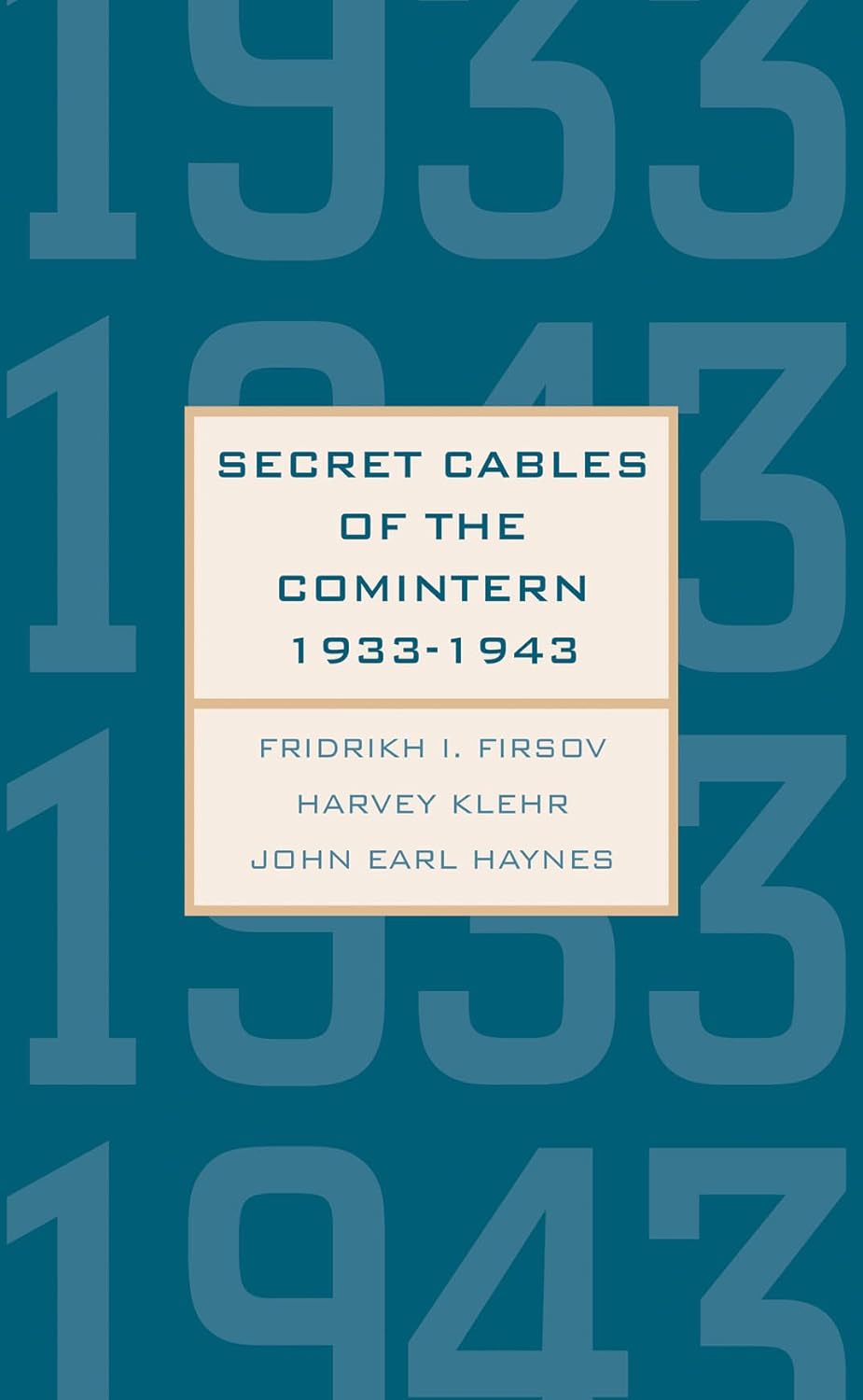 Fridrikh I. Firsov, Harvey Klehr, John Earl Haynes
Reviewer:
Richard Spence
Fridrikh I. Firsov, Harvey Klehr, John Earl Haynes.
Secret Cables of the Comintern, 1933-1943. Translated by Lynn
Visson. Annals of Communism Series. New Haven: Yale University Press, 2014. xi
+ 307 pp. $40.00 (cloth), ISBN 978-0-300-19822-5.
Reviewed by Richard Spence (University of
Idaho)
Published on H-Diplo (December, 2014)
Commissioned by Seth Offenbach
Moscow Rules
Over the past twenty years, John Earl Haynes and Harvey
Klehr, in such works as The Secret World of American Communism (1996), Venona:
Decoding Soviet Espionage in America (1999), and Spies: The
Decline and Fall of the KGB in America (2010), have made a virtual
cottage industry out of revealing the conspiratorial underbelly of the American
Communist movement and its role in Soviet espionage. In doing so, they have
collaborated and coauthored with former Soviet scholars, archivists, and
intelligence officers, including Kyrill Anderson, Alexander Vassiliev, and
Fridrikh Firsov. Firsov, in fact, is the “senior author” of the present work, a
position better defined below (p. 251n4).
Haynes is a retired twentieth-century political
historian of the Library of Congress’s Manuscript Division and Klehr is
the Andrew W. Mellon Professor of Politics and History at Emory
University. Firsov was a Soviet-era scholar and more recently section manager
of the former Russian Center for the Preservation and Study of Documents of
Contemporary History later absorbed into the Russian State Archive of
Socio-Political History. His research into the Communist International
(Comintern) goes back to the 1960s, and he is the coauthor or editor of various
works on the topic, includingDimitrov and Stalin, 1934-1943 (2000,
with Alexander Dallin), and Deutscher Oktober, 1923 (2003,
with Bernhard Bayerlein, et al.). It is fair to say that “few scholars in the
world can match [his] expertise on the Communist International” (p. 6).
The authorship of Secret Cables of the
Comintern, 1933-1943 is a bit complicated. It is basically a
translated, scaled down, and rewritten version of Firsov’s thousand-page
Russian magnum opus on the topic. Lynn Visson provides the translation. As
Firsov describes it, the original focused heavily on the “technical aspects” of
the Comintern’s code and communication system, whereas Haynes and Klehr have
shifted the emphasis to how the cables reflected “Comintern policy and the
actions of the Communist parties” (p. ix). They also limited the time frame to
the last decade of the Comintern’s existence, which encompasses the Popular
Front era, the purges, and the early part of World War II. The end result is a
work that is, as Haynes and Klehr put it, “more accessible to
historically-minded readers in the United States as well as more generally to
the English-speaking world” (p. 6). In that, overall, they have succeeded
admirably.
In roughly 250 pages of text (the remainder being notes
and index), Secret Cables covers a lot of ground, albeit to
varying degrees of depth. While many cables are quoted, some extensively, and
all clearly referenced, none are reproduced. The book does not offer any grand
revelations, nor does it put forth any particular claims to revisionist
reinterpretations. Rather, its strength lies in the sheer weight of
corroborative and illuminating details revealed in the secret cables. For
instance, anyone still clinging to the notion that the Communist International
“was truly an international organization” aligned with, but distinct from, the
Soviet regime will find nothing here to support it (p. 12). In every
instance, it is abundantly clear that the Comintern possessed neither a mind
nor a soul of its own and functioned only to abet and promote policies
determined in the Kremlin. To keep up appearances, in 1934 Joseph Stalin put
Bulgarian Communist Georgi Dimitrov, a non-Soviet, at its head. Under
Dimitrov’s watch, there is ample and stark evidence of the Comintern
Executive’s (ECCI) bullying and micro-managing of national Communist parties,
which, with few exceptions, slavishly bowed to the dictates.
The first of the book’s ten chapters is a summary of the
above “technical aspects” and offers a necessary overview of the Comintern’s
use of ciphered communications, a job handled by the ECCI’s hush-hush
Department of International Communications (DIC). The most interesting thing is
how unsystematic and unsophisticated the codes were and how careless many of
the people using them, including big shots like Andre Marty, were (p.
16). The extensive use of radios to communicate with Moscow also proved a
liability when British cryptographers broke the codes in the early 1930s. The
matter of secret communications inevitably touches on the collaboration and
continuity between the Comintern and Soviet intelligence organs. In that
regard, it is telling that in 1935 the new chief of the DIC was Meer Trilisser,
the ex-head of the Joint State Political Directorate’s (OGPU, predecessor to
the People’s Commissariat for Internal Affairs, NKVD) foreign intelligence
section. Trilisser and many other DIC personnel would perish in the purges just
a few years later. The subsequent chapter deals with the Comintern’s monetary
support to Communist parties, which is most remarkable for the relatively
modest, if often absolutely critical, sums involved and the ECCI’s obsessive
penny-pinching. As the authors make clear, comradely solidarity aside, such
subventions served as “a lever for exercising influence and ensuring
subordination” (p. 45).
The authors get more to the meat of the matter in the
following chapters dealing with the efforts to forge a Popular Front in France
and in the Spanish Civil War. The former is a blatant example of the Kremlin
dictating strategy and tactics to foreign comrades to keep them in line with
the best interests of Soviet diplomacy, not their own. Comintern operatives,
such as Marty and Palmiro Togliatti, played important roles in Spain, and the
creation of the International Brigades, a de facto Comintern Army, is often
seen as a crowning achievement of the organization. The reality, as revealed in
the cables, was much less organized and rather less heroic. International
Brigades troops commonly proved “ill-trained, poorly equipped, and commanded by
officers many of whom were as woefully short of training and military
experience as they were.” Morale was often poor, desertion rife, and casualties
heavy. ECCI chiefs in Moscow preferred to lay blame on “infiltration by spies
and fascists” but the root problem was the vanity and incompetence of men they
put in charge, notably Marty (p. 99). At the Brigades base camp in
Albacete, Marty set himself up as a mini-dictator whose capricious cruelty
earned him the nickname “Butcher.” When the highly capable commander of
the First Brigade, Emilio Kleber (Manfred Stern), earned too much attention,
Marty successfully schemed to get him recalled to Russia (where he ended up in
the Gulag). The politburo of the Spanish Communist Party blasted Marty for
mismanagement and “lacking flexibility” and tried to rein him in with a
collective executive (p. 97). When the ECCI dispatched Togliatti to sort
out the Spanish mess, his sensible advice to replace Marty and others fell on
deaf ears. Marty even picked a feud with Maurice Thorez, secretary of the
French Communist Party, which hindered French support for the International
Brigades.
The authors next turn their attention to the Terror back
home in the USSR and the Comintern’s role as the uncritical “megaphone of the Stalinist
regime” in justifying show trials, mass arrests, and general hysteria (p.
127). Beyond this, the Comintern took an active hand in ordering or enticing
foreign Communists to Moscow where they were duly arrested and liquidated by
the NKVD. The most glaring example of this was the Polish Communist Party which
ended up formally abolished and most of its leadership shot. Ominously, the
“confessions” of the Polish comrades only fueled notions of “the existence of
an espionage organization within the Comintern” (p. 126).
Perhaps nothing better indicated Stalin’s disregard for
the Comintern than the fact that “the ECCI leadership had not been warned of
Stalin’s intentions and had not grasped the meaning of Stalin’s sharp shift
towards a rapprochement with Hitler’s Germany” (p. 141). The blindsiding left
everyone from Dimitrov to local party leaders scrambling to wrap their minds
around the new order of things, a process, depending on your sense of humor, at
times almost comical. As the authors note elsewhere in the book, the “typical
Communist boilerplate” that permeated the Comintern’s public propaganda
was just as evident in its internal communiqués and reflected the “deeply
ingrained nature of the Stalinist belief system,” effectively, a kind of mental
straitjacket (p. 247). Thus, on Stalin’s instruction, all good
comrades eventually learned that the resulting war was not caused by Nazi
aggression but by the nefarious “aggressive British-French imperialist bloc”
(p. 166).
At least, that was the line until Hitler invaded the USSR
in June 1941. Much of the latter part of the book is devoted to the Comintern’s
role in supporting the Soviet war effort and foreign policy goals. This chapter
bounces around a good deal, but arguably the most interesting parts concern the
Comintern’s relations with Josip Tito and his already independent-minded
Partisan movement and the 1942 reanimation of the Polish Communists under the
label of the Polish Workers’ Party. The latter was almost at once dragged into
the Comintern’s frantic campaign to refute Soviet involvement in the infamous
Katyn Massacre of Polish POWs. The authors conclude that “it is quite unlikely
that the Comintern leadership knew that this massacre had been carried out
pursuant to a decision of the Politburo” (p. 212), but it also seems unlikely
they would have acted any differently if they had known. A separate chapter
centers on the ECCI’s wartime dealings with the Chinese Communists who also
displayed a tendency to pursue their own agenda, not Moscow’s. At the heart of
this was the Comintern’s (i.e., Stalin’s) insistence that Mao Zedong and his
comrades play nice with Chiang Kai-shek in fighting the Japanese, whereas Mao
stubbornly regarded Chiang as his primary enemy.
In the end, it is perhaps surprising that the Communist
International survived as long as it did. Stalin toyed with abolishing it as
early as April 1941. When the axe finally fell in May 1943, the authors
conclude, once again wartime expediency, in this case the arrival of American
diplomatic representative Joseph Davies in Moscow, was the precipitating
factor. However, they also note that despite the formal dissolution, little
really changed. In June, Dimitrov cabled party leaders around the world that
they should “continue to send information in the same way as heretofore” (p.
244). Moreover, ECCI or no ECCI, the “mental Comintern” still exerted a
powerful influence over Communist movements (p. 247).
Secret Cables does a splendid job in showing
Stalin’s personal dominance and manipulation of the Comintern in its final
decade, as well as the ECCI’s domination and manipulation of the thinking
and actions of Communist parties. The book likely will be of greatest value to
those who already have a solid grasp on the Communist International and its
history, but it has something to offer to anyone interest in Communist history
or in the diplomatic and political history of the 1930s and WWII.
Printable Version: http://www.h-net.org/reviews/showpdf.php?id=42246
Citation: Richard Spence. Review of Firsov,
Fridrikh I.; Klehr, Harvey; Haynes, John Earl, Secret Cables of the
Comintern, 1933-1943. H-Diplo, H-Net Reviews. December, 2014.
Assinar:
Comentários (Atom)
Postagem em destaque
Livro Marxismo e Socialismo finalmente disponível - Paulo Roberto de Almeida
Meu mais recente livro – que não tem nada a ver com o governo atual ou com sua diplomacia esquizofrênica, já vou logo avisando – ficou final...

-
Uma preparação de longo curso e uma vida nômade Paulo Roberto de Almeida A carreira diplomática tem atraído número crescente de jovens, em ...
-
FAQ do Candidato a Diplomata por Renato Domith Godinho TEMAS: Concurso do Instituto Rio Branco, Itamaraty, Carreira Diplomática, MRE, Diplom...
-
Países de Maior Acesso aos textos PRA em Academia.edu (apenas os superiores a 100 acessos) Compilação Paulo Roberto de Almeida (15/12/2025) ...
-
Mercado Comum da Guerra? O Mercosul deveria ser, em princípio, uma zona de livre comércio e também uma zona de paz, entre seus próprios memb...
-
 Reproduzo novamente uma postagem minha de 2020, quando foi publicado o livro de Dennys Xavier sobre Thomas Sowell quarta-feira, 4 de março...
 -
Itamaraty 'Memórias', do embaixador Marcos Azambuja, é uma aula de diplomacia Embaixador foi um grande contador de histórias, ...
-
Israel Products in India: Check the Complete list of Israeli Brands! Several Israeli companies have established themselves in the Indian m...
-
Pequeno manual prático da decadência (recomendável em caráter preventivo...) Paulo Roberto de Almeida Colaboração a número especial da rev...
-
O Brics vai de vento em popa, ao que parece. Como eu nunca fui de tomar as coisas pelo seu valor de face, nunca deixei de expressar meu pen...
