


 |
Spot the mark.
In this issue:
1. APEC meeting
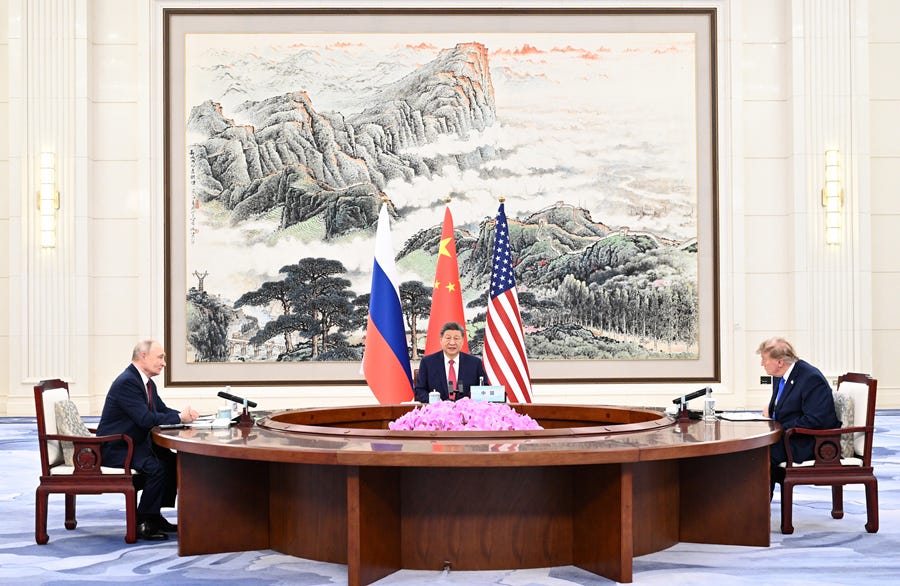
2. Xi-Putin-Trump trilateral
3. Xi-Trump meeting
4. Impact of tightened US chip controls
(...)The Feed: Business, Economy and Trade - Politics and Law - Foreign and Defense Affairs - Tech and Media - Society, Arts, Sports, Culture and History - Education - Rural and Agricultural Issues
Today’s top items:
1. APEC meeting - The APEC leaders’ meeting unanimously adopted the 2026 leaders’ declaration, a “Shenzhen Outlook” (深圳展望) and separate outcome documents on trade, connectivity and innovation. Xi announced $20 million for practical cooperation and new institutions covering Asia-Pacific community studies, digital technology, cross-border data, clean energy and SMEs. The big events around the meeting were the Xi-Putin-Trump trilateral, the Xi-Trump bilateral, and the general petty but unsurprising snubbing of the Japanese Prime Minister.
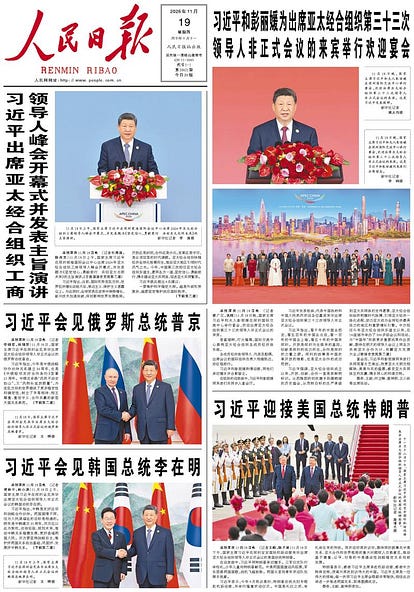
The November 19 People’s Daily front page:
 |
2. Xi-Putin-Trump trilateral - After the meeting the three leaders issued a “Heads of State Declaration toward Peace” with four points:
1. As permanent members of the United Nations Security Council, China, Russia, and the United States committed to reform the U.N. so that the U.N. can respond more effectively to global challenges and conform to its fundamental mission of international peace and security.
2. The three countries plan to increase the production and supply of refined petroleum products for the benefit of all nations. They reaffirmed the importance of stable energy flows.
3. The three heads of state recognized that the principle of state consent and respect for immunities of State officials are of paramount importance, and concurred that the International Criminal Court and other similar bodies must not abuse their jurisdiction.
4. The three heads of state reaffirmed that a nuclear war cannot be won and must never be fought. The three countries will conduct a dialogue on reducing nuclear risks and preventing the proliferation of nuclear weapons.
The US statement of the declaration was identical to the PRC’s with one exception. It described Xi as State Chairman of the People’s Republic of China, a literal translation of 国家主席, as opposed to the translation “President” that the PRC uses.
Xi leaned heavily into the PRC and Russian version of World War II history:
Xi noted that the first-ever gathering of the top leaders of China, Russia, and the United States was groundbreaking. History tells us that peace among major countries brings stability to the world, while contention among major countries brings chaos. Peace is humanity’s eternal aspiration. Our planet has experienced more than 10,000 wars, and more than 60 regional conflicts are still dragging on around the world today. More than 80 years ago, China, Russia, and the United States, as the backbone of the global anti-fascist struggle, fought shoulder to shoulder and won a great victory, bringing peace and tranquility to the world. History is the best textbook. We must remember history, draw lessons from it, and open up the future…
In his concluding remarks, Xi said the China-Russia-US heads of state meeting was positive, constructive, and fruitful and that the three countries shared the same views on safeguarding world peace. All three remember the history of fighting shoulder to shoulder during World War II and stress the need to cherish hard-won peace; major countries should take seriously the legitimate security concerns of all countries. Dialogue and negotiation are the right way to resolve differences, and so long as dialogue does not stop and the door remains open, there is hope for peace. Cooperation is the only way to respond to challenges. The countries should strengthen cooperation based on shared interests, use cooperation to promote peace, and seek win-win outcomes.
He also set out “Four Views on How Major Countries Should Get Along Properly”:
First, uphold mutual respect. Mutual respect is a basic norm for relations among major countries. China, Russia, and the United States have different national conditions. None can change the others. This is the product of history and the independent choice of each country’s people. The proper approach is to respect one another, seek common ground while reserving differences, and pursue common development. They should respect one another’s sovereignty and territorial integrity, social systems and development paths chosen by each country, and core interests and major concerns. They should uphold noninterference in other countries’ internal affairs and refrain from interfering in one another’s domestic affairs. On major and sensitive issues involving another party, they should communicate in advance, put themselves in the other’s position, and act prudently. In particular, they must not cross the other’s bottom lines.
Second, uphold peaceful coexistence. The “Thucydides Trap” is by no means inevitable; the key lies in the choices made by major countries. China, Russia, and the United States should be partners and friends, avoid conflict and confrontation, hold the bottom line of peaceful coexistence, and work to cross the “Thucydides Trap.” As the principal victors of World War II, they should firmly safeguard the postwar international order, uphold the purposes of the UN Charter, and defend the hard-won fruits of victory in World War II. Nuclear weapons are the “Sword of Damocles” hanging over humanity. They should be completely prohibited and thoroughly destroyed, with the ultimate goal of establishing a world free of nuclear weapons. A nuclear war cannot be won and must never be fought. Every effort must be made to prevent nuclear war, comply with the Treaty on the Non-Proliferation of Nuclear Weapons, and preserve global strategic stability.
Third, uphold win-win cooperation. The three countries have different development endowments and highly complementary economies and can leverage their respective strengths and meet one another’s needs. They should abandon Cold War thinking and strengthen economic and trade cooperation, linking the respective strengths of a resource-rich country, a manufacturing powerhouse, and a major consumer market, jointly making the pie of cooperation bigger, and achieving mutually beneficial and win-win outcomes rather than pursuing “decoupling and severing supply chains.” Global energy security faces severe challenges. The three countries can strengthen communication and coordination, jointly keep energy industrial and supply chains stable and unimpeded, and safeguard the security and stability of the global energy market.
Fourth, uphold dialogue and consultation. Differences among major countries are unavoidable. Without communication, suspicion will spread, and even small frictions may grow into major conflicts. The three countries should maintain regular high-level exchanges, keep dialogue channels at all levels open, and establish crisis-communication and prevention mechanisms to reduce misjudgments, keep differences under control, and prevent friction from escalating. Various disputes around the world are continuing, and hotspot issues keep resurfacing one after another. The international community expects major countries to do more to promote peace and facilitate talks. China, Russia, and the United States should continue encouraging parties to conflicts to sit down and talk and resolve disputes through political and diplomatic means.
The meeting was win-win, at least for Xi and Putin.
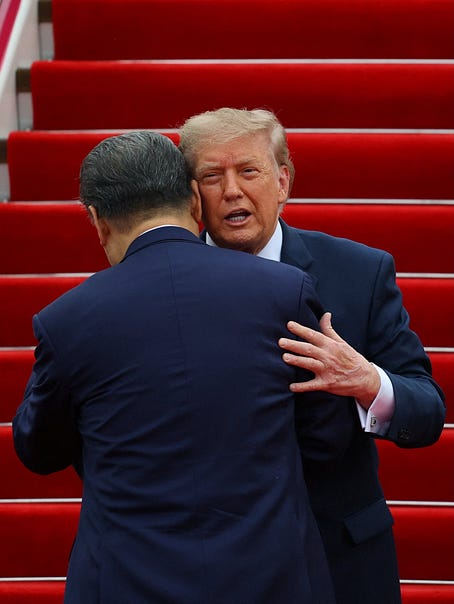
3. Xi-Trump meeting - Xi met Trump on the tarmac, reciprocating Trump’s greeting in the US in September, upgraded a bit with a hug, and the two made a show of bonhomie. The PRC readout had little new in it other than that the two sides “agreed to formulate an action plan for the constructive relationship of strategic stability”. The US side has yet to issue any statement or readout, and there are no details about what may be in the action plan that awaits formulation. The Nvidia scandal and the new chip controls were not mentioned publicly by the PRC side.
Xi urged the US to avoid a major disruption over Taiwan and proposed more cooperation on trade, fentanyl, illegal-migrant repatriation, telecom fraud and AI safety. The Chinese readout says Trump stated that the United States does not support “Taiwan independence”.
 |
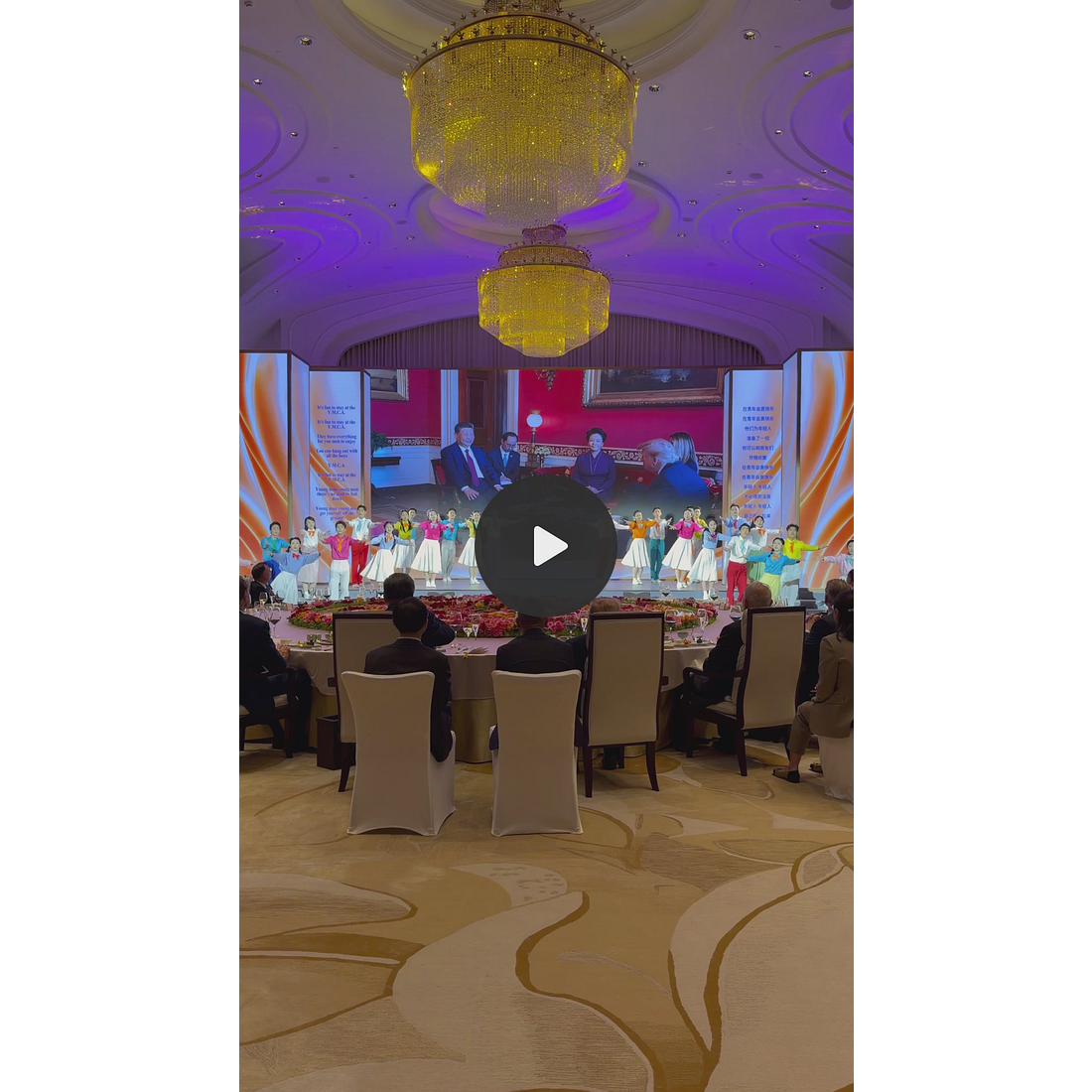
Trump also got a performance of his favorite song “YMCA”:
4. Impact of tightened US chip controls - The PRC has not substantively responded to the US rules announced Monday that will materially impact PRC AI firms’ access to advanced Nvidia chips and limit their ability to fab chips at 16 nanometers and below at chipmakers like Samsung and TSMC.
Caixin wrote about the impact of the Monday rules:
“We were expecting new restrictions from the U.S., but we never thought they would come this fast,” said an executive responsible for overseas AI data center procurement at a major Chinese tech company…
“Without access to these overseas AI data centers, China’s AI model industry is now in a precarious position as there is still a large performance gap between domestic chips and Nvidia’s,” the procurement executive said.
The Ministry of Commerce on Tuesday did say “if the US side insists on going its own way, China will take countermeasures and resolutely safeguard its national sovereignty, security, and development interests”, and so it is likely there will be a response, but that it was delayed until after Xi met with Trump in Shenzhen.
On Wednesday, The New York Times published a long article documenting Alibaba’s relationship with an AI lab with ties to the PLA. The investigations into the flow of Nvidia chips into China are just getting started here in DC, and I keep hearing there are going to be more revelations. ...


