O que é este blog?

Este blog trata basicamente de ideias, se possível inteligentes, para pessoas inteligentes. Ele também se ocupa de ideias aplicadas à política, em especial à política econômica. Ele constitui uma tentativa de manter um pensamento crítico e independente sobre livros, sobre questões culturais em geral, focando numa discussão bem informada sobre temas de relações internacionais e de política externa do Brasil. Meus livros podem ser vistos nas páginas da Amazon. Outras opiniões rápidas podem ser encontradas no Facebook ou no Threads. Grande parte de meus ensaios e artigos, inclusive livros inteiros, estão disponíveis em Academia.edu: https://unb.academia.edu/PauloRobertodeAlmeida

Site pessoal: www.pralmeida.net.

sexta-feira, 11 de fevereiro de 2022

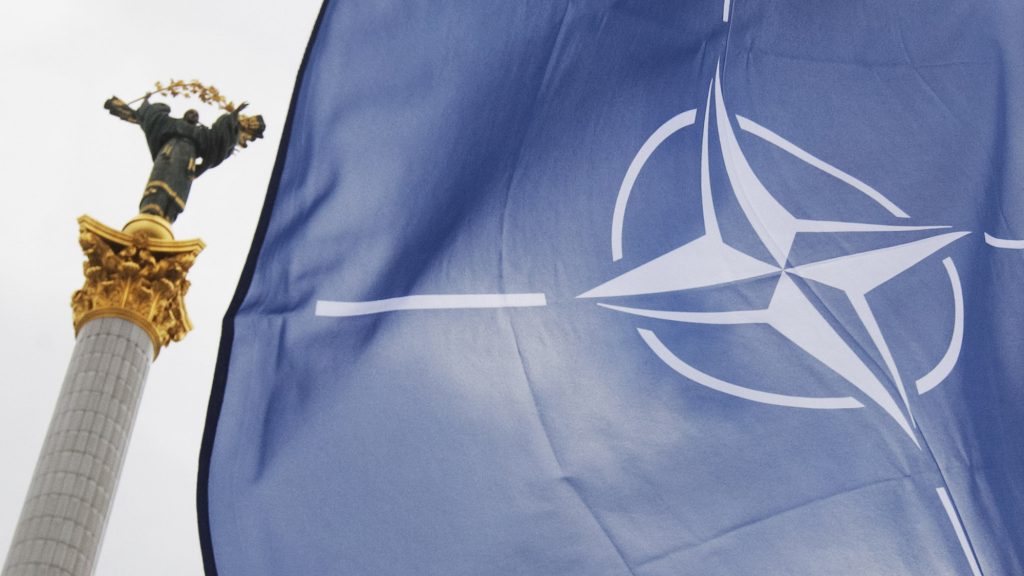
Ucrânia: artigos na Foreign Affairs; Putin como o novo Hitler

 Se o Putin atacar realmente a Ucrânia, ele não vai estar se equiparando ao Stalin da União Soviética, que em 1940 tomou os Países Bálticos e depois atacou a Finlândia.

Ele vai estar se equiparando a Hitler, que em setembro de 1939, depois de justamente ter feito um acordo de não agressão com Stalin (com um protocolo secreto prevendo a divisão do país entre eles dois) atacou covardemente a Polônia.

Paulo Roberto de Almeida

CRISIS IN UKRAINE

Image

“The world is on the brink of the largest military offensive in Europe since World War II,” Alexander Vindman and Dominic Cruz Bustillos wrote recently in Foreign Affairs. “A major military conflict in Ukraine would be a catastrophe. It is an outcome that no one should crave. But it is now a likelihood for which the United States must prepare.”


With Russian forces massed at the Ukrainian border and U.S. officials warning of an imminent attack, read a selection of our best essays on the origins of the current crisis—and how it could end.

O novo triângulo geoestratégico: EUA-China-Rússia, virando na sua base - Stephen Roach

  Acredito que os acadêmicos e os militares brasileiros estejam estudando seriamente a Declaração Putin-Xi Jinping de 4 de fevereiro, como o documento maior, o manifesto, da nova Guerra Fria, a declaração fundadora da nova Geostratégia do Século XXI. Este artigo do Stephen Roach pode ser interessante para ler, também. Eu não me impressiono muito com essas coisas: as três potências envolvidas nessa brincadeira vão torrar Zilhões de suas respectivas moedas em armas ofensivas e defensivas que não vão servir para NADA, pois tudo será dissuasão ao estilo do velho MAD, a Mutual Assured Destruction, ou seja, os contribuintes vão pagar para brinquedinhos que JAMAIS serão usados, em lugar de aumentar o grau de bem estar de suas respectivas sociedades, e para o desenvolvimento dos países pobres. Pena: a humanidade não precisaria dessas demonstrações de machismo estratégico...

Paulo Roberto de Almeida

Straits Times, Singapura – 11.2.2022

China’s triangulation gambit

America's rapprochement with China, 50 years ago this month, isolated the former Soviet Union at a time when its economic foundation was starting to crumble. Today, there can be little doubt that China has revived triangulation as a strategic gambit – or that this time America is the one being triangulated.

Stephen S. Roach


New Haven -  History’s turning points are rarely evident with great clarity. But the February 4 joint statement of Russian President Vladimir Putin and Chinese President Xi Jinping as the Winter Olympics opened in Beijing may be an exception – signaling a new turning point in a new Cold War.

Triangulation was America’s decisive strategic gambit in the first Cold War. Richard Nixon’s rapprochement with China, 50 years ago this month, isolated the former Soviet Union at a time when its economic foundation was starting to crumble. As Henry Kissinger put it in his opus, On China, “The Sino-US rapprochement started as a tactical aspect of the Cold War; it evolved to where it became central to the evolution of the new global order.” It took time for the strategy to succeed. But, 17 years later, the Berlin Wall came down and the Soviet Union imploded.

Never one to ignore the lessons of history, China is opting for its own triangulation gambit in a nascent Cold War II. A China-Russia tandem could shift the global balance of power at a time when America is especially vulnerable. This points to a worrisome endgame.

Important hints can be found in the triangulation of the first Cold War. Fearful of the Soviet military threat, the United States countered by embracing China in an economic marriage of convenience. Never mind that the US-China partnership, which initially provided cheap products for hard-pressed American consumers, has now been shattered by a trade and tech war. The point is that a comparable strategy has now brought China and Russia together.

This new marriage is convenient in both economic and geostrategic terms. Russia has the natural gas that an energy-hungry, coal-dependent, polluted China needs. And China, with its surplus savings, ample foreign capital, and its Belt and Road Initiative, offers Russia added clout to buttress its thinly-veiled territorial ambitions.

The geostrategic angle is equally compelling. Rightly or wrongly, both Xi and Putin are convinced that the US seeks to contain their supposedly peaceful rise. China points not just to former US President Donald Trump’s tariffs and to sanctions on its leading technology companies, but also to an ambitious Trans-Pacific Partnership that excluded China (and which has since morphed into the Comprehensive and Progressive Agreement for Trans-Pacific Partnership). More recently, Australia, the United Kingdom, and the US established the so-called AUKUS trilateral security agreement, which takes dead aim on China. 

Putin makes a similar case in resisting US containment of Russia. Fearful of NATO enlargement, he appears more than willing to hold Ukraine hostage and take Europe to the brink of yet another devastating conflict.Putin, who has described the demise of the Soviet Union as “a major geopolitical disaster of the [twentieth] century,” would like nothing better than to rewind history. Yet US President Joe Biden’s threats may well have cornered Putin, leaving him with no face-saving path for de-escalation. For authoritarians, face is everything.

The joint Sino-Russian statement of February 4 leaves little doubt that both leaders are united in the view that America poses an existential threat to their ambitions. Putin was successful in getting Xi to weigh in against NATO expansion – an issue well outside the Chinese leader’s wheelhouse. And Xi co-opted Putin to sign on to an agreement that fits the template of “Xi Jinping Thought,” promoting their joint statement as yet another of China’s grandiose “new era” policy pronouncements.

There can be little doubt that China and Russia have embraced triangulation as a strategic gambit. Ironically, unlike the first Cold War, the US is the one now being triangulated. And, as before, there is good reason to believe that the endgame will be determined in the economic arena.

That’s where the comparison between the two cold wars is especially worrisome. From 1947 to 1991, the US economy was balanced and strong. By contrast, over the past decade, real GDP growth (1.7%) and productivity gains (1.1%) were half their average rate over that earlier 44-year period. Recent comparisons are even worse for domestic saving, the current account, and America’s gaping trade deficit.

The US prevailed in the first Cold War not just because its economy was strong but also because its adversary’s was hollow. Starting in 1977, per capita output growth in the Soviet Union slowed dramatically, before plunging at a 4.3% average annual rate in the final two years of the Cold War. That presaged a subsequent economic collapse in the Soviet Union’s successor. From 1991 to 1999, the Russian Federation’s economy shrank by 36%.

Today, a weaker US economy is facing a rising China, in contrast to the earlier clash between a strong America and a faltering Soviet Union. Nor is China’s clout likely to be diminished by Russia, a bit player in the global economy. In 2021, Chinese GDP was six times that of Russia, and the gap is expected to widen further in the coming years.

Yet Putin gives Xi precisely what he wants: a partner who can destabilize the Western alliance and deflect America’s strategic focus away from its China containment strategy. From Xi’s perspective, that leaves the door wide open for China’s ascendancy to great-power status, realizing the promise of national rejuvenation set forth in Xi’s cherished “China Dream.”

In late 2019, Kissinger warned that the US and China were already in the “foothills of a new cold war.” The plot has since thickened with the emergence of a new triangulation strategy. The Xi-Putin gambit reinforces the conclusion that this cold war will be very different from the last one. Sadly, America appears to be asleep at the switch. (P.S.)


Stephen S. Roach, a faculty member at Yale University and former chairman of Morgan Stanley Asia, is the author of Unbalanced: The Codependency of America and China (Yale University Press, 2014) and the forthcoming Accidental Conflict.


Ucrânia: a Rússia revitaliza a OTAN - Ana Palacio (Atlantic Council)

 New Atlanticist

Why NATO will endure well beyond today’s crises

After the disastrous abandonment of Afghanistan, after years of bickering over the 2 percent of gross domestic product target for defense spending, and after French President Emmanuel Macron deemed the Alliance brain dead, NATO is front and center on the geopolitical stage and reclaiming relevance in the current cacophony. On June 29 and 30, the Alliance will meet in Madrid with two major issues on the agenda: the upcoming expiration of the Secretary General’s mandate on October 1 this year and the articulation of a new Strategic Concept, an outline of action that allies typically establish every ten years, though the current one was released in 2010.

It is therefore time to go above the noise and take stock of NATO’s purpose—created by the 1949 North Atlantic Treaty—and the philosophy that conceived it. General Lord Hastings Ismay, NATO’s first Secretary General, is credited with coining the often-repeated shorthand description of the project’s raison d’être when he first took office in 1952: “Keep the Russians out, the Americans in, and the Germans down.” In other words, in the face of Soviet expansionism, rebuild the continent by avoiding the resurgence of nationalist militarism in Europe. This endeavor convinced US President Harry S. Truman to, instead of bringing US troops back home as soon as hostilities ended, consolidate their presence in Europe. In keeping with the architecture for peace developed after World War II, the United States bet on Europe—and Europe bet on the protection offered by Washington.

The will of the twelve North Atlantic Treaty signatories (ten European countries plus Canada and the United States) was to advance the architecture of the international liberal system. With express mention of the recently formed United Nations, the preamble could not be clearer: Its founding impulse is to bring together countries founded on “democracy, individual liberty, and the rule of law” in order to “promote stability and well-being in the North Atlantic area.”

Both a political and military partnership, NATO is focused on collective defense, as touted in Article 5 of its founding treaty, which clearly states, “if such an armed attack occurs, each of [the members]… will assist the Party or Parties so attacked by taking forthwith… such action as it deems necessary, including the use of armed force, to restore and maintain the security of the North Atlantic area.”

Afghanistan has been a topic of almost constant conversation in the past year, owing to the United States’ haphazard departure in August 2021 with some NATO allies sayingthey weren’t consulted. But in the hubbub of August’s events, a crucial fact was forgotten: NATO allies had been in Afghanistan since the first (and only) time that Article 5 has been invoked—following the September 11 attacks. Beyond being an attack on the United States, 9/11 represented a challenge to the very core of the North Atlantic Treaty: democracy and the multilateral order. And it forced NATO allies to develop an awareness of the potential for new, unconventional threats—that is, those outside traditional warfare.

Just as the beginning of the Afghanistan operation marked a symbolic milestone, so, too, did its end. While former President Donald Trump damaged the image of the US presidency in the eyes of the world, those who hated the United States still had a general respect for the White House. However, since the scenes from Kabul’s airport, Washington has been perceived as an unreliable partner shedding its Atlantic ties to concentrate on the Indo-Pacific: Some fear it is evidence of its abdication of global leadership. But the United States’ ability to respond to global challenges and the integration of values ​​in its foreign policy should not be underestimated. After all, Uncle Sam has bounced back from other difficult situations in recent history—Vietnam comes to mind.

In that vein, the United States’ and NATO’s coordinated responses to Russian President Vladimir Putin’s December 17 ultimatum offer Moscow a serious and in-depth dialogue on arms control and strategic stability, but proclaim transatlantic commitment and steadfastness; a resounding rejection of Russian demands; and reaffirmation of the centrality of the principles of sovereignty, the inviolability of borders, and territorial integrity. They direct the Kremlin to refrain from the threat and use of force. Finally, and critically, both reiterate countries’ right to choose or change their security arrangements—to decide their future without external interference. This right is laid out in NATO’s well-known Open-Door Policy which prompted one of Putin’s classic responses of convolution: “They say—a policy of ‘open doors.’ Where did it come from? NATO has an open-door policy. Where is it stated? Nowhere.”

As for Europeans, the situation in Ukraine has made internal contradictions come to a head. From the outset, the European Union (EU) has been largely absent from the dialogue with Moscow, barring Macron’s bravado-riven bilateral conversations and his insights into the “contemporary traumas of this great people [Russians] and great nation.” Europe’s energy has been focused on grandiloquent speeches (unsurprisingly, primarily in French) and pompous formulas: while “strategic autonomy” loses momentum in Brussels talks, the term “Strategic Compass” is gaining ground after the European Council promised to adopt—within six weeks—what it has described as a road map to turning the Union into a more effective international security actor by 2030 and to strengthening its strategic sovereignty. Per a lesson from Aesop’s Fables, the mountain will give birth to another mouse—unless there is a miracle here, this speech promising great things will amount to little.

Europeans do not perceive danger in the same way across the board for historical and geographic reasons. Furthermore, there is the concerning about-facing—such as Hungarian Prime Minister Viktor Orbán’s recent visit to Moscow and his statements that Putin’s requests for security guarantees are “normal” despite the fact that they include proposals to block NATO weapons and forces from NATO members who joined after 1997, which includes Hungary. Allies also have to face the weakening of the democratic link within the organization, and particularly within the EU. Finally, Europeans have not accepted that defense must be paid for. All of the above serves as a backdrop for pessimistic outbursts such as Macron’s.

The Kremlin has spent years toward Putin’s objective of undermining the West but, more specifically, Europe and its future—the democratic system. And Putin makes no attempt to hide it with his litany of aggressive statements, weaponization of energy, Russo-Georgian war in 2008, and invasion of Crimea in 2014. But Ukraine seems to be the straw that broke the camel’s back. Procrastination in the face of “gradualism” is not a solution for NATO. It is time for an analysis of the range of Russia’s capabilities that the current situation has confirmed: misinformation, hybrid attacks, new technologies (including cyberattacks), “little green men,” and mercenaries. Those are gray areas that the Strategic Concept will have to clarify due to their impact on the interpretation of Article 5.

In addition to the risk posed by non-state actors and terrorism, the working hypothesis in the run-up to the NATO meeting in Madrid is that tension with Russia will not disappear soon (regardless of the outcome of the current crisis), underscoring the need for a solid defense and reach to the east, and a realistic approach in the Mediterranean and Africa. Likewise, Europeans must develop a common policy towards China: In a dialogue organized by the Atlantic Council, NATO Secretary General Jens Stoltenberg highlighted both the need for North America and Europe to maintain unity in the face of new threats, as well as the challenge of addressing “the security consequences of the rise of China.”

Putin, in his efforts to destroy the liberal international order, has shaken the foundations of NATO. It would be ironic—and welcome—for the crisis over Ukraine to reinvigorate the Alliance.


A version of this article originally appeared in El Mundo. It has been translated from Spanish by the staff of Palacio y Asociados and is reprinted here with the author’s and publisher’s permission.

Ana Palacio is a former minister of foreign affairs of Spain and former senior vice president and general counsel of the World Bank Group. She is also a visiting professor at the Edmund E. Walsh School of Foreign Service at Georgetown University and a member of the Atlantic Council’s Board of Directors.

Ucrânia: a diplomacia do megafone de Joe Biden - Anthony Faiola (WP)

 O presidente Joe Biden parece um locutor de partida de futebol: todos os dias ele irradia os segredos mais sensíveis capturados pela Inteligência americana sobre os movimentos da tropas russas, de forma a que o Putin fique sabendo que todos os seus passos estão sendo cientificamente observados.

Não haverá nenhuma surpresa, assim, se a invasão se efetivar: tudo terá sido observado, previsto e ANUNCIADO pelo grande locutor de jogos de guerra Joe Biden. Talvez seja uma tática interessante...

Paulo Roberto de Almeida


Why the Biden administration is being so public about the Russian threat in Ukraine

President Biden at the White House on Feb. 7. (Al Drago/The New York Times/Bloomberg News/Bloomberg)

President Biden at the White House on Feb. 7. (Al Drago/The New York Times/Bloomberg News/Bloomberg)

The Biden administration’s warnings of a Russian invasion of Ukraine have taken on the feeling of the Weather Channel tracking a hurricane. Since U.S. officials first bannered the gathering strength of Russian President Vladimir Putin’s forces at the border more than three months ago, they’ve repeated the threat with escalating alarm. Last week, new U.S. assessments emerged that Russian combat firepower had reached 70 percent of the gale force needed for a full-scale Category 5 assault. The Russian storm, the United States concluded, could overwhelm Kyiv, Ukraine, within two days, leaving as many as 50,000 civilians dead or wounded.

Few things in geopolitical crises are more sensitive than intelligence. And yet, from the beginning of the Ukraine crisis, the Biden administration has been extraordinarily vocal about U.S. knowledge of Russian movements, tactics and planning. One analyst dubs it “Biden’s megaphone strategy.” Others say you need to go back years to find a similar crisis where a U.S. administration has shared this much information with this level of specificity this quickly.

“This is unprecedented, even going back to before my professional life,” said John E. Herbst, the U.S. ambassador to Ukraine between 2003 and 2006, told me. “Maybe you could compare it to the [1962] Cuban missile crisis … [or] the build up to war in Iraq.”


There can be strategic reasons for being tight-lipped. Too much detail can compromise intelligence assets and risk future access to information. But there’s another big reason for discretion. Intelligence gathering and processing is more art than science, a tapestry of secrets held together by analytical assumptions. Intelligence can be — and often is — spun, and can be — and often is — wrong. The textbook example: U.S. warnings of Saddam Hussein’s nonexistent weapons of mass destruction, which were both spun by the Bush administration, as well as wrong.

That doesn’t mean U.S. assessments are off now — or that the Russian bear won’t claw its way into Ukraine. In fact, so far, the sense of Herbst and others is that the administration has gotten this right.

The administration has also been increasingly clear about what it doesn’t know: Whether Putin has made the critical decision to actually invade. That finer point came into focus after an exasperated Ukrainian President Volodymyr Zelensky decried Washington’s breathless warnings for causing “panic.” Last week, the White House backtracked on using the word “imminent” to describe the prospect of a Russian attack.

Some argue the administration is erring on the side of caution because it is sensitive to its foreign policy failures over the past year, particularly the sense that the U.S. government defense apparatus completely miscalculated the speed of the Taliban takeover in Afghanistan, which led to a messy withdrawal and broad recriminations.

That doesn’t mean its warnings are being taken at face value. As it borders on oversharing — President Biden even said a “minor” Russian incursion would be tolerated in a gaffe that had the ring of candor — the administration is in a jam over the credibility of U.S. intelligence and the reliability of its disclosures.


That distrust went on full display last week, when the administration outlined a deep fake operation allegedly being weighed by the Russians as a pretext for invasion, and for which the Ukrainians would be falsely blamed. State Department spokesman Ned Price told reporters about the production of a Russian video with “graphic scenes of false explosions — depicting corpses, crisis actors pretending to be mourners and images of destroyed locations or military equipment — entirely fabricated by Russian intelligence.”

Tough questions from reporters ensued.

“Where is the declassified information?” Matthew Lee of the Associated Press asked.

“I just delivered it,” Price said.

“No, you made a series of allegations,” Lee responded.

“The exchanges were … a sign of increased skepticism of the Biden administration when it comes to intelligence and military matters, particularly after officials failed to anticipate how swiftly the Afghan government would fall to the Taliban last year and initially defended a U.S. missile attack in Kabul as a ‘righteous strike’ before the Pentagon confirmed the action had killed several civilians but no terrorists,” ruled Chris Megerian of the Associated Press.

But many observers say the administration is tactically smart to get out in front of any Russian operation in precisely the way it’s doing.

Overwhelming disclosure has enabled Washington to present a highly public case for a real and present danger, narrowing the daylight between the U.S. and European allies on decisions for high sanctions for Putin that could ultimately serve as a successful deterrent to invasion. Differences between allies on a coordinated response no doubt still exist — but even the reluctant Germans are beginning to talk tougher.

And if Putin had hoped for a stealth attack, he now has the eyes of the world watching.

“The Biden administration has waged a campaign of deterrence in what the Russians sometimes call the 'information space,’ ” wrote The Washington Post’s David Ignatius. “To mobilize allies, U.S. officials have shared sensitive intelligence about Russia’s moves; when they’ve detected Russian plots, they’ve disclosed them. These aggressive tactics have checked Russia’s usual advantages of surprise and stealth.”

“Radical transparency” may be the best way to deal with Putin’s dark tactics.

“Russia’s hybrid war is based on sowing confusion and disinformation,” Richard Gowan, an International Crisis Group analyst, told Spanish newspaper El Pais. “By adopting radical transparency, the U.S. is complicating Russia’s task of disseminating disinformation about its actions. The Russians have tried to ignore or dismiss the accusations, but they have also had to go on the defensive in public. And this extreme transparency also makes things easier for Washington when it comes to keeping NATO’s allies more or less united.”

Still, the decision to play this one anything but close to the vest harbors risks. For one, if it is a bluff, then calling Putin on it might trigger action he never intended. “This megaphone diplomacy could make it complicated for Putin to do nothing,” Gowan added. “Now it will be harder for him to back off without a certain sense of humiliation.”

Another risk: That Russian troop movements are simply a ruse to capture the West’s attention, ice Ukraine’s hopes of ever joining NATO, test the will of the United States and Europe, and force a dialogue over its claimed security concerns.

“What if this diplomatic show was exactly what Putin wanted out of his move?” wrote Foreign Policy columnist Caroline de Gruyter. “What if the West played into his hands by trying to deter him? What if the West actually fell into his carefully laid trap?”

If there is no invasion, the United States and Europe could still be dragged into a long, diplomatic morass over Ukraine’s future that will suck time and energy from other important global affairs.

But that’s still better than war, which the administration could claim to have headed off by calling Putin out — or at least say it tried if he does invade.

“The downside is not so high. If it doesn’t happen, everyone will be saying ‘Thank God it didn’t happen,’ ” Herbst said. “I actually believe it’s highly unlikely the Russians will do a major operation, and less than 50 percent of something minor. But I believe that is because the Biden administration has been solid on this.”

Reforma na OMC? - Jamil Chade (The Geneva Observer)


** ✺ A SHAKEN WTO SECRETARIAT
------------------------------------------------------------
By Jamil Chade

Change is coming to the WTO’s Secretariat, but not without creating some waves within the organization. It was to be expected, WTO watchers tell The Geneva Observer, since the Secretariat has not been the subject of much organizational attention under the two previous D-Gs, Pascal Lamy and Roberto Azevedo. Dr. Ngozi has made the project one of her top priorities, and soon after her nomination, following a public tender, she entrusted consulting company McKinsey with the task of assisting her with her plan.

Ngozi ran for D-G on the promise that she would extensively reform and reshape the WTO, and harbors lofty ambitions for the organization, whose role she sees as larger than simply being the maker and enforcer of the rules governing global trade. Ngozi has often publicly expressed the view that the WTO has the potential to restore faith in international cooperation, contribute to fighting climate change, and of course help the world defeat the pandemic.

“Should it not exist, the WTO should be invented” she told an interviewer; a bold statement about an organization that is facing what some WTO experts call a make-or-break moment. Some suspect that, given the chance, she would reinvent it from scratch—an impression reinforced by the way she has approached the reform of the Secretariat.

‘Transformation’ might be a better word, for she sees it as the cornerstone of the modernization of the WTO, which will require the development of a new conceptual framework and set of rules to deal with digital trade, e-commerce and environmental goods.
The role of the 625-person-strong Secretariat is “to provide top-quality, independent support to WTO member governments on all of the activities that are carried out by the Organization,” according to the organization’s website (https://www.wto.org/english/thewto_e/secre_e/intro_e.htmhttps://www.wto.org/english/thewto_e/secre_e/intro_e.htm) . It has no decision-making powers, its main duties being to supply impartial technical and professional support to the WTO members. The WTO’s D-G—the first ever woman and African to lead the organization—has wasted no time or energy in her efforts, proving right the prediction of European Bank Director Christine Lagarde that Dr. Ngozi would “rock the place.”

As far as the Secretariat is concerned, she’s rocking it with the support of a large numbers of members who have been closely involved in the review process. Looking for wide and early buy-in from staff, the audit involved the review of more than a hundred documents, with McKinsey’s team conducting more than seventy one-on-one interviews, five focus groups, and two surveys, in addition to getting input from around sixty member states. The consultant’s audit revealed that the WTO Secretariat has a highly capable staff with deep knowledge and expertise, driven by the purpose of the WTO and by the desire to serve its members. It also established that staff felt comfortable in the ecosystem in which they were working, sources close to the audit’s conclusion tell The Geneva Observer.
SOUND FUNDAMENTALS
According to participants of the recent “town-hall-style meetings” spoken to by The Geneva Observer, Dr Ngozi called the Secretariat a “treasure” when she went before the staff a few days ago to share her vision for the organization, the rationale for her reforms, and the results of the audit. But, although the audit concluded in essence that the Secretariat’s fundamentals are sound, it nevertheless flagged several issues of importance when confronted with the most pressing need: how to address the challenges of a completely transformed trade environment.

According to the same sources, familiar with the audit and its participants, a large majority of Members agree that there is a potential to amplify the organization’s overall impact by having the Secretariat develop a clearer vision, better aligned with the WTO’s strategic priorities. The body also suffers from siloed ways of thinking and an ineffective structure, which often leads to uncoordinated answers on horizontal issues. Rigid resource allocation, a weak approach to talent management, recruitment and promotion, and ineffective processes were also mentioned, as well as difficulties in leveraging data and technology to its full potential.
"A HARD HAND IN A SOFT GLOVE"
However, the presentation of the plan appears not to have gone as smoothly as expected. Documents, minutes of meetings, letters, and recordings of various meetings confidentially obtained by the The G|O reveal deep tensions within the organization. More broadly, they shed a light on the difficulties and complexities involved in reforming international organizations. In this instance, a particularly contentious point centers around what some critics of the WTO’s management and of McKinsey consider to be an unbalanced process, skewed towards the demands of the members.

Staff were consulted and, according to figures quoted by McKinsey, responded with a high level of engagement, with a 50% response rate to the surveys. Critics of the process (including people in senior positions who talked to The G|O) do not dispute the figure, but claim that their input was not fully taken into consideration—a perception exacerbated by the fact that the audit was not shared in its entirety, and that no official document has yet been officially produced.

In addition, the decision to take early retirement made by two senior members highly critical of Dr. Ngozi’s management style has amplified some of the tensions. For some, including among her supporters, Dr Ngozi can appear abrasive. “She is this wonderful, soft, very gentle woman with an authentic approach to problems but, boy, under that soft glove there is a hard hand and a strong will behind it,” Christine Lagarde told Bloomberg a year ago.

Time plays in Dr. Ngozi’s favor. Altogether, seven senior positions will have to be filled this year—more if other voluntary departures occur. This is an opportunity for the D-G to bring what she calls “fresh blood” into the Secretariat.

How does she assess the situation? Dated February 3^rd, her latest status report to the Members reads: “Change process can be unsettling. As in any change process, there will always be residual noise in the system by those who feel more comfortable with the status quo. […] This may manifest in counterproductive behavior that targets the change process itself or those implementing it.” She also took pains to reassure them that the noise was not loud enough to “distract her.”

For her critics, her letter only deepened a feeling of distrust towards her, as they felt insulted by the fact she seemed to be stifling criticism. A “transformation unit” has been set-up as part of the change process at the Secretariat. No doubt it will be busy over the next few months.

-JC 

quinta-feira, 10 de fevereiro de 2022

Revista ACERVO, do Arquivo Nacional: chamada para artigos, número especial sobre o Bicentenário da Independência

https://revista.an.gov.br//index.php/revistaacervo/announcement/view/53 

A revista Acervo torna pública a chamada para o dossiê “Independências: 200 anos de história e historiografia”, que tem como editoras a professora Lúcia Maria Bastos Pereira das Neves, doutora em História pela Universidade de São Paulo (USP) e professora da Universidade do Estado do Rio de Janeiro (Uerj), e a pesquisadora do Arquivo Nacional Renata William Santos do Vale, doutora em História pela Universidade Federal Fluminense (UFF).

Em 2022, estão previstas as comemorações do bicentenário da Independência do Brasil. Comemorar significa, além do sentido de celebração, trazer algo à memória, rememorar juntos. Nesse sentido, convidamos pesquisadores de todo o Brasil e estrangeiros a rediscutir os acontecimentos que levaram ao rompimento com a metrópole portuguesa, levando-se em conta que se trata de um longo processo, iniciado, para diversos historiadores, com a transferência da Corte portuguesa para o Rio de Janeiro em 1808, e que, decididamente, não se encerra no ano de 1822.

É necessário refletir sobre os aspectos políticos, econômicos, diplomáticos, sociais, culturais, simbólicos, artísticos que envolvem aquele momento particular da história do Brasil, atentando, por exemplo, para os discursos contrários e os movimentos resistentes à Independência, para as diferenças regionais, o vocabulário político, os projetos de nação, os debates públicos na imprensa, a relação com as repúblicas latino-americanas e o pacto em torno da manutenção da escravidão. Por conseguinte, há muito ainda para se rediscutir.

Apesar dos avanços da historiografia recente sobre o movimento de Independência, é preciso prosseguir no processo de desnaturalizar a visão ainda persistente de uma história nacionalista, de uma Independência pacífica, ordeira, centrada na narrativa dos grandes fatos e homens, visando reforçar os laços de unidade e identidade nacional, silenciando as vozes contrárias e eliminando as diferenças. Deve-se considerar também os usos e apropriações do passado feitos ao longo do tempo, sobretudo no período republicano, incluindo os eventos de 1922, quando da comemoração do primeiro centenário com uma monumental exposição internacional no Rio de Janeiro.

Portanto, muitas são as questões sem respostas que podem ser analisadas nesse dossiê sobre a Independência que a revista Acervo lança tendo como ponto de partida o ano de 1822.

As submissões devem ser encaminhadas até o dia 28 de fevereiro de 2022, pelo site da revista Acervo, para as seções Dossiê Temático, Artigos Livres e Resenha. O dossiê será publicado de forma contínua entre setembro e dezembro de 2022. As contribuições devem estar de acordo com o foco e o escopo do periódico e seguir as normas editoriais.

Acesse: http://revista.arquivonacional.gov.br/index.php/revistaacervo/about/submissions

Dúvidas: revista.acervo@an.gov.br

A marcha da História (em geral e do Brasil) - Paulo Roberto de Almeida

 A marcha da História  

Paulo Roberto de Almeida

Diplomata, professor

(www.pralmeida.org; diplomatizzando.blogspot.com)


As sociedades evoluem e se transformam muito lentamente, na gradual acumulação de pressões inovadoras que vão gerando impulsos para reformas gradativas, parciais, geralmente de maneira não disruptiva, pois esta é a tendência dos grupos e classes sociais já organizados sob a forma de uma comunidade política qualquer, e também porque as mudanças econômicas, que são as que mais contam, só se realizam muito lentamente, com alguns saltos tecnológicos mais ousados que ocorrem a certos intervalos. 

Acelerações no ritmo das mudanças podem ocorrer, mas elas são perturbadoras das forças sociais e econômicas já consolidadas e podem provocar crises momentâneas, que perturbam um ciclo de crescimento. Os Estados Unidos, por exemplo, cresceram de maneira sustentada durante quase um século e meio, depois da guerra de secessão, mas também passaram por crises econômicas e algumas provocadas de fora. Sociedades que conheceram violentas mudanças políticas, em meio a grandes revoluções sociais – como a Revolução francesa, a bolchevique, em 1917, a maoísta, dos anos 1950-70, e a dos aiatolás, no Irã –, geralmente se saíram pior dessas formidáveis experiências do que se tivessem enveredado por um processo de reformas graduais, sem grandes perdas econômicas – como efetivamente tiveram – e sem os enormes sacrifícios em capital humano – emigrados, ou simplesmente eliminados fisicamente – que efetivamente tiveram.

Algumas sociedades não conseguem se reformar para avançar, passando por uma fase mais ou menos longa de declínio ou estagnação, ou então passam a enfrenar aquelas pressões disruptivas que as conduzem a processos revolucionários, em geral devido a impasses entre as classes dominantes e as elites dirigentes, ou em face da ascensão de novas forças sociais, que passam a disputar o poder político e o comando do Estado. Mas, as grandes revoluções sociais são eventos raros na história da sociedade, e a imensa maioria das sociedades avança mediante erros e tentativas, num processo gradual de adaptações e ajustes setoriais e parciais.

O Brasil nunca enfrentou um processo de tal magnitude quanto uma grande revolução social, mas teve várias pequenas e grandes rupturas ao longo dos últimos 200 anos. A longa crise da escravidão acabou redundando, entre outros fatores conjunturais, na própria abolição da monarquia, o que resultou num início de República muito caótico, até o país se acomodar no regime quase “normal” das oligarquias. A Revolução de 1930, liderada por um caudilho autocrático, nos levou à primeira grande ditadura, o Estado Novo, autocrático e modernizador (e também com grande efervescência cultural). Nova crise política, sempre com os mesmos desentendimentos entre as elites dirigentes, nos conduziram a nova ruptura política e a uma ditadura militar ainda mais longa, embora com nova e vibrante efervescência cultural. A democratização teve seus pequenos impasses e inéditos processos hiperinflacionários, que foram superados depois de diversos exercícios de engenharia econômica. 

Mas não tínhamos enfrentado, ainda, um processo de degradação institucional e de rebaixamento cultural conduzido diretamente a partir do poder central, como o enfrentado desde 2019, com a ascensão do reconhecidamente pior dirigente em toda a história do país. Venceremos o desmantelamento na governança pela via eleitoral, com talvez algumas sequelas no plano das crenças políticas, mas nada de totalmente disruptivo. Mais importante, talvez, do que os desarranjos atuais no núcleo do poder é o persistente processo de declínio ou estagnação do crescimento econômico, o que resultou da extrema fragmentação política na sociedade, do corporatismo no Estado e da baixa educação política do eleitorado.

Acredito que vamos superar essa letargia sem grandes rupturas políticas ou sociais, mas às custas de uma extrema lentidão nas reformas estruturais.


Paulo Roberto de Almeida

Brasília, 4078: 10 fevereiro 2022, 2 p.


Declaração de independência (nas eleições de 2022) - Paulo Roberto de Almeida

 Declaração de independência


Paulo Roberto de Almeida

(www.pralmeida.org)


Faço aqui minha declaração à praça, antes da abertura da campanha eleitoral de 2022, neste dia 10 de fevereiro de 2022.

Não pretendo apoiar nenhum candidato, direta ou indiretamente, assim como não pretendo, como nunca pretendi, em qualquer momento da vida, filiar-me a qualquer partido político, nem a qualquer corrente de opinião. Preservo minha autonomia de julgamento e minha independência de opinião, para poder analisar criticamente, como fiz durante muitas campanhas anteriores, as propostas dos diversos candidatos. Eu fiz isso primeiramente de forma eventual ou errática, desde a retomada da democracia, quando votei pela primeira vez na vida para presidente, mas de forma mais objetiva e sistemática a partir de 2002, embora eu já seguisse os programas eleitorais e as plataformas de governo de todos os candidatos, e os estatutos e plataformas de todos os partidos desde, pelo menos, o final dos anos 1980 e início dos 1990.

Com uma diferença porém: se em 2002 dediquei mais tempo e atenção ao programa do PT – porque se tratava da “novidade” eleitoral, já que eu antecipava, muitos meses antes, sua vitória eleitoral (e isso está registrado em “crônicas” que fiz e publiquei na revista Espaço Acadêmico, depois reunidas no meu livro A Grande Mudança) –, desta vez, em 2022, vou analisar um programa (se houver) do mesmo candidato petista, que desistiu de confiar nos seus economistas aloprados, uma vez que pretende aliar-se a um antigo opositor, aliás concorrente em duas eleições contra o PT, integrante daquela tribo dos socialdemocratas tão odiados pelos petistas, designados como “neoliberais” e outros impropérios políticos reveladores do alto grau de infantilidade que sempre distinguiu o PT. Quanto aos demais candidatos, vou examinar os programas apenas daqueles que poderão ter alguma chance no primeiro turno, não que eu tenha qualquer simpatia por algum deles, apenas porque tais programas poderão apresentar alguma importância relativa do ponto de vista conceitual ou intelectual. Mas, creio não ser insensato acreditar que o candidato do PT, um Lula diferente daquele de 2002 e de 2006, vai solenemente ignorar esses outros programas, pois se julga o “rei da cocada preta”, já eleito. 

Posso também antecipar que não creio que o programa do PT e de Lula, quaisquer que sejam suas “novidades” relativas – e talvez ele possa conter, mais exatamente, várias “velharias” –, possa representar qualquer elemento indicativo das políticas públicas (macroeconômicas e setoriais) que Lula implementará, em caso de reeleição. Seu governo será uma combinação de possibilidades, entre suas bases políticas no Congresso – entre elas o inevitável Centrão – e suas verdadeiras bases, que não são os movimentos populares, muito menos os pobres, mas sim o grande capital. Disso não duvido.

Meu único livro declaradamente político, A Grande Mudança, como dito acima, foi inteiramente escrito – com uma única exceção – antes das eleições de outubro de 2002, tendo eu elaborado uma série chamada “Consequências econômicas da vitória”, já antecipando a conversão neoliberal do governo de Lula e as angústias existenciais do PT (mas não, obviamente, a sucessão de escândalos políticos sobejamente conhecidos), o que veio a confirmar-se pelo menos numa primeira fase (até a assunção de Dona Dilma como chefe da Casa Civil e o começo da degringolada econômica, o que demorou alguns anos). Esse livro encontra-se hoje disponível em minha página da plataforma Academia.edu (https://www.academia.edu/42309421/A_Grande_Mudanca_consequências_econômicas_da_transição_politica_no_Brasil_2003_, no caso do miolo; neste link capa e contracapa: https://www.academia.edu/42309422/Capa_e_Contra_Capa_A_Grande_Mudanca_2003_).

Não tenho certeza de que prepararei, desta vez, alguma série especial sobre as eleições – uma vez que fiz até blogs especiais para cada uma das eleições da era do PT –, mas estarei atento a seus desdobramentos mais importantes, registrando então meus comentários críticos a propósito de determinados eventos ou processos.

Não estou aberto a nenhuma colaboração direta com qualquer um dos candidatos e tratarei a todos do mesmo modo, ou seja, criticamente. Isso não impede que eu possa oferecer, voluntariamente, “conselhos” a todos e a cada um dos candidatos, cada vez que julgar que eles estão fazendo demagogia, populismo barato ou prometendo políticas danosas do ponto de vista da economia nacional e de seus objetivos sociais prioritários.  


Brasília, 10 de fevereiro de 2022