segunda-feira, 3 de março de 2014

Livraria? O que e' isso? Nunca vi uma por aqui... - Huff Books

Infelizmente, o Brasil nem chegou a passar por essa fase de grandes cadeias de livrarias. As nossas já eram reduzidissimas, antes da era dos livros eletrônicos e do enxugamento das pequenas livrarias por algumas grandes superfícies e agora a redução destas últimos por problemas de custos fixos.
Eu já passei horas, dias, noites, fins de semanas seguidos, em livrarias (Border's, Barner, whatever), lendo livros que não pretendia comprar (não apenas por uma questão dos preços de lançamento, mais de 30 dólares os de capa dura, mas também porque não teria mais onde colocar), ou que pretendia comprar alguns meses mais adiante, por preços reduzidos na rede Abebooks.
Prazer imenso em pegar dois, três, quatro livros, e sentar num Starrbucks com um capuccino e passar 2 ou 3 horas lendo e anotando. Depois é só deixar por ali mesmo.
Só quem é viciado terminal sabe o prazer que isso dá..., com a vantagem que não vicia, quem já é viciado.
Ou melhor, não tem efeitos secundários, a não ser aumentar o seu prazer intelectual...
Paulo Roberto de Almeida


Grandpa, What's a Bookstore?

Huffington Books, Updated: 
Print Article
Ten years from now will our children or grandchildren even know what a bookstore was? I live on Long Island, and we no longer have a major chain bookstore within ten miles of our home. I'm talking about Long Island, a highly populated are, not somewhere in the middle of nowhere. Thankfully, we still have some great libraries and a wonderful independent bookstore the next town over, but the large chain stores are gone and both libraries and indies are struggling. With the demise of Borders and the closing of our local Barnes & Noble superstore, chances are that my grandchildren will never enter a bookstore. How sad is this?
Sure they can go to the local library and speak with an amazing librarian who really loves books. Or they can even go and buy books from a supermarket or at one of the big box stores like Wal-Mart or Target. They certainly can go online, order from a handful of online retailers and even get the books delivered the next day... possibly by a little drone in the not too distant future.
In all likelihood, once they are too old for picture books or to be read to, my grandchildren will end up buying their books on an e-reader or tablet. Having the ability to buy a book instantly and from an infinite selection is something we didn't even dream about only a few years back. To see reviews online from other readers before you purchase the book is a great tool. To have a recommendation engine that knows what you might like -- which companies have spent the equivalent of some small country's gross national product developing -- is an amazing programming feat.
But what about that experience of going into an old bookstore for the first time? You would walk through the entrance, maybe the bells on the back of the door would ring. You'd immediately be mesmerized by the sheer volume of books, the smell from the leather hardcover bindings and the ink on the paper. The shelves on the wall would be fully loaded to the ceiling with books that you couldn't possibly reach. You could pass the whole day wandering around and looking at the different categories of books, sometimes not even knowing what the subject meant. You could take a book off the shelf, sit cross-legged on the wooden floor and turn the pages of the book, just looking at the pictures. What was more fun than running around the rows of books on shelves and hiding from your parent,s or peeking through the shelves to spy on them, or knocking a book off the shelf in front of them from the other side?
Maybe it's because I recently turned 60 or because my background was in printing, but I'm feeling nostalgic for those bookstores that are vanishing. I know there's evidence that independent bookstores are making a comeback and I'm perfectly content going into a superstore or perusing the racks of books at the mass merchandisers. But you'll never be able to replace that bookstore experience or the knowledge that comes from the owner's love of books.
I'm taking my grandchildren to the bookstore as soon as I can or to the next best thing: the local library.

Follow up: I gave this post to my 35-year-old daughter to read and she emailed me the next morning to say..."Dad, I've never been to a bookstore like you're describing. I've only seen something like this in the movie You've Got Mail".
Apparently I have to take her along with my granddaughter and me on our visit!

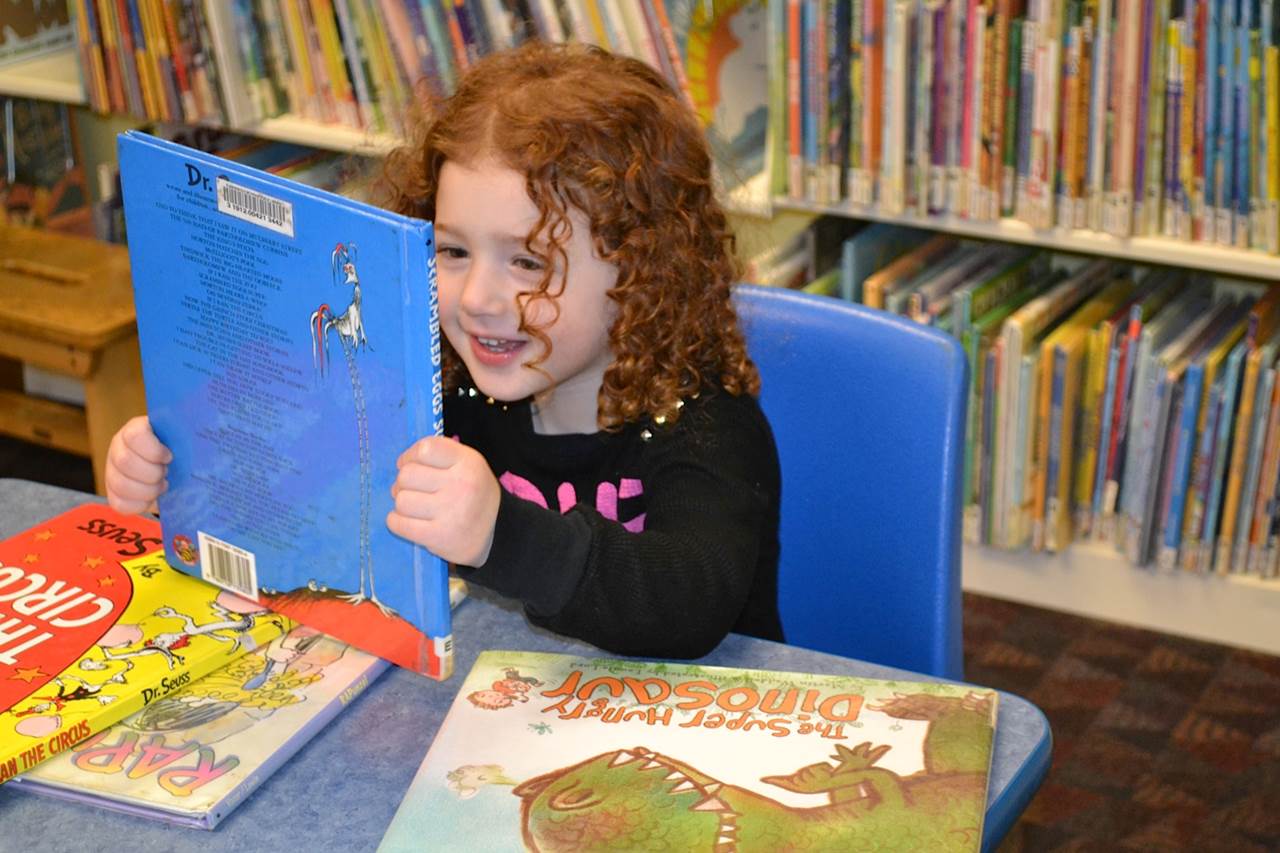
2014-03-03-Avaatlibrary1.jpg
My granddaughter at the local library enjoying Dr. Seuss. Photos by Cori Cohen.
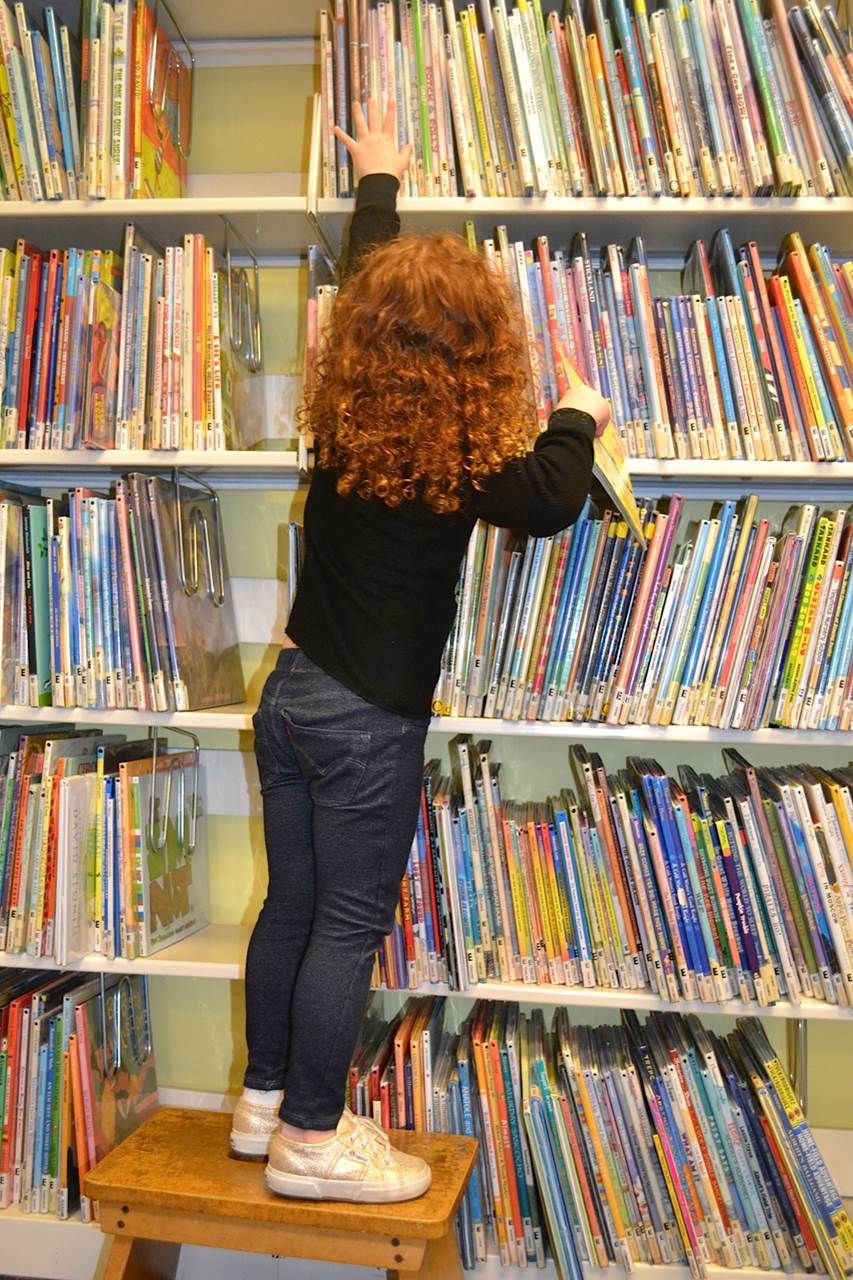
2014-03-03-Avaatlibrary2.jpg
Follow Steven Zacharius on Twitter: www.twitter.com/szacharius

Ucranianos selvagens massacram pobres russos indefesos, ou, conversely...

O mundo é realmente surpreendente: não sabíamos que os ucranianos eram todos fascistas, e que eles alimentam certos hábitos -- aliás, desde a grande fome provocada por Stalin em 1931 -- de comer russos, justamente, esses canibais.
Bem faz a mãe Rússia em proteger seus pupilos ameaçados naquelas terras de antropófagos...
Enquanto isso, na Venezuela, fascistas burgueses tentam derrubar um governo legitimamente eleito e legitimamente democrático.
Ainda bem que os vizinhos defendem a democracia por ali...
O mundo é mesmo gozado...
Paulo Roberto de Almeida

Russia demands surrender of Ukraine's Crimea forces

Ukraine's navy chief has urged his officers not to switch sides, as Daniel Sandford reports
Ukrainian defence sources have accused Russia's military of demanding the surrender of their forces in Crimea.
Russia's Black Sea Fleet chief Aleksander Vitko threatened a full assault if they did not surrender by dawn on Tuesday, the sources said.
However, Interfax news agency later quoted a Russian spokesman denying that any ultimatum had been issued.
The EU and US are threatening to hit Moscow with sanctions and travel bans over its intervention in Crimea.

At the scene

No shots have been fired and no treaties signed but Crimea is now de facto under Russian armed control.
Two large Ukrainian military bases are surrounded, with Russian troops standing alongside local self-defence groups, who demand that the Ukrainian soldiers inside defect from Kiev to Crimea's new pro-Russia government.
The naval headquarters remains blockaded and key installations like airports are still occupied. Thousands of newly arrived Russian elite troops far outnumber Ukraine's military presence here. Crimea has in effect been cut off by roadblocks, where vehicles are being denied access to the peninsula.
At countless pro-Russia demonstrations, Moscow's intervention is warmly welcomed. But away from the nationalist fervour, Crimeans from all sides are profoundly fearful of what comes next.
The trouble began last month when pro-Russian President Viktor Yanukovych was ousted following months of street protests.
Russia has since sent thousands of troops into Crimea, surrounding military bases and taking control of airports.
The Kremlin says its troops are needed to protect civilians in the region, many of whom are Russian speakers and have welcomed Russia's intervention.
Moscow says people in Crimea have come under threat from "ultra-nationalists" since pro-Russian President Viktor Yanukovych was ousted last month.
Ukraine has ordered full mobilisation to counter the intervention.
No shots have yet been fired in the region, but Russia's apparent threats have intensified the rhetoric.
Reports said Ukrainian military chiefs at various bases had been told to leave their bases by Tuesday morning.
The commanders of two warships similarly told Ukrainian TV they had been given even tighter deadlines to surrender, but they had vowed instead to fight for Ukraine.
One Ukrainian navy officer said his forces were facing intense pressure from Russia to support them
US President Barack Obama has once again accused Russia of violating international law and said Moscow was "on the wrong side of history".
American officials say they are planning to target Russian individuals and organisations with economic sanctions.
They have also once again urged Moscow to withdraw troops from Crimea, and have proposed sending international monitors to Ukraine.
Map of Crimea showing key locations
Riot policemen stand guard in front of the regional administration in Donetsk on March 3In the eastern city of Donetsk, pro-Russian protesters attempted to take over the regional government building
Ukrainian servicemen at their military unit located in the village of Lyubimovka, in Crimea, March 3Several Ukrainian bases have reported threats from the Russian military
Militiamen outside a Ukrainian base in Perevalne, Crimea, March 3Some bases are surrounded by pro-Russia militia and unidentified gunmen
The EU is also preparing to hit Moscow with sanctions.
The BBC's Chris Morris in Brussels says one official has told him the EU may even try to have Russia thrown out of the forthcoming football World Cup.
However, a British official was photographed holding policy documents that suggest the UK will not seek to curb trade with Russia or close London's financial centre to Russians.
Ukraine's Prime Minister Arseniy Yatsenyuk said earlier that any attempt to seize Crimea would fail, urging allies to give economic and political support to his government.
In other developments:
  • Russia's rouble has fallen to an all-time low against both the US dollar and the euro
  • EU leaders will meet on Thursday for an extraordinary meeting on Ukraine
  • Nato will hold an emergency meeting on the crisis on Tuesday, its second such gathering in 48 hours.
Are you in Ukraine? What is your reaction to this news of Russian troop deployment? Email us at haveyoursay@bbc.co.uk adding 'Ukraine' in the subject heading and including your contact details.

Venezuela: para quando uma nova nota?

Pode ser da Celac, da Unasul, do Mercosul, etc.


Des milliers de Vénézuéliens de nouveau dans la rue à Caracas

Le Monde.fr avec AFP |  • Mis à jour le
aA   Google + Linkedin Pinterest

Manifestations anti-gouvernement à Caracas, le 2 mars. | REUTERS/JORGE SILVA

Près de 20 000 Vénézuéliens ont manifesté dimanche 2 mars à Caracas, à l'appel d'étudiants qui protestent depuis près d'un mois, avec le soutien de l'opposition, contre la gestion du président Nicolas Maduro.
Les manifestants, réunis une nouvelle fois pour dénoncer l'insécurité, le coût de la vie et les pénuries qui impactent le quotidien de nombreux Vénézuéliens, appelaient aussi dimanche à un« dialogue sincère » avec le président. Ils souhaitaient ainsi discuter des moyens de mettre un terme à un mouvement émaillé par des violences qui ont fait 18 morts et plus de 260 blessés depuis les premiers rassemblements le 4 février.
C'est « la lutte du peuple contre un gouvernement inefficace. Maduro, vous avez perdu les rues du Venezuela parce qu'aujourd'hui les rues appartiennent au peuple », a déclamé devant les manifestants Juan Requesens, un des chefs de file étudiants à l'origine de la manifestation.

Manifestants à Caracas, le 2 mars. | REUTERS/TOMAS BRAVO

Quatre marches ont convergé dimanche après-midi vers la place Brion, dans le quartier de Chacaito, un des bastions de l'opposition. Chaque cortège protestait contre l'un des maux dénoncés par les manifestants : l'insécurité, l'impunité et les exactions policières, la crise économique et la censure des médias.
Les médias locaux ont fait état d'autres marches qui ont réuni quelques milliers de personnes à San Cristobal, berceau du mouvement étudiant (nord-ouest), Barquisimeto, Valencia (nord) et Puerto Ordaz (est).
« MASCARADE »
Ces manifestations se sont tenues au lendemain d'une soirée sans incidents entre jeunes et forces de l'ordre, pour la première fois depuis le début du mouvement. Visé par les contestations, le président Nicolas Maduro a lancé cette semaine un dialogue national, mais les meneurs du mouvement et les principaux opposants refusent de participer à ce qu'ils qualifient de « mascarade ». Et ils exigent la libération de l'opposant Leopoldo Lopez, interpellé le 18 février pour « incitation à la violence ».
Selon un décompte de l'ONG Forum pénal, 863 personnes ont été interpellées au total depuis le 9 février dans ce pays pétrolier. Une trentaine d'entre elles sont toujours sous les verrous.
Dimanche, le syndicat de la presse et Forum pénal ont annoncé la libération de la photographe italienne Francesca Commissari et de quarante et un manifestants arrêtés deux jours plus tôt en marge d'une marche de l'opposition, qui avait été marquée par des affrontements avec les forces de l'ordre.
aA   Google + Linkedin Pinterest

A Franca, a caminho de sua petite decadence (ou seria grande?) - Pascal Bruckner

PASCAL BRUCKNER
As the young and entrepreneurial flee, the country struggles to compete and pay for its massive welfare state.

With 200,000-400,000 French expatriates, London has become France's sixth-largest city.
WITH 200,000–400,000 FRENCH EXPATRIATES, LONDON HAS BECOME FRANCE’S SIXTH-LARGEST CITY.
Ricky Leaver/Loop Images/Corbis
Not long ago, I attended a colloquium of French scientists and philosophers in Corsica, France, called “How to Think About the Future.” With few exceptions, the astrophysicists, economists, physicians, and social theorists on hand offered dark visions of tomorrow. A new financial crisis, water and grain shortages, endless war, a general collapse of ecosystems—we were spared no catastrophic scenario.
A month earlier, as it happened, I had been invited by the environmentalist think tank Breakthrough to San Francisco, where I reflected with a group of thinkers on the Schumpeterian economic idea of “creative destruction” and its application to energy production. My experience there was quite different. Three days of vigorous and sometimes tense debates followed among advocates favoring, respectively, nuclear power, shale gas, and renewable energy sources. Defenders of threatened species had their say, too, but no one doubted in the slightest that we had a future, even if its contours remained unclear.
I recall an observation that Michael Schellenberger, Breakthrough’s president, made in the proceedings: “The United States’ greatest hope at present lies in shale gas and in the 11 million illegal immigrants who will soon become legal, 11 million brains that will stimulate and renew our country.” Such a comment, whatever one’s views on the specific policies that it implied, exhibited a hopefulness completely missing in Corsica—and hard to find in today’s France, which has outlawed not only the development but even the exploration of possible reserves of natural and shale gas, and which sees every stranger on its soil as a potential enemy. France has become a defeatist nation.
striking indicator of this attitude is the massive emigration that the country has witnessed over the last decade, with nearly 2 million French citizens choosing to leave their country and take their chances in Australia, Brazil, Canada, China, the United States, and other locales. The last such collective exodus from France came during the French Revolution, when a large part of the aristocracy left to await (futilely) the king’s return. About a century earlier, almost 2 million Huguenots fled the country, frightened by the revocation of the Edict of Nantes, which had put Protestants on an equal legal footing with Catholics. Today’s migration isn’t politically or religiously motivated, however; it’s economic.
This is borne out by the makeup of the departing population, which consists disproportionately of young people—70 percent of the migrants are under 40—and advanced-degree holders, who do their studies in France but offer their skills elsewhere. The migrants, discouraged by the economy’s comparatively low salaries and persistently high unemployment—currently at 10.9 percent, with the private sector losing more than 360,000 jobs in the second quarter of 2013—have only grown in number since Socialist François Hollande became president. In the teeth of an economic downturn, Hollande imposed onerous new taxes on the wealthy; the government’s tax haul has hit 46 percent of GDP, the highest in the eurozone, reports The Economist. The president has taken to roaming through France’s cities and towns, seeking “the first tremblings of the recovery,” but his diatribes against the well-off—“I hate the rich,” he said on television—provide no more encouragement to young entrepreneurs than do his tax policies. If economic success is all but criminal in France these days, why not depart for places that reward it instead?
The young and enterprising in France soon realize that elsewhere—in London, say—obstacles to success are fewer and opportunities greater. The British capital is now France’s sixth-largest city, with 200,000–400,000 émigrés, a number of whom have made fortunes. They’ve re-created a familiar way of life in their new home, frequenting French restaurants and patisseries and often barely speaking English.
The emigration of France’s aspirational young has also taken the form of a colonial inversion. Just as Spaniards now go to find work in Latin America or Morocco and Portuguese head for Angola and Mozambique, the French have started to seek opportunity in North Africa and in the sub-Sahara, where the energy and the taste for innovation appear greater than back home. Of course, emigration can go wrong: disillusionment can set in with, or homesickness can wear on, recent exiles, causing some to return, beaten. This helps explain why emigration counseling is a French growth industry. A good example is Lepetitjournal.com, a website that offers career and practical advice for expatriates.
The exile rolls also include hundreds of thousands of French retirees, presumably well-off, who are spending at least part of their golden years in other countries: tired of France’s high cost of living, they seek out more welcoming environments. Our beloved country, in other words, has been losing not only its dynamic and intelligent young people but also older people with some money. I’m not sure that this social model can work over the long term.
The protests that swept France in autumn 2010 reflected the country’s defeatist attitude, too, though in a different way. The government of Hollande’s predecessor, Nicolas Sarkozy, hoping to put tottering public finances on somewhat firmer ground, sought to increase the average retirement age in France from 60 to 62. This was an inadequate measure to deal with the magnitude of France’s massive deficit, especially compared with Germany’s fixing of retirement at 67, but, as was typical of the Sarkozy era, it unleashed a gigantic wave of unrest. The French confronted the surprising spectacle of high school students demanding pensions. Even before starting their working lives, the adolescent demonstrators were already thinking about ending them. Their response to French stagnation contrasted with that of the young economic exiles. For the protesters, existence—even if it were mediocre—had to come with a government guarantee, from beginning to end. (Some time ago, the far-Left political leader Olivier Besancenot proposed the creation of a Great Strikers’ Party. What a wonderful notion: our youth, by joining, could go on strike without ever having worked!)
Consider, in this light, an astounding 2005 survey of French youth, which showed that about three-quarters wanted to become government bureaucrats. So intently did they shun taking chances that they could imagine no happier future than working as (presumptively secure) state functionaries. Gravely affected by the weak economy, these young people make up the avant-garde of what may as well be France’s largest contemporary party: the Party of Fear. For the French have become afraid of everything: the world, poverty, globalization, Islam, capitalism, global warming, natural catastrophes—and even, to borrow an American phrase, fear itself.
No longer a world leader, contemporary France has apparently concluded that it must be nothing, and has increasingly abandoned itself to self-denigration. A nation that not long ago brandished its language as the natural idiom of the human race now seems to know only how to groan, rehearse the past, lick its wounds, and endlessly enumerate its failings, though with a suspicious self-satisfaction. Every year, dozens of books are published in France affecting the charm of despair. The French don’t like themselves any longer—they’re one of the world’s most depressed populations, a huge consumer of psychotropic drugs and tranquilizers—and don’t expect others to like them, either. A country so unsure of itself, needless to say, is incapable of inspiring enthusiasm among the young, whether immigrants or native-born.
To put it bluntly, France isn’t where things happen these days. Other players dominate the global arena: the Anglo-American world, Germany, the Gulf States, the rising powers of Asia, the emerging nations of Africa. History has passed us by; we have grown old without finding sources of renewal. Once France felt cramped within its modest territory; now it is detaching itself from Europe, and from the world, in the manner of an old man who feels the approach of death.
Yet the more provincial France becomes, the more it lapses into a pathetic vehemence. Wild lyricism and empty formulas replace concrete action. Economists, philosophers, politicians, and sociologists, at odds with the merchants of gloom, have sought to defend the French social model, portraying the rest of humanity as mistaken, even profoundly ill. We heard, for example, from Jean-Luc Mélenchon, president of the Left Party, who implausibly claimed that Germany was the country in dire straits, not France, despite our neighbor’s obvious comparative economic health. President Hollande conveys a similar message when he assures citizens that the French economy is back, or soon will be, and that we can again rest easy. The pro-Hollande press is masterful in its repeated delivery of this lesson. This brand of journalism reminds me of a song that became famous before World War II: “Everything is fine, Madame la Marquise, everything is fine / the stables are burning, the castle is in flames, but everything is fine, Madame la Marquise.”
Contemporary France, then, combines arrogance with self-hatred—a matchless vanity, rooted in the ages of Louis XIV and the French Revolution, with a lack of confidence typical of nations in decline. France lacks both the self-assured pride—without which nothing great can be accomplished—that has long characterized the United States and, more recently, China and India, and a curiosity regarding other cultures, the passion to learn from what is foreign, which is a sign of intelligence and reason. Our attitude makes us bound to lose on both fronts: pretension prevents us from benefiting from others’ experiences; doubt paralyzes us.
France remains blessed by its extraordinary beauty, which draws 70 million tourists a year, and it can still claim successful multinational corporations, a well-educated youth, a capable military, geological wealth, and a maritime surface that reaches from the Mediterranean to the Pacific and includes the Atlantic and Indian Oceans, thanks to the remaining confetti of our former empire. So where does our strange weakness, at once economic and spiritual, come from?
It has two deeper explanations, I believe. First is a hatred of money, a dual legacy of Catholicism and republicanism. I remember as a child in Lyon seeing the richest families arrive at Mass in the cheapest of automobiles, plainly dressed as they awaited the sacrament. Only when behind the gates of their properties did they abandon themselves to their prosperity, exchanging visits only with one another, and only then bringing out the best silver and scolding the servants. Quite unlike the unabashed pleasure that Americans take in wealth, the French way is to hide one’s goods, so as not to provoke envy.
To understand the French stance toward money, one should return to the well-known Balzac phrase: “Behind every great fortune there is a great crime”—as if the thirst for material success sprang from a desire to deprive others or prostitute their dreams. French leaders left and right have denounced filthy lucre. In 1919, for example, Leon Blum decried “this scum, this putrid fermentation that we see spreading over the surface of our economic life.” “My only adversary, that of France itself, has never ceased to be money,” said Charles de Gaulle in a 1969 interview with André Malraux. A few years later, François Mitterrand denounced “that king, money, that ruins and spoils everything, even the human conscience.” And Hollande, not to be outdone, declared during the 2012 election campaign not only that he hated the rich but also that he had only “one adversary, international finance.”
Such virtuous proclamations cannot replace actual policy in a modern nation. Even as France castigates the reign of money, our country fails to compete globally and suffers from economic stagnation and enforced austerity. King money reigns over a desert. Indeed, money is what is lacking in France—in public finances and among citizens (what the French fear most, by a large majority, is falling into a lower social class).
The second explanation is a widespread conformism, which paradoxically stems in part from our revolutionary history. Because the French made a great revolution more than two centuries ago, they seem to believe that they’re excused from the need to renovate and adapt. And what is distinctive about this conservatism is that it tends to be expressed in subversive language—since the far Left has, for the last half-century or longer, played the role of the French Republic’s superego. All legislation, all action, must be measured against its standard: no social or economic argument is acceptable that doesn’t start with a denunciation of the market and financial powers.
The far Left’s anticapitalism draws reinforcement from older French cultural currents: the idea of equality that lay at the heart of the French Revolution, which would inspire Russian Communism; and Jacobinism, according to which the state is the main agent of change in the nation and which helped do away with the intermediary bodies between individual and government. Given these premises, it’s not surprising that economic liberalism gets such bad press in France. The idea that the nation’s prosperity is not a pure governmental decision and that private actors can overturn the rules of the economic game unsettles some of our deepest convictions.
One discordant note to France’s current defeatism is the nation’s fertility rate, among the highest in the Old World, across all social classes. France is jarringly schizophrenic: we fight against our sense of gloom about the future, it seems, by repopulating our cradles. Here, though, we see the possibility of a fresh beginning, the chance that every generation has to look at the world anew. A nation alive in this way is one that can stumble, even fall, and still come back, better than before. If it is not to be buried in its own mausoleum, a country must prove able to break with old habits and find renewal, and a growing population makes this easier to imagine.
If France is not to become Europe’s new sick man, alongside Greece and Spain, it must rise to the challenge of competing with its neighbors and the world’s emerging economic powers. Indeed, it must accept existence itself as a challenge and undertake the necessary changes, in keeping, of course, with its national character. In an age of variable and fleeting patriotism, France must hold its children close but not expect them to show a limitless attachment. Perhaps the recent diaspora of the young and ambitious will one day be seen as the beginning of France’s salvation.

domingo, 2 de março de 2014

Relatos sobre o golpe militar de 1964 - video no YouTube

A outra versão do golpe de 1964 (completo)

Depoimentos de observadores (Marlio Jesus da Silva, Ipojuca Pontes), protagonistas (Fernando Henrique Cardoso), historiadores (Marco Antonio Villa), cientistas políticos e sociólogos (Demétrio Magnoli), sobre o golpe militar de 1964 e seus desenvolvimentos ulteriores, neste link: 


Há, por exemplo, um depoimento de Orlando Lovecchio, que perdeu uma perna num atentado feito por guerrilheiros que explodiram uma bomba no Consulado americano em São Paulo, sendo que o guerrilheiro recebe uma indenização três vezes superior à indenização recebida pela vítima.
Produção e direção de Daniel Moreno
Paulo Roberto de Almeida

Stanislaw Ponte Preta, again, and again - revista Veja

Dilma toca o samba da diplomacia doida
Em Bruxelas, a presidente demonstra o que os europeus podem esperar do Brasil em relação a um acordo comercial: frases sem nexo e um mundo fantasioso
Duda Teixeira

Dilma Rousseff discursa na VII Cúpula entre Brasil e União Europeia, em Bruxelas: pobre do tradutor simultâneo 

Cinco frases sem sentido do discurso de Dilma:
"A Zona Franca de Manaus, ela está numa região. Ela é o centro dela porque ela é a capital da Amazônia."
"Ela (Zona Franca) evita o desmatamento, que é altamente lucrativo — derrubar árvores plantadas pela natureza é altamente lucrativo."
"Os homens não são virtuosos, ou seja, nós não podemos exigir da humanidade a virtude, porque ela não é virtuosa, mas alguns homens e mulheres são, e por isso é que as instituições têm que ser virtuosas."
"Queria destacar a importância da ligação entre o Brasil e a Europa por cabos de fibra óptica submarinos. A ligação com a Europa significa uma diversificação das conexões que o Brasil tem com o resto do mundo."
"Nós consideramos como estratégica essa relação, até por isso fizemos essa parceria estratégica."

"Este é o samba do crioulo doido." Assim começa a música de Sérgio Porto, o Stanislaw Ponte Preta (1923-1968), sobre um certo compositor que obedecia ao regulamento e só fazia canções sobre a história do Brasil. Quando escolheram um tema complicado, a “atual conjuntura”, o compositor endoidou. Tiradentes falou com Anchieta, aliou-se a dom Pedro e da união deles foi proclamada a escravidão. Na diversão do Carnaval, a ausência da lógica garante a alegria dos foliões que querem distância de qualquer assunto chato. Em reuniões diplomáticas internacionais, porém, é um desastre quando um governante toma esse tipo de liberdade com o idioma, com a história, a geografia e a lógica. Em seu discurso na segun­da-feira 24, na VII Cúpula Brasil-Europa, em Bruxelas, a presidente Dilma Rousseff protagonizou um desses momentos constrangedores para ela e, como representante do Brasil, para todos os brasileiros. Dilma se disse satisfeita por estar presente na VI Cúpula. O fato de a presidente errar a edição do evento do qual estava participando foi o menor dos deslizes do dia. Depois disso, nossa chefe de Estado deu muito trabalho ao tradutor simultâneo e ao responsável pelas transcrições dos discursos da presidente no blog do Planalto.
A viagem a Bruxelas tinha o objetivo de fazer avançar as negociações para a assinatura de um acordo de li­vre-comércio. Para o Brasil, o assunto é do máximo interesse. As exportações brasileiras para o bloco poderiam aumentar em 12% com o tratado. Preso às amarras ideológicas do Mercosul bolivariano, contudo, o Brasil não conseguiu costurar até agora um único acordo comercial com um parceiro de peso. Quem manda no Mercosul são Venezuela e Argentina. Afogados nos próprios e monumentais erros de gestão ruinosa, esses dois países tragam os demais para seu buraco negro isolacionista e xenófobo. O Brasil não tem força para se impor e vai a reboque. Enquanto isso, as nações viáveis da região se uniram em torno da Aliança do Pacífico, a área de liv­re-comércio formada por Chile, Colômbia, México e Peru. São eles os novos tigres da economia s­ul-a­mericana. O Brasil, mais uma vez, perdeu a chance de liderar a região no rumo certo. “Isso põe em risco o futuro das exportações da indústria brasileira, que também enfrenta dificuldades tributárias, cambiais e logísticas”, diz o economista Roberto Giannetti da Fonseca, da Kaduna Consult.


(Para ler a continuação dessa reportagem compre a edição desta semana de VEJA no IBA, no tablet, no iPhone ou nas bancas)

Postagem em destaque

Livro Marxismo e Socialismo finalmente disponível - Paulo Roberto de Almeida

Meu mais recente livro – que não tem nada a ver com o governo atual ou com sua diplomacia esquizofrênica, já vou logo avisando – ficou final...