Temas de relações internacionais, de política externa e de diplomacia brasileira, com ênfase em políticas econômicas, viagens, livros e cultura em geral. Um quilombo de resistência intelectual em defesa da racionalidade, da inteligência e das liberdades democráticas. Ver também minha página: www.pralmeida.net (em construção).
Welcome to The Daily 202! Tell your friends to sign up here. On this day in 1776, the Second Continental Congress dropped “United Colonies” in favor of “United States of America.”
The big idea
New U.S. aid, front-line testimonials, Russian defiance – and Congress
Secretary of State Antony Blinken speaks to media before departure at the railway station in Kyiv, Ukraine, on Thursday. The sign on the train reads "The Victory Train". (AP Photo/Efrem Lukatsky)
It’s been a big week for the largest armed conflict in Europe since World War II, and for The Washington Post’s coverage of Russia’s expanded invasion of Ukraine. Let’s look at some of the critical developments — and a big looming test for President Biden’s policy.
I teased it in the headline, so let’s get right to that test, which you may have missed because it was more of a bureaucratic development than a battlefield conundrum, a diplomatic breakthrough, or a viral social media post featuring the explosive demise of a Russian tank.
Ready? One week ago, Biden asked Congress for another $13.7 billion in new money for the Ukraine war — $7.2 billion to provide Kyiv more weapons and military gear, and replenish U.S. stockpiles of arms sent to Ukraine, $4.5 billion to help the government of President Volodymyr Zelensky, and $2 billion to mitigate energy supply disruptions.
This week, some lawmakers, including Democrats hemmed and hawed at the request and asked the administration for more informationbefore they would commit to supporting it, as Joe Gould and Bryant Harris documented for Defense News.
That included, they reported, Senate Appropriations Defense Subcommittee chairman Jon Tester (D-Mont.). “I’m not opposed to it; I just want to know what’s in it,” they quoted him as saying.
Others raising questions included Senators Tim Kaine (D-Va.) and Thom Tillis(R-N.C.) who both sit on the Senate Armed Services Committee. The panel’s top Republican, James M. Inhofe (Okla.) expressed reservations and pushed Biden to use his authority to send another $2.8 billion in arms to Ukraine before that authority lapses when the new fiscal year opens Oct. 1.
FUNDING FIGHT
The White House requested the money as part of a broader $47 billion emergency package that would also help combat covid, bolster monkeypox vaccine stocks and address disaster needs after floods in Kentucky, my colleague Tony Romm reported.
“The official request sets up a fierce fight on Capitol Hill, where warring Democrats and Republicans face a looming, end-of-September deadline by which they must fund the government — or risk a catastrophic shutdown weeks before the midterm elections,” Tony noted.
The test for the Biden administration comes in two parts: Can they resist calls for the Ukraine package to come in the form of a stand-alone bill? And can they overcome congressional skepticism — as well as growing outright oppositionfrom House Republicans?
Odds are some kind of Ukraine aid legislation will pass. But it’ll require some skillful congressional navigation with threatening government shutdown clouds on the horizon and closing fast.
A WAVERING ALLIANCE?
Meanwhile, the Biden administration is toiling to reassure Ukraine of long-lasting support from Washington and to hold together the coalition of allies and partners even as Russia cuts off energy supplies to Western Europe, sending prices soaring with winter approaching.
My colleagues John Hudson and Missy Ryan chronicled the latest on Thursday: Secretary of State Antony Blinkenmade an unannounced visit to Kyiv and the administration promised another $675 million in U.S. military aid and $1 billion in military financing.
“We will support the people of Ukraine for as long as it takes,” Blinken said in a statement.
John and Missy noted the visit “focused partly on a major new operation that Ukrainian leaders hope can dislodge Russian forces from occupied areas in the country’s east and south, and that U.S. officials believe would put Kyiv on a better footing for potential negotiations with Russia.”
“We know this is a pivotal moment, more than six months into Russia’s war of aggression against Ukraine, as your counteroffensive is now underway and proving effective,” they quoted Blinken as saying.
“While the Ukrainians have made some gains, they are taking heavy losses, and soldiers say that despite huge foreign support, they desperately need more weapons and ammunition to prevail over the better-equipped Russians,” they reported.
And here, I want to strongly recommend John’s searing, searching report from a day earlier, when he told the painful stories of wounded Ukrainian troops describing their ordeal fighting to retake the strategic southern city of Kherson from Russian forces.
Beyond the tragic human toll, they told John of:
Russian drones tracking Ukrainian forces from so high up in the sky that their targets never heard the unmanned vehicles’ buzz.
Russian tanks emerging from newly built cement shelters, firing on Ukrainian targets, then slipping back into cover, protected from mortars and rockets.
Russian counter-battery radars that let Moscow’s forces target Ukrainian artillery.
Russian hackers taking over Ukrainian drones.
John’s piece serves as something of a corrective to the social-media narrative of the war, in which videos show plucky Ukrainian forces getting the better of heavier but hapless Russians. It’s a reminder that the war looks far from over.
In a surprise move, Ukrainian forces have driven Russian troops back in Kharkiv district, threatening to unseat Putin’s offensive to seize Donetsk.
Outline of Ukraine’s push in Kharkiv so far. Blue marks estimated major Ukrainian formations, defense lines, and supply routes. Blue arrows show Ukraine’s apparent thrust towards Kupiansk. Reds show Russia’s attacks in Donetsk, and the area north of Siversk where fighting has been going on for some time in phases. Base image from Liveuamap. Light blue shows area Ukraine want to take to cut of Russian forces near Izium.
Now, disclaimer due up front: it is very early days, and it is entirely possible that Ukraine’s push is being hyped to cover for limited progress in the Kherson region.
But overall, Ukrainian sources have proven themselves far more reliable in terms of basic honesty than Russian or American.
The actual fighting in Ukraine is taking place in the shadow of a larger looming confrontation between Russia and NATO.
Trolls are waging information war on both sides, working to keep domestic populations immersed in a steady flood of propaganda.
Ukrainian trolls are in this game too, but overall the past six months of war has seen official Ukrainian sources generally adopt a sensible policy of reasonable honesty with the international press.
No, Kyiv doesn’t reveal everything about its plans, but monitoring sources like the Kyiv Independent (which I now support with a monthly subscription), Ukrinform, and Liveuamap these past months shows a stark difference between American, Russian, and Ukrainian sourced information.
By and large Ukraine’s leaders appear to have recognized that integrity in public communications is far more important than playing information war games.
For good reason — nobody except pundits or true believers trusts anything an American public official says anymore because, well, WMDs in Iraq, anyone?
And obviously you can’t take what any member of Putin’s regime or state controlled media says at face value either. Or at least, not without applying the necessary Kremlin filter to get at what they’re really trying to communicate.
Americans and Russians spend a lot of time trying to control narratives, because both are hegemonic powers that rely on other countries not realizing how weak they are.
By contrast, Ukraine’s defense relies on maintaining solid relationships with partners abroad who will offer support in foul weather as well as fair.
So lying about the challenges its forces are facing doesn’t help — all that would accomplish is create grounds for a future backlash Ukraine might not survive.
That’s why I scrupulously doubt anything coming from an American or Russian source. The regimes that rule either empire have ways of manipulating the media — Russia directly, America indirectly, through restricting access to “unnamed officials” and engaging in public shaming before some mob.
Just the other day the commander in chief of the Ukrainian Armed Forces published a remarkable assessment of where the war is heading in 2023, a sober analysis that stands in sharp contrast to blather coming from the fake experts over at the American Institute for the Study of War.
In it, he broadly confirms much of the analysis I’ve posted on this blog over the past few months.
Ukraine still isn’t getting the right kind of aid from its foreign partners. Its counterattacks are going to take months to finish, and at extreme cost in human suffering.
Russia retains extreme advantages in vital military domains and the ability to replenish its low-tech weaponry pretty much indefinitely, even if its stocks of precision weapons are thankfully running low at last.
To push Russia out of Ukrainian territory without atrocious casualties will require the supply of more modern weapons and training Ukrainian soldiers to use them.
This should have begun on the necessary scale months ago to allow for a broad counteroffensive this year, but Ukraine’s allies have failed to organize the necessary effort, proving that NATO had better hope it never goes to war, because hoo boy would that be a hot mess!
In addition, the International Legion was terribly mismanaged, Ukraine just not having the resources to stand up something that complex when the war began and it was already inducting huge numbers of its own people into the defense forces.
Another missed opportunity.
Contrary to the confident prognostications of the smug analysts in D.C. since they realized they were wrong about Kyiv falling in three days, Russia is nowhere near collapse on any front, military or economic. Putin isn’t dead of cancer or deposed or begging for peace.
All those sanctions American leaders have billed as the death knell for Russia’s economy are slowly but surely being bypassed.
Most of the world hasn’t signed on, so re-exporting goods and fossil fuels will slowly compensate for Russia not being able to buy direct from Europe anymore.
At least prices for food and fuel will stabilize — for some. Europe faces a difficult winter and the prospect of long-term energy dependence on the United States, which is not ideal given that US energy is mostly fracked, requiring large-scale sacrifices of rural land.
This isn’t to say the average Russian won’t feel extreme financial pain in the near future or that Russia’s military industry won’t have to radically adapt to keep up the war effort.
But all that does is level the playing field between Ukraine and Russia a little more. Just like sending 16 HIMARS systems and not 160, when they’re otherwise just sitting in arsenals somewhere.
Nothing Ukraine has received so far is sufficient to deliver a decisive blow by any means. And as Ukraine’s own military leadership admits, the situation for their forces remains difficult everywhere along a front line that looks starkly like something from maps of World War 2.
Move and Countermove in Ukraine. Blue solid arrows show recent offensives, hashes show the next logical target. Red is the same, except the red hashes show where Russia might seek to advance if it has a reserve capable of doing so. Base image from Liveuamap
First and foremost is the dangerous situation between Izium and Sloviansk.
For months Ukraine’s defenders have stopped Russian attacks that, if successful, could partially cut off Ukrainian forces in Donetsk, particularly around the heavily fortified Sloviansk-Kramatorsk area.
To stop Ukraine’s pushback in Kherson, Russian forces have apparently redeployed in large numbers.
But despite satellites and drones being able to pick up big movements pretty easily, at more local levels and finer scales it is possible to use cover to conceal more patient concentrations of forces dispatched over time.
So despite the pain being inflicted on Russian forces across the 1300 km of actively contested front line, it remains a distinct possibility that Putin has managed to hide a major offensive formation somewhere.
Such a reserve could allow for a sudden overwhelming push like those that reached the outskirts of Kyiv in February. If Ukraine commits too much of its combat power in Kherson, where Russia may well have boosted its occupying forces from around 7,000 to three times that specifically to draw Ukraine into a difficult grind, that could leave Kyiv’s forces vulnerable elsewhere.
And while Putin certainly likes owning Kherson, given the massive bridgehead Russian forces presently hold across the strategically vital Dnieper river, trading that for taking control of Donetsk is likely a bargain he’ll gladly accept given that a march to Moldova is incredibly unlikely.
So long as Putin’s forces control all of Donbas, he can claim victory and go over to the defensive, forcing Ukraine to spend the next couple years shedding blood taking on entrenched forces.
All while its partners abroad slowly tire of sustaining the fight at the cost to their economies.
Putin’s basic goal in Ukraine now is to wait out America and Europe. Once Donbas is taken he’ll place the conflict on a steady low boil, using imported North Korean artillery and low quality reserve troops to hold the line.
Without more intensive aid to Ukraine, a strategic stalemate is likely even if Ukraine reclaims some territory. Failure to create a truly global sanctions regimes means that only Ukrainian success on the battlefield can erode his position within the Russian state before America probably falls apart completely in 2025.
At that point, Putin will have an opportunity to renew his assault on the rest of Ukraine.
It is therefore absolutely essential for Ukraine to prevent Putin from achieving the last of his stated aims for the war: seizing all of Donbas. Russia has to keep attacking until that is done, something that now appears to be more difficult each day.
This strategic situation means taking the risk of launching multiple offensives this September, striking at any part of the front that appear vulnerable given Russian force concentrations.
Their aim: to liberate territory and inflict such obvious defeats on the Russian military that Putin can’t hope to go over to the defensive or claim victory.
Ukraine has to strain Russian resources at every point it can to both prove to its partners it can go on the attack and prevent Russia from building up a new offensive capability — or drain what it might already have.
In both Kherson and Kharkiv Ukrainian forces appear to be striking at the flanks of Russian formations in an attempt to cut off front line units from support. They likely want to partially surround Russian salients to force them to retreat — or even better for optics, surrender.
On the Kharkiv front, the line of the Siverski Donets river has become the primary buffer between the two sides, water barriers being difficult to push across if the opposite bank is under enemy control.
But the thing about a riparian area is that it tends to have cover, allowing military units to filter in and mass undetected.
Even punch across the river at a weak point the defenders might assume is too well guarded to seize — until it is too late.
Ukraine appears to have done exactly that southeast of Kharkiv, breaking through the Russian lines.
Their target is clear and some reports has leading elements reaching it already: the town of Kupiansk, which lies along the most direct route for supplies heading to Russian forces fighting south of Izium.
If successful — and advancing fifty klicks in no more than a day or two definitely implies momentum — Ukrainian forces will at least bring the Kupiansk area under direct fire, which will all but eliminate any possibility of Russia punching south from Izium.
Why? Check the map above — Kupiansk is a vital node in the Russian supply lines sustaining operations around Izium, one of the earliest places I identified before February as a likely Russian objective.
And so it was.
Cutting the supply lines to Izium means any plan to repeat what Russia did to force Ukraine out of Luhansk won’t work.
All those red arrows threatening the flank and rear of Sloviansk will be cut off.
If that happens, Putin won’t be able to pretend all is going as planned on any front — thousands of troops in bridgeheads across two vital rivers will be at risk.
There’s a reason Ukraine is once again warning of the threat that Putin will use tactical nuclear weapons.
Truth be told, that might well be his only option if Russia’s ground forces are as badly damaged as it will be reasonable to hope if Ukraine pulls this off.
Fortunately for the world, the way Ukraine has to run its defense means that there are actually not a lot of really good targets for Russian nuclear strikes.
After firing several thousand precision missiles into Ukraine, most potential targets are destroyed or spread out that a nuke won’t accomplish substantially more than a conventional warhead.
And any nuclear use carries a real risk of NATO getting involved, which it is now likely that Putin doesn’t want, given that there is no longer much gain in hitting NATO supply bases after so much gear has already made it into Ukraine — and will, thanks to the country’s long borders with NATO.
Four months ago, the threat of missile strikes on NATO bases in a sudden escalation was deadly real. There’s a reason the US has kept a carrier group, a marine amphibious group, and a couple submarines armed with hundreds of cruise missiles near allies in Europe all year.
Now, there’s not much point in hitting a NATO target unless Russia is ready to go nuclear. And if Putin uses a nuke to terrorize Ukraine by vaporizing a civilian area or just setting one off harmlessly high above Kyiv, NATO might well have to get involved directly, and there is then a real chance World War 3 goes real hot, real fast.
This is likely why Russia is playing such dangerous games with Enerhodar — a release of radioactive material from the nuclear plant might serve as well as a direct use of nuclear arms because Russia is setting the stage to insist Ukraine did it.
It would be difficult to impossible to prove conclusively what happened in the short term, and Putin might see the panic a nuclear disaster would produce as serving his interests.
An incident could potentially freeze military operations across Kherson, for example. Or give Russia an excuse to mobilize its population, something that thankfully has not happened yet.
Right now, Russia is still fighting with a hand tied behind its back for fear of what forcing too many middle class Russians to fight in a war they likely despise would do to the stability of the regime. But an incident of sufficient magnitude might give Putin enough of an excuse to push Russia into true total war.
This is why a UN-backed military force should deploy to establish a humanitarian zone — but fat chance of that happening in a world where the UN is determined to be the League of Nations Mark 2.
In any case, Ukraine striking back in Kharkiv and achieving success has the potential to cement real gains as well as create credibility for Ukraine’s argument that it can and will win, if given enough support.
That’s the only way out of this situation now: total support for Ukraine until Russian forces withdraw.
Something about warfare that is rarely conveyed to the general public is the degree to which literally everything is interconnected.
War is anarchy in its purest form, with all organization being held together under the most difficult of conditions.
It’s why war reveals both the best and worst in human beings — our willingness to sacrifice our lives for those at our sides as well as the brutality we are able to inflict on fellow human beings.
Ukraine has had no real choice in this war — Russia has come to destroy an identity, a people, and until Putin’s regime is gone none can ever trust that the silly “Russian World” ideology he appears to believe in won’t lead to him attacking any place where Russian speakers live.
Which includes the West Coast, by the way. So as far as I’m concerned, my security here is directly bound to Ukraine’s.
That’s the hell of war and violence — the ripples they generate spread.
The entire world ought to be behind Ukraine as it fights to free its people from this brutal assault.
That craven America is backing Ukraine for its own geopolitical purposes does not mean that it truly cares about Ukrainians, but it also doesn’t mean that Russia is a friend to every country that doesn’t get along with America.
Russia and America are the same. That’s how international relations works. I didn’t get a degree in it from Berkeley, taught by some of the field’s leading minds, only to fail to recognize the scientific reality of our times.
A multipolar world is upon us all, like it or not, and pretending there are only two teams, Good and Bad, Democracy and Autocracy, is simply suicidal when thousands of nuclear weapons are still deployed all across the planet, waiting to fulfill their destructive purpose.
Half measures usually lead to the worst of both worlds, not a happy compromise. And on certain principles — like one country not getting to try to destroy another — there can be no compromise, or any hope of securing a lasting future peace simply breaks.
America’s invasion of Iraq broke it, though its leaders refuse to see. Russia’s invasion of Ukraine has ended it too, though it may take years for the collapse to follow its due course.
So best of luck, Ukraine — you’re fighting for all of us, and the future.
To Kupiansk, Kherson, and beyond!
In the will to fight to defend one’s home lies all hope for humanity, whether the enemy be merciless empire, hoarded wealth, or a fast-changing climate.
A woman holding an umbrella walks past a sculptural composition “Fair” in Serpukhov, Russia, on Sept. 7. (Yuri Kadobnov/AFP/Getty Images)
How has the war in Ukraine impacted ordinary Russians? If you listen to some, not much.
On Wednesday, Russian President Vladimir Putin publicly dismissed any impact from Western actions against on his country. “I’m sure we have not lost anything and will not lose anything,” Putin said at a plenary session of the Eastern Economic Forum in Vladivostok in Russia’s Far East. “The main thing is strengthening our sovereignty, and this is the inevitable result of what is happening now.”
There are immense sanctions and other restrictions. But in Moscow, some argue they are little felt. “Nothing has really changed,” 44-year-old Nataliya Nikonova told a reporter from the New York Times during a recent military parade in Red Square. “Sure, the prices went up, but we can endure that.”
“A few stores closed because of sanctions, which is frustrating but not that bad,” 18-year-old Yulia told the Times’ reporter, pointing to a nearby store once known for its luxury goods.
Some shoppers have even found ways around the sanctions by visiting a Moscow-aligned neighbor, Belarus, which has fewer restrictions. “Brands like H&M, Bershka and Pull & Bear left Russia but we [who travel to Belarus] can dress in them from head to toe,” Yelena Shitikova, an executive at Arkhangelsk region agency Family Travel, told the Moscow Times.
It appears that even rich and powerful Russian businesspeople have grown to accept the circumstances. “Many of the oligarchs who once enjoyed spending time in the west are now resigned to returning to Russia,” the Financial Times wrote after speaking to seven sanctioned Russian tycoons. “Those in Moscow have quietly accepted their diminished status in a country at war.”
To critics of the Russian government’s move to invade Ukraine on Feb. 24, the happy sights on the streets of Moscow may be alarming. There is little obvious evidence that sanctions are grinding down Russian resolve, especially as Western countries face their own domestic difficulties with rising energy prices.
But Russian attitudes to the war in Ukraine are hardly unwavering. This is a country of 144 million, spread across 6.6 million square miles and 11 time zones, with a population as far apart as St. Petersburg oligarchs to the indigenous villagers of the Far East. It has diversity of everything, including opinion.
Polling released Wednesday by the Carnegie Endowment for International Peace shows that “public support for the war against Ukraine, while sky-high, is less solid than statistics generally suggest … and has fallen in recent months with some supporters saying they are ambivalent, anxious, shocked or fearful about the ongoing military campaign,” The Post’s Robyn Dixon explained Wednesday.
In an analysis released with the polling data, Andrei Kolesnikov of Carnegie, and Denis Volkov, director of Moscow-based independent pollster the Levada Center, wrote that the idea that Putin has the full support of Russian society was “simply incorrect” and the “conflict has exacerbated existing divisions on a diverse array of issues, including support for the regime.”
To be sure, the levels of support for the war found in the polling suggest the clear majority say they support it: About 75 percent of Russians said they definitely or mostly support the actions of Russia’s military in Ukraine, and 20 percent were found not to support them. Even these high numbers are a fall from March, when 81 percent supported the war and 14 percent opposed it.
But reliable polling is also difficult in a managed autocracy like Russia, where dissent can be risky and the media environment is carefully crafted to restrict debate. Levada, which conducted the polling on behalf of Carnegie, has faced years of restrictions from the Russian government.
And experts who study seemingly popular autocrats like Putin often find that such popularity can evaporate quickly when the facade slips. “Such staged perceptions of popularity can be fragile,” a team of researchers wrote for The Post this April. “When unanimity or social consensus breaks down, regime support can dissolve very quickly, as happened when the Soviet Union abruptly crumbled in 1989.”
For now, the relative normality on the streets of Moscow may be a good thing. Early in the conflict, economists told Today’s WorldViewthat they were concerned about the spillover effects of the financial pain inflicted on Russia, especially if they hit ordinary Russians who have little power to sway Putin.
“Ninety-nine percent of the Russian people have no influence on Kremlin policy. I’m not keen on making life more miserable for ordinary Russians, which these sanctions will do,” Gary Hufbauer of the Peterson Institute for International Economics said in March.
After six months of conflict, it seems clear that Putin does not listen to other Russians when it comes to his policy: He has leverage over the oligarchs, not the other way around. “To do a palace coup and overthrow the tsar, you need to be in the palace first. None of these people are there,” one sanctioned Russian businessman told the Financial Times.
But even if Russians are materially okay, fissures can exist under the surface. “You cannot at the same time argue that majority of Russians fully support war in Ukraine and then point to the fact that Russian army struggles to get people to sign up for war,” Russian political analyst Anton Barbashin wrote Wednesday on Twitter. “Fully supporting and not openly objecting are different things,” Barbashin, one of the many Russians critical of Putin who has fled the country, continued.
Clearly, there have been many acts of defiance from Russians critical of the war, from paratroopers to artists. But there have been subtler signs of malaise too: The Moscow Times reported this week of a striking rise in interest in esoteric practices like tarot cards and numerology as Russians struggle to understand their chaotic situation. Putin’s refusal to fully mobilize for war, despite the obvious setbacks Russia has seen in Ukraine, suggests he is concerned about a deeper disquiet, too.
And that struggle is far from over: With a bloody new Ukrainian counteroffensive, the impact of the war will continue to hurt Russians in ways both material and intangible.
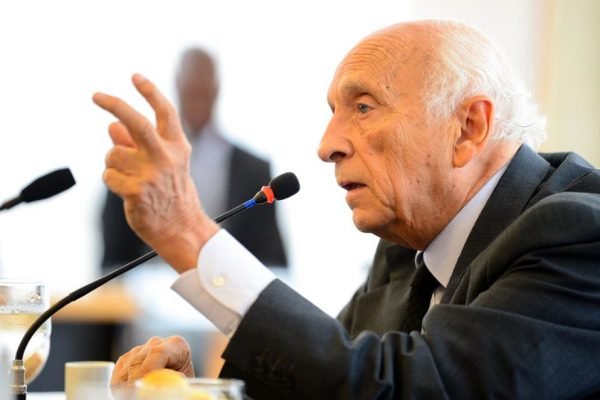
Meu colega e amigo Sergio Florêncio foi embaixador do Brasil no México e até escreveu um livro sobre os mexicanos (Editora Contexto)
Uma lição do México ao Brasil
Sergio Florêncio
Em 2010 o México passou um ano inteiro celebrando o Bicentenário de sua independência. No dia do aniversário o governo organizou atos cívicos em todas as capitais, com o propósito de resgatar seu passado, de unir e integrar a nação , de respeitar as comunidades indígenas e de fortalecer a democracia.
Hoje, em 2022, em flagrante contraste com tudo isso, o Brasil sequestrou o Bicentenário e o usou para propaganda eleitoral. Uma festa patriótica virou mais um episódio eleitoreiro . Nenhum presidente do Brasil no período da redemocratização transformou o 7 de setembro em palanque eleitoral. Bolsonaro praticamente ignorou 200 anos de passado e o 7 de setembro do presente. Nenhuma palavra sobre como enfrentar os reais problemas do país - desemprego , inflação, fome de 33 milhoes de brasileiros , desempenho econômico .
Em lugar de propostas para enfrentar os problemas do.presente e os desafios do futuro, o Presidente se concentrou em ofensas a adversário visto como inimigo, em manipulação politica da religiosidade do povo, em manifestações ridículas de machismo, em auto elogios vazios e em falsas realizações .
Conseguiu colocar multidões de seus fiéis seguidores nas ruas. Mas nao conseguiu comunicar qualquer mensagem que ajude a promover crescimento econômico, politicas sociais sustentáveis e política externa que retire o país da condição de pária internacional.
Nada construtivo foi mencionado. Bolsonaro esqueceu o.passado de 200 anos, sequestrou a festa cívica do presente e omitiu o futuro. Diante de tantos absurdos, a sociedade deverá resgatar sua história e afastar Bolsonaro para " o bem do povo e felicidade geral da nação". A esperança vai vencer o ódio.
Ensaio histórico, baseado em fontes primárias e literatura secundária, sobre a participação do Brasil na Conferência Econômica e Monetária Mundial, convocada pela Liga das Nações, e realizada em Londres, no verão de 1933. A conferência tinha poucas perspectivas de restabelecer o equilíbrio da economia mundial, seriamente abalado depois das crises de bolsa (1929) e financeira (1931) nos países avançados, uma vez que os principais atores, os Estados Unidos em primeiro lugar, revelaram pouca disposição em abandonar políticas nacionais para um acordo abrangente sobre comércio, finanças e câmbio, numa conjuntura em que todos eles havia abandonado a conversibilidade. O Brasil tinha objetivos limitados, vinculados ao comércio mundial de café e outras matérias primas, e ao financiamento de suas contas externas, sobretudo a dívida.
Relação de Originais n. 3956; Relação de Publicados n. 1432bis.
Brazil in the 1933 London economic conférence: limited objectives, negligible results
Um belo texto de Marcos Magalhães sobre a palestra do embaixador Ricupero na ABL.
O terceiro centenário começa agora
Marcos Magalhães
Jornal Metrópoles, 6/09/2022
Pouca gente circulava nas ruas do centro do Rio de Janeiro no fim da tarde da última sexta-feira, como costuma acontecer desde a pandemia. Mas uma pequena multidão disputava as últimas cadeiras disponíveis em um auditório da Academia Brasileira de Letras para assistir a uma palestra do embaixador Rubens Ricupero.
Ex-ministro da Fazenda, do Meio Ambiente e da Amazônia na década de 90, ele foi escalado pela academia para falar sobre o “Brasil em um mundo de acelerada transformação”, dentro do ciclo de debates sobre o bicentenário do país.
Aos 85 anos, ele lançou duas perguntas à audiência. A primeira, mais histórica: o que se fez na diplomacia nos últimos 200 anos? A segunda, prospectiva: o que se pode fazer ao longo dos próximos 100 anos?
As duas perguntas indicam uma terceira, que deveria estar no centro dos debates quando o país chega aos dois séculos de independência: qual é o lugar do Brasil no mundo neste começo do século 21?
Para Ricupero, poucos países devem tanto à diplomacia como o Brasil, que hoje tem um território dois terços superior ao que teria inicialmente e que vive em paz há 152 anos com todos os seus vizinhos.
Coube ao Barão do Rio Branco no início do século 20, como recordou o embaixador, tecer a estratégia de política externa adotada como bússola por décadas à frente. A postura do Brasil, segundo o antigo chanceler, era a de um país “amante da paz, conciliador e avesso à loucura das hegemonias”.
O otimismo do Barão o levou, durante discurso em 1905, a prever que o Brasil estaria entre as maiores nações da América Latina que, a seu ver, alcançariam em 50 anos condições de se colocar, juntamente com os Estados Unidos, entre as mais poderosas do mundo.
Não chegamos nem perto disso. E, neste início de século, o Brasil bicentenário está diante de um mundo tomado por múltiplas crises. Depois da crise financeira de 2008, recordou o embaixador, ocorreram o “retorno com força” da extrema direita, a ameaça de uma nova guerra fria, desta vez entre Estados Unidos e China, e a invasão da Ucrânia.
Como se isso não bastasse, o mundo sofre com catástrofes naturais “com digital humana”, como a pandemia e o aquecimento global. Ameaças contra as quais de nada vale o poder militar e econômico e que exigem cooperação em tempo de renovadas rivalidades geopolíticas.
É diante desse cenário cheio de desafios que se coloca a segunda pergunta: o que fazer nos próximos 100 anos? Ou, em outras palavras, como o Brasil quer se colocar no mundo?
As reflexões bem que poderiam ter lugar de destaque nas campanhas eleitorais desse ano do bicentenário. Mas cedem espaço, em momento de radicalização política, à discussão de medidas econômicas de curto alcance e a novos episódios das guerras culturais.
O próprio 7 de setembro foi raptado pela disputa eleitoral. A data nacional passou a ser vista como o momento máximo de mobilização promovida pelo atual governo em busca de reeleição. Uma celebração partidária, longe de uma data a ser pacificamente celebrada por toda a nação.
Longe dos comícios, Ricupero ensaiou, em sua palestra na Academia Brasileira de Letras, possível resposta aos atuais desafios internacionais. Se não é possível atender às expectativas de 1905 do Barão do Rio Branco, observou, o país pode buscar um caminho alternativo.
“Outro estilo de ser potência é possível, que não militar ou econômica”, disse Ricupero. “Uma potência ambiental, de direitos humanos, de promoção de igualdade racial e social, solidária a fracos e a vulneráveis”.
Para sair em defesa desses valores, recordou o embaixador, será necessário que os coloquemos em prática aqui mesmo, até mesmo para que venhamos a conquistar a autoridade necessária a essa postura diante do resto do mundo.
Ou seja, a adoção de uma nova agenda interna – baseada na defesa do meio ambiente, na redução das desigualdades e do combate ao racismo e a outras discriminações – seria a base necessária para a construção de uma renovada agenda externa.
O protagonismo baseado no exemplo já ocorreu em passado recente. A partir de uma bem-sucedida política em defesa da Amazônia, o Brasil passou a ser visto pelo resto do mundo como parceiro necessário nos principais foros de debates sobre a questão ambiental.
A aceleração do desmatamento nos últimos três anos, acoplada à perplexidade na comunidade internacional diante da percepção de risco de uma possível ruptura institucional, retirou do país muito do protagonismo exercido nas últimas décadas.
Se o Brasil pretende reconquistar apoio e simpatia internacionais, precisará primeiramente mudar a sua agenda interna. E essa mudança só poderá ser promovida pelo governo a ser eleito em outubro.
O ano de 2023 será o primeiro ano do terceiro século do Brasil como país independente. Se o bicentenário pegou o país no contrapé, dividido e radicalizado, será sempre possível corrigir o rumo. A adoção de uma nova agenda social e ambiental, como defendeu Ricupero, pode bem ser o início desse novo momento da nossa história.
Marcos Magalhães.Jornalista especializado em temas globais, com mestrado em Relações Internacionais pela Universidade de Southampton (Inglaterra), apresentou na TV Senado o programa Cidadania Mundo. Iniciou a carreira em 1982, como repórter da revista Veja para a região amazônica. Em Brasília, a partir de 1985, trabalhou nas sucursais de Jornal do Brasil, IstoÉ, Gazeta Mercantil, Manchete e Estado de S. Paulo, antes de ingressar na Comunicação Social do Senado, onde permaneceu até o fim de 2018.
Eu li esse artigo doElihu Root, no primeiro número da Foreign Affairs, em 1922, que se pronunciava por uma diplomacia "popular", aberta e "transparente", ou seja, tudo o que os EUA não fizeram nas suas intervenções externas no entorno imediato do Caribe e da América Central e depois, no mundo todo, no auge do seu poderio, pós-IIGM.
Root esteve no Brasil, em 1906, para a conferência americana organizada por Rio Branco. Foi daí que nasceu a ilusão de uma aliança não escrita, à qual os EUA jamais subscreveram.
A Foreign Affairs é uma boa revista, mas costuma expressar os pontos de vista da plutocracia americana, que manda na política externa, e os artigos acadêmicos dos wisest and brightest da costa leste, que são tão imperialistas quanto os primeiros.
Paulo Roberto de Almeida
Foreign Affairs, centennial issue
One hundred years ago, former Secretary of State Elihu Root opened the first essay in the first issue of Foreign Affairs with what may have seemed, in September 1922, a striking claim: that the development of foreign policy could no longer be confined to foreign ministries. “Democracies determined to control their own destinies object to being led, without their knowledge, into situations where they have no choice,” Root wrote. But such determination had to be matched by an effort to spread “knowledge of the fundamental and essential facts and principles upon which the relations of nations depend.”
Since then, thousands of articles have appeared in these pages. Many have, for good and for ill, helped set the course of U.S. foreign policy and international relations—perhaps most famously, George Kennan’s “X” article, which laid out Washington’s Cold War strategy of containment. Others have challenged the thrust of policy or questioned assumptions about the world. All have taken up Root’s basic charge, seeking to drive a debate that, by design, spans practitioners, experts, and a much broader engaged readership (hundreds of times larger than it was in Root’s day), in the United States and around the world.
Foreign Affairs is now much more than the issues that arrive in mailboxes and appear on newsstands every two months. You can read new articles daily at ForeignAffairs.com. You can hear our contributors elaborate on their arguments in our podcast, the Foreign Affairs Interview, or in live events. You can discover gems from our archives in weekly newsletters. To all of these, we strive to bring the same ambition of argument, the same clarity of analysis, the same credibility of authorship borne of singular experience and expertise, the same eye to policy response—to what should be done, not just to admiring the problem.
With this issue, you’ll notice a redesigned look for the print magazine, meant to reflect our tradition and to convey the substance and shelf life of what each copy contains. It comes at a moment when international relations are as fraught and uncertain, and U.S. foreign policy as vexed and challenged, as at any point in recent memory, when the forces of the past intersect with new ones in uniquely perilous ways.
Many of the essays in this issue trace the enduring influence of history—through American power, through democracy and technology, through China and Russia, through race and its impact on the foreign policy establishment (including this magazine). Our book reviewers, similarly, look both backward and forward, each naming a few titles essential to understanding the past century and a few essential to anticipating the century ahead. These contributions do “not represent any consensus of beliefs,” in the words of founding editor Archibald Cary Coolidge; instead, they reflect his pledge to “tolerate wide differences of opinion . . . seriously held and convincingly expressed.” Foreign Affairs, Coolidge stressed, “does not accept responsibility for the views expressed in any article, signed or unsigned, which appear in its pages. What it does accept is the responsibility for giving them the chance to appear there.”
The central claim of the magazine’s first-ever essay—that a good foreign policy demands deep, open, and broad debate—may no longer seem as striking as it did in September 1922. Yet all we do is meant to fulfill that commitment, one as vital now as it was 100 years ago.



 Email
Email