terça-feira, 7 de fevereiro de 2023

A simplificação da linguagem é sinal de menos inteligência? NÃO! - Marco Neves contra Clavé

 Certas Palavras

Estamos a ficar menos inteligentes por causa da língua?

Há umas semanas rodou por aí, partilhada à exaustão, a tradução de um texto francês sobre o empobrecimento da língua. O texto é bonito, mas a argumentação está colada a cuspo.

O cronista, um professor de gestão francês chamado Christophe Clavé, pouca culpa terá. Afinal, a língua é um tema interessante e, quando há que escrever uma crónica e não nos aparece outro assunto, há sempre a possibilidade de bater na língua dos dias de hoje. É um truque velho de séculos. Uma crónica escreve-se depressa, nem sempre temos tempo para pensar no que dizemos. Acontece.

Já fico um pouco mais preocupado com todos os leitores cultíssimos, exigentíssimos e sempre com o pensamento crítico na boca que, perante uma prosa sobre a língua que não mostra conhecimento mínimo sobre o estudo dessa língua, a divulgam sem remorsos e sem pensamento crítico que se veja.

Vejamos então o que diz o tal texto partilhado. Uso a versão traduzida que vi partilhada. O texto original é um pouco diferente (para dizer a verdade, mais subtil), mas foi este o texto que tantos portugueses quiseram partilhar. Vamos a ele. 

«O QI médio da população mundial, que sempre aumentou desde o pós-guerra até o final dos anos 90, diminuiu nos últimos vinte anos …É a inversão do efeito Flynn. Parece que o nível de inteligência medido pelos testes diminui nos países mais desenvolvidos. Pode haver muitas causas para esse fenómeno.»

Alto e pára o baile! Na verdade, houve ganhos tremendos — quase inacreditáveis — do QI nos últimos 100 anos, em todo o mundo. Este é o gráfico do aumento (não são valores absolutos, são valores relativos à base):

Os dados estão na página Our World in Data.

É verdade que se notou uma estabilização ou mesmo inversão do efeito Flynn em alguns países, principalmente do Norte da Europa, mas não está generalizada nem apaga o que foram os ganhos das últimas décadas. Há ainda que ter em conta que as subidas e descidas têm muitos factores associados. Não é fácil compreender por que razão ocorrem. Não é fácil chegar a conclusões sólidas…

Bem, o autor apresenta uma hipótese:

«Uma delas [das causas] pode ser o empobrecimento da linguagem. Na verdade, vários estudos mostram a diminuição do conhecimento lexical e o empobrecimento da linguagem: não é apenas a redução do vocabulário utilizado, mas também as subtilezas linguísticas que permitem elaborar e formular pensamentos complexos. O desaparecimento gradual dos tempos (subjuntivo, imperfeito, formas compostas do futuro, particípio passado) dá origem a um pensamento quase sempre no presente, limitado ao momento: incapaz de projeções no tempo.»

«Pode ser» — uma excelente dúvida científica. É pena que essa dúvida seja logo substituída por certezas que vêm dos habituais «vários estudos»… Que estudos serão esses? (Serão as flutuações dos resultados PISA? Desconfio que sim, mas não sei. O texto não diz.)

Pergunto eu: onde estão os linguistas — cientistas que estudam a língua — que encontram diminuição sustentada do conhecimento lexical e o empobrecimento da linguagem?

É verdade que o senso comum parece ver empobrecimento no uso da linguagem. Mas essa sensação já nos acompanha há milhares de anos (sim, há milhares)! É como os óvnis: muitos os vêem, ninguém os encontra. Quando se põem a estudar a questão, os linguistas não registam empobrecimento do uso da linguagem pelos falantes (o que registam, isso sim, é uma uniformização da linguagem nos espaços nacionais, com menos variação regional — mas isso é outra questão).

Os falantes continuam a ter os milhares de palavras que sempre tiveram ao seu dispor, mesmo que essas palavras não sejam exactamente as mesmas que eram há 100 anos. Nos dicionários, o número de palavras até estará a aumentar (porque os dicionários são cada vez mais abrangentes).

Olhando para o texto de Clavé, e exercendo o tal pensamento crítico que o próprio texto preconiza, temos de perguntar: mesmo se existisse esse empobrecimento da linguagem, como saber que há uma ligação de causa-efeito entre o empobrecimento e a suposta diminuição da inteligência? Não seria muito mais provável que o empobrecimento fosse uma consequênciae não uma causa dessa descida da inteligência (que, como vimos, não é bem como a pintam)?

Outra pergunta: se aceitarmos essa relação de causa-efeito, quer isso dizer que os anos 90, quando o QI chegou ao pico segundo o próprio texto, foram os anos em que a riqueza da língua chegou ao expoente máximo? Os anos 90 do século XX? A sério? 

Continuemos a ler Clavé:

«A simplificação dos tutoriais, o desaparecimento das letras maiúsculas e da pontuação são exemplos de «golpes mortais» na precisão e variedade de expressão.»

A escrita é hoje usada em contextos informais onde não aparecia há umas décadas. Assim, em certos contextos, usamos menos pontuação e menos maiúsculas. Mas noutros, ninguém deixa de usar maiúsculas ou pontuação. Na verdade, havendo mais variedade, há mais complexidade. Saber escolher entre um ponto, um ponto de exclamação ou nada numa mensagem de SMS é mais difícil do que apenas entre um ponto e um ponto de exclamação. Este uso da escrita na informalidade não se faz sem dificuldades, mas faz-se. Não há menos complexidade… Afinal, todos temos de aprender a usar a língua na escrita em mais registos do que até há poucos anos, quando os registos informais eram quase um exclusivo da oralidade.

Por outro lado, não percebi bem o que será «a simplificação dos tutoriais». Vou ao original: está lá «tutoiement». O tradutor de ocasião compreendeu muito mal o texto. Trata-se do tratamento por tu. (Se os tradutores profissionais falham algumas vezes, os «tradutores» com aspas falham muito mais.) Enfim, olhando para o original, parece que o autor defende que as formas de tratamento distintas são uma subtileza que importa não perder. Que ligação tem isto à inteligência? Não sei. Há várias línguas sem distinção T-V (como se chama habitualmente), sendo o exemplo mais conhecido o inglês. Serão menos subtis? Serão menos inteligentes

«Apenas um exemplo: eliminar a palavra «signorina» (agora obsoleta) não significa apenas abrir mão da estética de uma palavra, mas também promover involuntariamente a ideia de que entre uma menina e uma mulher não existem fases intermediárias.»

Aquele «signorina» virá, presumo, de um original «mademoiselle» que se transformou na versão italiana por alguma razão numa das várias traduções portuguesas que por aí circulam. (É, de facto. Confirmei no original. Como este problema em particular não existe em português, o «tradutor» inventou.) Nós não usamos uma forma intermédia entre «menina» e «mulher»/«senhora». Temos, por outro lado, um sistema de formas de tratamento que não lembra ao diabo — nem a um francês! Seremos mais subtis que os franceses? Talvez mais inteligentes? Seremos menos capazes de perceber as várias fases do desenvolvimento da mulher? Que confusão se cria assim entre as particularidades de cada língua, a inteligência e o conhecimento…

Há ainda que desconfiar destas impressões («mademoiselle» está a desaparecer!). Às vezes, vamos a ver e o tal desaparecimento não se verifica. Outras vezes, é um facto, mas muito mais antigo do que parece. Há que desconfiar das nossas impressões… Muitos portugueses estão convencidos de que «você» é palavra recente, quando já se usa desde o século XVII. É apenas um exemplo. Todos nós nos enganamos com as nossas impressões. Talvez fosse útil perguntar a algum linguista francês se pode verificar o tal desaparecimento de «mademoiselle». 

«Menos palavras e menos verbos conjugados significam menos capacidade de expressar emoções e menos capacidade de processar um pensamento.»

Os jovens usam menos palavras? Parece, mas é uma impressão de todos os tempos. Diria que os jovens sempre conheceram menos palavras que os mais velhos, porque viveram menos que os mais velhos. Mesmo assim, uma criança de cinco anos já sabe uns bons milhares de palavras, bem mais do que se diz por aí (já cheguei a ouvir dizer que só usamos 1000 palavras, um disparate…). Usamos hoje muitas bengalas? Sempre as usámos, fazem parte dos mecanismos mentais que nos permitem pensar enquanto falamos. Usamos muitas vezes umas poucas palavras? A distribuição de uso de palavras é constante entre línguas e é também constante no tempo. Chama-se a isto a Lei de Zipf (é fácil encontrar descrições sobre este fenómeno). Não, não andamos a usar muito poucas palavras — continuamos a usar a linguagem como sempre usámos. A língua muda, o cérebro humano lá se vai mantendo…

«Estudos têm mostrado que parte da violência nas esferas pública e privada decorre diretamente da incapacidade de descrever as emoções em palavras. Sem palavras para construir um argumento, o pensamento complexo torna-se impossível. Quanto mais pobre a linguagem, mais o pensamento desaparece. A história está cheia de exemplos e muitos livros (Georges Orwell – “1984”; Ray Bradbury – “Fahrenheit 451”) contam como todos os regimes totalitários sempre atrapalharam o pensamento, reduzindo o número e o significado das palavras.»

Quais estudos? Até admito que haja estudos que dizem isto mesmo quanto à violência (gostava, no entanto, de saber quais são). Só que a dificuldade de descrever as emoções é um problema de sempre… Será que hoje, quando a população está alfabetizada como nunca esteve, é mais difícil descrever as emoções? Será que isso tem levado a um aumento da violência? Será estranho defender isto depois de várias décadas de diminuição da violência nos países da Europa (por exemplo, no que toca aos homicídios). Mas mesmo que não fosse o caso, há que ter cuidado com as conclusões apressadas. Estabelecer uma ligação entre o uso da linguagem à violência exige provas bastante sólidas…

Quanto aos escritores referidos, dificilmente defenderiam que as suas obras descrevem uma diminuição da inteligência provocada por um empobrecimento da linguagem em regimes como os nossos. Mesmo que fosse o caso, para fazermos análises linguísticas convém ter dados e não apontar para representações ficcionais, por mais importantes que sejam — e estas são-no. Desconfio que apareçam aqui para dar um certo ar de profundidade literária a um texto cheio de ar. Há perigos no uso da língua, claro que há: todo este texto de Clavé mostra bem como podemos embrulhar numa retórica bonita ideias muito pouco desenvolvidas…

«Se não houver pensamentos, não há pensamentos críticos. E não há pensamento sem palavras. Como construir um pensamento hipotético-dedutivo sem o condicional? Como pensar o futuro sem uma conjugação com o futuro? Como é possível captar uma temporalidade, uma sucessão de elementos no tempo, passado ou futuro, e sua duração relativa, sem uma linguagem que distinga entre o que poderia ter sido, o que foi, o que é, o que poderia ser, e o que será depois do que pode ter acontecido, realmente aconteceu?»

Cada língua tem um determinado sistema de flexão verbal. Há línguas que usam muitos verbos auxiliares ou outras palavras para expressar uma grande parte dos tempos, enquanto línguas como as latinas apostam em diferentes formas do verbo. Um sistema não é melhor do que o outro. O inglês, por exemplo, expressa o condicional através da sintaxe. O português fá-lo através de uma forma particular do verbo. Serão os ingleses incapazes de construir pensamento hipotético-dedutivo? Claro que não! Todas as línguas permitem fazer isso mesmo, usem ou não uma forma verbal particular. Mesmo que o francês e o português estivessem a perder o condicional (não estão), a língua continuaria a ter formas de expressar o mesmo. Em português, por exemplo, podemos usar o imperfeito em vez do condicional, mas só o fazemos se se cumprirem certas condições. A língua, nesse ponto, está a ficar mais complexa, não menos.

A nossa flexão verbal continua a ser riquíssima. Basta tentarmos descrevê-la (como já tentei ao escrever uma gramática) para vermos como é difícil de sistematizar. É muito complexa, muito mais do que pensamos. Só como exemplo, temos expressões iterativas («tenho falado com ele»), temos vários graus do futuro, com subtis diferenças («eu falo com ele, eu falarei com ele, eu vou falar com ele, eu hei-de falar com ele, eu irei falar com ele…»). Nada disto mudou nos últimos anos.

Já o inglês, por exemplo, não tem uma forma verbal simples de expressar o futuro — precisa sempre de auxiliares. Serão menos inteligentes por lá?

«Caros pais e professores: Façamos com que nossos filhos, nossos alunos falem, leiam e escrevam. Ensinar e praticar o idioma em suas mais diversas formas. Mesmo que pareça complicado. Principalmente se for complicado. Porque nesse esforço existe liberdade. Aqueles que afirmam a necessidade de simplificar a grafia, descartar a linguagem de seus “defeitos”, abolir géneros, tempos, nuances, tudo que cria complexidade, são os verdadeiros arquitetos do empobrecimento da mente humana.»

Sem dúvida! Assino por baixo este último parágrafo (só este). As nossas línguas são complexas. Todas as línguas são complexas. (Já agora, se nós temos dois géneros e os falantes de suaíli têm mais do que dez, serão mais inteligentes por isso?) Convém não simplificar — e isso implica analisar a língua como ela existe e não a imagem simplificada (lá está) que temos do uso dessa língua. É por isso que dar mais atenção aos estudos linguísticos pode ajudar a cair em menos ratoeiras retóricas como este texto.

A questão é esta: as línguas não estão a ficar menos complexas. O que se perde de um lado, ganha-se de outro (por estranho que pareça), num jogo de equilíbrio cognitivo que não notamos, mas que se desenvolve ao longo dos milénios (o livro que proponho abaixo descreve esse jogo). 

No final, nenhuma língua exige dos seus falantes nativos mais inteligência para ser falada do que outra língua. É uma característica das línguas pouco conhecida, mas que se revela quando as estudamos de forma um pouco mais profunda. Para saber isso é preciso estudar um pouco mais a fundo a língua do que os habituais comentários de café… 

Entretanto, Clavé ainda não terminou:

«Não há liberdade sem necessidade. Não há beleza sem o pensamento da beleza.»

Muito bem. Frases bonitas, para terminar. Não vejo grande relação com o resto do texto, mas não faz mal. As línguas continuam a permitir pensar a beleza. Até continuam a permitir criar beleza, veja-se bem.

Antes de terminar, digo: as línguas podem passar por períodos de decadência — mas na escrita… Quando o Império Romano desapareceu, os níveis de alfabetização desceram. No entanto, as línguas em si, na oralidade, não se transformaram em subprodutos linguísticos — acabaram por dar origem às nossas línguas, que simplificaram partes do latim, mas complexificaram outras (os artigos, por exemplo).

Ora, mesmo na escrita não vivemos hoje num período de decadência: a alfabetização é superior a qualquer época passada. Ainda não estamos bem? Pois claro que não. Preocupa-me a falta de leitura de muitos jovens, que não permite ganhar capacidades de escrita adequadas para um mundo em que vivemos pela escrita. Mas de uma preocupação que todos podemos partilhar até conclusões catastróficas sobre a evolução da língua, o estado da gramática, do vocabulário, da violência e de tudo o mais — vai, claro, uma grande distância…

Temos de ser muito exigentes. A língua exige uso e estudo, principalmente na escrita. É por isso que proponho que se leia mais sobre a língua, para lá de impressões de café.

Por exemplo, este artigo (em inglês) mostra como as línguas tendem a transmitir informação com a mesma eficiência, afinada ao longo dos milénios pelas capacidades cerebrais e auditivas dos seres humanos. É um artigo difícil? Com certeza que sim… Nada que assuste quem tanto grita a favor da exigência. É uma das pistas que apontam para uma certa constância das línguas humanas no que toca à complexidade e às capacidades cerebrais necessárias para as falar.

Proponho ainda um livro de que já falei anteriormente, mas que é um bom ponto de partida para percebermos como as línguas não se desfazem no tempo: The Unfolding of Language, de Guy Deutscher. É um livro exigente, como certamente Clavé e os seus leitores gostam. É também um livro muito interessante e muito informado sobre as línguas. Já agora, como estamos a falar de um texto francês, deixo também outra sugestão de leitura: Le Français dans tous les sens, de Henriette Walter. Sobre a nossa própria língua, temos o recente (e já muito recomendado por aqui) Assim Nasceu Uma Língua, de Fernando Venâncio. Talvez sirvam, todos eles, como antídoto para o vício do catastrofismo linguístico.

São exemplos de textos inteligentes e exigentes, que nos entusiasmam para saber mais sobre as línguas e sobre a linguagem humana.

segunda-feira, 6 de fevereiro de 2023

How Iran beats Russia at sanctions game - Ian Bremer, GZero Signal Newsletter

 Israel o faz por causa própria ou para ajudar a Ucrania?


recent attack on a weapons manufacturing compound in the Iranian city of Isfahan, presumably by Israel, has again highlighted the Islamic Republic's position as a global arms powerhouse. 

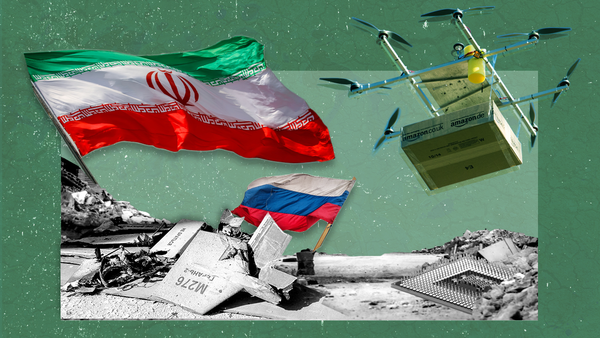
While it’s hard to know exactly what projects are in the works at the Isfahan facility, there are reports that the site is used to produce "suicide drones.” These are the same cheap and dirty contraptions Vladimir Putin’s military is using to pummel Ukrainian cities. 

With attention yet again on Iran’s drone-making prowess, a big question emerges: How has heavily sanctioned Iran managed to become a one-stop shop for Russia’s advanced weapons needs, while Moscow, largely cut off from Western supply chains, is desperately searching for weapons and parts? 

What are some of the biggest pain points for Russia in procuring weapons and parts? Moscow has long relied heavily on Western components for making advanced weaponry. Before the war, the bulk of its stash came from US firms. But access to semiconductors, the nearly invisible microchips essential for running modern military hardware, changed after the outset of the war when more than 30 countries – like Japan, the Netherlands, and the EU – joined US-driven bans on exports to Russia. 

What’s more, Russia has struggled to bulk up its domestic semiconductor industry. Some firms have gone bust, and private companies have refused to use domestically made chips, citing quality concerns – again reinforcing Russia’s reliance on foreign manufacturers. But global supply kinks have made procuring chips harderfor everyone

Still, Moscow has found ways to access these and other parts through third parties – including China and Turkey, a NATO member! Russia also imported $777 million worth of products from Western tech firms between April and October 2022 despite export bans. But Putin needs to get his hands on way more components to fuel his war machine. 

Iran to the rescue, but how? Tehran, meanwhile, has developed a knack for skirting Western sanctions and finding gaps in international arms control agreements to procure Western-made components.

“Iran has been living under sanctions for more than 40 years, so they’ve developed elaborate processes to do it [evade sanctions],” says Dr. Jon B. Alterman, director of the Middle East Program at the Center for Strategic and International Studies. “The smuggling operations in Iran are run by people close to the government. They’ve gotten good at it, and they’ve gotten wealthy doing it. They have the infrastructure.”

One part of their solution is quite relatable: Like you and me, the mullahs turn to the World Wide Web to shop. 

“Some of the stuff [needed to make drones], they can buy on eBay and Amazon,” says Alterman. “In a world of a huge amount of commerce, a lot of things are obtainable.” 

It’s also a matter of proactive preparedness. Iran has for decades invested heavily in its arms industry, launching a modernization program that’s allowed it to make major advancements in ballistic and cruise missile production. 

Iranian officials have also been known to scour conflict zones for American and Israeli debris for research purposes, including reverse-engineering. In fact, President Joe Biden recently tapped a task force to establish why a whopping 82% of components found in downed Iranian drones in Ukraine were reportedly made in … America. (Not exactly the Made in America promo Biden wanted).

Why would Iran help Russia? Like so many things in geopolitics, it’s a case of I’ll scratch your back if you scratch mine, but Iran is also playing the long game.

“The war in Ukraine has reshuffled the deck of alliances, and Iran now has access to modern weaponry,” says Pierre Boussel, a Middle East expert at the Liechtenstein-based Geopolitical Intelligence Service. So Iran is arming the Russians and, in return, the Russians are giving Tehran some advanced hardware. Case in point: Moscow recently sent Tehran the US Javelin anti-tank missile and Stinger anti-aircraft missile, as well as British anti-tank missiles.

While Iran’s rustic approach can’t compete with the West’s, it has helped Tehran carve out a nice space for itself in the arms-making world: “US sanctions have forced Tehran to position itself in a low-cost arms market,” Boussel says, adding that “Iranian drones may be slow and inaccurate … but they are numerous enough to overwhelm enemy defenses.”

Plagued by crises at home and abroad, Iran has enough on its plate. So what’s its game plan? “The Iranians have an interest in having at least one of the great powers being indebted to them,” says Alterman, adding “they see an opportunity to lock in some gains.”

“Iran has no partners, so the fact that somebody might owe it is kind of a big deal in Iran.”

domingo, 5 de fevereiro de 2023

Lies and corruption: Sailor of the Black Sea flagship “Moskva” Alexander gives new revealing insights that contributed to seal the Moskva’s fate - Chris Snow (Medium)

 Uma história inacreditável, real e surpreendente, sobre o despreparo, corrupção e total inoperância no comando nas Forças Armadas da Rússia. Um trecho do relato do "marinheiro Alexander": 

"At one point, two loud explosions sounded, and the lights went out abruptly. Currently, I was in the cockpit and resting after the watch. Panic began, there were no commands or alarm on the broadcast for ten minutes, and then the senior assistant commander, Captain 2nd rank Gudkov, announced the gathering of personnel in the ship’s dining room, the appointment of emergency groups and the beginning of the struggle for survivability. There was darkness and smoke all around. As it turned out, the first missile hit between the galley and the dining room, and the second between the post of the Osa-MA air defense system and the torpedo tube, by the way, it is still not clear why it did not detonate."

Cabe ler por inteiro...

Medium, Jan 4, 2023

More than six months have passed since the inglorious death of the flagship of the Russian fleet in the Black Sea. Putin could not admit the fact of the loss of “Moscow” on the Kremlin TV, so the multi-layered lies hid any reliable information in its abyss. Lies accompanied the cruiser from the very beginning to the very end.

The Russian Volunteer Corps posted a unique interview with a survivor of the Moskva flagship Cruiser.

This interview also mentions pre-war events as well as the exact time of its sinking. This is an eyewitness report of one of the former crew members who is now fighting for Ukraine.

Purported image of Moskva on her final day afloat. Analysts suggest that the image is consistent with the vessel’s configuration and Ukrainian accounts of the strike (Unknown source)

The sailor’s name is Alexander, and he got on the cruiser Moskva long before Putin’s Russia launched a full-scale invasion of Ukraine. Here is the translation of the report in which he gives extensive background information about the incident from April last year. (Personal comments in brackets)

The story begins in June 2021, the Moskva sailed to the Mediterranean Sea, where it participated in the tracking of the British aircraft carrier Queen Elizabeth, during which we had a fire in a barbette with AAU (automatic artillery installation) AK-630 ammunition, back then the automatic fire extinguishing system worked, and the explosion was avoided.

There were a lot of problems. For example, we had the main complex of the flag radar, which should illuminate the airspace at up to 480 km, but in fact, every 30 minutes, there was an overheating with its subsequent shutdown. In addition to the flag radar, the cruiser had Nadir radar complexes located in the bow and stern, as well as Vympel complexes on the starboard and port sides.

Absolutely all radar complexes of the ship overheated due to improper maintenance and control.

The same "flag" saw nothing but highway civilian aircraft as it couldn’t even give out a non-existent target. The rest of the radars cover a 15 to 45 km radius. For all these reasons, until the sinking of the ship, it was necessary to monitor the airspace with the help of civilian programs on a laptop.

Subsequent deployments out to sea ended almost identically - failure after failure. In the fall of 2021, we went to the sea to monitor NATO and Ukrainian ships participating in exercises in the Black Sea.

The ship's gunners were tasked with hitting an artificial surface target with an AK-130 and AK-630 AU artillery piece. By the way, the first ended with a blackout on the entire ship during the rotation of the gun, and the second - ended in an unsuccessful firing and desynchronization of two AK-630 complexes (they were supposed to work in pairs but decided to turn in opposite directions of each other).

In addition to the terrible technical condition, there were simply inhumane conditions for the life of the crew on board.

During a twenty-day deployment in the Mediterranean, "one and a half" liter of fresh water were given out per person for three days. In addition, there were meals of poor quality. Fresh water was supplied twice a day - in the morning and before the break. Even then, only for 20 minutes. For a crew of more than 400 people.

Since the water reserves in the tanks are limited, and the desalination machines for seawater simply did not work (they worked only in documents and reports).

The food on bord was generally tolerable if you didn’t notice the cockroaches in the rice and compote. There was an incident on the tenth day after the ship left for the Mediterranean sea, namely the disappearance of mugs from the dining room, because of which the deputy commander of the ship for educational work, Captain 2nd rank Vakula ordered to remove all mugs from the dining room before arriving at the base.

An extensive report on with a lot of facts and figures about the ship and the Russian Navy in general

Since I touched on the topic of army idiocy, it is worth talking about constant training, anxiety, and performing tasks that are in no way connected with reality.

All the drills done on the cruiser were fiction. Everything was done to ensure that photo reports on the "work" done lay on the table of Kuprin (the commander of the ship) and to those higher up.

Photo reports, photo reports, and once again photo reports... this is the essence of the entire army of the Russian Federation, it does not matter whether you are able to professionally perform your work or not, here only a beautiful picture and what your’re painting in the journal of combat training is important.

For example, the Osa-MA air defense system. These systems have been repaired since 2014, and according to the documents, they were fully operational according to the reports provided.

One of the few manifestations of a sober assessment of the situation was the recognition by the command of the “Moscow” of the non-combat capability of the PU Sam system S-300F “Fort”, because, as it turned out, there are no missiles for it in the Black Sea Fleet.

The main missile system is PU PRKR P-1000 "Vulcan" in the amount of 16 pieces. It was almost impossible to launch due to an insufficient supply of electricity and compressed air. I am generally silent about anti-submarine weapons.

The war started while we were out at sea on a routine patrol mission

Or at least it was supposed to be a routine mission to patrol the oil rigs near Snake Island, but when we woke up on the morning of February 24, we were informed of the beginning of a "special military operation." Many that morning could not even imagine that Russia would start a real war.

How lies destroy armies

My thoughts were only about what is happening now in Ukraine - the country in which my relatives live.

At that time, we did not know about the missile strikes and thought that everything was happening within the Donetsk and Luhansk regions of Ukraine.

After some time, the Moskva approached the island of Zmeiny, and the ZKK on the VPR, Captain 2nd rank Vakula, picked up a radio and began his shameful speech, in response to which he was sent along with the ship by a Ukrainian border guard.

Au AK-130 barely worked on the island, and on its last legs, the ship went to the raid along the patrol line.

The famous clip

After the events near the island of Zmeiny, "Moskva" came to the port of Sevastopol back to its base. Afterward, we were interviewed by "plainclothes men," and non-disclosure documents were signed by some crew members.

The crew was then released on leave, but the lion’s share remained, as some of the sailors were sent on deployment to the 810th Marine Brigade, where they were assembled in January for exercises as part of infantry rifle units. Soon, those who were there on deployment were sent to the Kherson direction.

Corruption has been rampant ever since in the Russian army and the Navy which is normally among the absolute elite of every army seems to be heavily compromised

In April 2022, the cruiser was sent to Odessa to patrol the water area. At least this information was given to the crew.

We had lunch on the ship. It was 14:15 Moscow time on the clock. Half of the personnel rested in their crew cabins, and the other was assigned to watches and outfits. There was no alarm or targets on the radar.

At one point, two loud explosions sounded, and the lights went out abruptly. Currently, I was in the cockpit and resting after the watch. Panic began, there were no commands or alarm on the broadcast for ten minutes, and then the senior assistant commander, Captain 2nd rank Gudkov, announced the gathering of personnel in the ship’s dining room, the appointment of emergency groups and the beginning of the struggle for survivability. There was darkness and smoke all around. As it turned out, the first missile hit between the galley and the dining room, and the second between the post of the Osa-MA air defense system and the torpedo tube, by the way, it is still not clear why it did not detonate.

Starpom was informed that it was impossible to collect the wounded in the dining room because the blast wave had cut through the corridors and doors, and a hole appeared on the side of the ship. It is not entirely clear what exactly the commander of the ship was doing at this time, but the only one who made decisions and did something at that moment was the Starpom. (a naval rank in Russia)

Then the next order came - contract soldiers and midshipmen were to drop life rafts from the upper tiers, and officers and remaining midshipmen were to evacuate conscripts to the stern of the ship to transfer them to the frigate "Admiral Essen", on board of which was the commander of the 30th division of surface ships, Captain 1st rank Tronev.

In total, the struggle for survivability lasted until 20:00 and stopped when the fire spread to the commander’s bridge and Vulcan missile systems. By that time, the division commander was on board the cruiser and ordered to end the struggle for survivability and evacuation.

During the evacuation, the body of senior midshipman Vakhrushev was found in a helicopter hangar. He took conscripts out of the holds until the last moment, but he himself did not have enough time to escape. Vakhrushev was according to the Kremlin, the only one who died because of the "fire."

In fact, at least 30 crew members died (according to tame estimates), these were mainly conscripts who were in the holds, the entire galley outfit along with the deputy of my unit and, possibly, those who could not get out of their posts. (Link to conscripts and training here for those interested in learning more about this topic)

After these events I have just described, we were told the official version: There was a fire. That’s it.

I can’t fathom how cynical these people are to stand there and blatantly lie to those who have seen everything with their own eyes. Who lost their friends and acquaintances.

Again, everyone signed a non-disclosure agreement, and maybe you are wondering what the former crew members of the cruiser "Moskva" think about this? They don’t think anything at all about it!

A guy from my unit in the first days after the sinking of the cruiser told relatives and friends in social networks about what had happened, and, as a result, he withdrew from wherever he could.

He then had to report to special security forces with IDs (korochka), after which he simply stopped communicating and disappeared from the social network.

To my great regret, this tragedy did not free the guys from the morass of propaganda, but on the contrary. The topic of the death of the "Moskva" has become almost taboo among the former crew.

As the cruiser’s last exit was not a combat exit, but only a patrol one, and therefore, none of those on the Moskva received any bonuses or compensations.

The Kremlin does not recognize the dead sailors for two reasons:

  • The first is legal - in the so-called SVO, according to the regime, conscripts do not participate.

Let the enemy know that there are many of us, and we have long been in his rear.

I really hope that I was able to somehow help in the fight against the lies pouring into the ears of Russians and, despite the fear of being caught or killed, we will fight for the freedom of Ukraine and the liberation of Russia! (Alexander, former member of the Russian navy)

Summary and Conclusion:

I consider this a most fascinating bit of information and very revealing. A few things really stood out in my opinion:

1. The lack of training, maintenance, and combat readiness. "Photo reports - the essence of the entire army of the Russian Federation. "
2. How they lie and cheat their own kind. Just to avoid paying reparations to relatives by calling this “a non-combat exit”
3. "The huge blow to the image of the dictator "

It is reasonable to presume that the entire Russian navy is as rotten to the core as the rest of the Russian army eaten up from the inside by corruption and “Vranjo” a culture of lies and deception from the lowest to the highest ranks.

I cannot help but wonder, perhaps dangerously, how good any of their strategic rocket forces are. There have been credible reports that none of the ICBM silos are loaded as they fill with water. Also, there have been reports of batches by soldiers who are part of the missile forces surfacing in Ukraine.

It is definitely most revealing that most of their training drills are purely fabricated for propaganda purposes. That should give you a hint on why an army this big and with so much on paper advantage can lose in such a decisive way against its much smaller neighbor.

Dear reader, thank you for reading my article, be sure to leave a clap or a comment and if you wish to join medium, I would be very happy if you would consider using my referral link to support me and my writing or leave a small tip.

Also, please consider following me on medium if you want to read more of my work in the future.

Press the clap button for 15 seconds you can clap 50 times at once.

Take care and be well.

Post scriptum

A suicide note was found on a dead soldier in Luhansk, making it apparent how awful the Russian forces must treat their own. It doesn’t fit with the rest of the article, so I attached it here, but beware it is gruesome and bleak.

"Goodbye. darling, in the time that I’m here, I have seen hell. There were not so many deaths in Chechnya or even Afghanistan. Seas of human meat. But that’s not why I depart. We here, Russian people, are nobody, and Chechens rule. They drink, they are unhinged, and they rape, they give beatings to everyone and noone is going to do anything about it. Kitty, they took all the money you sent, and they did a thing to me. This is to let you know that I resisted. Remember that you and I owe nothing to anyone. This is the only way out. Love, see you after death”

Additional sources

Strength of the Russian navy

Ian Bremer takes the two sides on Ukraine war

Ponderando os dois lados... 

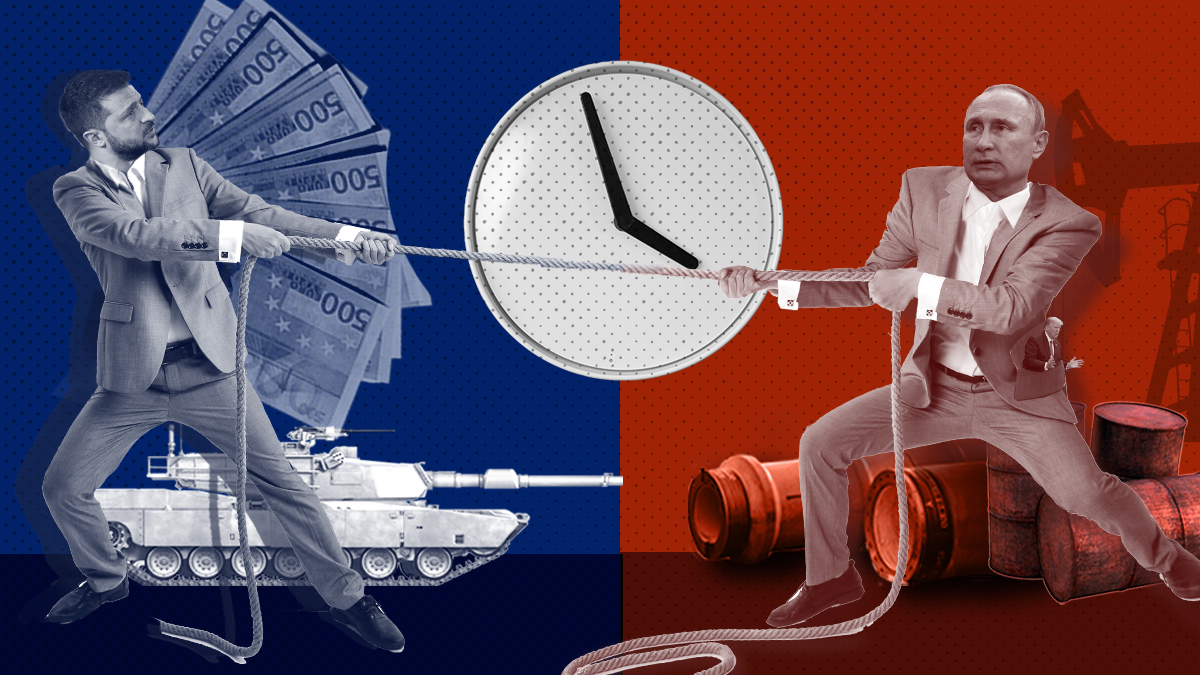
Time favors ... Ukraine or Russia?

Illustration of Volodymyr Zelensky & Vladimir Putin between a tightrope
 Luisa Vieira

Russia’s invasion of Ukraine has been grinding on for nearly a year (or nearly a decade if you ask the Ukrainians). In this time, momentum has swung back and forth between Russia and Ukraine. But now, the front lines have stabilized, making gains harder to come by for both sides.

There’s consensus that in the near term, Moscow will be unlikely to achieve its war aims and Kyiv will be equally unlikely to liberate all its territory. A lasting ceasefire, let alone a negotiated settlement, remains as distant as ever because neither country is willing to make territorial concessions as long as they believe they can achieve a stronger negotiating position through continued fighting. And both sides still believe defeat is unthinkable and victory is at least possible (if not likely).

There’s no end in sight to what seems to be evolving into a war of attrition. Which raises the critical question: Who has the advantage in a drawn-out war, Russia or Ukraine?

Let’s look at both sides of the argument.

Time is on Ukraine’s side

Ukraine can continue to defend itself and retake territory for as long as the United States and Europe keep the guns and dollars flowing. Despite suffering massive losses, Ukraine currently has better offensive and defensive capabilities than it did on Feb. 24, 2022. Ukrainians’ will to fight is intact, and their forces are better armed, better trained, and better led than their Russian counterparts. Ukraine’s successful counteroffensives last summer and fall put Russia on the defensive; advanced Western weaponry (including armored vehicles and air-defense systems) will help Ukraine make further inroads into Russian-held territory and put Kyiv in a better negotiating position.

Western support for Ukraine isn’t crumbling.Despite the costs of support and the side effects of the war, public opinion in the West remains steadfast in backing military and financial aid for Kyiv. In the US, only a minority of the Republican caucus opposes it. In Europe, support has held even in countries with new populist governments like Italy. Meanwhile, Germany is decoupling from Russian gas remarkably quickly and will survive the winter just fine – a sign that Russia’s biggest source of leverage over European countries is effectively over.

Russia’s military will continue to underperform Ukraine’s. Moscow lost some of its best men and equipment in the first months of the invasion; it’s now running short of important military capabilities, and its ability to replenish them is constrained by decades of underinvestment, corruption, and now sanctions. Much of the equipment it has left in storage is of low quality or in poor condition, and conscripts lack the motivation and training of professional and volunteer soldiers. The manpower and matériel Russia can throw at the war going forward are decidedly inferior to what it fielded last Feb. 24.

Mounting economic woes will erode Russia’s ability and willingness to fight. Russia’s economy shrunk by 3.5% in 2022 and it’ll do so by a similar or greater amount this year. While high oil prices have thus far cushioned the blow felt by most Russians, the impact of sanctions will grow significantly over time. Some of the toughest measures — export controls, the oil embargo, the price cap on Russian crude — are only now starting to take effect. The long-run erosion of living standards and productive capacity due to Russia’s decoupling from advanced industrial economies will be acute and permanent. This will make it hard for Russia to reconstitute its defense industrial base, blunting its war effort. Most importantly, combined with mounting casualties, it will reduce popular and elite support for the war and put pressure on Putin to de-escalate.

Time is on Russia’s side

Ukraine needs ever-more-powerful Western weapons to sustain the fight, but Western support will dry up sooner rather than later. Ukraine’s military capabilities are almost entirely dependent on continued support from the West and especially from the United States. But Western publics will get weary of the war as the costs mount and the risk of World War III becomes more apparent. With Republicans in control of the House, a growing GOP bloc opposed to aid for Ukraine, and a Republican president potentially taking office in 2025, Washington’s commitment to Kyiv can only weaken. The moment US support withers, so will Europe’s… and Kyiv’s ability to defend itself.

Even with continued Western support, Russia can win on the battlefield. Russian troops are no longer on the back foot. Now that they’ve had time to fortify their defensive positions and fill their ranks with better-trained conscripts, Ukraine won’t be able to repeat the kinds of successful offensives it achieved last year. While Kyiv may have overperformed in the early days of the war, a drawn-out conflict favors the more powerful belligerent. Both sides have taken severe losses, but Russia is a larger country with much more manpower, equipment, and military-industrial capacity it can throw at the war. Western weapons notwithstanding, Ukraine is likely to run out of men long before Russia does.

Unlike Ukraine and the West, Russia has the staying power to survive a protracted conflict. The West has used up most of the leverage it had against Russia, yet sanctions haven’t succeeded in crippling Russia’s economy or military. Moscow continues to have strong commercial or security ties with China, Iran, India, and many developing countries, and it maintains the ability to produce weapons domestically without imported components. Most ordinary Russians haven’t seen their living standards decline, and they continue to buy into the Kremlin’s pro-war propaganda. But even if that were to change, Putin’s ability to crush dissent means domestic political stability isn’t under threat; he can afford to continue piling pressure on Ukraine and the West at minimal risk to his rule.

Why it matters ...

Because the answer determines the pace and volume of Western aid to Ukraine.

When Kyiv launched a successful counteroffensive that won back swaths of Russian-occupied territory last summer and fall, Ukraine’s backers believed that the longer the fighting went on, the more likely Ukraine would emerge victorious. Accordingly, they carefully calibrated their support for Kyiv to avoid provoking the Russians unnecessarily. Now that the Russians have gotten their act together a bit, many have come to believe time is on Moscow’s side. This explains why the West finally agreed to deliver tanks in the hopes of achieving a quicker end to the conflict (or at least ensuring the Ukrainians could continue to effectively defend themselves).

Trouble is, Ukraine definitely can’t win without steadily incremental support from the West, but the level and path of Western support both depends on and determines Western leaders’ beliefs about the trajectory of the war. As calls for fighter jets come into play, this isn’t getting any easier.

Readers, tell me what you think.

Postagem em destaque

Livro Marxismo e Socialismo finalmente disponível - Paulo Roberto de Almeida

Meu mais recente livro – que não tem nada a ver com o governo atual ou com sua diplomacia esquizofrênica, já vou logo avisando – ficou final...