Mostrando postagens com marcador Peter Dickinson. Mostrar todas as postagens

quinta-feira, 5 de novembro de 2026

Europe must weigh rising Ukraine costs against higher price of Russian victory - Peter Dickinson (The Atlantic Council)

 Ukraine Alert

Europe must weigh rising Ukraine costs against higher price of Russian victory

By Peter Dickinson

The Atlantic Council, November 3, 2026

Europe must weigh rising Ukraine costs against higher price of Russian victory

Russia’s intensifying bombing campaign is forcing Ukraine to seek tens of billions of dollars in additional funding to keep the country’s wartime economy afloat in 2027. This is creating political headaches for Kyiv’s European partners at a time when many are already facing mounting domestic financial pressures of their own. As Europe debates whether it can afford to continue bankrolling the Ukrainian war effort, the real question is whether it can afford not to.

Ukraine has relied on international financial support since the onset of Russia’s full-scale invasion nearly five years ago. According to a new Bloomberg report published on Monday, this dependency is now deepening as Russian air attacks devastate the Ukrainian economy. “Although imminent economic collapse is unlikely, sustaining the war through 2027 will increasingly depend on timely, reliable, and adequate flows of Western financing,” Bloomberg analysts concluded.

This bleak assessment comes as no surprise. In recent months, Russia has dramatically escalated airstrikes against economic targets across Ukraine as Vladimir Putin seeks to break the deadlock in his faltering invasion. Russia’s bombardment has led to the closure of Ukraine’s Black Sea ports, the shutdown of entire industries, and massive disruption throughout the economy. As businesses count the cost, the National Bank of Ukraine has downgraded its outlook for 2026 and now expects Ukrainian GDP to shrink by 0.4 percent, the first annual decline since the sharp drop that accompanied the start of the full-scale invasion.

Ukrainian President Volodymyr Zelenskyy is sounding the alarm and calling on Kyiv’s European allies to dig deeper. At a recent summit of EU leaders, he stated that Ukraine will need almost $80 billion in additional funding next year in order to cover defense spending and ensure national resilience. The race is now on to find this money, with EU leaders looking to non-member states including Japan, Norway, Switzerland, Canada, and Britain to step up their contributions.

The prospect of increased spending on Ukraine’s defense has raised eyebrows in some European capitals amid concerns that populist parties may seek to exploit the issue during upcoming elections. However, the alternative is even more ominous. If Russia succeeds in overrunning an underfunded and exhausted Ukraine, the consequences for Europe will be catastrophic and the price tag of containing the Kremlin will dwarf the current cost of supporting Kyiv.

quinta-feira, 2 de junho de 2022

From White Russia to Belarus: Norway snubs Kremlin - Peter Dickinson (The Atlantic Council).

 BelarusAlert

From White Russia to Belarus: Norway snubs Kremlin with name change

Norway has announced that it will from now on use the name “Belarus” instead of “Hviterussland” (literally “White Russia”) in all official documents. The move is seen as a symbolic snub to Russia and recognition of Belarus’s aspirations to emerge from the Kremlin orbit and embrace democracy. “We believe it is right to change the use of names in solidarity with the Belarusian democratic movement,” commented Norwegian Prime Minister Jonas Gahr Støre.

Norwegian Foreign Ministry officials underlined the symbolic importance of the switch and stressed the need to emphasize the difference between Belarus and Russia. 

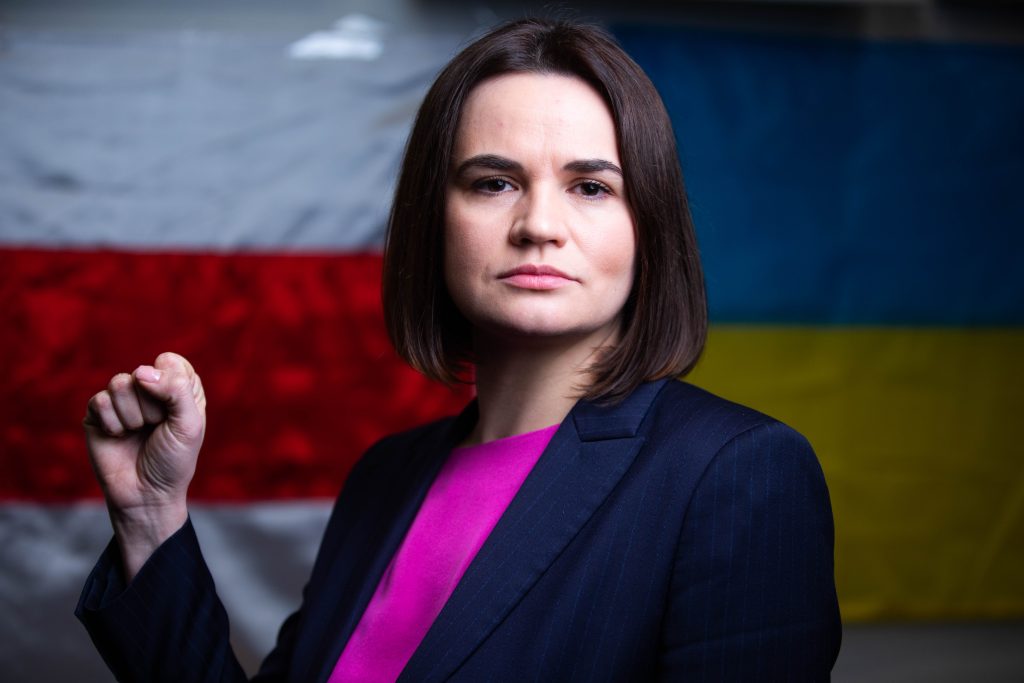
Norwegian Minister of Foreign Affairs Anniken Huitfeldt first broke the news of the name change in a personal call with the exiled leader of Belarus’s democratic opposition, Sviatlana Tsikhanouskaya (pictured), on the eve of this year’s International Day of Solidarity with Belarus, which is marked annually on May 29. “Although there are both historical and linguistic arguments for writing “Hviterussland,” it is ultimately a political issue,” stated Huitfeldt. “We do this as a sign of solidarity with the Belarusian democratic movement. They will not be a continuation of Russia.”

Belarusian opposition leader Sviatlana Tsikhanouskaya welcomed the Norwegian gesture, which she praised as “more than just symbolic.” Belarusian journalist Hanna Liubakova shared this sentiment, commentingthat she saw Norway’s step as a sign of growing international recognition that referring to modern Belarus as “White Russia” was anachronistic and misleading. 

Subscribe for the latest from BelarusAlert

Receive updates for events, news, and publications on Belarus from the Atlantic Council.

Norway’s decision to begin using the name Belarus in official documents is part of a regional trend, with fellow Scandinavian countries Sweden and Denmark also making similar switches from their own outdated versions of “White Russia” in recent years. This reflects broader changes in international perceptions of the country following a 2020 pro-democracy uprising that thrust Belarus into the global headlines following decades spent in the post-Soviet shadows.

For much of the post-Soviet period, Belarus was perhaps best known internationally as the last dictatorship in Europe. It owed this dubious honor to Belarusian President Alyaksandr Lukashenka, who won election in 1994 before proceeding to dismantle the country’s fledgling democracy and reestablish a Soviet-style one-party state.  

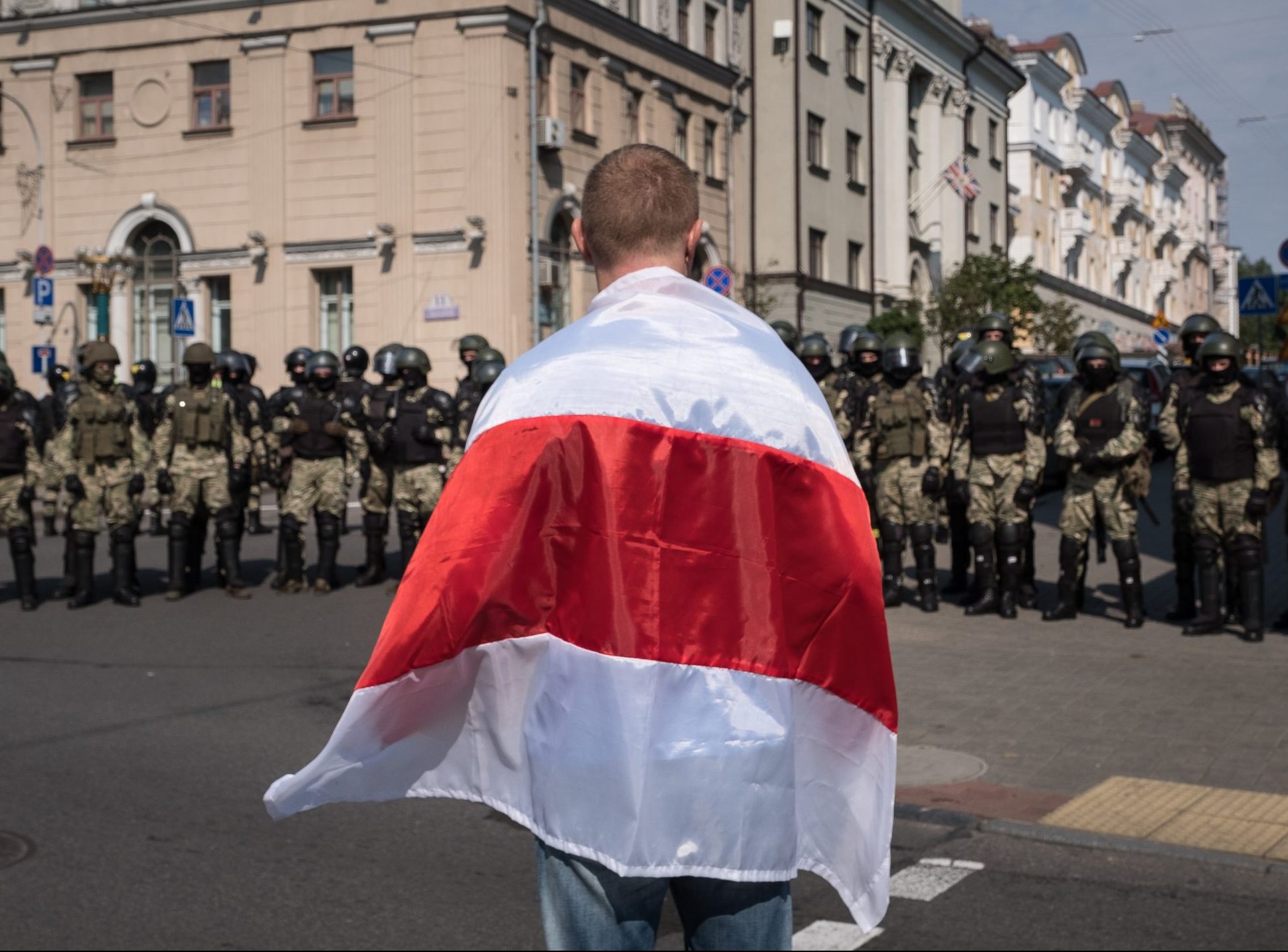
For over a quarter of a century, Lukashenka was able to successfully suppress all domestic opposition and strengthen his grip on power while maintaining close ties with neighboring Russia. He faced the first serious challenge of his entire reign in August 2020 when heavy-handed attempts to rig the country’s presidential election served as a focal point for simmering public frustrations, leading to the eruption of mass protests across the country on the evening of the vote.

This pro-democracy protest movement gained momentum in subsequent weeks and caught the world’s imagination. It dominated international news coverage for much of late summer and early fall 2020, with many seeing the unprecedented people power uprising as the latest chapter in the slow-motion collapse of the Soviet Empire. The Lukashenka regime looked destined to fall until Russia intervened with a financial lifeline and a promise to send in the Russian security services if necessary.

Lukashenka has remained entirely dependent on Russian support ever since. In return, he has gradually surrendered his country’s sovereignty to the Kremlin, allowing Moscow to expand its political, economic, and military footprints in the country. In February 2022, Lukashenka permitted Putin to use Belarus as a platform for the invasion of Ukraine. Thousands of Russian troops flooded across the Belarusian border into Ukraine as part Putin’s failed attempt to seize Kyiv. The country has also served as a launch pad for the bombardment of Ukrainian towns and cities.


Postagem em destaque

AUTOBIOGRAFIA DE UM FORA-DA-LEI, 13: OS MILITARES, MEUS PRUSSIANOS TROPICAIS - Paulo Roberto de Almeida (Revista Será?)

 Revista Será? , ANO XIV |  AUTOBIOGRAFIA DE UM FORA-DA-LEI, 13: OS MILITARES, MEUS PRUSSIANOS TROPICAIS Paulo Roberto de Almeida  Na série ...