terça-feira, 21 de fevereiro de 2023

Alexey Navalny on the eve of first year of the Russia's agression war against Ukraine: a political platform (20 Feb 2023)

@navalny
 

On the eve of the anniversary of the full-scale and unprovoked invasion of Ukraine by Russian troops, I have summarized the political platform of mine and, hopefully, of many other decent people.

15 theses of a Russian citizen who desires the best for their country.

What was all this about and what are we dealing with now? 1. President Putin has unleashed an unjust war of aggression against Ukraine under ridiculous pretexts.
He is desperately trying to make this a "people's war," seeking to turn all Russian citizens into his accomplices, but his attempts are failing. There are almost no volunteers for this war, so Putin's army has to rely on convicts and forcibly mobilized people.

2. The real reasons for this war are the political and economic problems within Russia, Putin's desire to hold on to power at any cost, and his obsession with his own historical legacy. He wants to go down in history as "the conqueror tsar" and "the collector of lands."

3. Tens of thousands of innocent Ukrainians have been murdered, and pain and suffering has befallen millions more. War crimes have been committed. Ukrainian cities and infrastructure have been destroyed.

4. Russia is suffering a military defeat. It was the realization of this fact that changed the rhetoric of the authorities from claims that "Kyiv will fall in three days" to hysterical threats of using nuclear weapons should Russia lose.

The lives of tens of thousands of Russian soldiers were needlessly ruined. The ultimate military defeat may be delayed at the cost of the lives of hundreds of thousands more mobilized soldiers, but it is generally inevitable.
The combination of aggressive warfare, corruption, inept generals, weak economy, and heroism and high motivation of the defending forces can only result in defeat.
The Kremlin's deceitful and hypocritical calls for negotiations and ceasefire are nothing more than a realistic assessment of the prospects of further military action.
What is to be done? 5. What are Ukraine's borders? They are similar to Russia's - they’re internationally recognized and defined in 1991. Russia also recognized these borders back then, and it must recognize them today as well. There is nothing to discuss here.
Almost all borders in the world are more or less accidental and cause someone's discontent. But in the twenty-first century, we cannot start wars just to redraw them. Otherwise, the world will sink into chaos.

6. Russia must leave Ukraine alone and allow it to develop the way its people want. Stop the aggression, end the war and withdraw all of its troops from Ukraine. Continuation of this war is just a tantrum caused by powerlessness, and putting an end to it would be a strong move.

7. Together with Ukraine, the U.S., the EU and the UK, we must look for acceptable ways to compensate for the damage done to Ukraine.
One way to achieve this would be lifting the restrictions imposed on our oil and gas, but directing part of the income Russia receives from hydrocarbon exports towards reparations. Of course, this should only be done after the change of power in Russia and the end of the war.

8. War crimes committed during this war must be investigated in cooperation with international institutions.

Why would stopping Putin's aggression benefit Russia? 9. Are all Russians inherently imperialistic? This is nonsense. For example, Belarus is also involved in the war against Ukraine.
Does this mean that the Belarusians also have an imperial mindset? No, they merely also have a dictator in power.
There will always be people with imperial views in Russia, just like in any other country with historical preconditions for this, but they are far from being the majority.
There is no reason to weep and wail about it. Such people should be defeated in elections, just as both right-wing and left-wing radicals get defeated in developed countries.

10. Does Russia need new territories? Russia is a vast country with a shrinking population and dying out rural areas. Imperialism and the urge to seize territory is the most harmful and destructive path.
Once again, the Russian government is destroying our future with its own hands just in order to make our country look bigger on the map. But Russia is big enough as it is. Our objective should be preserving our people and developing what we have in abundance.

11. For Russia, the legacy of this war will be a whole tangle of complex and, at first glance, almost unsolvable problems. It is important to establish for ourselves that we really want to solve them, and then begin to do so honestly and openly.
The key to success lies in understanding that ending the war as soon as possible will not only be good for Russia and its people, but also very profitable.
This is the only way to start progressing toward removal of sanctions, return of those who left, restoration of business confidence, and economic growth.

12. Let me re-emphasize that after the war, we will have to reimburse Ukraine for all the damage caused by Putin's aggression.
However, the restoration of normal economic relations with the civilized world and the return of economic growth will allow us to do so without interfering with the development of our country.We have hit rock bottom, and in order to resurface, we need to bounce back from it. This would be both ethically correct, rational, and profitable.

13. We need to dismantle the Putin regime and its dictatorship. Ideally, through conducting general free elections and convocating the Constitutional Assembly.

14. We need to establish a parliamentary republic based on the alternation of power through fair elections, independent courts, federalism, local self-governance, complete economic freedom and social justice.

15. Recognizing our history and traditions, we must be part of Europe and follow the European path of development. We have no other choice, nor do we need any.

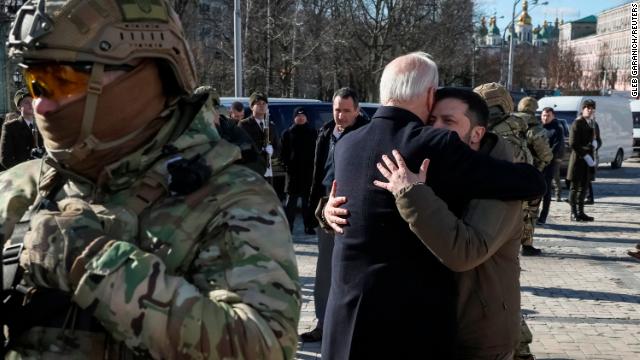
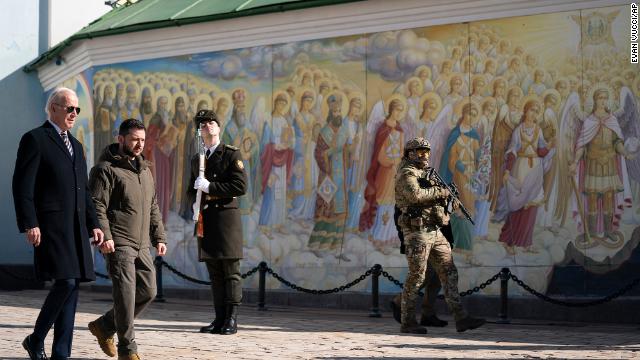
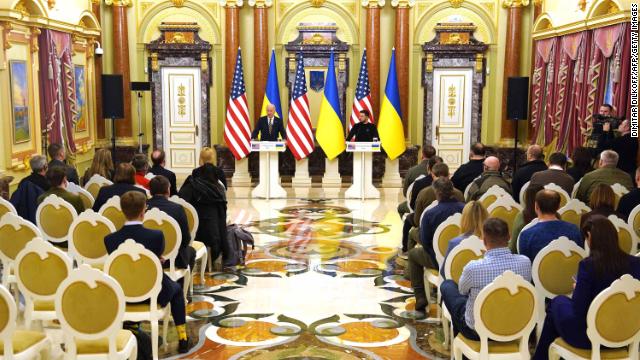
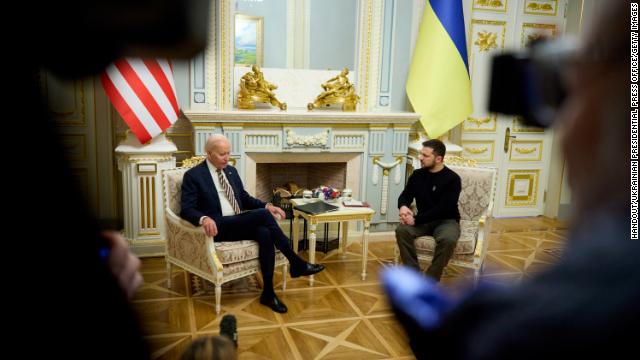
Presidents' Day ... in Ukraine - Stephen Collinson, Caitlin Hu and Shelby Rose (CNN Meanwhile in America)

CNN, February 20, 2023

segunda-feira, 20 de fevereiro de 2023

A metamorfose do comunismo na China, livro de Xulio Rios - resenha de Rubén Darío Guzzetti

Un libro para leer, dialogar y reflexionar Rubén Darío Guzzetti

In PublicacionesSecciones by Xulio Ríos

https://politica-china.org/secciones/un-libro-para-leer-dialogar-y-reflexionar

El conjunto de generaciones que tenemos el privilegio de vivir estos tiempos estamos atravesados por una enorme cantidad de transformaciones excepcionalmente particulares agigantadas por su aceleración y profundidad. Desde los meteóricos cambios científicos y tecnológicos hasta los no menos importantes sociales y culturales, van transformando nuestra vida diaria haciendo muy difícil metabolizarlos.

Tratar de comprender que es lo que pasa, porque está ocurriendo lo que nos modifica nuestro entorno y a nosotros mismos, ha pasado de ser una opción a una necesidad y de esta a una obligación, aunque no sea mas que para sobrevivir.

La actualidad nos interpela a hacer horas extras como ciudadanos de este mundo.

Uno de los temas que ha sorprendido a la humanidad en el último medio siglo es la presencia internacional de un país que supo ser primera potencia en siglos anteriores pero que había caído en un abismo sometido por occidente. Sin lugar a dudas China sorprendió al mundo a partir de la segunda mitad del siglo XX. Casi todo lo que consumimos, en cualquier rincón del mundo, en alguna instancia de la cadena global de valor pasó por China.

Surgieron así cantidades de interpretaciones para dar explicación a infinidad de interrogantes que surgieron con el fenómeno chino:

¿Cómo fue posible que la población de uno de los dos países más poblados, que hasta hace 50 años se sostenía con dos comidas diarias a base de arroz hoy cuente con mas de 500 millones de personas en la categoría de clase media con la proyección de llevar esa cifra a 1000 millones en el año 2025?

¿Como hicieron para pasar de tener el 80% de analfabetos en 1949 a contar hoy con más de cien millones de universitarios?

¿Cómo hicieron para lograr poner fin a la pobreza extrema en noviembre del 2020 cuando los países mas desarrollados no lo logran y por el contrario esta crece?

¿Cómo fue que pasaron de tener un ingreso per cápita de U$S 180 en 1949 a 12.000, con grandes posibilidades de superar el piso de 12.600 y entrar a la categoría de país de altos ingresos, ¿en los próximos 2 años?

¿Cómo lograron pasar de ser una de las economías mas atrasadas a ser la segunda por PBI nominal y la primera en paridad de poder de compra, desplazando del podio a EE.UU., en 2014, después de 142 años?

En fin, podríamos sintetizar: ¿Cómo hicieron los chinos?, ¿qué hicieron los chinos?

El profesor Xulio Ríos, que dedicó una gran parte de su vida al estudio del proceso chino, aprovechando la celebración del primer centenario del Partido Comunista Chino, el 23 de julio de 2021, nos presentó una magistral obra que nos permite encontrar muchas respuestas al resurgimiento de la nación asiática.

El profesor Ríos, en las 435 páginas de su libro “La Metamorfosis del Comunismo en China”, no solo nos responde a muchos de estos interrogantes, sino que con una prosa entretenida y una objetividad envidiable nos refleja los distintos aportes de cada una de las cinco generaciones

de revolucionarios que gobernaron el país, los errores cometidos y la capacidad del partido para salir airoso de cada dificultad con una flexibilidad y capacidad política notable.

El profesor también pone luz sobre ciertas contradicciones en el seno de la organización como por ejemplo entre ideología y economía, entre izquierdistas-conservadores y occidentales-liberales, así como en la gestión de Xi Jinping el partido logró una síntesis virtuosa entre el yin y el yang, representativos de la cultura y la civilización milenaria, y la dialéctica del marxismo leninismo.

La obra también nos explica como el partido, a pesar de los obstáculos y equivocaciones nunca se apartó de sus objetivos fundacionales: revitalizar la nación china, luchar por su integridad territorial y trabajar incansablemente por la felicidad del pueblo.

Además, el profesor Ríos explica el ingreso de la RPCh en el escenario internacional y su propuesta de la Nueva Ruta de la Seda y de un futuro compartido para la humanidad.

Esta obra incursiona en evidenciar el conflicto actual entre las principales potencias y el proyecto estratégico de China en consonancia con su tradición e idiosincrasia.

Tampoco están ajenos en el libro los desafíos que enfrenta la actual dirigencia del partido, como se preparan, el fuerte intento de ir a una sociedad regida por leyes y con una profundización de la democracia entendida de una manera distinta a la occidental.

En fin, la obra del profesor Ríos es imprescindible para comprender un fenómeno muy particular, donde en Occidente estamos muy ajenos al mismo y lo solemos interpretar erróneamente con nuestras categorías.

Sin comprender qué está pasando en China es muy difícil entender qué pasa hoy en el mundo, cuáles son sus disputas y porqué ocurren. Para lograr dar algunos pasos en ese conocimiento es imprescindible leer “La Metamorfosis del Comunismo en China”, un manual de consulta permanente.

Uno de los libros que al lector lo deja reflexionando y con mucho más interés en el tema que al principio de su lectura.

Buenos Aires, 18 de Febrero de 2023

Rubén Darío Guzzetti

Director Instituto Argentino de Estudios Geopolíticos

Miembro del Instituto de Estudios de América Latina

Miembro del Centro y Formación Marxista Héctor Agosti


Nem o Banco Central, nem o governo definem a taxa de juros, mas sim o credor - Ricardo Bergamini

 Nem o Banco Central, nem o governo definem a taxa de juros, mas sim o credor

Ricardo Bergamini


Preados Senhores


Abaixo provas cabais e irrefutáveis da afirmação do preâmbulo, senão vejamos:


1 - Em 2020, o governo promoveu o “OSCAR DE EFEITOS ESPECIAIS” e manteve a TAXA SELIC em 2,00% ao ano, mas os credores, de forma soberana, rolaram a dívida do governo ao custo de 8,37% ao ano. Tendo sido o IPCA de 4,52% ao ano, o ganho real dos investidores foi de 3,85% ao ano.  


- Em 2020, 57,74% do mercado de crédito - R$ 2.319,9 bilhões (31,31% do PIB) - com recursos livres com juro médio de 25,5% ao ano. 


2 - Em 2022, o governo manteve a TAXA SELIC em 13,75% ao ano, mas os credores, de forma soberana, rolaram a dívida do governo ao custo de 10,21% ao ano. Tendo sido o IPCA de 5,79% ao ano o ganho real dos investidores foi de 4,42% ao ano.  


- Em 2022, 59,61% do mercado de crédito - R$ 3.175,0 bilhões (32,3% do PIB) - com recursos livres com juro médio de 42,0 % ao ano. 


Cabe destacar que de 2011/2018 governos (DILMA/TEMER) a taxa média de ganho real dos investidores foi de 5,93% ao ano.


O que não se debate no Brasil é a diferença entre os juros pagos pelo governo na rolagem da sua dívida e o pago pelo mercado de crédito livre. 


- Em 2020, o governo pagou 8,37% ao ano e o mercado 25,5% ao ano.


- Em 2022, o governo pagou 10,21% ao ano e o mercado 42,0% ao ano.


Fonte - ME


Diferença entre juros SELIC e juros de longo prazo – ME


Base: dezembro de 2022

Ano

1

2

3

4

5

6

7

2011

2.600,7

4.376,4

59,44

11,00

12,83

6,50

6,33

2012

2.887,4

4.814,8

59,97

7,25

11,55

5,84

5,71

2013

3.059,6

5.331,6

57,39

10,00

11,32

5,91

5,41

2014

3.392,8

5.778,9

58,71

11,75

11,84

6,41

5,43

2015

4.055,7

5.995,8

67,64

14,25

16,07

10,67

5,40

2016

4.635,7

6.269,3

73,94

13,75

12,02

6,29

5,73

2017

5.218,8

6.583,3

79,27

7,00

10,29

2,95

7,34

2018

5.671,4

7.004,1

80,97

6,50

9,86

3,75

6,11

2019

6.137,6

7.256,9

84,58

4,50

8,71

4,31

4,40

2020

6.998,6

7.445,7

94,00

2,00

8,37

4,52

3,85

2021

7.643,0

8.599,8

88,87

9,25

8,91

10,06

-1,15

20/22

8.106,8

9.784,8

82,85

13,75

10,21

5,79

4,42

Legenda: 1 – Estoque da dívida da União - R$ Bilhões; 2 – Valor do PIB em R$ bilhões; 

3 – Dívida % do PIB; 4 - Taxa SELIC % ao ano; 5 - Custo de rolagem da dívida % ao ano;

6 - IPCA% ao ano; 7 - Ganho real do investidor % ao ano. 


Com base nas informações acima colocadas podemos afirmar que o debate de juros no Brasil é um manicômio amplo, geral e irrestrito.


Que Deus tenha piedade da abissal escuridão e ignorância reinante no Brasil (Ricardo Bergamini)

Postagem em destaque

Livro Marxismo e Socialismo finalmente disponível - Paulo Roberto de Almeida

Meu mais recente livro – que não tem nada a ver com o governo atual ou com sua diplomacia esquizofrênica, já vou logo avisando – ficou final...