sexta-feira, 31 de janeiro de 2025

The Case for Reglobalization - Roger W. Ferguson, Jr., Maximilian F. Hippold (Foreign Affairs)

 The Case for Reglobalization

Turning Inward Won’t Secure America’s Interests

Roger W. Ferguson, Jr., and Maximilian F. Hippold

Foreign Affairs, January 30, 2025


ROGER W. FERGUSON, JR., is the Steven A. Tananbaum Distinguished Fellow for International Economics at the Council on Foreign Relations.

MAXIMILIAN F. HIPPOLD is a Research Associate at the Council on Foreign Relations.


After years of promoting globalization and free trade agreements, in the past decade, U.S. policymakers have coalesced around an economic agenda that emphasizes industrial policy and supply chain security. This pivot was in large part a reaction to the downsides of economic interdependence. Although the overall economic benefits of globalization are undisputed, they have been unevenly distributed. In many parts of the United States, unfettered international trade brought a decline of domestic industry and the loss of well-paid manufacturing jobs. Entire regions, especially rural and predominantly industrial ones, were left behind. The supply chain issues that emerged during the COVID-19 pandemic further highlighted the dangers of interdependence. As a result, both Republicans and Democrats have turned to industrial policy and trade restrictions to create more domestic manufacturing jobs and reduce the United States’ reliance on other countries.

But U.S. policymakers risk overcorrecting. By adopting a narrow focus on economic security, they could miss opportunities to court countries in the global South that want economic relationships with the United States. And with great-power competition heating up, now is not the time to look further inward. Instead, the United States needs to seek out ways to reinforce its existing relationships and build new ones in regions of strategic importance.

The Trump administration needs a policy that can balance both economic and geostrategic objectives. It must initiate a process of “reglobalization,” investing in industries that support U.S. supply chains in countries in the global South. Such measures are not the broad, often unpopular, and sometimes harmful free trade agreements of past U.S. administrations. They are targeted foreign investments that ultimately boost domestic manufacturing of high-end products. By adopting this approach, the new administration could both reindustrialize the United States and strengthen the web of partnerships it needs to compete with China, Russia, and other strategic rivals.

LOSING GROUND

A global power shift has changed the terms of U.S. alliances. The post–Cold War unipolar world, dominated by the United States, is becoming a multipolar one. No longer do countries naturally gravitate into Washington’s sphere of influence. Many countries, especially in the global South, are increasingly comfortable engaging with several major powers simultaneously. Vietnam, for instance, is a U.S. partner that also maintains close ties with both China and Russia. India is a member of the Quad (Quadrilateral Security Dialogue)—a grouping that includes Australia, India, Japan, and the United States—and is considered by Washington to be a strategic partner in countering Chinese influence in Asia. But India also works closely with Russia, including by purchasing discounted Russian oil and thus indirectly funding Moscow’s war in Ukraine. Turkey is a U.S. treaty ally as a fellow member of NATO, but it also signed a deal in 2018 to purchase a Russian antimissile defense system and more recently requested to join BRICS, the group whose early members included Brazil, Russia, India, China, and South Africa.

The United States and its closest allies, collectively, no longer represent the world’s largest economic bloc. The newly expanded BRICS, which now boasts ten members (the most recent additions are Egypt, Ethiopia, Indonesia, Iran, and the United Arab Emirates), account for more than a third of global GDP, surpassing the share of the G-7, which includes Canada, France, Germany, Italy, Japan, the United Kingdom, and the United States. And as other countries build international partnerships, they are driven not by a sense of shared values but by economic benefits. Many African countries, for instance, have recently increased their economic ties not only to China through its Belt and Road Initiative but also to Russia, Turkey, and the United Arab Emirates, which have made investments in ports, clean energy, mining, and more.

The United States, meanwhile, has increasingly turned its attention to domestic priorities. Washington is focused on revitalizing former manufacturing hubs and building capacity at home. There is bipartisan agreement on the need to create new manufacturing jobs, especially in parts of the country most affected by deindustrialization and production offshoring. In 2022, the U.S. Congress passed the CHIPS and Science Act, which allocates more than $58 billion to boost domestic production of computer chips and semiconductors, with broad support from both parties.

Trump needs a policy that can balance economic and geostrategic objectives.

Washington is not about to expand its foreign economic engagement with new free trade agreements, either. Neither party has an appetite for such deals, as demonstrated by strong bipartisan objection to the Trans-Pacific Partnership, which led to the U.S. withdrawal from the 12-country agreement in 2017, and stalled negotiations with the EU in 2016 over the Transatlantic Trade and Investment Partnership. President Donald Trump, after renegotiating the North American Free Trade Agreement in his first term, has suggested he might impose 25 percent tariffs on goods from Canada and Mexico ahead of the planned review of NAFTA’s successor, the U.S.-Mexico-Canada Agreement, next year. Tariffs have become a mainstay of U.S. policy, used to protect domestic industries from unfair competition, primarily from China, and to ensure that products vital for U.S. national security are produced domestically. President Joe Biden maintained many of the tariffs on Chinese goods that Trump put in place in his first term, and Biden imposed new import restrictions on Chinese electric vehicles and other green technologies.

If Washington continues to train its focus inward, however, it could jeopardize its ability to build relationships with countries in the global South that could help the United States advance other strategic aims. The same countries are already growing wary of aligning with Washington. The United States’ recent foreign policy missteps and the perception of double standards in its divergent responses to the wars and human suffering in Ukraine and Gaza have damaged the country’s reputation. Many countries have started to look more favorably toward other global and emerging powers, such as China, Russia, or the United Arab Emirates, as a result. With its diminished economic and cultural appeal hampering its ability to forge new partnerships, the United States risks allowing its adversaries to deepen their ties to nonaligned countries in ways that harm U.S. interests.

The consequences are already visible in Africa, where China in particular has made significant inroads. Under its Belt and Road Initiative, China has offered loans to and invested substantial sums in infrastructure projects in countries such as Angola, the Democratic Republic of the Congo, Kenya, Nigeria, Tanzania, and Zimbabwe. Beijing has gained access to ports and natural resources in return. Mining projects in Congo, Zimbabwe, and elsewhere have helped China secure control of almost 90 percent of the global processing of rare earths, which are needed to manufacture computer chips, semiconductors, and batteries. Although African-sourced critical minerals still only account for a moderate proportion of global production, the industry has huge potential. By neglecting to invest in its development, the United States and its allies could miss an opportunity to reduce their dependence on China for access to these resources.

China has similarly expanded its economic influence in Latin America. Through its infrastructure investments, such as a megaport in Peru and a hydroelectric plant in Ecuador, Beijing is now the region’s second-largest trading partner after the United States. And its influence is not always benign: in March 2023, China pressured Honduras to sever diplomatic relations with Taiwan in exchange for economic aid. Beijing has begun to extend its involvement in the region beyond economic ventures, too. In Argentina, for instance, China operates a deep space station that has raised concerns among U.S. defense officials about the possibility it could be used to track U.S. satellites.

TARGETED APPROACH

The Trump administration needs updated strategies to effectively compete with China for influence among nonaligned countries. Building relationships in Africa and Latin America is important not only to secure U.S. access to critical resources but also to increase the number of countries that are willing to help the United States advance its interests. And in the Indo-Pacific region, Washington must create new partnerships beyond its established alliances with Japan, the Philippines, and South Korea to curtail China’s rising economic and military influence.

But to forge those partnerships—as well as strengthen existing ones—the United States must offer economic benefits. As former United States Agency for International Development Administrator Samantha Power said at an event at the Council on Foreign Relations in December, “No matter where I go, no matter what continent, no matter what community even, the message is the same: we want trade, not aid.” The United States therefore needs to ensure that its focus on boosting domestic manufacturing of high-end products does not lead to a wholesale rejection of new foreign economic partnerships. Such partnerships can be mutually beneficial. By investing in industries abroad that can provide inputs for U.S. manufacturing, Washington can both strengthen its supply chains and deepen its ties to pivotal countries in the global South.

The new Trump team should start by identifying the alliances it should strengthen and the countries it should build new relationships with in Africa, Latin America, and the Indo-Pacific region. In Africa and Latin America, this could include countries that are rich in the natural resources used in battery or semiconductor production, such as Chile and Zimbabwe, or are in strategically important locations, such as Djibouti due to its access to the Red Sea. In the Indo-Pacific, the United States should prioritize deepening its partnerships with countries such as Indonesia, Vietnam, and others where it competes with China for economic influence, as well as with Pacific Island nations whose military cooperation could prove useful to Washington in the event of a conflict with Beijing over Taiwan or in the South China Sea.

To forge new partnerships, the United States must offer economic benefits.

Next, the administration should work with U.S. business leaders in critical domestic industries, such as semiconductor manufacturing and car production, to determine the raw or processed materials that can be sourced from priority countries. The U.S. government should then invest in these countries to improve infrastructure and build up industries that can feed directly into U.S. supply chains. The Biden administration’s recent investment in a railway project in Angola followed this logic: the route connects Angola with the Democratic Republic of the Congo and Zambia, facilitating the production of critical minerals used in batteries. But Washington should be making far more of these strategic investments. In Chile, for example, the United States can invest in the copper industry, which is vital for semiconductor manufacturing. It can finance mining projects in Indonesia, which has large reserves of nickel, a mineral used to produce batteries for electric vehicles and other green technologies. In Vietnam, the United States can invest in electronic manufacturing to diversify its supply chains in this sector away from China and Taiwan.

Additionally, the United States can leverage its influence in international financial institutions such as the International Monetary Fund and the World Bank to facilitate lending and investment in U.S. partner countries in the global South. The United States is the largest shareholder of the World Bank Group, and together with its closest allies, such as Germany, Japan, and the United Kingdom, it has an outsized influence when it comes to making policy changes and approving financial assistance packages. Washington could thus push for measures that increase the foreign investment and economic aid to its new or existing partners in the global South, adding to initial U.S. investments and boosting these countries’ long-term economic development. Other U.S. allies, including Japan, South Korea, and European countries, could also benefit from better access to new markets.

This approach is more targeted than the United States’ traditional economic aid, which has primarily focused on grants, humanitarian assistance, and trade programs. It does not just provide economic benefits to U.S. partners in the global South but also meets the United States’ economic and national security needs. With a commitment to reglobalization, carefully crafting trade and investment packages to build relationships with critical countries, Washington can strengthen its domestic industries, protect its supply chains, and enhance the partnerships it needs to advance other national security and geostrategic interests—all at once.

quinta-feira, 30 de janeiro de 2025

Charles III chora na cerimônia dos 80 anos de libertação de Auschwitz

Charles III chora na cerimônia dos 80 anos de libertação de Auschwitz

janeiro 27, 2025

As comemorações pelos 80 anos da libertação do campo de concentração e extermínio de Auschwitz-Birkenau reuniu sobreviventes do Holocausto e chefes de Estado nesta última segunda-feira de janeiro, 27, na pequena cidade situada ao oeste de Cracóvia, na Polônia. Compareceram à cerimônia, Andrzej Duda, Presidente da Polônia, a primeira-dama Agata Kornhauser-Duda, Philippe, Rei dos Belgas, a Rainha MathildeAlexander De Croo, Primeiro-Ministro Belga, Frederik X, Rei da Dinamarca, a Rainha Mary, Dom Felipe VI, Rei de Espanha, a Rainha Letizia, Charles III, Rei da Grã-Bretanha, Willem-Alexander, Rei dos Países Baixos, a Rainha Maxima, Emmanuel Macron, Presidente de França, a primeira-dama Brigitte MacronVolodymyr Zelensky, Presidente da Ucrânia, Justin Trudeau, Primeiro-Ministro do Canadá. Os chefes de Estado e de Governo da Alemanha fizeram-se presentes, o Presidente Frank-Walter Steinmeier e o Chanceler Olaf Scholz.

Durante a cerimônia o Rei Charles III chorou. O soberano é neto de personagens que lutaram contra o regime totalitário de Adolf Hitler: neto paterno da Princesa Alice da Grécia e Dinamarca, que salvou a vida de judeus e recebeu de Israel o título de Justo entre as Nações, e neto materno do Rei George VI e da Rainha Elizabeth, que continuaram a residir no Palácio de Buckingham mesmo debaixo dos intensos bombardeios aéreos sofridos pelo povo de Londres durante a II Guerra Mundial. A presença do soberano britânico possui um forte simbolismo. Charles III é o primeiro chefe de Estado do Reino Unido a visitar Oświęcim (Auschwitz é como os alemães denominam o local).

Os crimes com todos os requintes de crueldade cometidos pelo Nazistas, liderados por Hitler, jamais poderão ser esquecidos ou relativizados. Cerca de 3 milhões de pessoas, a maioria judeus, foram mortas no complexo de Auschwitz. Por ação das câmeras de gás, fome ou doenças. Fingir que nada ocorreu é no mínimo crime histórico.


Rei Charles III ao lado da Rainha Maxima e do Rei Frederik X  


Rei Charles III e o Presidente da Ucrânia

 
Sobrevivente do Holocausto

 
Marian Turski, Sobrevivente do Holocausto

 
 Leon Weintraub, Sobrevivente do Holocausto

 
Janina Iwanska, Sobrevivente do Holocausto

 
Philippe e Mathilde, Rei e Rainha dos Belgas

 
Primeiro-Ministro do Canadá e  Ronald S. Lauder, Presidente do Congresso Mundial Judaico


Rei e Rainha dos Países Baixos com o Rei Charles III 


Cartão manuscrito do Rei Charles III

 
Pole Wladyslaw Osik, Sobrevivente do Holocausto

 
Prefeito de Cracóvia, Aleksander Miszalski, cumprimenta o Rei Charles III 

 
Rabino Sir Ephraim Mirvis e o Rei Charles III

 
Rei Charles III durante visita ao Centro Comunitário Judaico de Cracóvia


Leia mais:

https://tarsomarketing.blogspot.com/2022/01/dia-da-liberdade-e-da-memoria.html

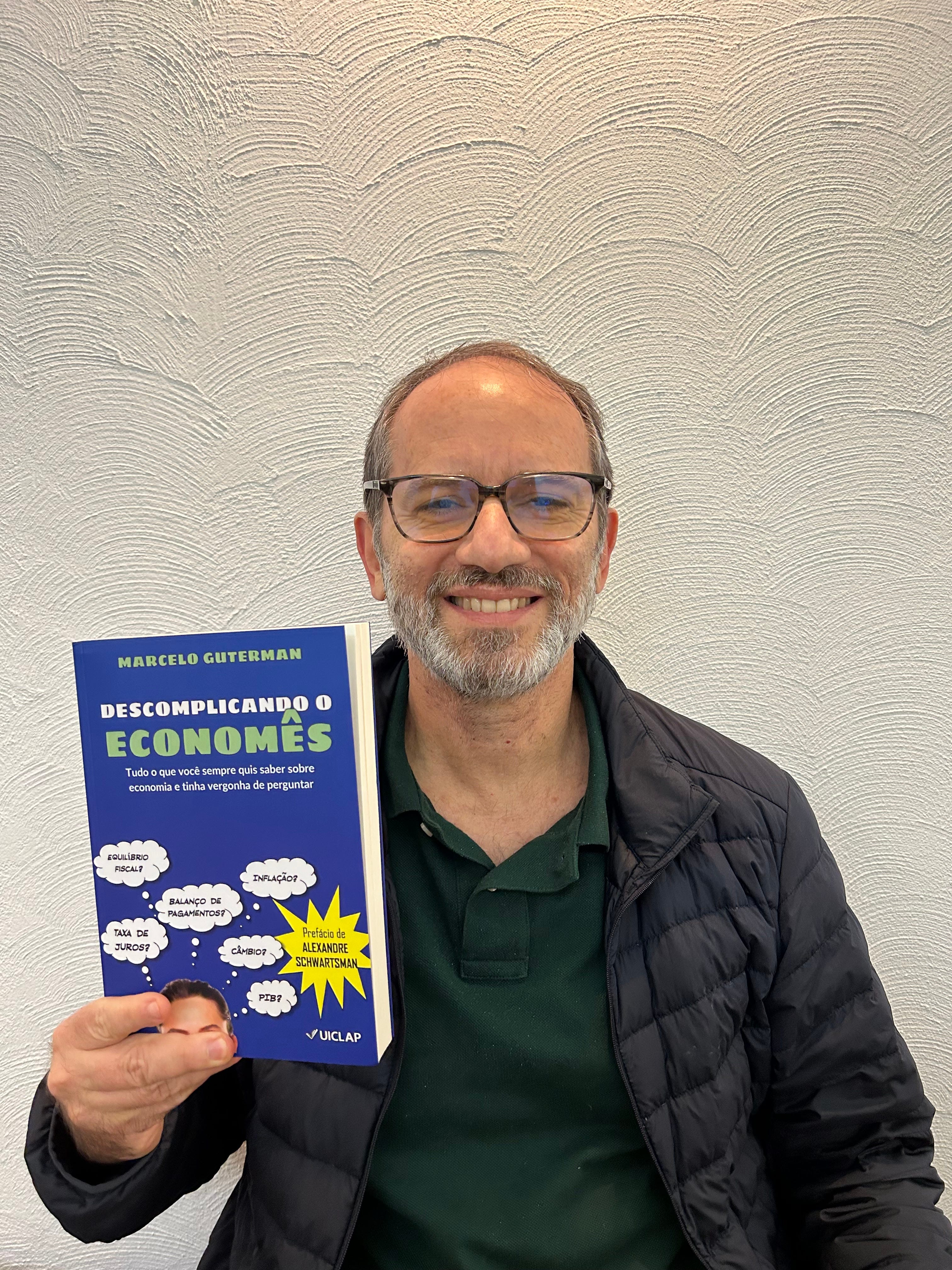
Falta de credibilidade de quem? A crise do IBGE e a perda de credibilidade do governo - Marcelo Guterman

 Falta de credibilidade de quem?

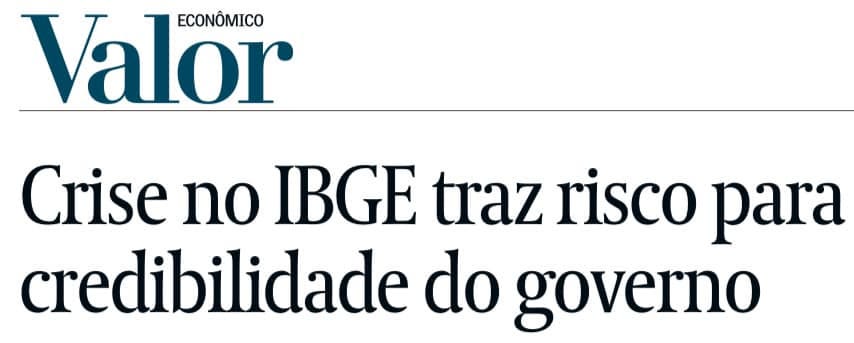
Editorial do Valor chama a atenção para uma novela que vem se desenvolvendo há meses, e que já ameaça se transformar na próxima grande crise do governo Lula: a credibilidade do IPCA junto à população.

Não que isso seja propriamente uma novidade. Alguns anos atrás, negociando um contrato de aluguel, pedi a troca do índice de reajuste de IGPM para IPCA. O corretor externou a sua desconfiança em relação a um índice “calculado pelo governo”, mas seguiu com o meu pedido junto ao proprietário, e o índice acabou sendo modificado. Nessa ocasião, pude perceber o custo de termos governos com pouca credibilidade ao longo de anos.

Blog do Marcelo Guterman é uma publicação apoiada pelos leitores. Para receber novos posts e apoiar meu trabalho, considere tornar-se uma assinatura gratuita ou uma assinatura paga.

Há uma falta generalizada de conhecimento de como os índices de inflação são calculados. Trata-se de médias calculadas em várias cidades do país, considerando uma cesta de consumo de referência. Só por muita coincidência o índice medirá a nossa inflação pessoal. Além disso, tendemos a prestar mais atenção aos preços que sobem do que aos preços que caem, reforçando a ideia de que a nossa inflação é maior do que a “oficial”.

Por tudo isso, quanto menos o IBGE estiver na ribalta, melhor. Trata-se de tema sensível, em que discussões públicas dificilmente resultam em boa coisa. Mas Lula, fiel à ideologia petista, apontou o tarefeiro Márcio Pochmann para liderar o instituto. Sua passagem pelo IPEA, entre 2007 e 2012, foi marcado pelas mesmas polêmicas que agora vemos no IBGE. Pode-se argumentar que a revolta dos técnicos é mero corporativismo contra iniciativas que podem fazer com que se reduza o escopo de seu trabalho, o que é verdade. Pouco importa. O fato é que tem barulho, uma especialidade de Pochmann, a última coisa de que o IBGE precisa, neste ou em qualquer momento.

Pessoalmente não tenho nenhuma desconfiança sobre o cálculo do IPCA. Trata-se de algo facilmente verificável, pois há vários outros índices sendo calculados por entidades privadas e que servem como checagem do índice oficial. Além disso, os próprios funcionários do IBGE denunciariam qualquer tentativa de manipulação, o que não ocorreu até o momento, apesar da desinteligência envolvendo Pochmann.

A questão, no entanto, não é essa. A questão é de percepção. O governo não tinha a intenção de impor um imposto sobre o PIX, mas um aperto do torniquete sobre essas transações foi o suficiente para que a história da “taxação do PIX” pegasse. Da mesma forma, não creio que o governo tenha a intenção de manipular índices. Mas o ruído em torno do IBGE é prato feito para esse tipo de especulação. Nesse sentido, acho que o título do editorial está errado. O correto seria dizer “Falta de credibilidade do governo traz risco para o IBGE”. Seria mais conforme à realidade do atual governo.

Blog do Marcelo Guterman é uma publicação apoiada pelos leitores.

How Trump’s Anti-Globalism Could Backfire - Harold James (Project Syndicate)

 How Trump’s Anti-Globalism Could Backfire


HAROLD JAMES


Project Syndicate, Jan 27, 2025


America's heavy dependence on global capital is potentially a big vulnerability. If foreign inflows were to dry up in response to new tariffs, corporate tax policies, a strong dollar, or other policy decisions, Americans would have to consume less, which would be experienced as a decline in their standard of living.


PRINCETON – While US President Donald Trump has left no doubt about his love of tariffs, the world is still waiting to see precisely what he will do. He has named China, Canada, and Mexico as his first targets, but it remains to be seen whether he wants a grand slam, or more conditional measures linked to other policy issues (such as acquiring TikTok). For now, the only certainty is that his administration will use tariffs to extract concessions where it can.

But trade and exchange-rate policies are generally handled by different agencies – the Departments of Commerce and the Treasury, respectively – and conflict has frequently been a feature of their interactions. In the 1930s, the world ended up deeply divided because trade negotiators claimed that they could do nothing until exchange rates were fixed, while monetary officials argued that no exchange-rate settlement was possible until there had been a general opening of trade. In the event, protectionism escalated.

Complicating matters further, another mechanism has since come to the fore: the balance of payments. Since a country with a large trade deficit, like the United States, must pay for its imports somehow, it relies on foreigners to buy its securities or invest in its companies. These inflows of foreign funds to the US are running at very high levels, because Americans do not save very much. The country imports savings from the rest of the world to pay for its trade deficit. If it did not, Americans would have to consume less, which would be experienced as a decline in their standard of living.

Higher tariffs jeopardize this arrangement, because the US needs foreign investment to drive its future growth. Former President Joe Biden understood that foreign capital was necessary to “build back better,” and Trump should know that he cannot deliver his promised “golden age” without it. Perhaps that is why some of his first guests in the White House were Masayoshi Son of the Japanese investment giant SoftBank, the Chairman of Oracle, and the CEO of OpenAI, the “big money and high quality people” behind a new $100 billion venture (Stargate) to build AI infrastructure.

The irony should be obvious. Trump’s bid to reclaim sovereignty and usher in a “new era of national success” depends on the same combination of technology and globalized finance that eroded the American middle class and turned many Americans into Trump voters in the first place. But this dependence on global capital is not just ironic; it also leaves America vulnerable. If the foreign money were to dry up, Trump’s promised miracle would become a nightmare. 

One early warning would be if bond markets grew anxious about America’s capacity to repay the large debt it has accumulated. Since 2022, when UK Prime Minister Liz Truss made a similar gamble on growth, the bond market has returned as a force that even Americans cannot ignore. The “exorbitant privilege” of issuing the main global reserve currency does not mean that you can do absolutely anything. Market sentiment can shift, and when it does, it is usually quite dramatic – as in 1931 or 1971. Credibility can fall victim to suspicion and doubt overnight, especially in a world where the US dollar has been weaponized for various political ends.

Foreign funding also could decline if the bright future that has been promised suddenly seems over-hyped, or if the technology disappoints. Many investors already worry that today’s sky-high valuations for tech stocks may indicate a bubble. A big bet on this potential new engine of growth will require vast investments, but if the bubble bursts, plenty of projects will become stranded assets.

Yet another reason that foreign funding could end is that certain governments intervene to stop their countries’ citizens and firms from investing in the US. This is one potential response to a new trade war or a strong dollar regime. If French wine, German cars, or Chinese cars, aircraft, and solar panels cannot be sold competitively in America, those governments might start weighing their options, and figures like Son could face more hurdles in trying to bring jobs and investment to the US.

In fact, one of the easiest ways for governments to affect cross-border capital flows is to revise how foreign investments are taxed. With US tech giants already complaining to Trump about the unfavorable tax treatment that they receive elsewhere, notably in Europe, tax policy could become yet another weaponized issue. The OECD’s negotiated global corporate minimum tax is clearly under threat, since Trump and congressional Republicans seem eager to cut corporate taxes as much as they can.

If they do, Europeans may have even more reasons to retaliate by increasing taxes not only on foreign companies in Europe, but also on their own corporations’ and citizens’ investments in the US. Doing so could divert some European funds back to Europe, while making it even more difficult for the US to balance its current account.

Economic fashions are contagious. It is only a matter of time before someone follows Trump’s own logic and offers a plan to “Make Europe Great Again.” A US debt crisis could be the perverse result of his administration’s campaign against globalism.


Harold James is Professor of History and International Affairs at Princeton University. A specialist on German economic history and on globalization, he is a co-author of The Euro and The Battle of Ideas, and the author of The Creation and Destruction of Value: The Globalization Cycle, Krupp: A History of the Legendary German FirmMaking the European Monetary Union, The War of Words, and, most recently, Seven Crashes: The Economic Crises That Shaped Globalization (Yale University Press, 2023).


quarta-feira, 29 de janeiro de 2025

John Maynard Keynes: “An Open Letter to President Roosevelt” (1933)

An Open Letter to President Roosevelt

By John Maynard Keynes (December 1933)


Dear Mr President,

You have made yourself the Trustee for those in every country who seek to mend

the evils of our condition by reasoned experiment within the framework of the

existing social system. If you fail, rational change will be gravely prejudiced

throughout the world, leaving orthodoxy and revolution to fight it out. But if you

succeed, new and bolder methods will be tried everywhere, and we may date the

first chapter of a new economic era from your accession to office. This is a

sufficient reason why I should venture to lay my reflections before you, though

under the disadvantages of distance and partial knowledge.


(...)


Read the entire letter here: 


https://www.academia.edu/127346912/An_Open_Letter_to_President_Roosevelt_1933_John_Maynard_Keynes


Eu sei, mas não devia, de Marina Colasanti, Rebeca Fuks - via Mauricio David

 Poesia | Eu sei, mas não devia, de Marina Colasanti


Marina Colasanti morreu ontem à noite. Vai nos fazer muita falta...Era casada com o poeta mineiro Affonso Romano de Sant’Anna ( que hoje, com os mesmos 87 anos com que faleceu Marina, sofre da doença de Alzenheimer. Minha nossa !, como é triste o fim da vida...)

Mauricio David


Eu sei, mas não devia, de Marina Colasanti 


Eu sei que a gente se acostuma. Mas não devia.

A gente se acostuma a morar em apartamentos de fundos e a não ter outra vista que não as janelas ao redor. E, porque não tem vista, logo se acostuma a não olhar para fora. E, porque não olha para fora, logo se acostuma a não abrir de todo as cortinas. E, porque não abre as cortinas, logo se acostuma a acender mais cedo a luz. E, à medida que se acostuma, esquece o sol, esquece o ar, esquece a amplidão.

A gente se acostuma a acordar de manhã sobressaltado porque está na hora. A tomar o café correndo porque está atrasado. A ler o jornal no ônibus porque não pode perder o tempo da viagem. A comer sanduíche porque não dá para almoçar. A sair do trabalho porque já é noite. A cochilar no ônibus porque está cansado. A deitar cedo e dormir pesado sem ter vivido o dia.

A gente se acostuma a abrir o jornal e a ler sobre a guerra. E, aceitando a guerra, aceita os mortos e que haja números para os mortos. E, aceitando os números, aceita não acreditar nas negociações de paz. E, não acreditando nas negociações de paz, aceita ler todo dia da guerra, dos números, da longa duração.

A gente se acostuma a esperar o dia inteiro e ouvir no telefone: hoje não posso ir. A sorrir para as pessoas sem receber um sorriso de volta. A ser ignorado quando precisava tanto ser visto.

A gente se acostuma a pagar por tudo o que deseja e o de que necessita. E a lutar para ganhar o dinheiro com que pagar. E a ganhar menos do que precisa. E a fazer fila para pagar. E a pagar mais do que as coisas valem. E a saber que cada vez pagar mais. E a procurar mais trabalho, para ganhar mais dinheiro, para ter com que pagar nas filas em que se cobra.

A gente se acostuma a andar na rua e ver cartazes. A abrir as revistas e ver anúncios. A ligar a televisão e assistir a comerciais. A ir ao cinema e engolir publicidade. A ser instigado, conduzido, desnorteado, lançado na infindável catarata dos produtos.

A gente se acostuma à poluição. Às salas fechadas de ar condicionado e cheiro de cigarro. À luz artificial de ligeiro tremor. Ao choque que os olhos levam na luz natural. Às bactérias da água potável. À contaminação da água do mar. À lenta morte dos rios. Se acostuma a não ouvir passarinho, a não ter galo de madrugada, a temer a hidrofobia dos cães, a não colher fruta no pé, a não ter sequer uma planta.

A gente se acostuma a coisas demais, para não sofrer. Em doses pequenas, tentando não perceber, vai afastando uma dor aqui, um ressentimento ali, uma revolta acolá. Se o cinema está cheio, a gente senta na primeira fila e torce um pouco o pescoço. Se a praia está contaminada, a gente molha só os pés e sua no resto do corpo. Se o trabalho está duro, a gente se consola pensando no fim de semana. E se no fim de semana não há muito o que fazer a gente vai dormir cedo e ainda fica satisfeito porque tem sempre sono atrasado.

A gente se acostuma para não se ralar na aspereza, para preservar a pele. Se acostuma para evitar feridas, sangramentos, para esquivar-se de faca e baioneta, para poupar o peito. A gente se acostuma para poupar a vida. Que aos poucos se gasta, e que, gasta de tanto acostumar, se perde de si mesma.


.-.-.-.-.-.-.-.-.-.-


Rebeca Fuks

A crônica Eu sei, mas não devia, publicada pela autora Marina Colasanti (1937) no Jornal do Brasil, em 1972, continua nos cativando até os dias de hoje.

Ela nos lembra de como, muitas vezes, deixamos as nossas vidas se esvaziarem acomodados numa rotina repetitiva e estéril que não nos permite admirar a beleza que está a nossa volta.

A crônica de Marina Colasanti convida o leitor a refletir sobre a sociedade de consumo, sobre como lidamos com as injustiças presentes no mundo e sobre a velocidade do tempo em que vivemos, que nos obriga a avançar sem apreciar o que está ao nosso redor.

Ao longo dos parágrafos vamos nos dando conta de como nos acostumamos com situações adversas e, em determinado momento, passamos a operar no automático. O narrador dá exemplos de pequenas concessões progressivas que vamos fazendo até, afinal, ficarmos numa situação de tristeza e esterilidade sem sequer nos darmos conta.

Vamos também perdendo paulatinamente a nossa identidade a cada vez que o turbilhão da vida nos atropela. A escrita de Marina nos coloca igualmente diante de uma importante questão: somos o que genuinamente somos ou somos aquilo que esperavam que nós fossemos?

O perigo da rotina

O narrador de Eu sei, mas não devia retrata circunstâncias bastante mundanas e com as quais todos nós conseguimos facilmente nos relacionar.

Descobrimo-nos afinal apáticos: sem reação, sem identidade, sem empatia com o outro, sem surpresa, sem euforia. Nos tornamos meros espectadores da nossa própria vida ao invés de extrairmos dela o máximo de potencialidade.

O texto de Marina nos fala especialmente porque se trata de um contexto estressado e apressado vivido num centro urbano. Vamos no dia a dia esbarrando com uma série de situações marcadas pelo conformismo e pela acomodação.

Em prol de vivermos uma vida que achamos que devemos viver, acabamos privados de uma série de experiências que nos dariam prazer e nos fariam sentir especiais.

O texto de Marina Colasanti pode ser lido como uma bem sucedida chamada de atenção para não nos deixarmos nunca afundar numa rotina vazia.

Sobre o formato da escrita

Em Eu sei, mas não devia o narrador faz uso do polissíndeto, uma figura de linguagem que acontece quando há repetição enfática de conectivos.

O objetivo desse recurso é ampliar a expressividade da mensagem: a repetição da mesma estrutura frasal faz com que lembremos do tema abordado e sintamos o mesmo sintoma de exaustão que vivemos no nosso dia a dia.


Ouça Eu sei, mas não devia

A crônica de Marina Colasanti foi recitada por Antônio Abujamra e se encontra disponível na íntegra online:

Watch on YouTube

Sobre a publicação de Eu sei, mas não devia

A crônica Eu sei, mas não devia foi publicada pela primeira vez durante os anos 70 (mais precisamente em 1972), no Jornal do Brasil, tendo sido mais tarde eternizada em livro.

Eu sei, mas não devia foi reunida com outras crônicas da mesma autora sobre os mais variados assuntos tendo sido publicada pela primeira vez em formato de livro no ano de 1995 pela editora Rocco. Em 1997, a publicação recebeu um prêmio Jabuti.

A coletânea, que contém 192 páginas, carrega como título o título da crônica mais famosa de Marina Colasanti - Eu sei, mas não devia.


Biografia Marina Colasanti

A autora Marina Colasanti nasceu em 1937 em Asmara (capital da Eritreia). Em 1948 se mudou para o Brasil com a família e se estabeleceram no Rio de Janeiro.

Formada em artes plásticas, começou a trabalhar no Jornal do Brasil como jornalista. Marina foi também tradutora, publicitária e esteve envolvida com uma série de programas culturais para a televisão.

Em 1968 publicou o seu primeiro livro e, desde então, não parou de escrever os mais diversos gêneros: contos, crônicas, poesia, literatura infantil, ensaios. Muitas das suas obras foram traduzidas para outros idiomas. 

Bastante celebrada pela crítica, Marina já recebeu uma série de prêmios como o Jabuti, o Grande Prêmio da Crítica da APCA e o prêmio da Biblioteca Nacional.

A escritora é casada com o também autor Affonso Romano de Sant'Anna. O casal tem duas filhas (Fabiana e Alessandra).


Postagem em destaque

Livro Marxismo e Socialismo finalmente disponível - Paulo Roberto de Almeida

Meu mais recente livro – que não tem nada a ver com o governo atual ou com sua diplomacia esquizofrênica, já vou logo avisando – ficou final...