Temas de relações internacionais, de política externa e de diplomacia brasileira, com ênfase em políticas econômicas, viagens, livros e cultura em geral. Um quilombo de resistência intelectual em defesa da racionalidade, da inteligência e das liberdades democráticas. Ver também minha página: www.pralmeida.net (em construção).
AOS LEITORES...
que sentem a falta do cronista: por acidentes da vida, estou hospitalizado. Volto quando sair do estaleiro.
Já voltou, e sempre afiado..., mas por enquanto repostando textos antigos. Vamos desejar pronto restabelecimento e aguardar textos inéditos...
Paulo Roberto de Almeida
Tenho o prazer, e o orgulho, de repostar aqui um pequeno-grande texto de meu amigo, excelente intelectual, e colega blogueiro, lutador das boas causas da inteligência e contra a mediocridade acadêmica, Orlando Tambosi, sobre um tema no qual nenhum de nós dois pode ser considerado especialista, ou especialmente motivado para comentar: a renúncia do papa Bento 16, e a torcida de alguns por e para um papa "diferente" da próxima vez (seja lá o que isso queira dizer).
Tanto eu, como ele, somos de outro time, digamos racionalistas não religiosos, no meu caso um "irreligioso" consciente (mas não hostil às religiões, embora com restrições a algumas religiões). Ou seja, não temos necessariamente competência para a matéria, mas sabemos reconhecer o que é relevante no debate público.
Não acrescento nada de substantivo a essa questão, mas quero simplesmente dizer que concordo, integral e totalmente, com as palavras do Orlando Tambosi sobre o assunto.
Apenas e simplesmente isto. Grato, Orlando, pelo privilégio de ler algo inteligente, algo tão raro em nossos dias e em certos meios...
Paulo Roberto de Almeida Querem um papa politicamente correto? Orlando Tambosi
Blog do Tambosi, 13/02/2013
Como agnóstico, hesitei em falar sobre a renúncia do Papa Bento XVI. Renunciar é direito de qualquer pessoa que ocupe determinado cargo político e, sim, o papado é político também. Respeito a decisão do pontífice, quaisquer que sejam as razões. É ato elogiável de alguém que, considerado infalível, sabe e reconhece que somos todos falíveis e mortais. É ato católico também - fui criado, e bem criado, por pais e avós católicos, à maneira deles, em tempos mais difíceis do que hoje - e com eles aprendi muito. Meu ceticismo filosófico e científico não me impede de ver o mérito de todos eles.
O ex-frei Leonardo Boff deve estar alegre com a notícia. Quando ainda era cardeal de uma das congregações da Igreja Católica, o alemão Ratzinger determinou que o barbudo "teólogo da libertação" - marxista de orelha que hoje adula a juventude como escritor de auto-ajuda - fizesse "silêncio obsequioso", isto é, calasse a boca. Bocarra, aliás, que jamais hesitou em louvar as ditaduras latino-americanas, de Fidel ao chavismo.
Estes padrecos e ex-padrecos ideológicos estão felizes. Pensam que, enfim, pode vir por aí um papa politicamente correto, da América Latina ou da África. Se isto acontecer, a Igreja Católica jogará uma pá de cal sobre sua história, nem sempre honrosa, mas exemplo de diálogo, ainda que difícil, com a filosofia e as tradições milenares do mundo judaico-greco-romano. Apesar dos crimes cometidos por essas tradições, sua herança é o que temos de melhor.Ou alguém aí prefere o islamismo?
Quanto ao fato de o papa renunciante poder influenciar, como diz Reinaldo, a escolha de seu sucessor, tanto melhor. Mas não acredito que, diante do precário estado de saúde em que ele se encontra, essa influência seja significativa.
Melhor a matemática: ouvi ontem que cardeais italianos e norte-americanos são as forças mais fortes do Conclave. Que não cedam à doutrina politicamente correta.
Este autor é um dos intelectuais asiáticos mais conhecidos, principal partidário da tese da decadência ocidental e da ascensão asiática. Pode até ser. Pelo tamanho, pelo poderio econômico, pela demografia, pela criatividade e produtividade dos vários povos asiáticos -- que não existem, estrito senso, pois são todos muito diferentes entre si, embora comerciem muito, na própria região -- é muito provável que a alavanca econômica, tecnológica e financeira do mundo (não ainda a cultural, ou intelectual, e menos ainda a dos valores democráticos e humanísticos) passe definitivamente, em poucos anos, do Atlântico Norte para o Pacífico Norte (aqui incluída a Califórniam pelo menos, e provavelmente alguns do Índico também), o que será uma tremenda revolução geopolítica no mundo.
Mas, como muitos intelectuais asiáticos, Kishore Mahbubani acredita na teoria do complô ocidental contra os pobrezinhos asiáticos. Pode até haver algum fundamento histórico nessa história, em vista do colonialismo e do imperialismo desde a era dos descobrimentos, a era de "Vasco da Gama", como escreveu um historiador indiano. Mas, no more; não há nenhum fundamento hoje para essa teoria da conspiração ocidental contra a Ásia. Essa é uma história antiga, que ele desenvolveu em outros livros.
Vejamos agora a sua acusação atual: a de que a ONU é mantida fraca por uma conspiração (ou que seja "interesse") do Ocidente.
Trata-se, simplesmente, de uma mentira, e de uma cegueira.
Os EUA, e outros países ocidentais, foram consistentemente multilateralistas desde o início, com algumas condicionalidades. É evidente que os EUA nunca, jamais cogitariam de submeter suas principais políticas públicas e sobretudo suas estratégias e táticas de segurança nacional para a ONU ou qualquer esquema multilateral porventura existente. Nisso ele pode ter razão. Mas a culpa não é dos EUA apenas, mas sim de todas as grandes potências, sobretudo, e aqui há um grande SOBRETUDO, da União Soviética.
Se a ONU foi mantida fraca, durante a maior parte de sua história, isso é devido às grandes potências em seu conjunto mas principalmente devido à URSS e, desde 1972, à China, que substituiu Taiwan no CSNU. Esta é a principal razão, e o Ocidente é o menor culpado nessa história. Mahbubani não está apenas errado, ele acusa de má fé e isso é indesculpável para um intelectual.
Quanto à conclusão implícita, no sentido contrário, de que uma ONU forte seria melhor para o mundo, e para o desenvolvimento dos países atrasados, tampouco se deve atribuir muita consistência a essa "tese". A ONU é um dinossauro muito caro, e nunca fez nenhum país atrasado avançar no caminho do desenvolvimento, que não tenha sido pelos próprios esforços dos países em causa. Já estamos há seis décadas de assistência oficial ao desenvolvimento e poucos, se algum, países em desevolvimento avançaram em função de programas onusianos. A burocracia onusiana é como esses burocratas keynesianos nacionais, que acham que dinheiro resolve qualquer coisa...
Em todo caso, aceitando ou não minhas críticas, vocês podem ler agora esta matéria, parte de um livro desse intelectual asiático antiocidental.
Paulo Roberto de Almeida
Globalist Bookshelf > Global Governance Why the United Nations Is Kept Weak
The Globalist Even
during the Cold War, when Moscow and Washington disagreed on pretty much
everything, both nations were united in one regard: they actively
conspired to keep the UN weak. Unfortunately, writes Kishore Mahbubani
in his new book, "The Great Convergence," this state of affairs has
persisted long after the Cold War ended — to the great detriment of
global development.
dirty little secret is that institutions of global governance are weak
today by design, rather than by default. This has long been an open
secret, as I know from having lived in New York City, the home of the
United Nations, where I served for more than ten years.
The West needs to rethink its long-held policy that it serves Western interests to keep institutions of global governance weak.
It
was most revealing to encounter many senior members of the U.S.
political establishment and hear them lament about the poor state the
United Nations was in.
These people regularly assumed that it was a result of either the
UN being dominated by the poor and weak states of Africa and Asia, or
by the poor quality of its bureaucrats. They would assure me that they
wished that the UN could act in a more muscular fashion and perform as
well as Western organizations did.
To the best of my knowledge, not one of these senior figures ever
acknowledged that it has been a long-standing Western strategy, led
primarily by Washington, to keep the UN weak.
Even during the Cold War, when Moscow and Washington disagreed on
pretty much everything, both nations were united in one regard. They
actively conspired to keep the UN weak.
The United States and the Soviet Union did so through a variety
of means. They selected all too pliable secretaries-general, such as Kurt Waldheim.
They bullied whoever was secretary-general at a given time into
dismissing or sidelining competent or conscientious UN civil servants
who had shown any backbone.
They squeezed UN budgets endlessly. And, of course, they planted
CIA and KGB spies in all corners of the UN system. All this was well
known to anyone who worked within the UN system.
As we move into the era of the great convergence,
the world clearly needs stronger "global village" councils. The time
has come for the West to begin a fundamental rethink of its long-held
policy that it serves long-term Western interests to keep institutions
of global governance weak.
Of course, Western strategy has been a bit more nuanced. While it
has kept the UN system at large weak, the UN Security Council was kept
relatively strong and effective. Why? Because the West has been able, by
and large, to control and dominate the UN's most important body.
If the West can control an international institution, it allows that institution to become strong and occasionally effective.
Similarly,
the West has allowed both the IMF and World Bank to function better
than the UN. These two bodies have a system of "weighted voting," which
has allowed the West to retain control of both of those institutions.
In short, the West has adopted an intelligent long-term strategy.
If it can control an international institution, it allows that
institution to become strong and occasionally effective. If it cannot
control an international institution, it deliberately debilitates that
institution.
This once-intelligent long-term strategy is no longer so
intelligent, however. As the West progressively loses relative power
within the international system, the inclination is to hold on to past
power as much and as long as possible.
With only 12% of the global population and an inevitably
declining share of economic and (increasingly) military power, the
West's hardcore long-term geopolitical interests will quite naturally
switch to delay the unavoidable.
It will move from trying to preserve Western "dominance" to
trying to put in long-term safeguards to protect the West's "minority"
position in a new global configuration of power.
This game can of course be played for a long time. However, the
best way to protect minority rights is actually through strengthening
the rule of law and strengthening the institutions that promote it.
This is precisely what most institutions of global governance are
designed to do. The time has come for the West to work on
strengthening, rather than weakening, these institutions. I hope that we
will soon see a major debate in Western capitals on the rapidly
diminishing wisdom of sticking with the old policies.
If the West cannot control an international institution, it deliberately debilitates that institution.
The
West should not underestimate the value of the trust that the UN enjoys
in the hearts and minds of the rest of the world's population. But the
UN can retain this trust only if it is clearly perceived to be serving
global, not just Western, interests.
When I visited Beijing in May 2012, I got a firsthand experience
of the value of this trust. For many years, the West had been trying to
persuade China to pay more attention to its environment and to adopt
sustainable development.
Predictably, China reacted with a great deal of suspicion to this
unsolicited Western advice. It was seen to be a clever, but transparent
maneuver by the West to derail or slow down China's economic
development.
A Chinese policymaker told me that China finally accepted the
policy advice when it was given to them by an independent UN agency, the
UNDP. No wonder then that, when the Chinese government finally decided
to organize a global seminar to address this issue, its partner of
choice was the UNDP.
Trust is an essential commodity as we go about restructuring the
global system to handle new global challenges. We should try to retain
as much as possible all the trust that the UN has accumulated in our
world.
One very direct policy consequence of all this is that the time
has come for the United States to terminate its zero-budget policies and
to invest in the UN constructively.
If it were to do so, the impact on the American economy and the U.S. federal budget would be truly inconsequential.
Just consider that the budget of the New York City Fire
Department, which serves one city, was $1.73 billion in 2011. In
contrast, the budget for the UN's core functions — the Secretariat
operations in New York, Geneva, Nairobi, Vienna and five Regional
Commissions, which serve the whole world — is $1.74 billion a year.
The
West should not underestimate the value of the trust that the UN enjoys
in the hearts and minds of the rest of the world's population.
O resumo da ópera, se cabe o termo, é o seguinte. Total da Dívida: 2.734.496,6 Dívida em poder do Banco Central: 886.369,9 % da dívida total em poder do BC: 32,41% Total da dívida sobre o PIB: 64,5% Total da dívida do BC sobre o PIB: 21% Ou seja, quase UM TERÇO da dívida pública é detida pelo Banco Central. E ela representa UM QUINTO do PIB... Alguém conhece um outro país cujo Banco Central detém um volume tão significativo de dívida pública? Em quantos países do mundo, sérios, eu quero dizer, os bancos centrais, ou a autoridade monetária, é autorizada, constitucional ou legalmente, a deter títulos da dívida pública? Nessa proporção... Respostas para este blog, por favor. Paulo Roberto de Almeida
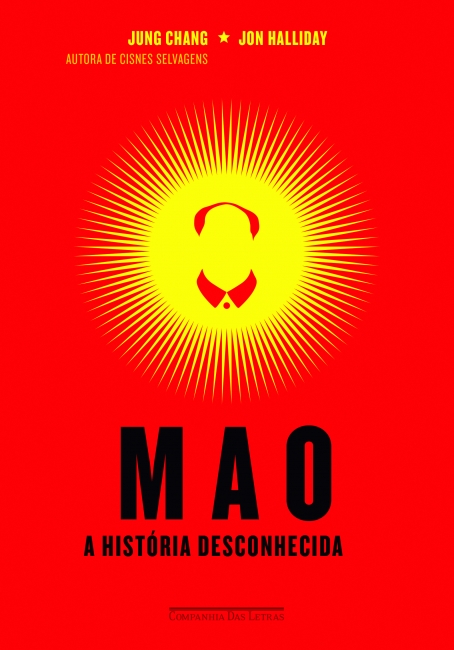
Este livro já foi publicado há muito anos, em 2006; agora está saindo no Brasil. Antes tarde do que nunca, como se diz, mas não precisaria ser tão tarde.
Transcrevo os releases do Brasil e da edição original.
Mao - A história desconhecida é a mais sólida biografia de Mao
Tse-tung já escrita, fruto de uma década de pesquisa em arquivos do
mundo todo e centenas de entrevistas com amigos, colaboradores e
conhecidos de Mao - boa parte dos quais nunca havia se pronunciado. O
resultado do árduo trabalho de Jung Chang e de seu marido Jon Halliday é
a demolição de diversos mitos.
O livro ataca o heroísmo da Longa Marcha, discorre sobre a ajuda
financeira e militar da União Soviética de Stálin para a criação e o
fortalecimento do Partido Comunista chinês e desqualifica os relatos de
que os rebeldes comunistas teriam enfrentado os japoneses na Segunda
Guerra Mundial.
Os autores mostram como Mao concentrou-se em expandir seu domínio
durante quase três décadas, ainda que isso resultasse no sofrimento e na
morte de dezenas de milhões de cidadãos. Para se perpetuar no poder,
instituiu um clima de denúncias, perseguições e terror. Na intimidade,
ele é descrito como um pai omisso, marido infiel e amigo pouco
confiável. Mao foi um dos lançamentos mais esperados no mundo todo e causou grande impacto quando foi publicado, no Reino Unido, em 2005.
“Poucos livros estão destinados a mudar a história, mas este mudará.” - George Walden, Daily Mail
“Uma bomba atômica.” - Time
“Esta biografia grandiosa demole sistematicamente cada pilar da simpatia e da legitimidade que Mao possuía.” - The New York Times Book Review
“Um êxito. Um retrato hipnotizante da tirania, da degeneração, do
assassinato em massa e da promiscuidade, um bombardeio de revelações
revisionistas e um trabalho de pesquisa sensacional.” - Simon Sebag
Montefiore, autor de Stálin
The most authoritative life of the Chinese leader every written, Mao: The Unknown Story is
based on a decade of research, and on interviews with many of Mao’s
close circle in China who have never talked before — and with virtually
everyone outside China who had significant dealings with him. It is full
of startling revelations, exploding the myth of the Long March, and
showing a completely unknown Mao: he was not driven by idealism or
ideology; his intimate and intricate relationship with Stalin went back
to the 1920s, ultimately bringing him to power; he welcomed Japanese
occupation of much of China; and he schemed, poisoned, and blackmailed
to get his way. After Mao conquered China in 1949, his secret goal was
to dominate the world. In chasing this dream he caused the deaths of 38
million people in the greatest famine in history. In all, well over 70
million Chinese perished under Mao’s rule — in peacetime.
Editorial Reviews
Amazon.com Review
In the epilogue to her biography of Mao Tse-tung, Jung Chang and
her husband and cowriter Jon Halliday lament that, "Today, Mao's
portrait and his corpse still dominate Tiananmen Square in the heart of
the Chinese capital." For Chang, author of Wild Swans, this fact is an affront, not just to history, but to decency. Mao: The Unknown Story
does not contain a formal dedication, but it is clear that Chang is
writing to honor the millions of Chinese who fell victim to Mao's drive
for absolute power in his 50-plus-year struggle to dominate China and
the 20th-century political landscape. From the outset, Chang and
Halliday are determined to shatter the "myth" of Mao, and they succeed
with the force, not just of moral outrage, but of facts. The result is a
book, more indictment than portrait, that paints Mao as a brutal
totalitarian, a thug, who unleashed Stalin-like purges of millions with
relish and without compunction, all for his personal gain. Through the
authors' unrelenting lens even his would-be heroism as the leader of the
Long March and father of modern China is exposed as reckless
opportunism, subjecting his charges to months of unnecessary hardship in
order to maintain the upper hand over his rival, Chang Kuo-tao, an
experienced military commander. Using exhaustive research in
archives all over the world, Chang and Halliday recast Mao's ascent to
power and subsequent grip on China in the context of global events.
Sino-Soviet relations, the strengths and weakness of Chiang Kai-shek,
the Japanese invasion of China, World War II, the Korean War, the
disastrous Great Leap Forward, the vicious Cultural Revolution, the
Vietnam War, Nixon's visit, and the constant, unending purges all,
understandably, provide the backdrop for Mao's unscrupulous but
invincible political maneuverings and betrayals. No one escaped
unharmed. Rivals, families, peasants, city dwellers, soldiers, and
lifelong allies such as Chou En-lai were all sacrificed to Mao's
ambition and paranoia. Appropriately, the authors' consciences are
appalled. Their biggest fear is that Mao will escape the global
condemnation and infamy he deserves. Their astonishing book will go a
long way to ensure that the pendulum of history will adjust itself
accordingly. --Silvana Tropea
10 Second Interview: A Few Words with Jung Chang and Jon Halliday Q: From idea to finished book, how long did Mao: The Unknown Story take to research and write? A: Over a decade. Q: What was your writing process like? How did you two collaborate on this project? A:
The research shook itself out by language. Jung did all the
Chinese-language research, and Jon did the other languages, of which
Russian was the most important, as Mao had a long-term intimate
relationship with Stalin. After our research trips around the world, we
would work in our separate studies in London. We would then rendezvous
at lunch to exchange discoveries. Q: Do you have any thoughts about how the book is, or will be received in China? Did that play a part in your writing of the book? A:
The book is banned in China, because the current Communist regime is
fiercely perpetuating the myth of Mao. Today Mao's portrait and his
corpse still dominate Tiananmen Square in the heart of Beijing, and the
regime declares itself to be Mao's heir. The government blocked the
distribution of an issue of The Far Eastern Economic Review, and
told the magazine's owners, Dow Jones, that this was because that issue
contained a review of our book. The regime also tore the review of our
book out of The Economist magazine that was going to (very
restricted) newsstands. We are not surprised that the book is banned.
The regime's attitude had no influence on how we wrote the book. We hope
many copies will find their way into China. Q: What is the one thing you hope readers get from your book? A:
Mao was responsible for the deaths of well over 70 million Chinese in
peacetime, and he was bent on dominating the world. As China is today
emerging as an economic and military power, the world can never regard
it as a benign force unless Beijing rejects Mao and all his legacies. We
hope our book will help push China in this direction by telling the
truth about Mao.
Breakdown of a BIG Book: 5 Things You'll Learn from Mao: The Unknown Story
1. Mao became a Communist at the age of 27 for purely pragmatic reasons: a job and income from the Russians. 2.
Far from organizing the Long March in 1934, Mao was nearly left behind
by his colleagues who could not stand him and had tried to oust him
several times. The aim of the March was to link up with Russia to get
arms. The Reds survived the March because Chiang Kai-shek let them, in a
secret horse-trade for his son and heir, whom Stalin was holding
hostage in Russia. 3. Mao grew opium on a large scale. 4.
After he conquered China, Mao's over-riding goal was to become a
superpower and dominate the world: "Control the Earth," as he put it. 5.
Mao caused the greatest famine in history by exporting food to Russia
to buy nuclear and arms industries: 38 million people were starved and
slave-driven to death in 1958-61. Mao knew exactly what was happening,
saying: "half of China may well have to die."
--This text refers to an out of print or unavailable edition of this title.
A Coreia do Norte acaba de fazer o seu terceiro experimento nuclear em uma década: ela está se capacitando, assim, no plano militar atômico, dentre os poucos países que detêm esse tipo de tecnologia bélica. O que provavelmente distingue a Coreia do Norte, em face dos demais países nuclearmente armados, é a fome de seu povo. Segundo informações fidedignas, centenas de milhares de norte-coreanos já morreram de fome, provavelmente mais de um milhão, em todas as crises alimentares que esse país vem enfrentando contínua e regularmente desde muitos anos.
Talvez não seja apenas a Coreia do Norte, a dispor de bombas atômicas e um povo miserável. A Índia também enfrenta, ocasionalmente, problemas desse tipo, por acidentes naturais e desorganização da distribuição, mais do que por incapacidade produtiva.
Quanto ao Paquistão, um dos responsáveis pelo seu programa nuclear, o finado líder político Zulfikar Ali Buttho, teria dito, uma vez, que o Paquistão teria a bomba atômica, mesmo se o povo precisasse comer grama, durante muitos anos. Exemplo de atitude responsável, como vemos.
Mas a Coreia do Norte é diferente, pelo grau alcançado pela fome regular de sua população, e o país vem sendo objeto de assistência alimentar bilateral e de órgãos multilaterais há muitos anos. O Brasil também participa desse esforço, como registra um comentarista neste blog, em tom crítico, mesmo se a iniciativa pode, justamente, ajudar as forças armadas norte-coreanas a desviar recursos para seus projetos nucleares. Triste situação.
Transcrevo aqui o que acabo de receber de um leitor deste blog.
Paulo Roberto de Almeida
Gilrikardo deixou um novo comentário sobre a sua postagem...:
TERÇA-FEIRA, 12 DE FEVEREIRO DE 2013 Criando corvo Coréia do Norte e Brasil __Aquilo que se temia, lá atrás, infelizmente se revelou hoje. A Coréia do Norte mostrou ao mundo que já desenvolveu a bomba nuclear e que daqui para frente será apenas uma questão de aperfeiçoar a técnica. Eu pergunto, e para quê? Qual a utilidade das bombas se não é para matar... destruir... aniquilar... enfim, por a baixo aquilo que levou anos, séculos, milênios para ser erguido. Esse episódio trouxe-me a lembrança do post onde abordei o tratamento vip que os "cumpanheiros" tem dispensado aos comunistas coreanos. __Abaixo reproduzo com a impressão de que talvez eu seja um dentre a meia dúzia de brasileiros que lembraram desse episódio no dia de hoje.
************************** 20 de maio de 2012. O PT que a maioria não vê. Gilrikardo disse: Enquanto a companheirada faz festa com a dinheirama ao doar 21 mil toneladas de alimentos aos comunistas da Coréia do Norte, os militares coreanos investem pesado em armamentos e em energia nuclear. Seria verdadeiro afirmar que a companheirada está financiando, mesmo que indiretamente, os alucinados XING LINGS comunistas. Enquanto isso, aqui em nosso Brasil, lugares miseráveis ignorados pela "falta de recursos", dizem eles. Só para melhor entender o tamanho da ofensa imaginem que uma carreta transporta vinte toneladas, então para cem toneladas são cinco carretas, vezes dez, então teremos cinquenta carretas para transportar mil toneladas de alimentos. Como serão vinte e uma mil toneladas, serão necessárias vinte e um multiplicado por cinquenta, ou seja MIL E CINQUENTA CARRETAS abastecidas com alimentos e pagas com dinheiro de nossos impostos. Singelamente doadas aos famintos coreanos do norte que estão mais preocupados em produzir armas a alimentos.
O diretor-geral do departamento para a América Latina do Ministério
das Relações Exteriores da Coreia do Sul, Jang Keun-ho, criticou a
ajuda humanitária que o Brasil vem dando ao seu vizinho do norte. Em
entrevista ao jornal Folha de S.Paulo, o diplomata reconheceu que a atitude do Brasil de enviar alimentos à Coreia do Norte é boa, mas pode ter um efeito negativo.
O governo sul-coreano teme que o vizinho, com quem está tecnicamente em guerra, use as doações para ganhar fôlego e continuar seu programa nuclear.
A
Coreia do Norte vive uma crise humanitária, e o Brasil já enviou 16 mil
toneladas de alimento ao país, número que deve chegar a 21 mil
toneladas nos próximos meses, segundo a Folha de S.Paulo. A
Coreia do Norte já enfrentou crises de alimentos, e o governo americano
interrompeu a ajuda humanitária ao país depois que o governo lançou um
foguete em abril. O temor é que o lançamento tenha sido o teste de um
míssil.
De acordo com a Folha, o Itamaraty afirma que a
doação de alimentos é regulamentada por uma lei de junho do ano passado,
que prevê a ajuda a países com carências alimentares.
**********************
LEI Nº 12.429, DE 20 DE JUNHO DE 2011. Conversão da Medida Provisória nº 519, de 2010 A PRESIDENTA DA REPÚBLICA Faço saber que o Congresso Nacional decreta e eu sanciono a seguinte Lei:
Art. 1o A União fica autorizada a doar, até 12 (doze)
meses após a publicação desta Lei, por intermédio do Programa Mundial de
Alimentos das Nações Unidas - PMA, ao Estado Plurinacional da Bolívia, à
República de El Salvador, à República da Guatemala, à República do
Haiti, à República da Nicarágua, à República do Zimbábue, à República de
Cuba, aos países da Comunidade de Países de Língua Portuguesa, à
Autoridade Nacional Palestina, à República do Sudão, à República
Democrática Federal da Etiópia, à República Centro-Africana, à República
Democrática do Congo, à República Democrática Somali, à República do
Níger e à República Democrática Popular da Coreia os produtos nos
respectivos limites identificados no Anexo desta Lei, desde que não
comprometa o atendimento às populações vitimadas por eventos
socionaturais adversos no território nacional.
Art. 1o A União é autorizada a doar, por intermédio do
Programa Mundial de Alimentos das Nações Unidas (PMA), ao Estado
Plurinacional da Bolívia, à República de El Salvador, à República da
Guatemala, à República do Haiti, à República da Nicarágua, à República
do Zimbábue, à República de Cuba, aos países da Comunidade de Países de
Língua Portuguesa, à Autoridade Nacional Palestina, à República do
Sudão, à República Democrática Federal da Etiópia, à República
Centro-Africana, à República Democrática do Congo, à República
Democrática Somali, à República do Níger e à República Democrática
Popular da Coreia os produtos nos respectivos limites identificados no
Anexo desta Lei, desde que não comprometa o atendimento às populações
vitimadas por eventos socionaturais adversos no território nacional.
(Redação dada pela Lei nº 12.688, de 2012)
§ 1o As doações serão efetivadas por meio de termo firmado pela
Companhia Nacional de Abastecimento - CONAB e correrão à conta de
dotações orçamentárias da Política de Garantia de Preços Mínimos - PGPM e
do Programa de Aquisição de Alimentos - PAA.
§ 2o Caberá ao Ministério da Agricultura, Pecuária e Abastecimento:
I - caso haja necessidade premente, autorizar o beneficiamento dos produtos em alimentos prontos para consumo humano; e
II - disponibilizar, por intermédio da CONAB, os produtos, livres e
desembaraçados, dentro dos navios nos portos do Rio de Janeiro, no
Estado do Rio de Janeiro, de Santos, no Estado de São Paulo, de
Paranaguá, no Estado do Paraná, de Itajaí, no Estado de Santa Catarina, e
de Rio Grande, no Estado do Rio Grande do Sul, por meios próprios ou de
terceiros, correndo todas as despesas decorrentes, inclusive na forma
de equivalência em produto, à conta de dotações consignadas no orçamento
da União.
§ 3o O frete e demais despesas de transporte serão cobertos pelo PMA,
que poderá ser ressarcido na forma de equivalência em produto.
§ 4o Em casos excepcionais, nas situações em que o PMA não puder arcar
de forma integral com as despesas de transporte, os referidos custos
deverão ser cobertos pelas dotações orçamentárias mencionadas no § 1o.
Art. 2o As despesas com as doações previstas no art. 1o desta Lei não deverão afetar a implementação eficiente da PGPM e do PAA.
Art. 3o Caberá ao Ministério das Relações Exteriores
definir os quantitativos e respectivos destinatários dos produtos
identificados no Anexo desta Lei, em coordenação com o PMA.
Parágrafo único. Atendida a demanda dos países previstos no art. 1o
desta Lei, o Ministério das Relações Exteriores poderá destinar os
estoques remanescentes a outros países atingidos por eventos
socionaturais adversos ou em situação de insegurança alimentar aguda,
observados os limites previstos naquele artigo.
Art. 4o Esta Lei entra em vigor na data de sua publicação.
Brasília, 20 de junho de 2011; 190o da Independência e 123o da República.
DILMA ROUSSEFF
Antonio de Aguiar Patriota
Milton Elias Ortolan
Afonso Florence
Este texto não substitui o publicado no DOU de 21.6.2011
Spain moves to give bullfighting special cultural status
The number of bullfights each year is falling in Spain
Spanish
MPs have voted to consider giving bullfighting special cultural status -
a move that could overturn regional bans on the age-old tradition.
In a 180-40 vote, the parliament backed a petition signed by 590,000 people.
If the idea becomes law, it may roll back the ban in Spain's regions of Catalonia and the Canary Islands.
It may also provide tax breaks for promoters of bullfighting
(corrida). Opponents describe the tradition of killing animals as
barbaric. 'Barbaric' tradition
On Tuesday, the popular petition
was easily backed in parliament, where the governing conservative
Popular Party (PP) has a majority.
Under the proposal, bullfighting would be promoted by the
authorities who would also push the UN to recognise it as part of
Spain's cultural heritage.
A parliamentary commission is now expected to fine-tune proposed legislation and the vote could take place later this year.
The parliamentary vote is an attempt by pro-bullfighting
conservatives to keep this controversial tradition alive, the BBC's Tom
Burridge reports.
About 2,000 fights are still held every year in Spain, but the numbers are falling.
Bullfighting was banned last year in Catalonia, in the
north-east, with supporters of the measure describing the blood-soaked
pageants as barbaric.
The ban in Catalonia was also seen by many Spaniards as an
attempt by Catalan nationalists to distinguish the region from the rest
of Spain and its traditions.
Bullfighting was also banned in the Canary Islands in 1991.
Bullfighting
Those taking part in the a bullfight are called toreros, while
the person in charge of killing the bull is the matador de toros -
killer of bulls
Fighters can be awarded the bull's ears, tail or hooves as a trophy
Author Ernest Hemingway was an admirer of Spanish bullfighting and wrote about its rituals in 1932 in Death in the Afternoon
The tradition dates back at least 4,000 years and is thought to have been popularised by the Romans
It remains popular in southern France, Portugal and some South American countries


 dirty little secret is that institutions of global governance are weak
today by design, rather than by default. This has long been an open
secret, as I know from having lived in New York City, the home of the
United Nations, where I served for more than ten years.
dirty little secret is that institutions of global governance are weak
today by design, rather than by default. This has long been an open
secret, as I know from having lived in New York City, the home of the
United Nations, where I served for more than ten years.




 Q: From idea to finished book, how long did Mao: The Unknown Story take to research and write?

