Rússia mobiliza 200 mil e divulga treinamento para guerra nuclear
Temas de relações internacionais, de política externa e de diplomacia brasileira, com ênfase em políticas econômicas, viagens, livros e cultura em geral. Um quilombo de resistência intelectual em defesa da racionalidade, da inteligência e das liberdades democráticas. Ver também minha página: www.pralmeida.net (em construção).
terça-feira, 4 de outubro de 2022
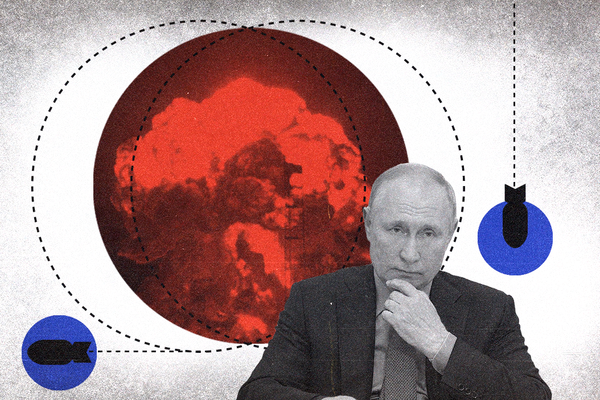
A guerra nuclear de Putin contra a Ucrânia - Igor Gielow (FSP)
Adeus política externa ativa? - Oliver Stuenkel (Estadão)
Resultado das eleições torna menos plausível política externa assertiva do Brasil
Putin usará uma arma nuclear tática: consequências devastadoras para a Ucrânia - Signal Newsletter (GZero)

Will Putin drop a nuke on Ukraine?
October 4, 2022
Vladimir Putin isn't exactly losing the war in Ukraine, but he's definitely not winning it either.
Although Russia has more territory now than before the invasion, things aren't going well. Putin has had to call up reservists, his annexation of four Ukrainian regions was immediately challenged, and he's on the hook now for selling to the Russian people the idea that they are at war with NATO and the West.
Putin's push to win at all costs might soon force him to make one very serious and potentially scary choice. He needs to land a big blow, so what bigger blow than the biggest of them all: nuclear weapons. Russia's president has already hinted at the possibility, while Washington and NATO are sorting through what they might do in response.
Let's look at why he might, or might not, pull the trigger to launch what is known as a tactical nuke, a low-yield atomic warhead designed to take out military targets, not entire cities.
The sheer destructive capacity of a nuclear weapon could turn the tide of the war in Russia’s favor. Even a small nuclear strike could wipe out entire units of Ukraine's army in minutes. It would also give the Russians time to regroup their forces to push back against the ongoing Ukrainian counteroffensive and appease hardliners gripingabout Russia not doing enough to win in Ukraine.
Putin still has some other options. He could order cyberattacks, the sabotage of European energy links, or more intense conventional strikes on Ukrainian cities and infrastructure. But none of those have the shock value of a single nuke, which might just scare Kyiv into accepting Russia’s terms for “peace” — such as the recent land grab of 15% of Ukraine.
Also, Putin perhaps thinks he can get away with it (relatively) unscathed. In other words, the US and NATO will respond, but probably not in kind.
Aside from warning of somewhat vague "catastrophic consequences," the West hasn't been very clear on what it would do if Putin pushed the nuclear button. Doing nothing at all is a non-starter, yet the US and its NATO allies, wary of a dangerous escalation with nuclear-armed Russia, might only toughen sanctions and send more advanced weapons to Ukraine — a best-case scenario for Putin.
Putin might even test a tactical nuke just to bait NATO into attacking Russia, which he's been daring the alliance to do since his invasion began. It would give him an excuse to say he was right all along about the West trying to encroach on Russia’s sphere of influence.
Still, for Russia, a non-nuclear Western response might be almost as bad as a nuclear one. US airstrikes could wipe out most of Russia's forces inside Ukraine and sink its entire Black Sea fleet in one fell swoop. Putin might back down if he thinks the price would be too high — even if it went against his own grievance-fueled narrative.
Dangerous escalation? Perhaps. But it hasn’t been ruled out by retired senior US officials.
Putin might lose his two most powerful friends if he pushes the button. Although we know both China’s Xi Jinping and India’s Narendra Modi are unhappy about how the war is going, we don't know what they recently told Putin about how they’d react to a Russian nuclear strike. But Putin does, and his decision-making will surely factor in how it'll go down in Beijing and New Delhi.
The Chinese or Indian response could be anything from a reprimand at the UN to cutting economic ties with Moscow right when the Russian economy is reeling from sanctions despite a strong ruble. Just the threat of turning down Russian oil and natural gas — which Putin needs to sell to keep his war machine going — should give the Russian leader pause.
There's no turning back. If Putin crosses that line, all other options cease to exist. He loses control of the narrative because he's done the unthinkable. Then again, perhaps the Russian leader has already backed himself into a corner, and it's all just a question of not if but when he orders the first nuclear strike since World War II.
What do you think Putin will do? Let us know here.Lula pretende continuar apoiando o tirano de Moscou?
Do Bozo eu Não Espero NADA! Mas dos companheiros anti-imperialistas se esperava um mínimo de comportamento ético nessa guerra de agressão do imperialismo russo.
Paulo Roberto de Almeida


Ucrânia avança em território anexado ilegalmente pela Rússia
As forças ucranianas relataram que conseguiram recapturar cidades ao longo da margem oeste do rio Dnieper, no sul da Ucrânia, perto da cidade de Kherson, capital da província de mesmo nome – uma das quatro regiões anexadas ilegamente por Moscou.
O comunicado sobre novas conquistas territoriais das tropas ucranianas foi divulgado na segunda-feira (03/10), poucos dias depois que Kiev tomou o principal centro logístico de Lyman – o ganho no campo de batalha mais significativo da Ucrânia em semanas.
Além da confirmação oficial pela Ucrânia, fontes russas reconheceram que uma ofensiva de tanques ucranianos penetrou dezenas de quilômetros ao longo da margem oeste do rio Dnieper. Vários vilarejos foram recapturados ao longo do caminho.
O porta-voz do Ministério da Defesa da Rússia. Igor Konashenov, disse que, "com unidades de tanques superiores na direção de Zolotaya Balka, Aleksandrovka, o inimigo conseguiu penetrar nas entranhas de nossa defesa".
No entanto, ele acrescentou que as tropas russas "ocuparam uma linha defensiva previamente preparada e continuam a infligir danos maciços de artilharia" às forças ucranianas.
"A informação é tensa, vamos colocar dessa forma, porque, sim, houve avanços, de fato", disse Vladimir Saldo, líder russo instalado na província de Kherson, em entrevista à emissora estatal russa. "Há um assentamento chamado Dudchany, bem ao largo do rio Dnieper, e ali mesmo, naquela região, houve um avanço. Há assentamentos ocupados por forças ucranianas."
Rob Lee, membro sênior do instituto de pesquisa Foreign Policy Research Institute, citou blogueiros militares russos informando que as tropas de Moscou haviam recuado até Dudchany – 40 quilômetros rio abaixo de onde estavam estacionados no dia anterior.
"Quando tantos canais russos estão soando o alarme, geralmente significa que eles estão com problemas", escreveu Lee em sua conta no Twitter.
Sucessos recentes de Kiev
O avanço no sul da Ucrânia reflete os sucessos recentes das forças de Kiev no leste – e que mudaram a maré na guerra contra a Rússia.
Essa guinada ocorre apesar de Moscou tentar aumentar as apostas ao anexar ilegalmente território ucraniano, ordenar uma mobilização parcial e ameaçar com uma retaliação nuclear. Os avanços militares ucranianos prepararam o terreno para avanços destinados a cortar ainda mais as linhas de abastecimento das forças russas.
Kherson tem sido um dos campos de batalha mais difíceis para os ucranianos. Na semana passada, o presidente russo, Vladimir Putin, assinou tratados de anexação de Kherson e outras três regiões, após a realização de pseudorreferendos orquestrados pelo Kremlin. A medida foi ratificada pelo Parlamento russo.
Nações ocidentais condenaram a ação de Moscou e classificaram os "referendos" como uma farsa, conduzidos sob a mira de armas.
pv/ek (DPA, AFP, Reuters, AP)
Na Ucrânia, faltou logística às forças russas; os ucranianos exploraram muito bem esse lado - Paul Schwennesen (Law and Liberty)
Putin calculou um breve passeio militar para invadir e ocupar toda a Ucrânia. Os soldados ficaram entregues a si mesmos. Esta a principal razão do fracasso.
Ukraine's Saratoga?
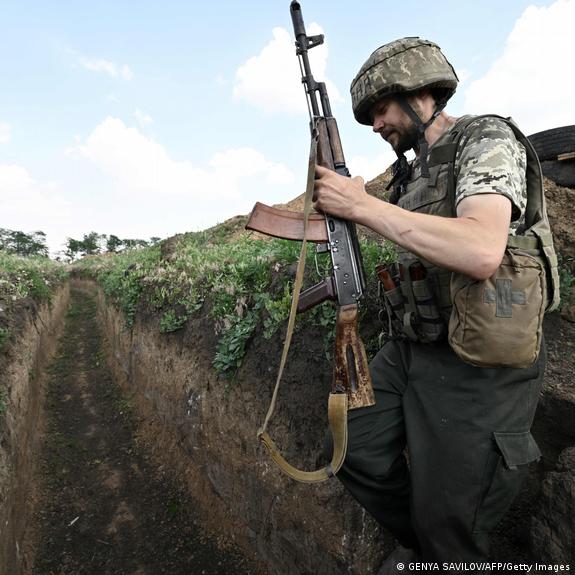
“An Army,” it is famously said, “marches on its stomach.” In the streets and trenches of Lyman, east of Kharkiv, the Russian army was reminded of this timeless maxim. Ukrainian forces (some of whom I know personally) “tightened the noose” around the village, controlling its supply lines, on the way to another major victory in the north. It might even have been Ukraine’s Saratoga moment—the logistical vanquishing of an overstretched invader which ultimately turns the tide of war. Unfortunately, while the moral victory is indisputable, occuring in the midst of Putin’s farcical annexation of eastern territories, an opportunity was lost for a more thumping defeat.
Lyman, a dusty little village along the Donets River, had become something of a bastion—first for Russia’s advance and then its retreat—which makes its recapture a touchstone for northern operations and for Ukraine’s theater-wide strategy as a whole. I bought carrots from a farmer there as I left Kharkiv last time, and was stunned when it fell to the Russian advance. I’m therefore thrilled to hear of its recapture. Personal attachments aside, the Lyman operation illustrates a larger strategy of “Logistic Leapfrogging” (flanking, then cutting the supply umbilical—leaving enclaves of Russian forces isolated, demoralized, and no option but surrender). It is an investment strategy I had loudly pleaded for as I stood on the frontlines of the battle of Kyiv—a missed strategic opportunity when tens of thousands of Russian troops might have been cut off in their retreat north to Belarus.

The Leapfrog strategy leverages the advantages of Ukrainian internal supply lines and is infinitely better than playing to Russian advantages in a grinding, incremental, frontal assault to recapture territory. The opportunity, I was heartened to see, presented itself again in Lyman, as Russia seems incapable or unwilling to learn from its past. The Leapfrog strategy may become an enduring theme of the entire war—for, as Napoleon adjured, “One must never interrupt your enemy when he is making a mistake.”
Ukraine, for its part, isn’t immune to mistakes either. It was dismaying to see Russian forces able to retreat through the supposed “encirclement” of Lyman—the crowning chance to capture possibly thousands of Russian fighters was squandered in what seems an uncoordinated rush to “take back” the city. Why could they not have waited, reinforcing supposedly “closed” escape routes with infantry? To be fair, Ukrainians cannot afford to lose manpower or materiel: it is fighting a Goliath ten times its size and feels losses disproportionately. The strain is already starting to show after months of sustained combat—soon it may quickly devolve into a crumbling capacity to resist Russian mass, regardless of how clumsily it is wielded. Just yesterday I was informed that five of my colleagues were ambushed in a building-clearing operation in newly liberated territory. In the maelstrom of machine gun fire and grenade shrapnel, all of them were wounded, two critically. The only thing that saved their lives was incoming Russian artillery “support” which caused the ambushers to scurry back to their retreating line. A lucky break at the tactical level, but this can’t go on indefinitely—Ukraine cannot long afford to put its fighting capacity into hospital bunks.
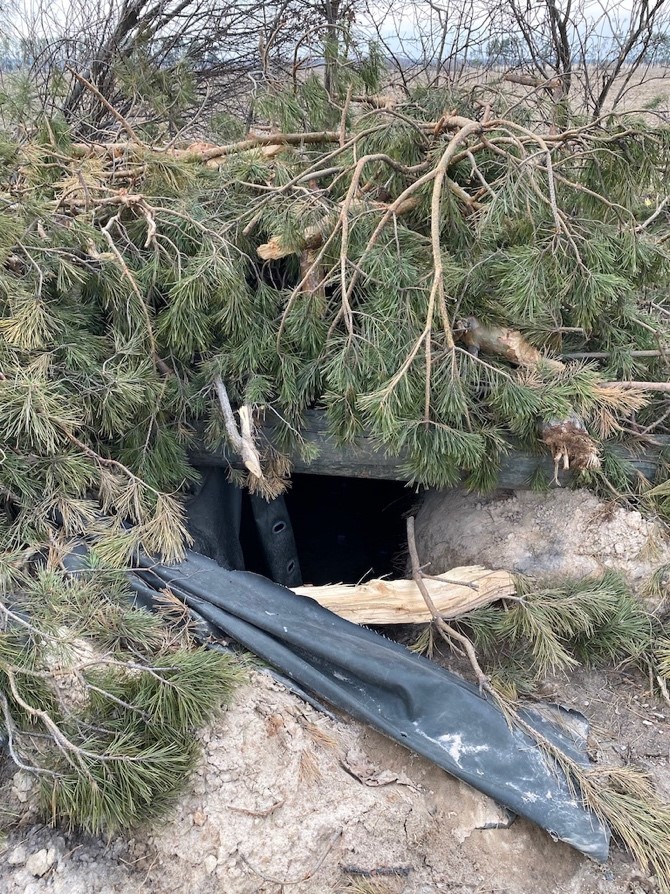
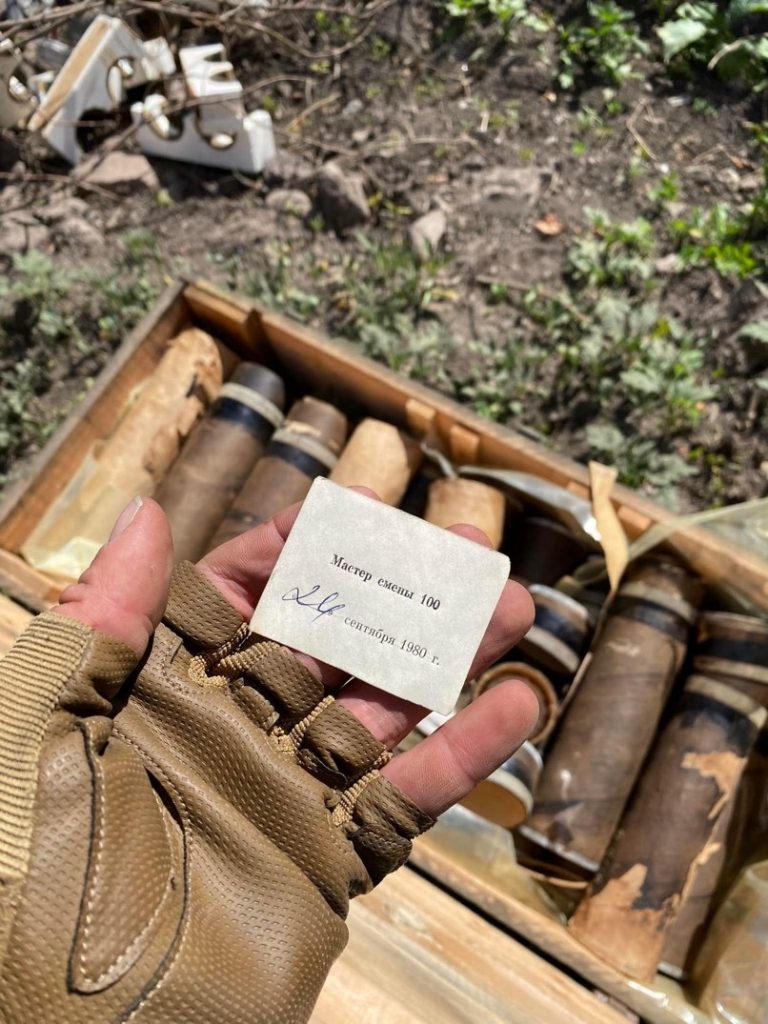
That is why it is all the more important to continue to Leapfrog: cutting supply lines and enveloping swathes of Russians is the only way to equalize this inherently unequal campaign. Cautious flexibility, of course, is the name of the game: now that Russia’s top logistical officer, General Bulgakov, has been relieved of his post and replaced by 60-year-old Col. Gen. Mikhail Mizintsev, there is a good possibility that this strategy will require extra finesse. Mizintsev, known amongst Ukrainians as the “Butcher of Mariupol,” is likely to want to alter Bulgakov’s approach, if only to save his own neck. There is hope, however: while he is surely aware of his logistical disadvantages, if Mariupol is any indication he is unlikely to break from the basic paradigm of brute force backed by massive artillery support. Luckily, this kind of support requires thick conduits of ammunition transport which are increasingly vulnerable as Ukrainian resistance perfects techniques of light, rapid, flanking maneuvers and logistics interdiction. What’s more, Russian ammunition is not infinite. If abandoned ammunition is any indication, Russia is scraping deep into its stores of firepower:

Could Ukraine’s “Saratoga moment”—cutting off an overstretched invading force from its supply lines—translate into a theater-wide strategy? Yes, and solid indications suggest that this is precisely the idea. With the success in Lyman, it is natural to suppose it will be repeated elsewhere. Crimea, for example, is a Yorktown waiting to happen: a bottled-up army, cut off from supplies of its “beans and bullets” cannot long endure.
All of this is simply a reminder that this war has become, or more accurately has always been, a logistical one. As such, it is a race against depletion: every loss the Ukrainians incur must be offset by extracting ten times the cost to the Russian war machine. This is a desperately difficult challenge. Western support can fill the deficit to an extent, but it is not reasonable to expect it to fill the imbalance completely. The only real hope is in Ukrainian maneuverability (and patience!)—the capacity to isolate, invest, and pare off elements of the invading force that lie far ahead of its supply lines, leapfrogging and enveloping them in a trap of the Russian’s own making.
Lyman has focused international attention in much the way that Saratoga did for America’s Continental Army in 1777. In addition to a brilliant political blow to Putin’s supporters, the success helps highlight French and German reticence, goading them (for good or ill) into more meaningful involvement. Whether such involvement escalates the conflict into a low-grade nuclear slugfest, or perhaps pushes the more reluctant republics of the Russian Federation to finally make their break remains to be seen, but the fact remains: Lyman, like Saratoga, will be remembered historically as the moment the war turned.
Paul Schwennesen is completing a PhD dissertation on environmental history and Spanish conquest in the Arizona/New Mexico borderlands. He holds a Master’s degree in Government from Harvard University and degrees in History and Science from the United States Air Force Academy. He is a regular contributor to the Property and Environment Research Center and his writing has appeared at The New York Times, American Spectator, Claremont Review, and in textbooks on environmental ethics (Oxford University Press and McGraw-Hill). He is the father, most importantly, of three delightful children.
Novo embaixador da Bélgica no Brasil, Peter Claes, pretende fortalecer os laços com o Brasil (Diplomacia Business)
Bem-vindo ao novo embaixador da Bélgica no Brasil, país que eu considero como minha segunda pátria, pelo menos no plano intelectual, uma vez que meus três principais diplomas – graduação, mestrado e doutorado – são de universidades belgas.
Meus melhores votos a ele e toda a sua equipe em Brasília e nos demais postos no Brasil.
Paulo Roberto de Almeida
Resenha de A outra Independência: o federalismo pernambucano de 1817 a 1824, por Evaldo Cabral de Melo - Paulo Roberto de Almeida
Uma resenha quase que pertencendo à categoria do "what if?", mas que tinha sido pouco divulgada na época, pois a revista do Ipea que a publicou já não existe mais.
História quase virtual do Brasil
Evaldo Cabral de Mello:
A outra Independência: o federalismo pernambucano de 1817 a 1824
(São Paulo: Editora 34, 2004, 260 p.; ISBN: 85-7326-314-8).
Estamos tão habituados à versão tradicional da independência do Brasil, de cunho unitário e quase que “naturalmente monarquista”, que negligenciamos outros modos possíveis de desenvolvimento da nação ou de formação do Estado. Já não falo de uma história declaradamente virtual, que poria em confronto “o que efetivamente se passou”, segundo a visão rankeana, com possibilidades inesperadas ou puramente hipotéticas, como uma separação holandesa do Nordeste, em caráter permanente, ou um movimento inconfidente bem sucedido nas Gerais, de caráter republicano, ou ainda uma divisão de fato entre as várias províncias do norte e do sul no processo de independência, o que teria conformado um arquipélago de nações luso-parlantes na América do Sul (a exemplo da fragmentação hispano-americana na vertente andina).
Este novo livro do diplomata-historiador (ou vice-versa) Evaldo Cabral de Mello explora justamente essa última possibilidade, a de uma outra independência possível, não como hipótese virtual, mas como realização efetiva, tal como tentada nas cidades e nos campos da Bahia e de Pernambuco, entre a insurreição precoce de 1817 e a Confederação do Equador em 1824. Esses movimentos, junto com outros do Sul, ficaram agrupados sob o amálgama enganador de “separatismo”, ao passo que os construtores do Império, a partir do Rio de Janeiro, passaram para a história com o beau rôle de unitários e de nacionalistas. Essa é, porém, uma perspectiva equivocada, uma vez que, no momento da independência, o Brasil era tudo menos Brasil, e sim um ajuntamento de províncias que se relacionavam mais com a metrópole (ou com a África, por exemplo) do que entre si. Luiz Felipe Alencastro já tinha alertado para esse arquipélago de sistemas desvinculados entre si, sem unidade econômica real.
Este livro conta a história desse “destino não manifesto”, traduzido no desejo de algumas elites regionais, no caso as do Nordeste, de recuperar o poder local perdido quando da vinda da família real e a centralização operada em favor do Rio de Janeiro. O federalismo, segundo Evaldo, era uma possibilidade real, se alguns destes processos não tivessem ocorrido: a manutenção da dinastia bragantina no Rio, um tratamento mais conforme às aspirações das elites regionais pelas Cortes de Lisboa e a determinação da “administração” da Corte no Rio em preservar sua posição hegemônica. Mas foi uma luta bárbara, na qual a força foi mais importante do que a persuasão. A historiografia ulterior alimentou o “rio-centrismo”, descurando ou desvalorizando os “separatismos” regionais, uniformemente agrupados na rubrica contrária à unidade nacional, quando o que eles pretendiam, na verdade, era uma forma diferente de organização do Estado (e do equilíbrio entre as províncias), provavelmente mais conforme ao modelo proposto nos Estados Unidos poucas décadas antes.
A Bahia, como se sabe, ficou sob ocupação portuguesa no episódio da separação, razão pela qual coube eminentemente a Pernambuco a liderança federalista, quando na verdade ambas as províncias tinham condições econômicas de sustentar um modelo diferente, singularmente autonomista, de construir um Estado não centralizado, ainda que passavelmente unitário, sob a égide da monarquia (mesmo se muitos liberais fossem declaradamente republicanos). Longe de obedecerem a impulsos regionais anárquicos e anti-patrióticos, como a propaganda fluminense quis fazer acreditar (dando os exemplos caóticos dos estados hispano-americanos), os patriotas do Nordeste queriam a verdadeira liberdade e a igualdade, num regime de poderes compartilhados.
José Bonifácio foi, neste caso, menos sábio do que o habitualmente afirmado, pois que, partindo da idéia de uma “peça majestosa e inteiriça desde o Prata até o Amazonas”, denegriu o projeto federalista, assimilando-o ao republicanismo e acusando seus líderes de pretenderem um “governo monstruoso”, para serem nas províncias “chefes absolutos, corcundas despóticos”. Os “bispos sem papa”, no dizer de Bonifácio, foram esmagados e assim o Brasil continua a ser até hoje, a despeito da ironia de carregar no nome o adjetivo federalista, a mais unitária das repúblicas americanas.
Paulo Roberto de Almeida (www.pralmeida.org)
Brasília, 1411: 20 março 2005
1411. “História quase virtual do Brasil”, Brasília, 20 março 2005, 2 p. Resenha de Evaldo Cabral de Mello: A outra Independência: o federalismo pernambucano de 1817 a 1824 (São Paulo: Editora 34, 2004, p. 260; ISBN: 85-7326-314-8). Revista Desafios do Desenvolvimento (Brasília: IPEA-PNUD, ano 2, nº 9, abril 2005, p. 71;). Republicada na revista Plenarium (Brasília: Câmara dos Deputados, Ano II, nº 2, novembro 2005, p. 343-344). Relação de Publicados nº 548.
Postagem em destaque
Livro Marxismo e Socialismo finalmente disponível - Paulo Roberto de Almeida
Meu mais recente livro – que não tem nada a ver com o governo atual ou com sua diplomacia esquizofrênica, já vou logo avisando – ficou final...
-
Uma preparação de longo curso e uma vida nômade Paulo Roberto de Almeida A carreira diplomática tem atraído número crescente de jovens, em ...
-
FAQ do Candidato a Diplomata por Renato Domith Godinho TEMAS: Concurso do Instituto Rio Branco, Itamaraty, Carreira Diplomática, MRE, Diplom...
-
Países de Maior Acesso aos textos PRA em Academia.edu (apenas os superiores a 100 acessos) Compilação Paulo Roberto de Almeida (15/12/2025) ...
-
Mercado Comum da Guerra? O Mercosul deveria ser, em princípio, uma zona de livre comércio e também uma zona de paz, entre seus próprios memb...
-
Reproduzo novamente uma postagem minha de 2020, quando foi publicado o livro de Dennys Xavier sobre Thomas Sowell quarta-feira, 4 de março...
-
Itamaraty 'Memórias', do embaixador Marcos Azambuja, é uma aula de diplomacia Embaixador foi um grande contador de histórias, ...
-
Israel Products in India: Check the Complete list of Israeli Brands! Several Israeli companies have established themselves in the Indian m...
-
Pequeno manual prático da decadência (recomendável em caráter preventivo...) Paulo Roberto de Almeida Colaboração a número especial da rev...
-
O Brics vai de vento em popa, ao que parece. Como eu nunca fui de tomar as coisas pelo seu valor de face, nunca deixei de expressar meu pen...