sábado, 24 de agosto de 2024

Vergonhosa entrevista do assessor presidencial internacional - CNN

 Poucas vezes fomos confrontados com afirmações tão desonestas, tão deformadas em seu vies pró-chavista. PRA

Venezuela: Não é correto reconhecer presidente com “atas nas mãos da oposição”, diz Amorim à CNN 

Celso Amorim destaca problemas na eleição venezuelana, sugere nova votação com supervisão da União Europeia e alerta para a necessidade de diálogo e reconciliação nacional 

Da CNN

Leia abaixo uma versão editada da entrevista que a CNN fez com Amorim:

CNN: O que o senhor está lendo sobre o que está acontecendo na Venezuela hoje, levando em conta que já se passaram várias semanas desde as eleições?

Celso Amorim: Estive na Venezuela durante as eleições, inclusive com o presidente Maduro, no dia seguinte; também estava presente o presidente da Assembleia Nacional, e falei sobre a necessidade de ter as atas.

Isso faz parte do acordo de Barbados, aceitar a transparência da parte deles e, para dirimir qualquer dúvida, seria importante ter as atas.

Ele me disse que seria uma questão de dias, de alguns dias, ele até acrescentou, “como sempre ocorre”. Mas, bem, ainda não as temos.

Do outro lado, temos as atas da oposição, mas também não me parece correto basear o reconhecimento de um presidente em atas que estão nas mãos da oposição, de um partido, não do Conselho Nacional Eleitoral. Embora saibamos que são cópias, não me parece correto.

CNN: Essa promessa de que em poucos dias as atas apareceriam, Nicolás Maduro fez diretamente ao senhor?

Amorim: Vamos ter que pensar com imaginação.

Enfrentamos uma situação, não era idêntica, os fatos não eram os mesmos, mas uma situação muito difícil após a tentativa de golpe de Estado em 2002, e em 2003 criamos um grupo de amigos que analisaram a situação e fizeram propostas que os dois lados aceitaram e, naquele caso, foi um referendo revogatório.

Agora não é o caso, mas será necessária alguma imaginação e também tolerância de ambas as partes, pois é um problema muito sério. Não se trata apenas de quem venceu uma eleição; há uma divisão muito profunda, e me parece que é necessária uma reconciliação nacional.

Uma pessoa vota durante as eleições presidenciais na Escola Ecológica Bolivariana Simon Rodriguez em 28 de julho de 2024 em Fort Tiuna, Caracas, Venezuela • Jesus Vargas/Getty Images

CNN: Esse exercício de imaginação poderia chegar ao ponto de pedir novas eleições na Venezuela?

Amorim: Já se falou sobre isso, mas não podem dizer que é uma proposta do Brasil, porque não deve ser uma proposta do Brasil ou de outro país, deve haver um diálogo do qual possa surgir uma solução.

Poderia ser isso, não sei se seria suficiente, teria que fazer parte de um pacote, como disse o presidente (Gustavo) Petro no X, que tenha garantias recíprocas entre o governo e a oposição. Não só a garantia de não perseguição, mas também garantias de participação no processo eleitoral.

No próximo ano, estão programadas as eleições parlamentares e regionais. É muito importante que… São mais de dois partidos, mas que os dois lados principais possam participar livremente.

CNN: Essa ideia de repetir as eleições, pelo menos em uma primeira reação oficial da oposição, por exemplo, no caso de María Corina Machado, não foi bem aceita. Há outro caminho?

Amorim: O fundamental é o diálogo, e no diálogo deve haver um pacote. Por exemplo, a UE seria uma boa entidade para acompanhar as eleições. Eles estavam convidados, mas o convite foi retirado porque a UE manteve as sanções.

Então, deve haver tolerância, não deve haver arrogância daqueles que querem ajudar, porque é fundamental lembrar que a Venezuela é um país independente. Estamos tentando ajudar, como fizemos há 20 anos com o referendo revogatório, mas não para intervir, não para dar uma prescrição, dizendo “façam isso”.

CNN: A principal líder da oposição, María Corina Machado, não quer novas eleições. O que o senhor acha disso?

Amorim: Não consigo compreender. Se ambos os lados dizem que venceram, por que não realizar outra eleição em que se possam evitar os problemas que, dizem, contaminaram essa eleição? Se ela ganhou, provavelmente ganhará de novo, não?

Não estou questionando a Corina (Machado) nem nada parecido, estou dizendo que o diálogo é importante, a tolerância é importante.

No caso da Venezuela, há uma divisão muito profunda, parece que são quase dois países, não é possível isso. Deve haver um diálogo, e os amigos do diálogo podem estar presentes.

Para Amorim, diálogo com o país vizinho é essencial • ANDRE VIOLATTI/ATO PRESS/ESTADÃO CONTEÚDO

Naquela época… Não estou dizendo que as soluções são as mesmas, mas foi criado o grupo Amigos da Venezuela, que incluía o Brasil, por exemplo, que tinha um bom diálogo com (Hugo) Chávez, mas também os Estados Unidos ou a Espanha, que tinham reconhecido, inclusive, o golpe de Estado.

CNN: O senhor acredita que Maduro eventualmente reconheceria uma derrota em uma segunda eleição?

Amorim: Se houver uma supervisão real… Mas, para isso, seria importante que a UE suspendesse as sanções. Se houver uma supervisão real, o problema não surgirá, porque a própria supervisão evitará as dúvidas que existem agora.

CNN: Vou fazer uma pergunta que parece pessoal, mas é política. Quando o senhor viu cara a cara Nicolás Maduro e ele lhe prometeu que em poucos dias as atas eleitorais apareceriam, o senhor acreditou nele?

Amorim: Tenho 82 anos, tenho um grau suficiente de ceticismo político, mas também tenho confiança no ser humano, então preferi acreditar. Não estou acusando de nada, mas esse é o fato.

CNN: Qual é a sua opinião e a do Brasil sobre as denúncias de detenções arbitrárias e até mesmo de pessoas cujo paradeiro ainda é desconhecido após as eleições?

Amorim: Não conheço os detalhes das detenções. Claro que somos contra todo tipo de detenção política e espero que isso seja resolvido também em um contexto de reconciliação e diálogo, porque não há outra maneira de enfrentar isso.

Países como Colômbia, Brasil, México também — mas o México agora está em uma transição, então é mais difícil –, mas estamos lá. E qualquer país de fora da região, desde que não seja com arrogância.

CNN: A posição histórica do Brasil em relação à Venezuela pode mudar se tudo continuar como está e as atas eleitorais não aparecerem?

Amorim: A posição histórica do Brasil é ajudar a encontrar uma solução.

Na época, Chávez nos procurou porque queria que o ajudássemos; ele queria mais um grupo de amigos de Chávez do que de amigos da Venezuela, e o presidente (Lula) lhe disse isso, exatamente com essas palavras, ao presidente Chávez.

O assessor especial da presidência, Celso Amorim, e o presidente Lula
O assessor especial da presidência, Celso Amorim, e o presidente Lula • Fábio Rodrigues-Pozzebom/ Agência Brasil – 26/06/2023

Finalmente, foi criado um grupo que era composto pelo Brasil, mas também pelos Estados Unidos, México, Chile, Espanha e Portugal. Então, havia pessoas mais próximas de Chávez e pessoas mais próximas da oposição.

Isso permitiu que se chegasse a uma conclusão que foi justamente, naquele caso, aplicável, o referendo revogatório. Chávez ganhou com uma margem bastante grande.

Agora, não sei, você perguntou sobre novas eleições, talvez, quem sabe? Não posso dizer com certeza que seja isso, mas sim o diálogo, que pode ser um diálogo com facilitadores, pensado um pouco fora da caixa, pode-se chegar a esse acordo.

Você me pergunta se sou otimista, nesse caso… A gente tem que ser otimista sempre, mas é muito difícil. Não quero simplificar a situação.

CNN: Esse otimismo ao qual o senhor se refere também é compartilhado pelo presidente Luiz Inácio Lula da Silva?

Amorim: Isso é muito pessoal, mas se Lula não fosse otimista, não estaria onde está agora, depois de ser colocado de maneira totalmente injusta na prisão.

Ele conseguiu provar que era inocente e foi eleito pela terceira vez pelo povo brasileiro. É o primeiro presidente reeleito pela terceira vez no Brasil, sem mudar nenhuma regra.

CNN: É possível continuar sendo amigo de um país que não tem eleições transparentes, se isso for comprovado?

Amorim: A Venezuela é vizinha do Brasil. Os amigos (sic) são amigos dos vizinhos. Os vizinhos devem se tratar bem. Tenho esperança de que encontremos uma solução que permita uma boa relação com o governo da Venezuela.

CNN: Mas você tem vizinhos que são amigos com uma parte importante da população dizendo que essas eleições não terminaram com Maduro como presidente.

Amorim: Somos amigos da Venezuela, não de uma parte ou outra, somos amigos da justiça, da verdade, e isso é o que queremos.

Ata eleitoral da Venezuela • Luciana Taddeo/CNN

CNN: O que o senhor acha que aconteceu com o processo eleitoral que o governo dizia que seria completamente transparente? Em que momento tudo se complicou tanto?

Amorim: Não tenho elementos para dizer em que momento isso aconteceu. O que sei é que, quando estive com o presidente, ele disse claramente que o CNE publicaria as atas em poucos dias e isso não aconteceu.

Eles alegam que houve hackeamento, eu não tenho como julgar isso. Mas, de qualquer forma, não cabe a nós fazer um julgamento de valor sobre cada coisa. Temos que fomentar um diálogo do qual possa surgir uma solução.

CNN: O senhor estaria disposto a voltar se o presidente do Brasil lhe pedisse?

Amorim: Sou assessor de Lula, não sou assessor nem de Maduro nem de Edmundo (González Urrutia), mas se Lula me pedir, pode ser.

CNN: Mas o senhor poderia ser um dos negociadores, um dos interlocutores válidos para tentar encaminhar esse processo?

Amorim: Vamos deixar o tempo passar e ver como as coisas acontecem.

CNN: Quanto tempo seria razoável?

Amorim: Quando se fala em tempo, parece que há um ultimato. Isso é sempre negativo, porque fazer um ultimato a um país e obrigá-lo a algo é invadir sua soberania. Por outro lado, se for feito um ultimato e não for cumprido, perdemos a credibilidade.

Vamos continuar conversando, haverá um momento em que haverá um cansaço, não sei, mas ainda não chegamos exatamente a isso.


David Ogilvy, The Godather of Advertising, sold BILLIONS of dollars with his pen


From: yousawnts (August 23, 2024)

David Ogilvy, The Godather of Advertising, sold BILLIONS of dollars with his pen.

He was a marketing genius, a business magnate, and a darn good writer.

On April 19, 1955, Ogilvy wrote a letter to Mr. Ray Calt outlining his creative process in 12 simple steps — the same process that took him from dishwasher to business tycoon and legendary adman.

Number 12 is the secret to great writing, and it has nothing to do with writing 🧵

Dear Mr. Calt:

On March 22nd you wrote to me asking for some notes on my work habits as a copywriter. They are appalling, as you are about to see:

1. I have never written an advertisement in the office. Too many interruptions. I do all my writing at home.

2. I spend a long time studying the precedents. I look at every advertisement which has appeared for competing products during the past 20 years.

3. I am helpless without research material—and the more “motivational” the better.

4. I write out a definition of the problem and a statement of the purpose which I wish the campaign to achieve. Then I go no further until the statement and its principles have been accepted by the client.

5. Before actually writing the copy, I write down every conceivable fact and selling idea. Then I get them organized and relate them to research and the copy platform.

6. Then I write the headline. As a matter of fact I try to write 20 alternative headlines for every advertisement. And I never select the final headline without asking the opinion of other people in the agency. In some cases I seek the help of the research department and get them to do a split-run on a battery of headlines.

7. At this point I can no longer postpone the actual copy. So I go home and sit down at my desk. I find myself entirely without ideas. I get bad-tempered. If my wife comes into the room I growl at her. (This has gotten worse since I gave up smoking.)

8. I am terrified of producing a lousy advertisement. This causes me to throw away the first 20 attempts.

9. If all else fails, I drink half a bottle of rum and play a Handel oratorio on the gramophone. This generally produces an uncontrollable gush of copy.

10. The next morning I get up early and edit the gush.

11. Then I take the train to New York and my secretary types a draft. (I cannot type, which is very inconvenient.)

12. I am a lousy copywriter, but I am a good editor. So I go to work editing my own draft. After four or five editings, it looks good enough to show to the client. If the client changes the copy, I get angry—because I took a lot of trouble writing it, and what I wrote I wrote on purpose.

Altogether it is a slow and laborious business. I understand that some copywriters have much greater facility.

Yours sincerely,

D.O.

Georgia goes ‘North Korea’ with bombshell plan to ban main opposition parties - Gabriel Gavin (Politico)

Mais um país, temporariamente assaltado por autocratas, que se junta ao clube dos repressores da “nova ordem global multipolar”, mais “democrática”, segundo Putin. Começam proibindo partidos de oposição (de qualquer tendência), depois vão para a ditadura aberta. PRA

 Georgia goes ‘North Korea’ with bombshell plan to ban main opposition parties

EU ambitions face new blow as analyst warns the government’s move “would be the end of Georgia’s democracy.”

Politico, August 23, 2024


Georgia’s ruling party has vowed to outlaw virtually all of its political opponents if it wins parliamentary elections later this year.

The ban would likely leave Georgia’s already frozen bid to join the EU in tatters, after recent clashes between Tbilisi and Brussels on human rights and the rule of law.

On Friday, Prime Minister Irakli Kobakhidze saidthe government would seek to ban more than half a dozen parties following October’s critical nationwide vote.


That comes days after the ruling Georgian Dream party threatened to dissolve the largest opposition grouping in parliament, the United National Movement (UNM) which was founded by former Georgian President Mikheil Saakashvili.

In addition to the UNM, the other pro-Western factions with seats in parliament face being shuttered, Kobakhidze said, because “in reality, all of these are one political force.” Any MPs elected on their platforms, he said, would be barred from taking up office.

“I believe that abolishing [parliamentary] mandates will be the logical continuation of outlawing these parties. Criminal members of the criminal political forces shouldn’t exercise the status such as that of a member of Georgia parliament,” said Kobakhidze. 


POLITICO approached the European Commission for comment on Kobakhidze’s plans, which he claims will not stand in the way of joining the EU, but did not receive an immediate response.

“This will effectively ban all opposition that Georgian Dream sees as a threat,” said TinatinAkhvlediani, a researcher at the Centre for European Policy Studies. “The only parallels for this kind of thing are Alexander Lukashenko in Belarus, or North Korea — it would be the end of Georgia’s democracy.”

Opposition parties have sought to join forces ahead of the vote to defeat Georgian Dream, which has faced widespread street protests in recent months over its introduction of a Russian-style law that brands Western-backed NGOs and media outlets as “foreign agents.”


Kobakhidze shrugged off suggestions that the country could be descending into a dictatorship, claiming that Ukraine and Moldova had banned political parties without burning their bridges with the West. “The same will happen in the case of Georgia,” he said.

The two Eastern European countries have banned specific pro-Moscow factions in the wake of Russia’s war on Ukraine and amid warnings they had been working to stage coups — but both have still maintained vibrant multi-party systems.

Tina Bokuchava, the leader of the UNM, told POLITICO earlier this week that the move to outlaw her party proved Georgian Dream has become a “Putin-style authoritarian government.”

The EU has frozen Georgia’s application for membership of the bloc amid warnings of backsliding on human rights, while the U.S. has suspended much-needed funding for the South Caucasus country over its pivot toward the Kremlin.

Dato Parulava contributed to this report.


sexta-feira, 23 de agosto de 2024

Governo brasileiro caiu em mais uma de suas armadilhas com posição sobre Venezuela, diz Rubens Barbosa (CNN)

Governo brasileiro caiu em mais uma de suas armadilhas com posição sobre Venezuela, diz ex-embaixador à CNN 

Ex-embaixador Rubens Barbosa diz que o governo brasileiro se encontra em uma posição difícil diante da decisão do Supremo Tribunal da Venezuela de reconhecer a vitória de Maduro 

Da CNN22/08/2024 às 23:03

https://www.cnnbrasil.com.br/internacional/o-governo-brasileiro-caiu-em-mais-uma-de-sua-armadilhas-diz-ex-embaixador-a-cnn/

O ex-embaixador Rubens Barbosa criticou duramente a posição do governo brasileiro em relação às recentes eleições na Venezuela.

Segundo o diplomata, o Brasil “caiu em mais uma de suas armadilhas” ao afirmar que a Justiça venezuelana seria responsável por solucionar a crise política no país.

Durante sua participação no programa WW da CNN Brasil, Barbosa comentou a decisão do Supremo Tribunal da Venezuela de declarar a vitória do presidente Nicolás Maduro nas últimas eleições.

O ex-embaixador destacou que o presidente Lula (PT) havia anteriormente declarado que era normal haver divergências e que a oposição poderia contestar o resultado da eleição.

Coerência política em xeque

Rubens Barbosa argumentou que o governo brasileiro se encontra agora em uma posição difícil.

“Como ele propôs que ocorresse o que ocorreu e que deveria ser a decisão da Suprema Corte, o que ele vai fazer agora? Vai reconhecer o resultado ou vai ficar calado sem fazer nada?”, questionou o diplomata.

Na opinião do ex-embaixador, o presidente Lula provavelmente não reconhecerá o resultado das eleições venezuelanas por questões de política interna e optará por permanecer em silêncio.

No entanto, Barbosa enfatizou que, para ser coerente com suas declarações anteriores, Lula deveria reconhecer o resultado da eleição.

A situação coloca em evidência os desafios enfrentados pela diplomacia brasileira na região, especialmente em relação a governos controversos como o de Nicolás Maduro.

O posicionamento do Brasil neste caso pode ter implicações significativas para as relações do país com a Venezuela e outros parceiros internacionais.


Enquanto isso, no Afeganistão... - Foreign Policy

 Restrictions on Afghan women

Foreign Policy, August 22, 2024

Afghanistan’s Ministry for the Propagation of Virtue and the Prevention of Vice, established by the country’s Taliban rulers, issued new laws on Wednesday prohibiting women’s voices and bare faces from being heard or seen in public. Specifically, women must wear face coverings at all times; are not allowed to look at men to whom they are not related (and vice versa); and cannot sing, recite, or read aloud, as a woman’s voice is considered intimate. The Taliban said the bans are to better follow their strict interpretation of Islamic law.

“Afghanistan was no paradise for women even before the Taliban’s return to power in August 2021,” FP columnist Lynne O’Donnell wrote last July. But misogyny and inequality have worsened since the group took control.

The day before, the Taliban announced that it had destroyed more than 21,300 musical instruments in the past year and prevented thousands of computer operators from selling “immoral and unethical” films at local markets. The group also said it had dismissed more than 280 members of its security forces for failing to grow a beard.

Ukrainian flag: a little story - Yaroslava


I will tell you about the Ukrainian flag today

Yaroslava

 
When did the story begin?

The blue and yellow flag appeared in the mid-19th century.

From 1848 to 1849, the world experienced the Spring of Nations, the largest wave of revolutions in human history. These revolutions almost simultaneously swept through Europe. At that time, Europe was dominated by large empires, but the people living in these empires felt empowered and demanded greater political freedoms.

At that time, Ukraine's territory was divided between two empires: the russian Empire in the east and the Austrian Empire in the west. The Ukrainians from Galicia, Bukovyna, and Transcarpathia, part of the Austrian Empire, participated in the Spring of Nations in 1848 and initiated the Ukrainian Revolution.

On May 2, 1848, the leaders of revolutionary Western Ukraine, including representatives of the clergy, scholars, teachers, and historians, led by Bishop Hryhoriy Yakhymovych, established the Supreme Ruthenian Council in Lviv, which served as the revolution's decision-making centre.

At the same time, revolutionary centres began to emerge in the towns and villages of Western Ukraine. One of these centres asked the Supreme Ruthenian Council about the Ukrainian national colours and symbols.

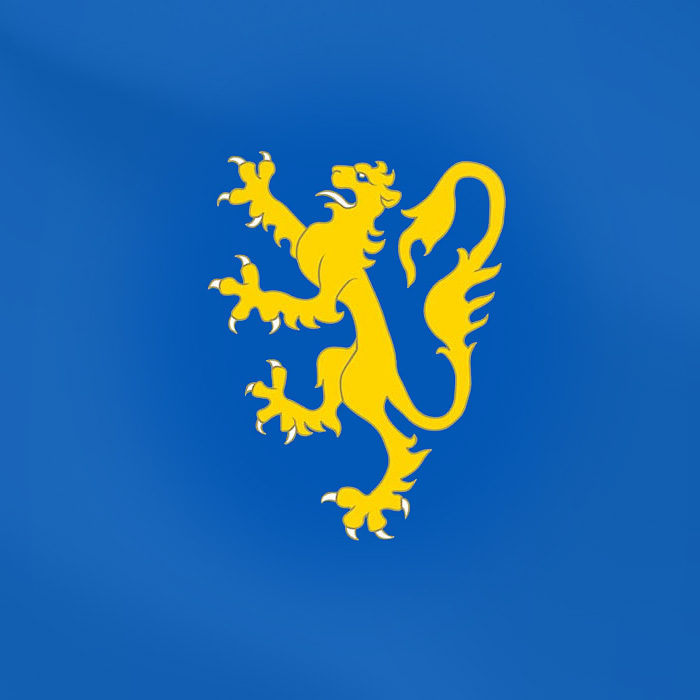
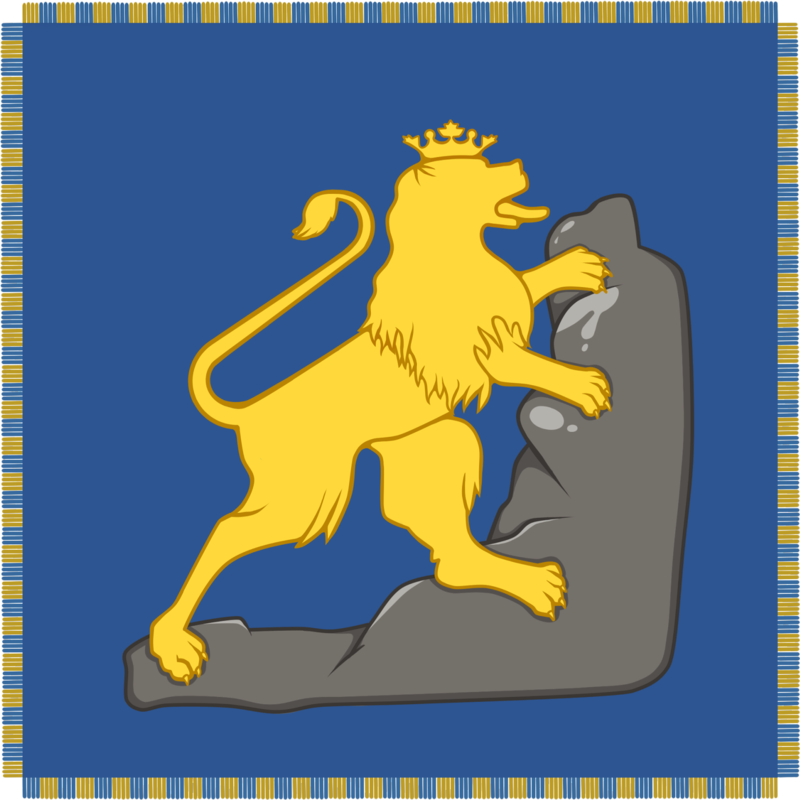
After some consideration, the answer was a golden lion leaning on a rock on a blue background.

 
Why did they choose a symbol like that?

Let's go back to the 13th century when the Kingdom of Galicia–Volhynia, also known as the Kingdom of Ruthenia, existed in Ukrainian lands. It was the main state that emerged in modern Ukraine's territory after Kyivan Rus's collapse.

In 1253, Pope Innocent IV appointed Prince Danylo Romanovych as the king of the Kingdom of Galicia–Volhynia. The new king needed royal symbols. Considering that he founded the city of Lviv, known as the city of the lion, and named his son Lev (Lion), it is evident that the symbol of the lion held a sacred meaning for the king. So, the royal symbol appeared to be a golden lion on a blue background.

But when did the lion disappear from the Ukrainian flag?

Thus, on May 16, 1848, the Supreme Ruthenian Council decided to use the ancient coat of arms of the Kingdom of Galicia–Volhynia. The problem was that rural communities in Galicia constantly asked the Council to help them make local flags. The production of flags with a lion was complicated and expensive, so flags that were simplified to two horizontal stripes, blue and yellow, became more popular.

The blue and yellow flag was first flown over Lviv City Hall on June 25, 1848. Since then, it has been used at public events and demonstrations.

How did the blue and yellow flags spread across all the territory of Ukraine?

At the end of the 19th century, Ukrainians in the russian Empire were also interested in their traditions; national literature and theatre were developing. The russian authorities, who had been russifying the Ukrainian population for centuries, did not like this. In 1863, the Valuev Circular was issued, prohibiting the publication of religious and educational books in Ukrainian. The Ems Ukaz followed it in 1876, ousted the Ukrainian language from the public space (banning the use of the Ukrainian language in print except for reprinting old documents).

After the revolution in the empire in 1905-1907, the Valuev Circular was cancelled. This contributed to the discussion between Ukrainians living in the Austro-Hungarian Empire and the russian Empire about national symbols. The debate unfolded on the pages of newspapers.

The lion symbol was seen as unfamiliar by Ukrainians living in the russian Empire because russia had suppressed the true history of King Danylo for many years. However, using blue and yellow on the flag brought unity, as these colours reminded people of the wheat fields and blue sky of Ukraine.

What happened next?

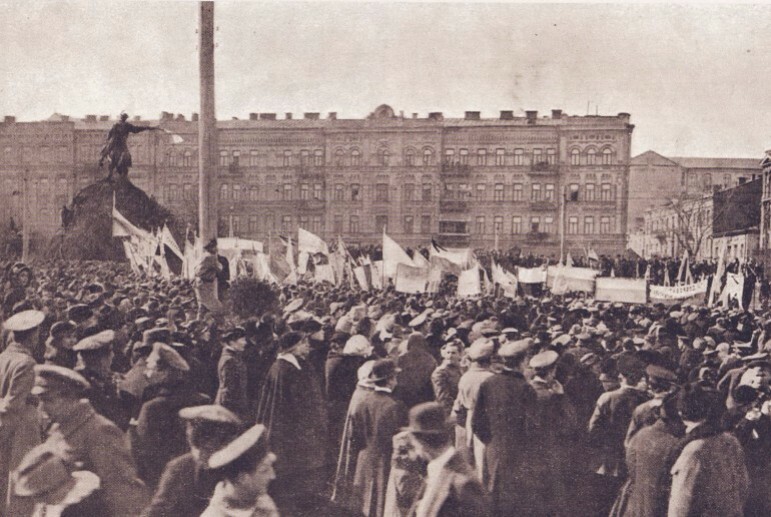
In 1917, the russian Empire collapsed. On March 17, the Central Rada, a parliament of pro-Ukrainian forces fighting for independence, was formed in Kyiv. Historian and public figure Mykhailo Hrushevsky became its chairman. Under his leadership, on April 1, 1917, the first mass Ukrainian celebration of freedom occurred in front of St. Sophia Cathedral. It was a large demonstration with one hundred thousand people under blue and yellow flags.

The Austro-Hungarian Empire was also under the threat of collapse. Ukrainians in the western lands of Ukraine also organized demonstrations in favour of forming the Western Ukrainian Republic. And they, too, came out with blue and yellow flags.

A joint flag symbolizing the desire for independence united the two parts of Ukraine on January 22, 1919, during a gathering of thousands of people on St. Sophia Square in Kyiv. The Unification Act was then proclaimed.

And what was the story of the Ukrainian flag in the Soviet Union?

After the collapse of the russian Empire, bolsheviks took over the territory and established their communist empire, the Soviet Union. During their rule over Ukrainian lands, the Communists suppressed the national movement and the display of the Ukrainian flag. Possession of the Ukrainian flag was punishable under two articles of the Criminal Code, known as "Anti-Soviet agitation and propaganda," and carried a penalty of imprisonment for six months to 7 years.

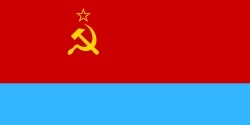
The Communists approved a red flag with a hammer, sickle, and star as the national flag of Soviet Ukraine, to which an azure stripe was added in the lower part in 1949.

On May 1, 1966, a sensational event occurred in Kyiv. A blue and yellow flag replaced the red one over the Kyiv Institute of National Economy. The individuals responsible for this act were an electric welder and a plumber. They raised the blue and yellow flag as a protest against the violation of Ukrainians' rights and freedoms. As a result, they were sentenced to 2 and 3 years in prison, which they served in russian strict regime camps.

When did the blue and yellow flag return to Ukraine?

A year before the declaration of Independence on July 24, 1990, 200,000 Ukrainians gathered near the Kyiv City Council on Khreshchatyk. They came to the lawmakers with one question: When would they officially recognize the blue and yellow flag and take down the red Soviet flag? However, the communists did not want to do this. They left the session room through the back door to create an artificial lack of quorum, making it impossible to vote for the recognition of the Ukrainian flag.

Afterwards, people began taking action independently. A flag, blessed by the head of the Ukrainian Orthodox Church, Volodymyr, was brought from Lviv. At precisely 7 pm, the blue and yellow flag was raised over Kyiv while the Ukrainian anthem was sung. People were not even afraid of snipers positioned on the roofs of buildings by Soviet security forces. However, the communist authorities did not acknowledge the flag. For several months, residents of Kyiv guarded the flag on Khreshchatyk day and night until they eventually compelled the Kyiv City Council to vote for it.

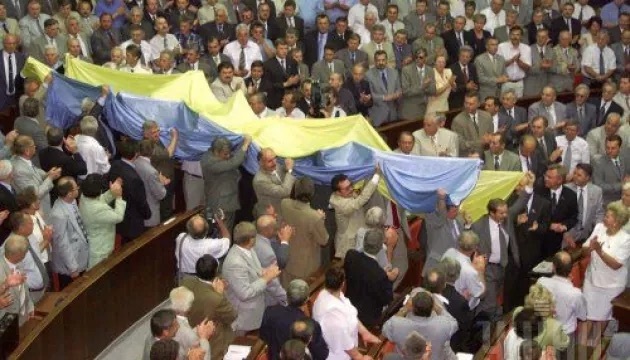
On August 24, 1991, following the adoption of the Declaration of Independence, lawmakers brought a blue and yellow flag, which measured eight by four meters, into the session hall and covered the rostrum.

This is the story. I wrote it with tears and pride. With tears for all the terror we received (and still receive) from russia, and with pride for our invincible spirit.

We returned our blue and yellow flags. We gained our independence. And we will never give them back.

Слава Україні! Glory to Ukraine!

Sincerely,
Yaroslava

P.S. If you like this letter, please consider subscribing to them by joining my Patreon family. Thank you!


George Orwell reviews Hitler’s Mein Kampf - Jonathan Crow (Open Culture)

 George Orwell Reviews 

Mein Kampf: “

He Envisages a Horrible 

Brainless Empire” (1940)

https://www.openculture.com/2024/08/george-orwell-reviews-mein-kampf-he-envisages-a-horrible-brainless-empire-1940.html

Christopher Hitchens once wrote that there were three major issues of the twentieth century — imperialism, fascism, and Stalinism — and George Orwell proved to be right about all of them.

Orwell displays his remarkable foresight in a fascinating book review, published in March 1940, of Adolf Hitler’s notorious autobiography Mein Kampf. In the review, the author deftly cuts to the root of Hitler’s toxic charisma, and, along the way, anticipates themes to appear in his future masterpieces, Animal Farm and 1984.

The fact is that there is something deeply appealing about him. […] Hitler … knows that human beings don’t only want comfort, safety, short working-hours, hygiene, birth-control and, in general, common sense; they also, at least intermittently, want struggle and self-sacrifice, not to mention drums, flags and loyalty-parades. However they may be as economic theories, Fascism and Nazism are psychologically far sounder than any hedonistic conception of life.

Yet Orwell was certainly no fan of Hitler. At one point in the review, he imagines what a world where the Third Reich succeeds might look like:

What [Hitler] envisages, a hundred years hence, is a continuous state of 250 million Germans with plenty of “living room” (i.e. stretching to Afghanistan or there- abouts), a horrible brainless empire in which, essentially, nothing ever happens except the training of young men for war and the endless breeding of fresh cannon-fodder.

The article was written at a moment when, as Orwell notes, the upper class was backpedaling hard against their previous support of the Third Reich. In fact, a previous edition of Mein Kampf — published in 1939 in England — had a distinctly favorable view of the Führer.

“The obvious intention of the translator’s preface and notes [was] to tone down the book’s ferocity and present Hitler in as kindly a light as possible. For at that date Hitler was still respectable. He had crushed the German labour movement, and for that the property-owning classes were willing to forgive him almost anything. Then suddenly it turned out that Hitler was not respectable after all.”

By March 1940, everything had changed, and a new edition of Mein Kampf, reflecting changing views of Hitler, was published in England. Britain and France had declared war on Germany after its invasion of Poland but real fighting had yet to start in Western Europe. Within months, France would fall and Britain would teeter on the brink. But, in the early spring of that year, all was pretty quiet. The world was collectively holding its breath. And in this moment of terrifying suspense, Orwell predicts much of the future war.

When one compares his utterances of a year or so ago with those made fifteen years earlier, a thing that strikes one is the rigidity of his mind, the way in which his world-view doesn’t develop. It is the fixed vision of a monomaniac and not likely to be much affected by the temporary manoeuvres of power politics. Probably, in Hitler’s own mind, the Russo-German Pact represents no more than an alteration of timetable. The plan laid down in Mein Kampf was to smash Russia first, with the implied intention of smashing England afterwards. Now, as it has turned out, England has got to be dealt with first, because Russia was the more easily bribed of the two. But Russia’s turn will come when England is out of the picture — that, no doubt, is how Hitler sees it. Whether it will turn out that way is of course a different question.

In June of 1941, Hitler invaded Russia, in one of the greatest strategic blunders in the history of modern warfare. Stalin was completely blindsided by the invasion and news of Hitler’s betrayal reportedly caused Stalin to have a nervous breakdown. Clearly, he didn’t read Mein Kampf as closely as Orwell had.

You can read Orwell’s full book review here.

Related Content:

George Orwell’s Political Views, Explained in His Own Words

T.S. Eliot, as Faber & Faber Editor, Rejects George Orwell’s “Trotskyite” Novel Animal Farm (1944)

Aldous Huxley to George Orwell: My Hellish Vision of the Future is Better Than Yours (1949)

Hear the Very First Adaptation of George Orwell’s 1984 in a Radio Play Starring David Niven (1949)

Jonathan Crow is a writer and filmmaker whose work has appeared in Yahoo!, The Hollywood Reporter, and other publications. You can follow him at @jonccrow

Postagem em destaque

Livro Marxismo e Socialismo finalmente disponível - Paulo Roberto de Almeida

Meu mais recente livro – que não tem nada a ver com o governo atual ou com sua diplomacia esquizofrênica, já vou logo avisando – ficou final...