Thinking About the Unthinkable, Again
Essay by Mark Helprin
The Claremont Book Review, vol. X-XI, Winter 2010-Spring 2011

The equation for determining the overpressure of a nuclear shock wave, which can pulverize concrete before the heat of detonation turns it into glass and radioactivity makes it unapproachable, is D=D1´ W⅓(where D equals distance from ground zero of overpressure; D1equals distance from ground zero of reference overpressure; and W equals kilotonage). Applying this to empirical data reveals, for example, that at the outer limit of a six-square-mile area subject to a 10-kiloton nuclear blast at its center, a typical 20-story office building would be subjected on one side to an instantaneous pressure of six-million pounds. Pity everything in the six-square-mile area, and much beyond. And a 10-kiloton device, easily transportable in a salesman's case, produces less than 1/50th of 1% the yield of the largest nuclear weapon ever tested.
The destructive power of nuclear weapons, which operate on almost an astronomical scale, has engendered so deep-seated a fear that to think about them rationally is often mistaken as endorsing their terrible effects. In this view, emotion and sensitivity trump reason and calculation, as if neurosurgery would be better accomplished by method actors and poets, with a fainting couch nearby, rather than by neurosurgeons, who are commonly faulted for being cold. Thus Herman Kahn, who bid us think about the unthinkable, was reviled as a Dr. Strangelove even before Dr. Strangelove existed, and thus the movements for various types of nuclear abolition or reduction (their persistent power derived from the will, though not the wit, to survive) display a quality akin to panic.
The safe, responsible policy that for more than half a century has kept civilization-destroying nuclear weapons in check is counterintuitive: that is, to keep the unthinkable at bay, one must be willing to do the unthinkable. Consequently, it is hardly friendly to public opinion. Accommodating the popular will as they must, politicians of both parties frequently take steps that soothe the public even as they inflame the danger. And when responsible officials are themselves strangers to the facts of the matter, like Neville Chamberlain they develop the habit of mistaking the acclamation they receive for the true leadership they lack.
This is what has happened. In its drive toward severe numerical reduction of nuclear weapons as a prelude to complete abolition, the current administration will increase nuclear instability and proliferation even as it fulsomely congratulates itself for having done the opposite. Would that its perceptions were as faultless as its motives.
Abolition
Were the certain abolition of nuclear weapons possible, it would almost certainly be worth the negative effects that would accompany it, but these cannot be dismissed even if in most quarters they are virtually unknown. Abolition would restore primacy to certain forms of conventional warfare, changing the military balance unpredictably; for example, resurrecting the value of mass formations even if in the context of massed precision weaponry. Destabilizing in itself, a suddenly revised balance would coexist with a vastly lowered threshold of conflict between the major powers. In the first half of the 20th century, before the advent of nuclear weapons sidelined the direct conflict of the leading nations into a proxy system in which remote wars cost the lives of millions, the world wars cost the lives of scores of millions. The great wars did not vanish because of an era of good feelings, and there is nothing to indicate that absent the fear of nuclear escalation they might not reappear, especially given the further advancement, enrichment, and growth of the technology, surplus-producing economies, and massive nation-states that made them possible in the first place.
Were it actually feasible, removing nuclear weapons from the equation could make the use of chemical and biological weapons more likely. There is now a prototype of this in the Obama Administration's "Negative Security Assurances" as expressed in the 2010 Nuclear Posture Review (NPR): "The United States will not use or threaten to use nuclear weapons against non-nuclear weapons states that are party to the Nuclear Non-Proliferation Treaty and in compliance with their non-proliferation obligations."
According to this ill-considered doctrine intended with the force of paper to turn countries like Iran from their nuclear ambitions, they will be free to use chemical and biological weapons against us with our solemn guarantee that we will not respond with our full potential. What was once incalculable uncertainty has vanished, and they are now at liberty to entertain what previously they might not even have considered.
Someone in some agency of government must have drawn attention to this highly effective maneuver of the United States against itself, for the document immediately attempts to address the problem it creates: "Any state that uses CBW [chemical and biological warfare] against the United States or its allies and partners would face the prospect of a devastating conventional military response." Not a few states, however, such as North Korea, Vietnam, Iraq, and Afghanistan, have been willing to risk the "devastating conventional military response" with the confidence that they would live through it, as they have. We neither possess nor will we use CBW. Thus, we have unbalanced the equations of deterrence and given rogue and terrorist-sponsoring states license to attack us as we have never been attacked before.
If in fact we were to suffer such an attack, it is almost certain that even President Obama would immediately discard the "Negative Security Assurances"—which is only one of the reasons why it will be ineffective as a counter to proliferation. But in the context of nuclear abolition an indelible "Negative Security Assurances" would alter the dynamic of deterrence irreversibly and make the use of other weapons of mass destruction that much more likely.
Although the opportunity to abolish nuclear weapons might still be worth such potentially devastating effects, yet another risk overshadows the entire enterprise and cannot be responsibly abided. Abolition has none but a destructive purpose unless it is universal and highly certain. Without these conditions, giving up nuclear weapons is not merely unilateral disarmament but a powerful encouragement of their use, whether as a threat or in actuality, by whatever agency would secretly retain or manufacture them anew. Unfortunately, universality in a high degree of certainty is impossible to attain, which (and not because man is inherently evil, whether he is or not) is why nations have been trapped in nuclear deadlock.
The world is far too large and history too rich in surprise and betrayal to trust that abolition can be made certain. The nine known nuclear powers have collectively manufactured approximately 100,000 warheads. The bulk of these have degraded over time or been decommissioned. Most are secure and accounted for, but many are not, and no reliable warhead inventory exists among the established nuclear-weapons states, rogue aspirants, shoe-box countries, and terrorist groups. Untracked fissionable material from the former Soviet Union alone would be enough for the construction of a large number of weapons, and—legitimately or otherwise—new fissile material is created every day. Almost half a century ago, Israel, with a GNP of $3.3 billion and a population of two and a half million, created a nuclear weapon even before it produced its own jet aircraft. Were certain and universal abolition to be achieved, it could be secretly negated by manufacture. And as for covert retention, an average American house is big enough to hold an arsenal sufficient to control an otherwise nuclear-disarmed world.
What is the administration's answer to this elemental contradiction of its faith in the near-term feasibility of disarmament? "[I]n a world with complete nuclear disarmament, a robust intellectual and physical capability would provide the ultimate insurance against nuclear break-out by an aggressor." That is, after an aggressor unveils—or has used—his hidden arsenal, we begin to recreate our own?
At first one may feel relief that such astonishing reasoning, which riddles theNuclear Posture Review, is hedged. Abolition, we are told, depends upon halting proliferation; achieving total transparency, verification, and enforcement; and "the resolution of regional disputes that can motivate rival states to acquire and maintain nuclear weapons." Though these conditions will not arrive before the Messiah, with the audacity of hope over experience we are moving ahead anyway, in the expectation that engagement itself will solve problems unrelated to engagement, our rivals will cast aside their vital interests as easily as we have cast aside our own, and to show the people of Western Europe that we are sophisticated enough to share their semi-religious affection for appeasement.
Severe Reduction
The road to abolition—that is, the process of disarmament that in itself is reassuring to many—is anything but benign. Some effects of the severe reduction necessary to get to zero might be worth the risk were true abolition certain, but even then some would be so dangerous as to give pause.
Multilateral Effects: The drastic reductions we have agreed upon (from a peak of 31,255 warheads in 1967 to 1,550 in the New Strategic Arms Reduction Treaty (NSTART), deployed, more pertinently, on only 700 platforms) will rapidly bring about multilateral nuclear parity among, at first, China, the U.S., and Russia, and then among any number of states. As in the physical three-body problem, in which it is impossible to calculate the equilibrium among three bodies in motion, much less half a dozen; and as in a tripartite arms competition in which A and B can never rest in balance if B must take account of C, multilateral nuclear parity cannot be stable. Deterrence and sufficiency must be determined in view of combinations of opponents, or those that, having sat out a confrontation, come in fresh. This cannot be done without altering the equilibrium, requiring further adjustments that will further destabilize it. It used to be that the object of arms control was stability. Now it has become abolition, and the severe reductions required to achieve it are and will be detrimental to stability.
Lesser State Adventurism: As lesser, rogue, and crazy states arrive at actual—or what they merely perceive to be—nuclear parity, or even just nuclear sufficiency (the ability to inflict damage enough to dissuade an opponent from consideration of a nuclear exchange) they will be able to contemplate the use of tactical nuclear weapons to keep out the superior conventional forces of the traditional powers. Although it might delight the peace movements of the West, it would allow aggressors freedom of action without intervention. In the many regional wars this would inevitably encourage, nuclear use might seem irresistible to the states thus shielded, were their fortunes on the battlefield to encounter frustration they found threatening or intolerable. When Iran becomes a nuclear power, the Middle East will find itself in a whole new world. And as we move closer and closer to abolition, the prospect of an Iran at nuclear parity with the United States, as inconceivable as it may have been just a short time ago, becomes, as Yogi Berra might say, theoretically real, because we are making it so.
Encouragement of Proliferation: When the superpowers each had scores of thousands of warheads, thousands of delivery systems, and active, ever-evolving, related technologies, there was no profit to a lesser state in offering a nuclear challenge. The best any nation could do was to strive for minimum sufficiency. But with advances in precision guidance, sufficiency became a dangerous game, in that if it were calculated that, for example, 100 warheads were necessary to inflict unacceptable damage upon and therefore deter an opponent, presumably reducing their number by one would produceinsufficiency, and in so doing, tempt a first strike.
The focus then shifted to the much misunderstood and maligned concept of overkill, which increases stability by making it more difficult in a first strike to eliminate an opponent's sufficiency. But as precision guidance became nearly absolute, even overkill could be wiped out by an accurate enough attack. Lesser nuclear powers (China, Britain, France) relied upon the superpowers' demonstrated sobriety and contented themselves with enough nuclear potential to create uncertainty. Except when in their eyes regional rivalries made it imperative, non-nuclear powers generally saw no point in entering the game, because it was always too late to catch up.
Now, however, when the U.S. has committed to hold only 5% the number of warheads it once possessed at the peak, and requests an immediate push for further reductions; when our nuclear weapons complex and the nuclear weapons themselves have aged without adequate maintenance and replacement; when official policy is that "The United States will not develop new nuclear warheads...[to] support new military missions or provide for new military capabilities," we have stopped the evolution that served for so long to discourage so many others. This longstanding and popular goal of arms control—fewer and fewer warheads, approaching zero, and frozen technological advance—means that now anyone, no matter how small, can get in the game, and will. That is called proliferation, which arms control theoretically is supposed to stem, and sometimes can, but not when its focus is trained on abolition rather than stability, not when officials want to be credited for their transcendence rather than risk criticism for willingness to pursue the counterintuitive.
First Strike
One can reasonably argue that in pursuit of abolition the dangers associated with the process of reduction (multilateral instability, crazy-state adventurism, increased proliferation) are worth the risk. Abolition itself might make worthwhile the renewal of certain forms of conventional warfare, the lowering of the threshold of conflict between the major powers, and the increased likelihood of CBW, but is not worth the risks of concealment, breakout, or covert manufacture. Similarly, the severe reductions on the road to abolition or for their own sake are not worth nuclear force instability and the implicit encouragement of first strike.
The Nuclear Posture Review's conclusion that "the likelihood of a major nuclear war has declined significantly; thus far fewer nuclear weapons are needed," is received wisdom at the highest and lowest levels. A letter in the Air Force professional journal states that, "[A]s stockpiles decline, so does the temptation...to use them.... According to most scholars, the odds of a superpower nuclear gambit or first strike have by most estimates sunk to near zero—with odds continuing to lower as stockpiles diminish." Or the same, resuméd, from an Air War College professor writing in the New York Times: "[W]e have calculated that the country could address its conceivable...military concerns with only 311 strategic nuclear weapons...nine-and-a-half times the [explosive power] that...McNamara argued in 1965 could incapacitate the Soviet Union." (Diminution to one fifth the current agreed limits is politically conceivable, as these are themselves one twentieth the historical maximum, and the express wish of the administration is for an immediate move toward further reduction.)
The careless orthodoxy that a large number of warheads and delivery vehicles promotes a first strike and a smaller number discourages it, breaks first upon the shoals of fact—we know that during 40 years of very large numbers there was no first strike, and we do not yet know the effect of small numbers—and then upon those of logic, for it takes no account of vulnerability, the prime variable of strategic stability.
Even with advances in precision and terminal guidance, not every warhead will hit its target. Faulty intelligence, equipment failure, weather (literally), deception, defense, and other countermeasures mean that no matter how many warheads are devoted to each target not all targets will be destroyed. Consider illustratively the case of two opponents, each with a single warhead, and then another two with 1,000 apiece, with each warhead given an 80% chance of detonating upon its target. In the first case, the first strike has an 80% chance of destroying 100% of the victim's retaliatory capacity. In the second, at the same rate of accuracy, 200 warheads will remain with which the victim can retaliate in a second strike, and the opponent who struck first will have none with which to respond—a 0% chance of success. In a more homely fashion, which would be preferable, to attempt one bull's-eye with a rifle that is 80% accurate, or 1,000 bull's-eyes with 1,000 rifles of 80% accuracy? The conventional wisdom says that more warheads are more conducive to a first strike, and fewer are less conducive. The reality is exactly the opposite.
That the proposed 311 warheads are just a smidgen less than 1% of the historical maximum suggests that the analysis in the Times may have been driven less by objectivity than by a desired result. How stable would the balance of terror be at this number, assuming that a major competitor was effectively held to the same level? Strategic nuclear weapons are deployed in a triad of silo-based missiles, submarine-launched missiles, and bombers, and 311 warheads could be distributed among these in many permutations. Because the sea leg is the least vulnerable, the bulk of the warheads would no doubt be sea-based.
For example, even if all the soon-to-be-reduced-to-twelve SSBNs (nuclear ballistic missile submarines) did not take the soon-to-be-reduced-to-a-maximum-of-20 SLBMs (submarine-launched ballistic missiles) but 15 instead, 180 warheads would then reside in 12 targets—six SSBNs in port (fixed) and six at sea (mobile). One warhead on each of our only 60 remaining bombers at their three bases, dispersed into four primary target areas per base, yields 12 fixed targets. The remaining 71 warheads on 71 silo-based Minuteman III missiles yield an additional 71 fixed targets. Even if an enemy held 110 warheads in reserve, he would still have 2.5 warheads with which to attack each of a total of 89 fixed targets. The six submarines at sea would be vulnerable to, for example, those operational of 30 Russian and Chinese nuclear/attack and 74 conventionally powered submarines, and a large number of surface vessels and maritime patrol aircraft.
By way of comparison, at the end of the Cold War an enemy would have had to deal not with 89 fixed targets but with 1,064, and not with 6 SSBNs at sea but with 17, a far greater challenge and thus a far greater impediment to rash action. In addition, in 1992, virtually every missile was MIRV'd (that is, it carried multiple independently targetable warheads) meaning that, though MIRV'ing created its own major stability problem, to be effective a first strike had to approach 100% accuracy. For example, if 30 American missiles survived a first strike, because each missile could carry multiple warheads we would have been able to throw back several hundred in a retaliatory strike. If 30 warheads were left in the proposed 311-warhead regime, and the enemy had 110 remaining (see above), there would be no counter-force option (incapacitating his remaining missiles), meaning that he could, if he wished, destroy America's cities were the U.S. to retaliate with a counter-value strike against his cities in response to his first strike. Also, the degradation of the 30 remaining American missiles—by malfunction, weather, and ballistic missile defense—might make the risk of absorbing the consequently limited, and suicidal, counter-value strike tolerable to a Hitler, Stalin, Mao, or Ahmadinejad.
Although these examples are simplified versions of a more complex reality, nothing inherent or observable in the complexity changes the fact that moving to a very small number of warheads and delivery vehicles creates instability. The smaller the number, the greater the chance that a first strike may succeed, especially as the seas become more transparent and the accuracy of missilery increases at the torrid pace of civilian electronics. As if this were not enough, yet more (self-inflicted) changes to America's defense posture and nuclear doctrine will serve to destabilize the balances of what will soon become not a world in which nuclear weapons no longer exist, but one in which they are almost commonplace, and possessed by nations and dictatorial regimes known less for their restraint than for their psychoses.
Further Instability
Early in the nuclear age, inept doctrine sometimes was the cause of instability, and in recent decades inescapable technical advance leading to super-precision strike has done the same, but never has so mature a power of destruction been mated to such a confusion of doctrine amid such wide-spreading proliferation. Turning its gaze from stability to abolition, the Obama Administration has run roughshod over a number of protective principles discovered over time and as a corrective to great risk. For example, the essence of the doctrine of Flexible Response is to avoid terminal escalation by assuring that at every level of arms an assiduously maintained "deep bench" is not so easily exhausted or outmaneuvered as to require the desperate jump to nuclear weapons. In perhaps dim recognition of this, the NPR offhandedly states that "to reduce the role of nuclear weapons in deterring non-nuclear attacks" "[t]he United States will continue to strengthen" what elsewhere are called its "unrivaled military capabilities."
That its conventional capabilities are yet unrivaled by those of any single state is irrelevant to the wide scope of demands placed upon them, but, more to the point, the United States continues not to strengthen but to weaken them. The Air Force and Naval Aviation, which used to field four or five peak-generation fighters, have been reduced to the F-35-half the plane of the gratuitously abandoned F-22, of which we retain the remnants while Russia and China, and even India, together have five fifth-generation lines in development. The Navy's incredibly shrinking fleet is the smallest since 1916. The army has been transformed into a gendarmerie that with every skipped training rotation and cancelled heavy weapons system moves farther and farther away from the ability to fight another army. And the defense industrial base has been made so thin, non-competitive, and inactive that in case of emergency the "ramp-up" to the manufacture of today's complex weaponry would take from ten years to forever. All this and much more across the board has been inflicted in the name of economy, accompanied by false assurances and unfelt bravado, and without a thought to the implications for the use of nuclear weapons in an emergency in which inadequate conventional forces might buckle.
The new doctrine encourages proliferation not merely in easing up on existing and potential nuclear rivals by running the United States backwards, but in more creative ways as well. We will strengthen "bilateral and regional security ties" to show "neighboring states that their pursuit of nuclear weapons will only undermine their goal of achieving military or political advantages," and to reassure "non-nuclear U.S. allies and partners that their security interests can be protected without their own nuclear deterrent." But our involvement in regional alliances and wars tends to spur rather than dissuade neighboring states in regard to acquisition of nuclear weapons. One of Iran's chief motivations in seeking them is their utility in relation to American forces and policy in the Middle East. And our allies facing newly nuclear-armed antagonists can hardly be expected to rely on either our rapidly weakening conventional forces or our rapidly folding nuclear umbrella, but rather to seek their own. The reality is so intensely the opposite of what the NPR states that it may drive even Japan to seek its own nuclear deterrent. Which is all to say that disarmament cannot strengthen security guarantees or substitute for sound doctrine, and that when it is tortured into doing so the effects are predictably negative.
What of the new doctrine's elemental faith, as we have seen, that nuclear sufficiency is sufficient? In most things, by definition, sufficiency is sufficient, but in nuclear strategy it isn't. It would be were there no crises, misjudgments, and losses of control, and if one side's perceptions and doctrines were always rather than almost never exactly matched to the other's. It would be if the possibility of defense did not allow either the actual or illusory forcing of an opponent's capability from sufficient to insufficient. And defense is not just hardware and interceptors but also dispersion, civil defense, hardening, mobility of the deterrent, and the acceptability of loss as determined culturally, politically, by circumstance, and in the often unfathomable minds of those with the power of decision. Sufficiency is in these ways mercurial, yet at every turn and without a closer look the Obama nuclear doctrine relies upon it to preserve nuclear stability and defend the United States.
As if it were not enough for the administration to run its ideological bulls through the complex china shops of nuclear strategy, destroying structures and relations of which it may not even be aware, it sees as dangerous and worthy of suppression the very instrument with the greatest potential of both buttressing strategic stability and discouraging proliferation. That is, ballistic missile defense (BMD). In this regard, one thing must be clarified. The chief accusations against BMD have been that it cannot work and would (illogically, if it cannot work) promote strategic instability by serving as a shield to protect an aggressor from retaliation after his first strike, especially if this were a counter-force strike that reduced the victim's ability to retaliate in strength.
First, BMD can and does work, and though as the history of warfare illustrates and one would expect, all defenses can be countered, the same history also illustrates that with persistence and responsible stewardship defense can evolve to overcome countermeasures as they develop in turn. As for the second point, no competent strategist ever assumed that a missile shield, no matter how advanced, dense, or layered, could be assumed to do anything but mitigate the effect of an all-out nuclear strike, because even if only a few warheads broke through, the damage would be catastrophic. What a missile shield can do for certain, however, is protect a nation's deterrent, making a successful first strike impossible. A 90% effective defense that led to the destruction of 10% of a nation's cities would hardly free it to contemplate a first strike. By the same token, a defense that preserved 90% of its retaliatory force would make a first strike upon it virtually inconceivable.
Adequate ballistic missile defense would deeply discourage proliferation, in that the likely and threatening proliferators, able to produce only a limited strike capability, have the least chance of getting through a missile defense. The major leverage they might seek by going nuclear would be so reduced as to make them think twice. (Conveyance of nuclear bombs other than by missilery is a separate problem that does not absolve one from addressing the yet most efficient and likely means of delivery.)
How then will the administration make use of BMD, the best structural encouragement of strategic stability and a powerful disincentive to proliferation? "[O]ur missile defenses...are designed to address newly emerging regional threats, and are not intended to affect the strategic balance." The U.S. here officially limits missile defense to rogues and accidental launch, thus disallowing its role in reinforcing strategic stability and as a final line of defense (potentially saving millions of lives) against a counter-value attack. At the same time, it challenges an aspiring nuclear power to aim one notch beyond being a "regional threat." That is because, as we will not venture a defense against a major adversary, and have only 30 interceptors, the task for a new proliferator is well defined and not that challenging: build more than 30 missiles. In a unique "auto-jiu-jitsu," this will eventually force upon us the choice of increasing the numbers of interceptors, thereby moving toward a true strategic defense, or allowing "regional threats" to overwhelm our defenses as we keep faith to our theologically imposed self-limitations.
What can one offer, then, in lieu of the rapid diminution of nuclear weapons on the march to total abolition? First, the continuing maturity of safety measures. They have advanced over the years, from the Hotline to Permissive Action Links and Open-Ocean Targeting, and they can evolve further.
Second, ballistic missile defense, which can benefit strategic stability like nothing else, discourage proliferation, function as a last resort, and even, perhaps, slowly open the road to an abolition less fraught with the dangers of breakout, to the extent of a defense's ability to deal with these as the mass of the defense more and more outweighs the mass of a potentially concealable strike threat.
Third, instead of focusing on our own disarmament and that of other heretofore responsible nuclear powers—thus creating a complex of many actors with widely varying nuclear doctrines in a state of unstable parities—we should first devote our energies to preventing the acquisition of nuclear weapons by dictatorships, crazy states, lunatics, and medieval theocracies. At this we have thus far failed ignobly because we have neither the clarity of vision nor the courage to use force where it is obviously and responsibly required for the defense of this country and the world.
Nuclear war is not precluded by good intentions and magnanimous gestures. Crucial distinctions in doctrine make this unfortunately so. Russian, Chinese, and Iranian views are variously and sometimes vastly different from our own. Even we, after using nuclear weapons twice, contemplated doing so in Korea—not just MacArthur but Eisenhower and Churchill as well—and, later, in Vietnam. The doctrines and practices that over literally millions of "warhead years" have prevented even a single detonation either in anger or by accident are complex, sometimes delicate, and often counterintuitive. They have always been and must remain subject to evolution and adjustment, but they must be deeply understood before they are revised, and at the least they must be considered before they are cast aside.


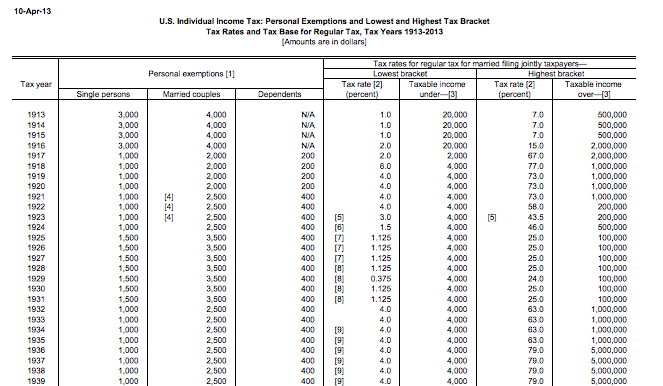


I wonder if mainstream in this case is base on Ramsey model?I learnt in college that base on Ramsey model capital tax is the worse type of tax, is he dealing with this issue anyhow?
industries was 62 cents an hour. In January, 1968, it was
$2.64 an hour. But our legislators, not content with this
general rise in wages due to more and better tools and
natural economic forces, have decided to keep raising
the legal minimum wage even faster than the fast-rising
market average. Thus the statutory minimum was only
29 per cent of average hourly earnings in manufacturing
just before the increase in 1950, but 40 per cent
before the increase of the minimum in 1956,43 per cent
before the increase in 1961, 47 per cent before the increase
in 1963, and 54 per cent before the increase in
1968. The consequence of this is that the legal minimum
wage was pushed up 114 per cent between early 1956
and 1968, though average hourly earnings in manufacturing
rose only 55 per cent. Meanwhile, the Federal
minimum wage has become effective over a far greater
range.
The net result of all this has been to force up the wage
rates of unskilled labor much more than those of skilled
labor. A result of this, in turn, has been that though an
increasing shortage has developed in skilled labor, the
proportion of unemployed among the unskilled, among
teen-agers, females and non-whites has been growing.
The outstanding victim has been the Negro, and particularly
the Negro teen-ager. In 1952, the unemployment
rate among white teen-agers and non-white
teen-agers was the same—9 per cent. But year by year,
as the minimum wage has been jacked higher and
higher, a disparity has grown and increased. In Februaryary of 1968, the unemployment rate among white teenagers
was 11.6 per cent, but among non-white teenagers
it had soared to 26.6 per cent.”