Russia’s War in Ukraine: Key Events and How It’s Unfolding
Sign up here to get the latest updates on the Russian invasion of Ukraine. You can also follow us on Telegram here.
Russian President Vladimir Putin launched Europe’s biggest military assault since World War II with his Feb. 24 invasion of Ukraine, killing thousands of people, driving millions more from their homes, shaking the post-Cold War geopolitical order and roiling global markets.
After initially losing territory, Ukraine’s over-matched military unexpectedly fought Russian forces to a standstill in the north, prompting the Kremlin to refocus its attack on the eastern Donbas region. Ukraine has now called on its allies to help it re-arm and prepare for what may stretch into a months- or years-long war.
Here’s a timeline of the main events so far.
Feb. 24
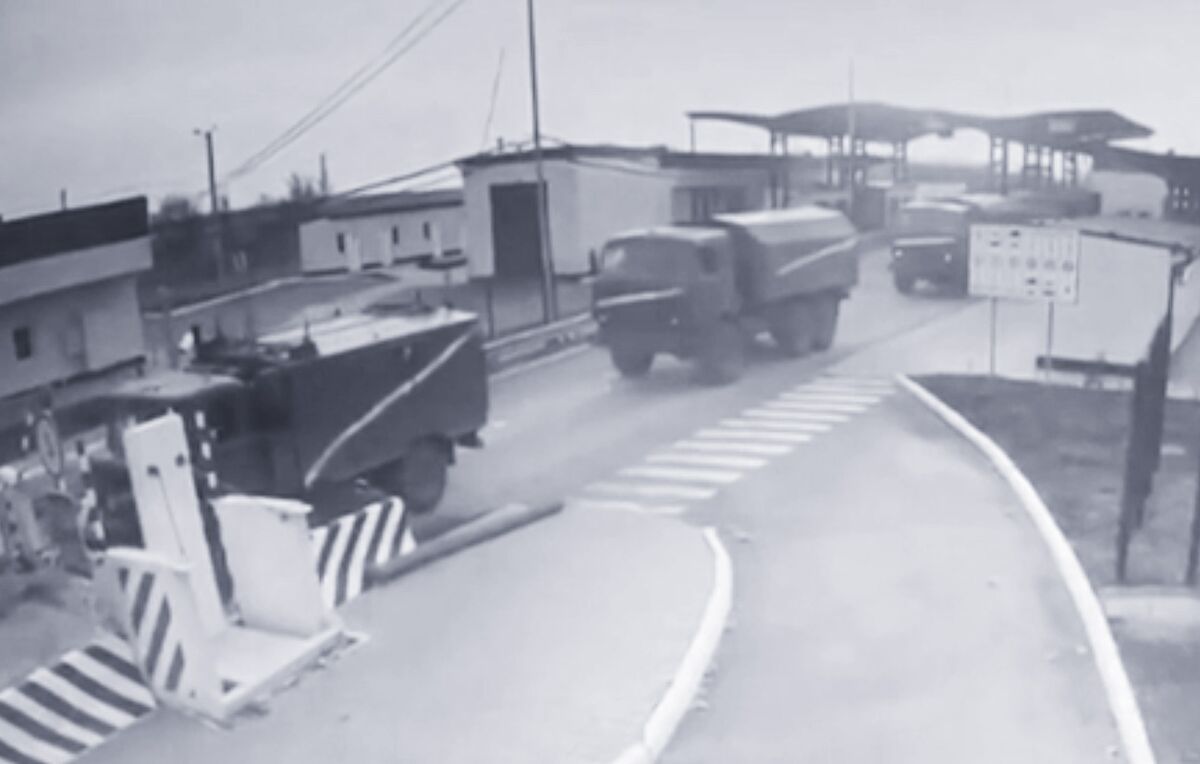
Russia launches its attack from three directions: Belarus in the north, the Donbas region in the east, and from Crimea, which Putin seized in 2014, in the south. The U.S. and European Union announce sanctions targeting Russia’s financial sector, technology imports and oligarchs. Russian stocks and the ruble plunge.
Feb. 25
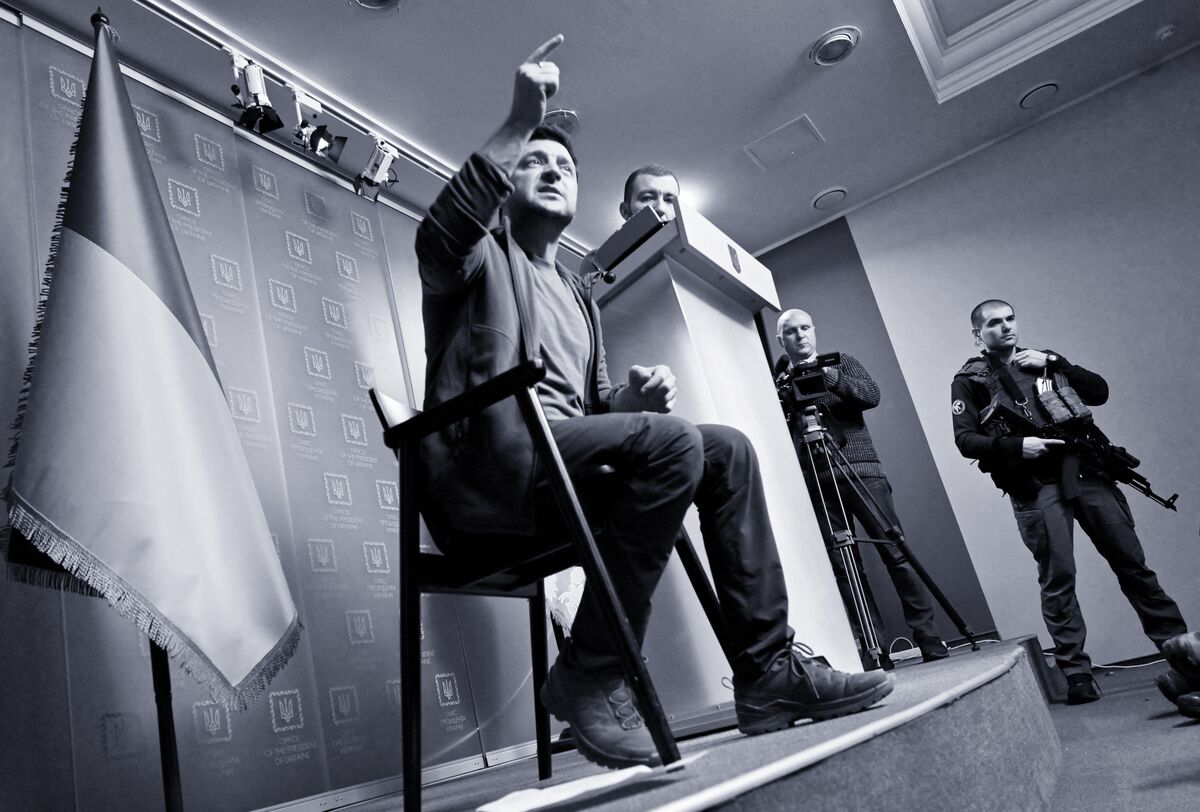
President Volodymyr Zelenskiy rejects calls to flee Ukraine’s capital, Kyiv, says his forces are fighting back, and calls for international support and for weapons. The EU imposes sanctions on Putin and Russian Foreign Minister Sergei Lavrov.
Feb. 27
German Chancellor Olaf Scholz announces plans for a massive boost in defense spending in a historic policy shift. Germany will channel 100 billion euros to modernize the military and meet the NATO spending target of 2% of gross domestic product on defense by 2024.
Feb. 28
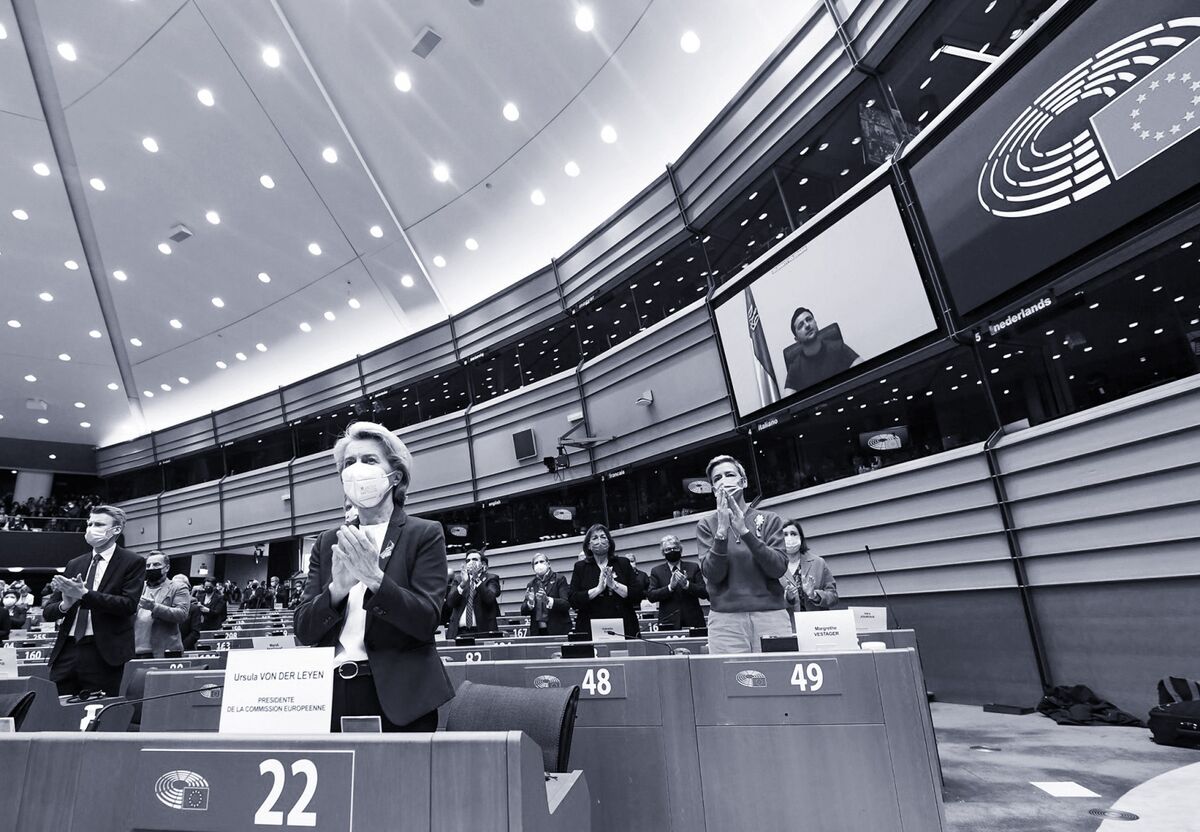
Ukraine applies for EU membership. Accession to the bloc is a long and arduous process, which requires the candidate to adopt established EU law and enact reforms, including to its judicial and economic systems. The move also requires the unanimous approval of all EU members.
March 1
Russian forces begin the siege of Mariupol, a port city with about 450,000 residents on the Sea of Azov.
March 2
The EU excludes seven Russian banks from the SWIFT international payments system and suspends broadcasting by media outlets Russia Today and Sputnik. Officials carve up the EU units of Russia’s largest lender, Sberbank, after sanctions prompt a run on deposits.
March 4
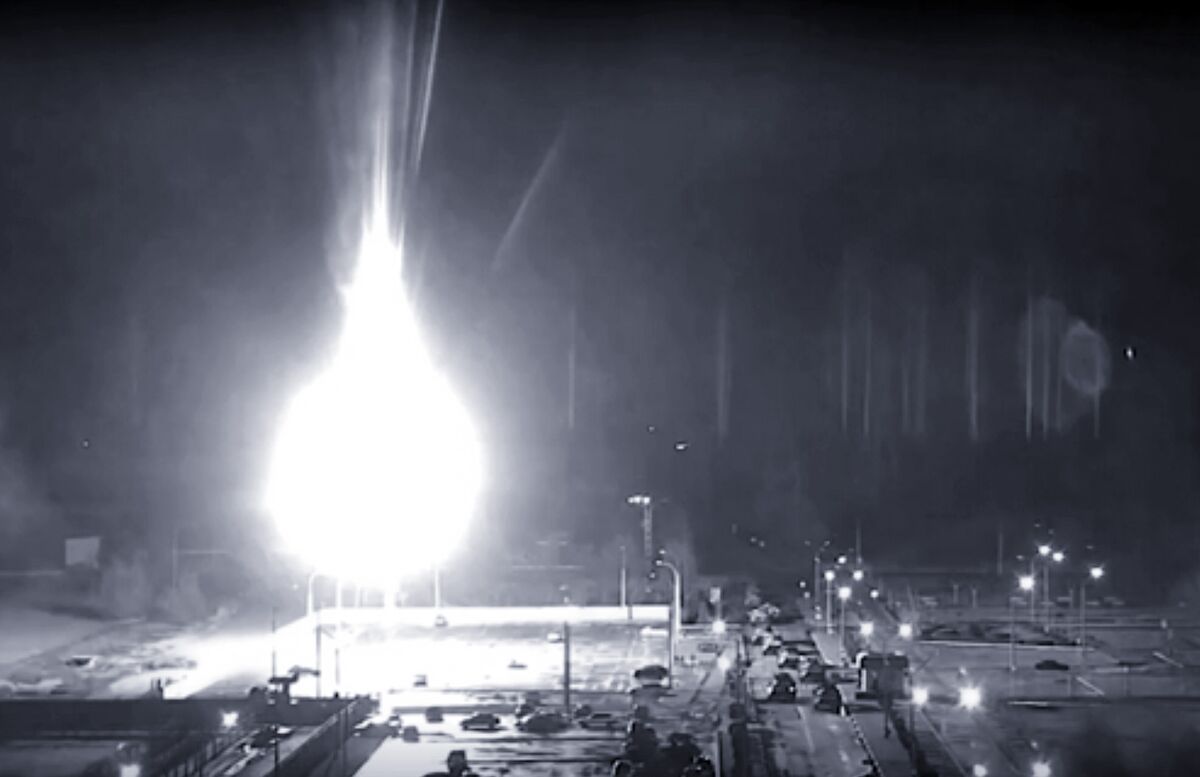
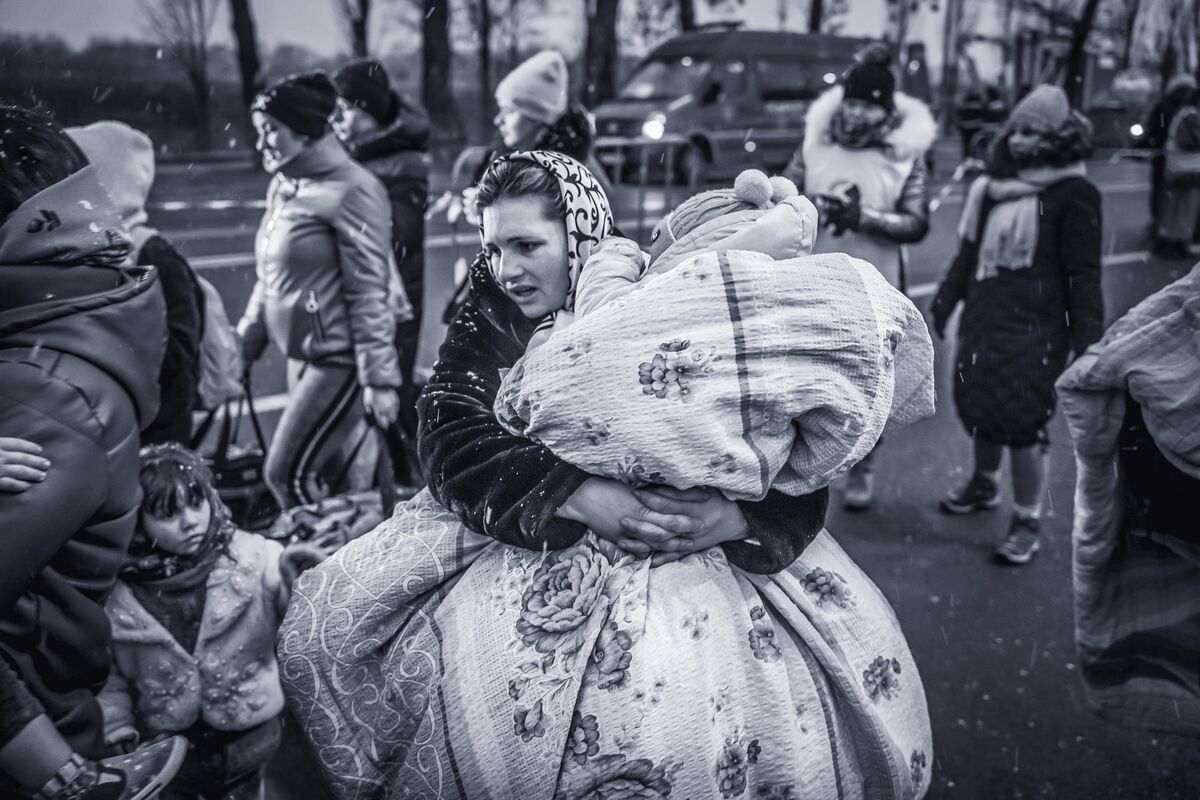
Russian forces occupy the site of Europe’s largest nuclear power plant in Zaporizhzhia, in an attack that Ukrainian officials say ignited a fire and Lithuania’s president calls “nuclear terrorism.” NATO Secretary General Jens Stoltenberg rejects calls from Zelenskiy to impose a no-fly zone over Ukraine, saying it would risk “a full-fledged war in Europe.” The number of refugees displaced inside and outside Ukraine surpasses a million.
March 8
The U.K. says it will ban all imports of Russian oil, a measure taken in concert with the U.S.
March 10
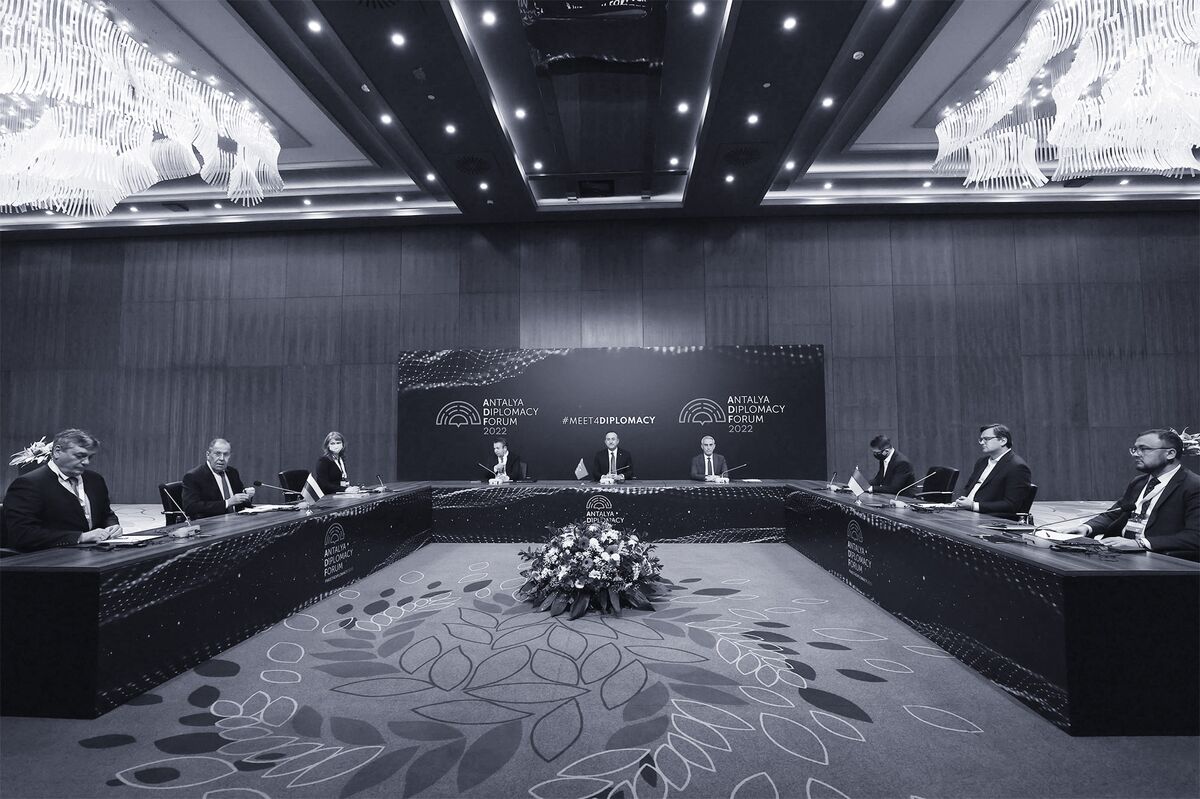
The first high-level talks between Ukrainian Foreign Minister Dmytro Kuleba and Russia’s Lavrov fail to make progress, with Kuleba saying the Kremlin is demanding that Kyiv surrender. A six-ton unmanned, Soviet-made reconnaissance drone streaks across three NATO countries from Ukraine to crash in the Croatian capital Zagreb, raising awkward questionsabout the alliance’s readiness.
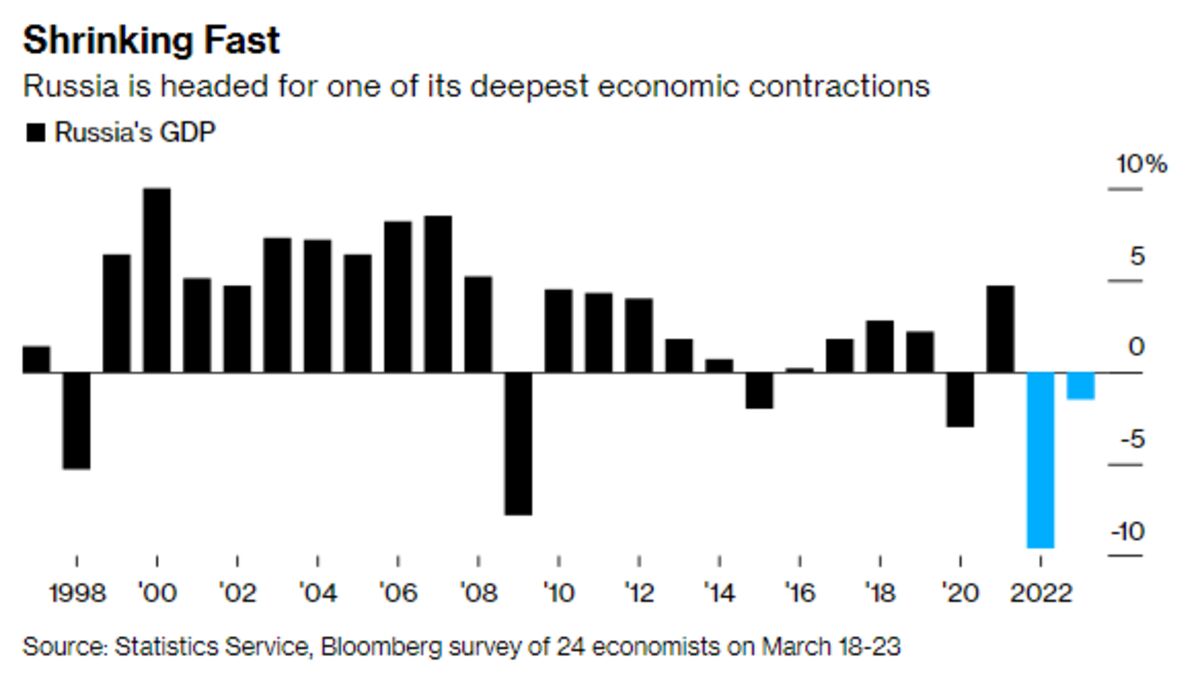
The U.K. also freezes the assets of Chelsea Football Club owner Roman Abramovich as the EU approves sanctions against more wealthy Russians and more than 140 Russian lawmakers. The ruble hits a record low of almost 122 per dollar as economists predict a steep recession in the Russian economy.
March 13
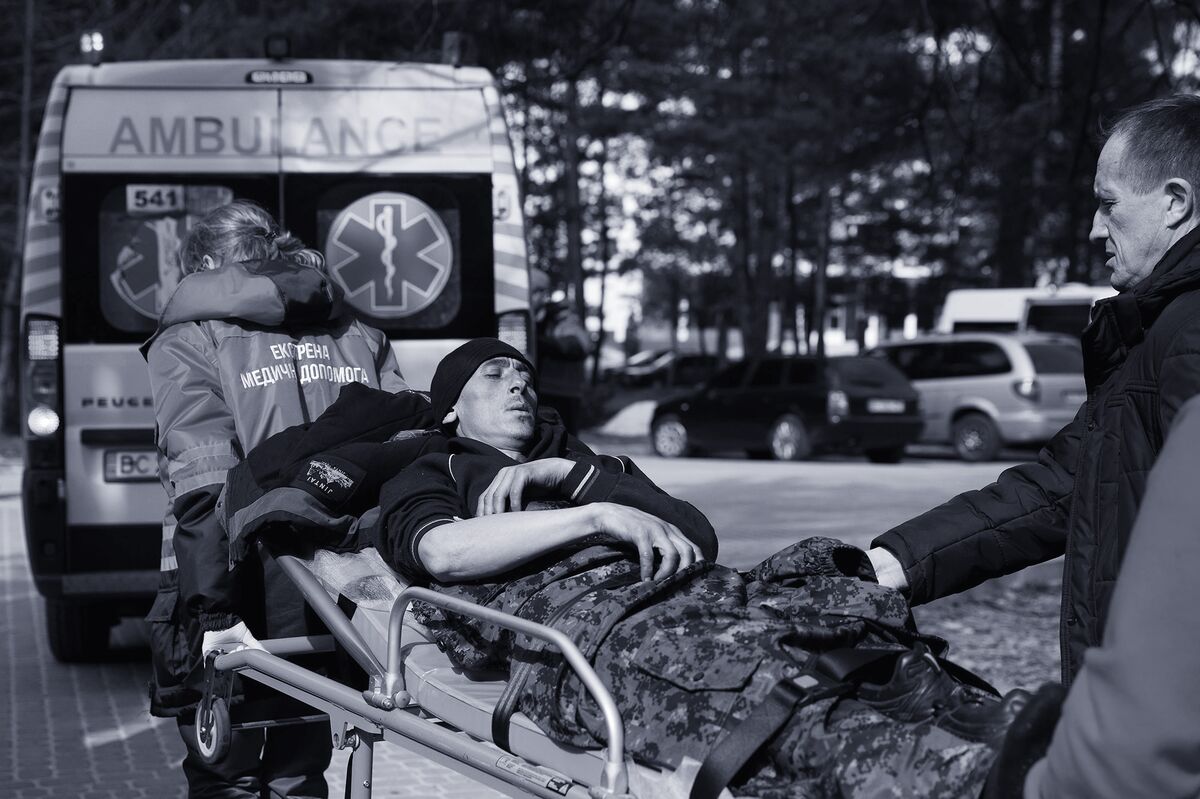
Russian missiles hit a Ukrainian military training facility that had been used by NATO forces before the invasion. The attack near the western city of Lviv close to the Polish frontier killed 35 and wounded 134, and raised concern the war could spill over Ukraine’s borders.
March 15
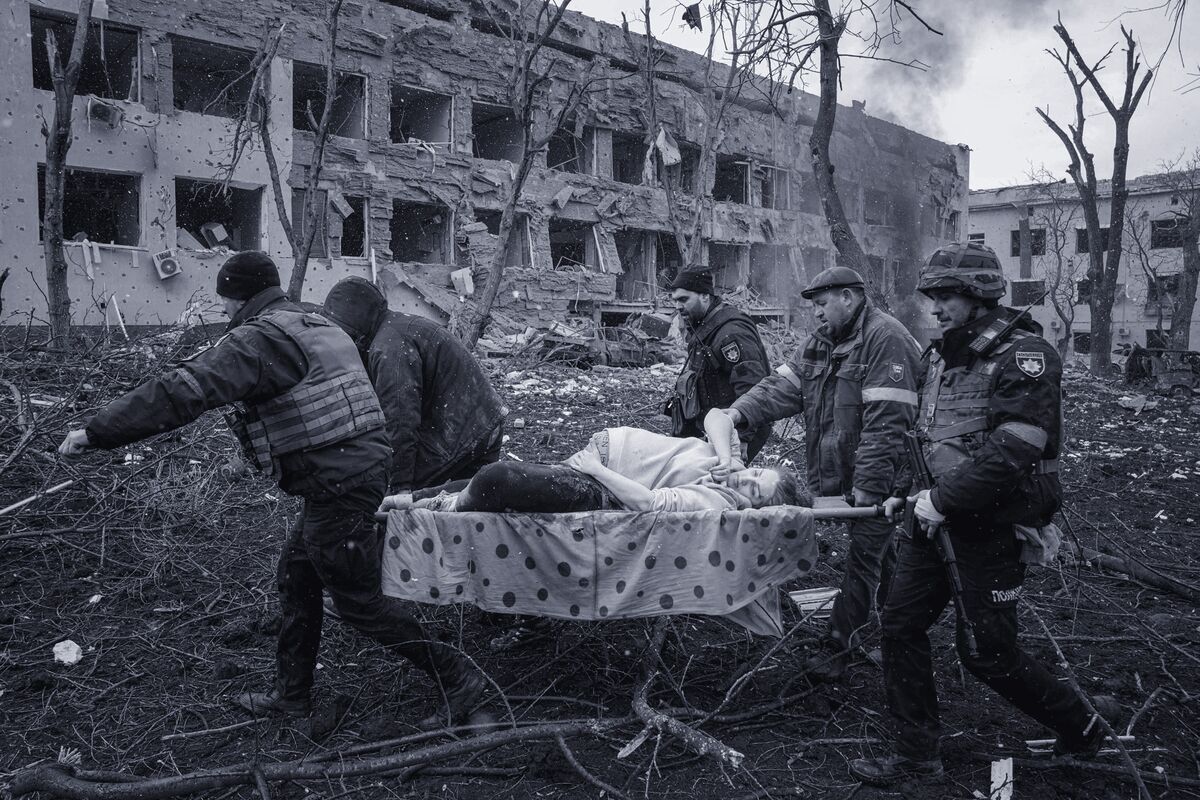
Russian troops take over the largest hospital in Mariupol, taking more than 400 patients and medical staff hostage after targeting it with air strikes. That followed a March 9 strike on a children’s hospital that Ukrainian officials said killed pregnant women and newborns. The EU bans the sale to Russia of luxury goods and the purchase of many Russian steel and iron products, as well as targeting more oligarchs. Zelenskiy reiterates that Ukraine won’t push for NATO membership.
Read More: Tracking the Sanctions Imposed on Russia Over Ukraine Invasion
March 16
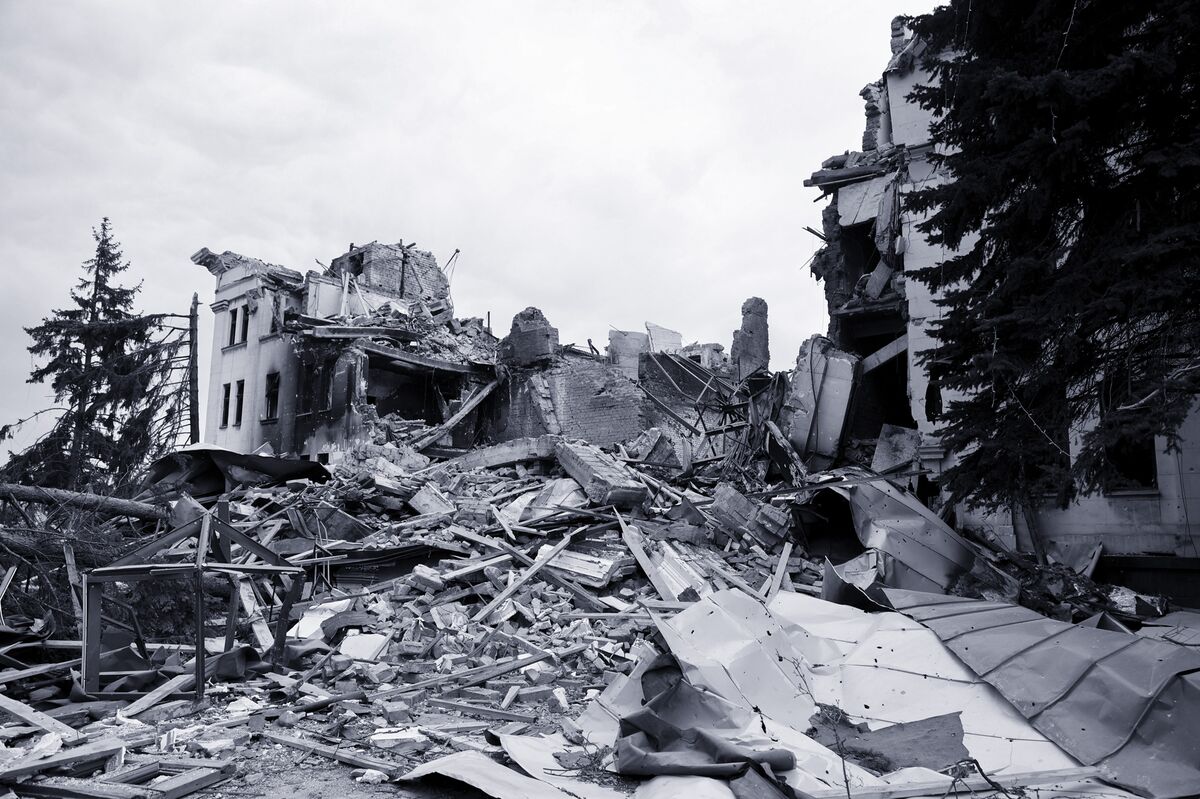
About 300 people are killed by a Russian air strikeon the Mariupol Drama Theater, according to Ukrainian authorities. It was marked by the word “CHILDREN” in huge white letters to ward against an attack.
March 18
Fears of a bond default by Russia ease after $117 million in interest payments start to reach international investors.
March 24
Russian bond, ruble and stocks trading resumesimultaneously for the first time in nearly a month, even as the Kremlin maintains strict capital controls on the currency.
Read More: Panicked Russians Don’t Buy Official Advice That Economy Is Fine
Heading West
About 2.3 million barrels a day of Russian crude heads west through a network of pipelines and ports
Sources: Bloomberg; AW Consulting
March 25
Germany’s government announces plans to stopalmost all Russian oil imports this year and broadly wean itself off of the country’s gas by mid-2024. Berlin repeats that Germany won’t back an immediate embargo on Russian energy, citing the cost to business and households and resisting pressure from Ukrainian officials who say fossil fuel purchases are helping fund Putin’s war.
March 29
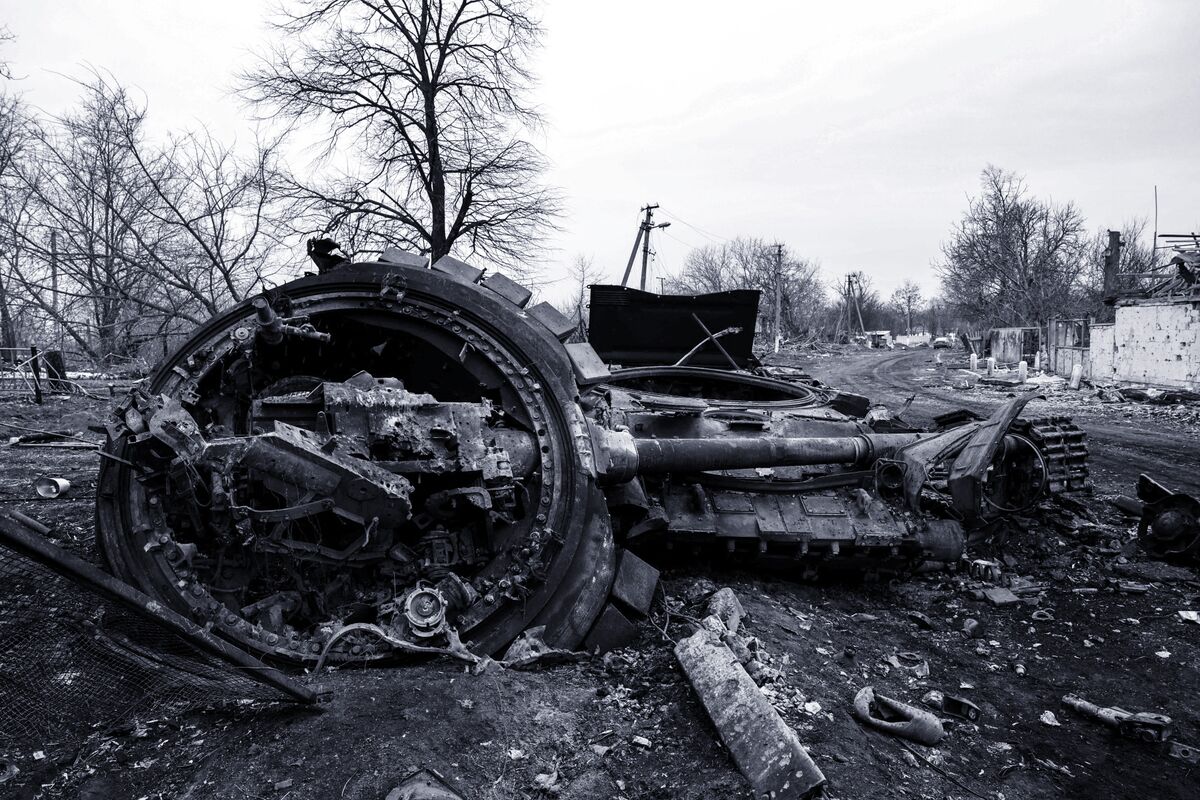
After Ukrainian forces halt Russia’s advance toward Kyiv, inflicting thousands of casualties and destroying hundreds of aircraft, armored vehicles, and other weapons, the Kremlin says it will sharply cut military operations near the capital and the northern city of Chernihiv. In talks in Turkey, a Ukrainian negotiator said his country is seeking international security guarantees for territory that doesn’t include the occupied areas of Donbas and Crimea.
April 1
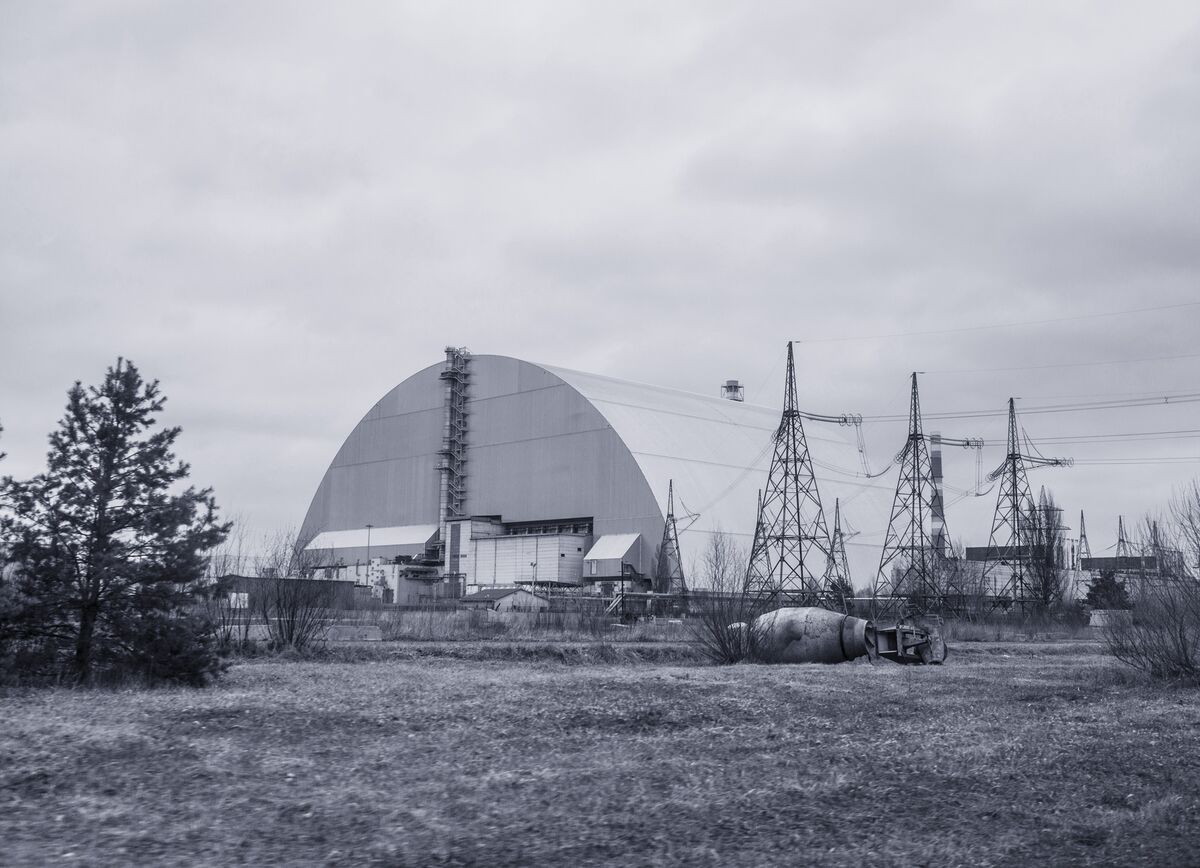
Russia pulls back its forces from the decommissioned nuclear power plant in Chernobyland accuses Ukraine of raising radiation exposure risks. Kyiv blames Russia, and Ukraine’s state power company says Moscow’s forces received “significant doses” of radiation after digging trenches at the highly contaminated site.
April 3
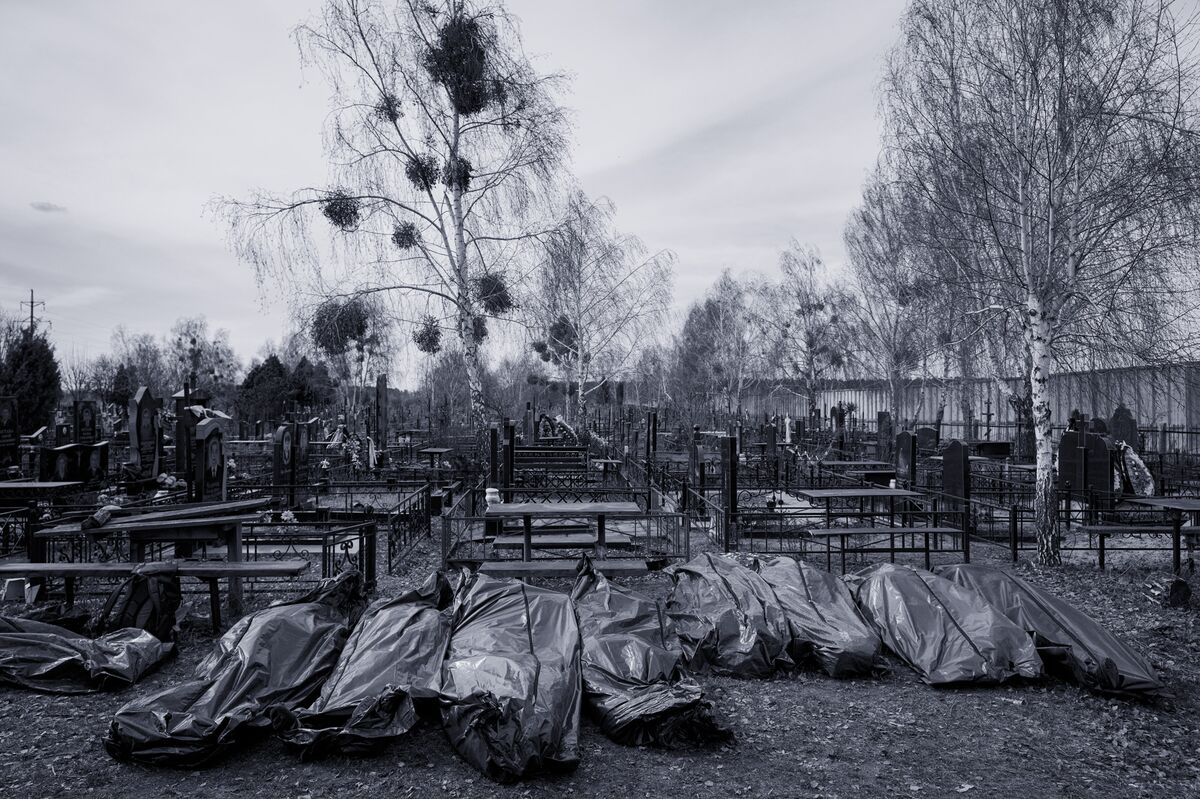
Evidence of mass killings and other atrocities surfaces after Russian troops withdraw from Bucha and other areas around Kyiv. The EU condemns what it says may be war crimes and begins work on new sanctions. U.S. President Joe Biden says Putin could face trial at an international tribunal and vows additional penalties as well. The Kremlin has repeatedly denied targeting civilians and has blamed the West for staging the attacks, without providing strong evidence for its claims.
April 6
The U.S., EU and Group of Seven coordinate on new sanctions on Russia, including a U.S. ban on investment and an EU ban on coal imports.
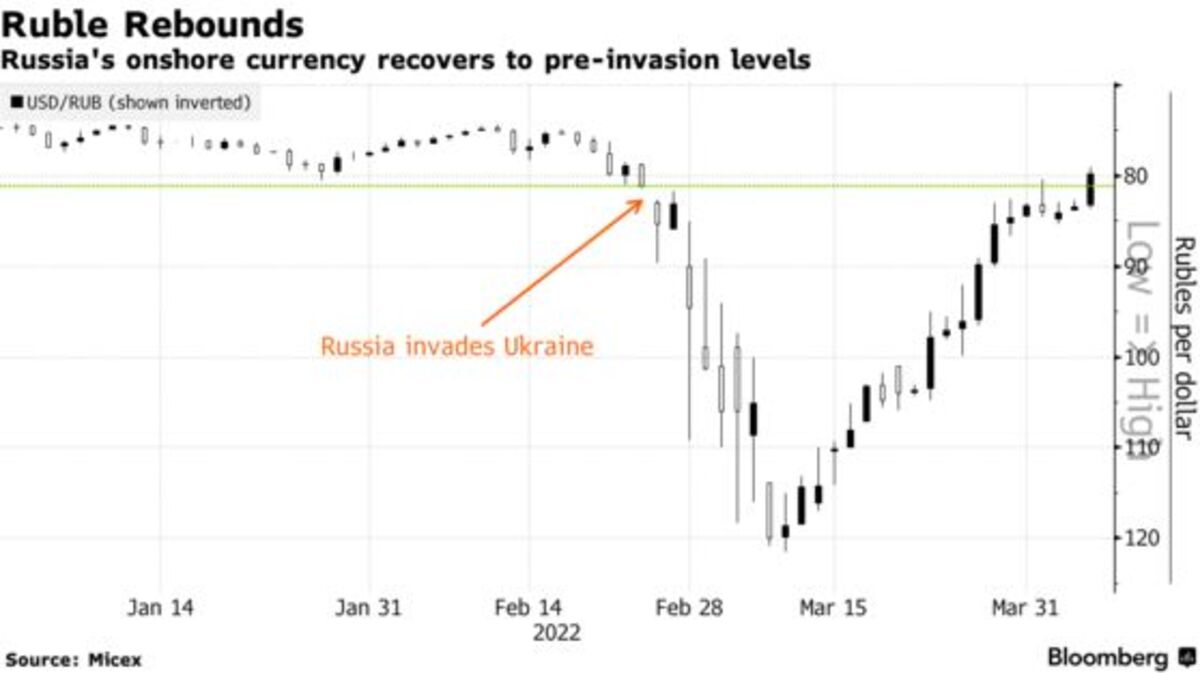
Despite the penalties, the ruble returns to levels from before the invasion, propped up by capital controls and incoming hard-currency income from energy exports. Russia also slips closer to technical default after foreign banks declined to process about $650 million of dollar payments on its bonds.
April 7
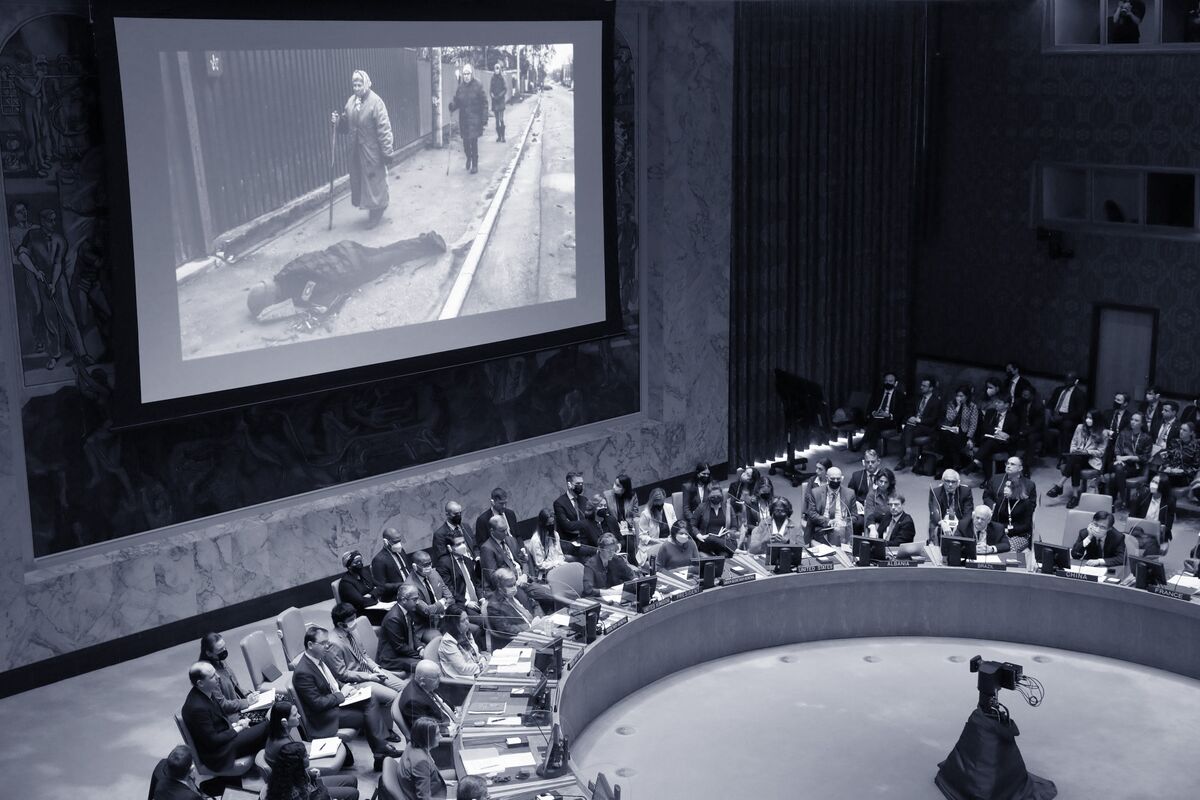
The United Nations General Assembly votes to suspend Russia from the UN Human Rights Council over its conduct in Ukraine.
April 8
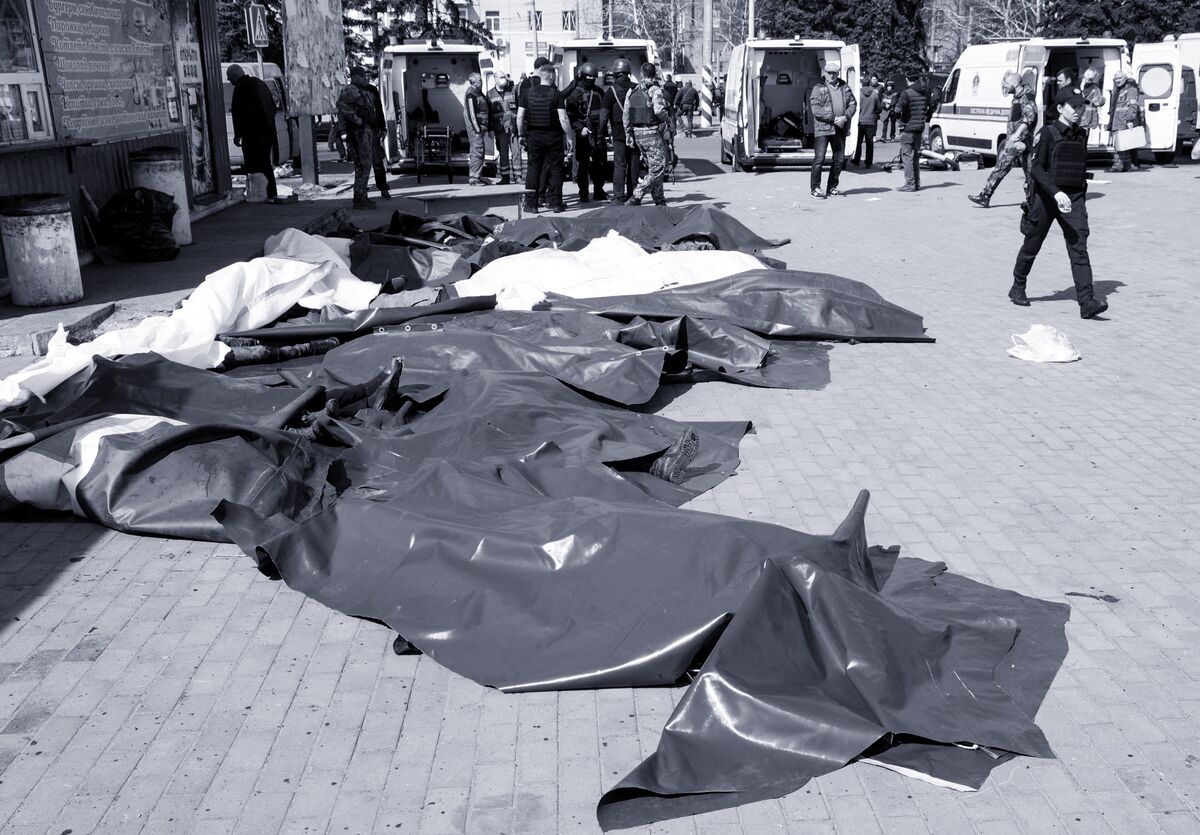
At least 52 people were killed and more than 100 wounded when at least one Russian cruise missile carrying cluster munitions hit the main train station in the eastern city of Kramatorsk, Ukrainian officials said. The attack on the main hub to evacuate civilians from an expected Russian offensive in Donbas drew condemnation from Western officials and calls for tighter sanctions.
April 10
Ukraine is pursuing about 5,600 cases of war crimes linked to Russia’s invasion, Prosecutor General Iryna Venediktova says, calling Putin “the main war criminal of the 21st century.” Around this time Russia appoints General Alexander Dvornikov, who oversaw Moscow’s forces in Syria in 2015 and 2016, as top commander for the war. He led the southern prong of the invasion, which had more success than the northern thrust, and will now manage the Kremlin’s shift of focus to the eastern Donbas region.
April 12
Putin characterizes peace talks with Ukraine as “at a dead end,” says the invasion is proceeding “according to plan” and vows to continue, as Kyiv accuses Moscow of sabotaging peace talks.
Read More: Russian Troops Risk Repeating Blunders If They Try for May 9 Win
April 13
Biden accuses Putin for the first time of committing “genocide” in Ukraine. Russian forces also face hard-to-prove allegations that they used a poisonous substance in the besieged city of Mariupol which, if confirmed as a chemical weapon, could further escalate the war. Finland starts the process expected to lead to a bid for it to join NATO, while the U.S. and EU separately agree to pay for additional arms for Ukraine worth more than a combined $1.3 billion, including heavy weapons.
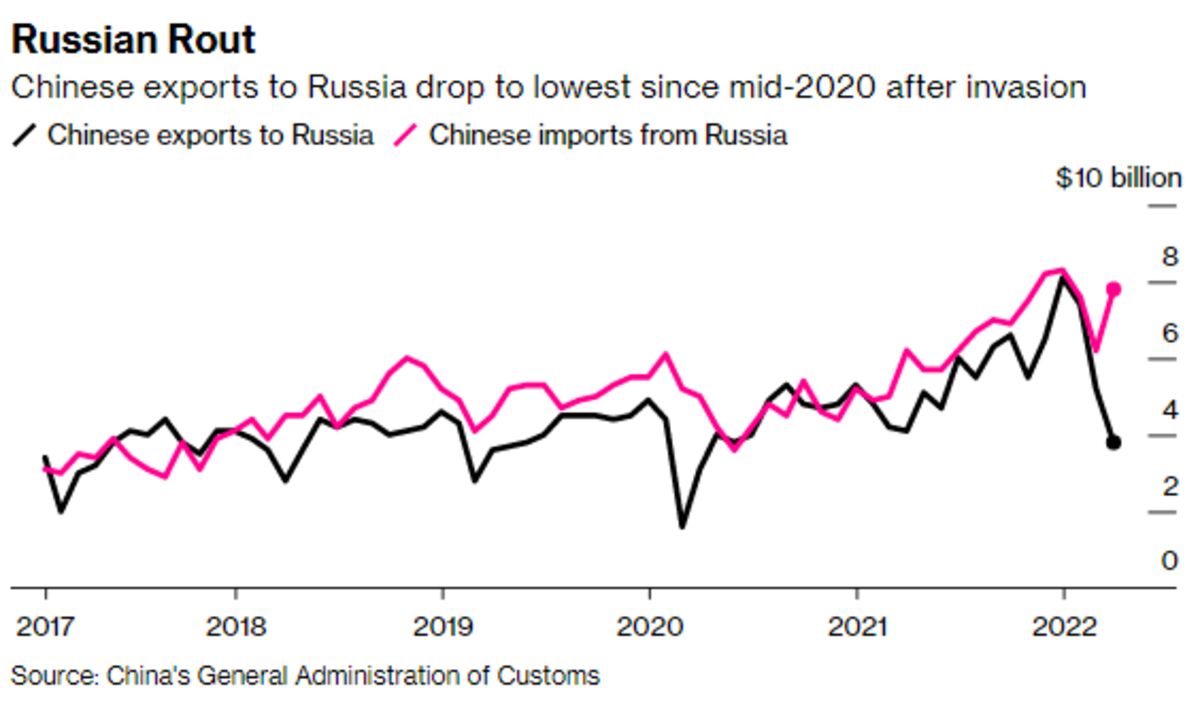
China’s exports to Russia slumped in March, even as shipments to other nations grew quickly, indicating Chinese companies are likely being cautious about trading with Russia.
April 14
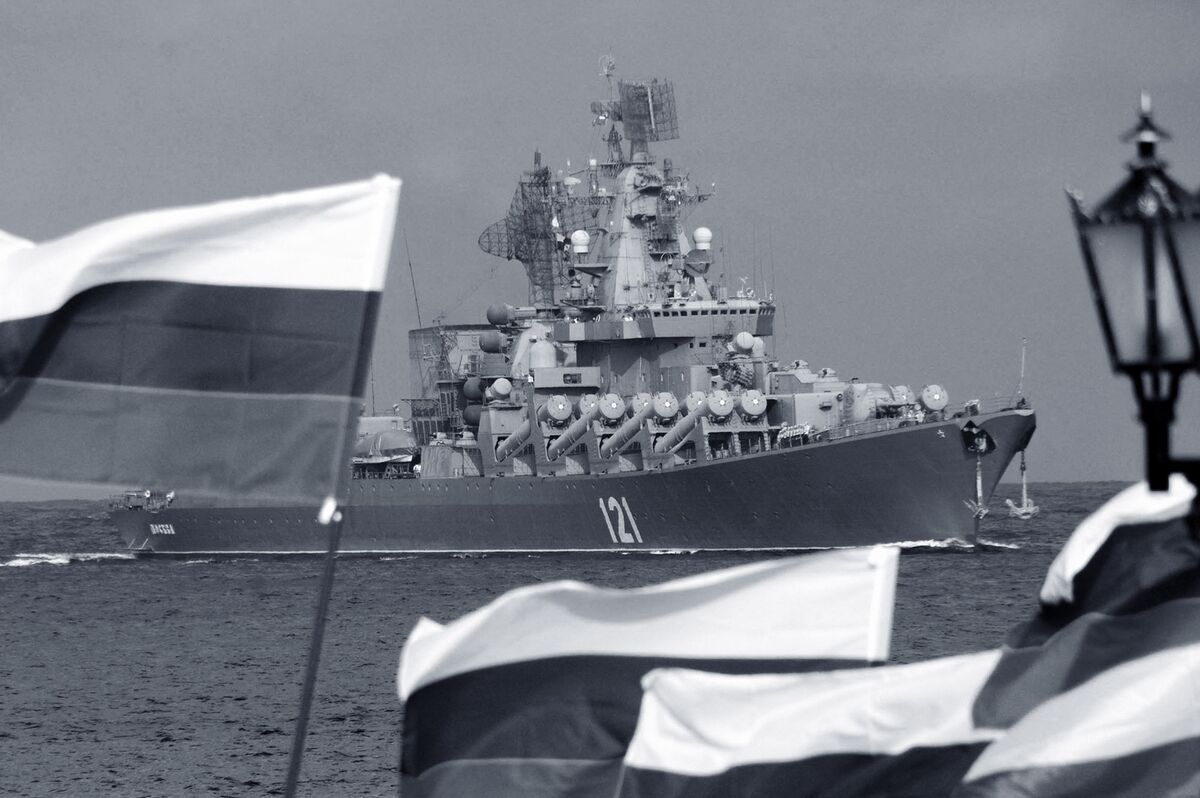
Russia threatens to deploy nuclear weapons in and around the Baltic Sea if Finland and Sweden join NATO. Russia’s Black Sea flagship, the missile cruiser Moskva, is reported damaged in an incident attributed by Russia to exploding onboard ammunition and by a Ukrainian official to a rocket attack.
— With assistance by Andra Timu and Patricia Suzara


3 comentários:
This week, there was an attack in Brazil. An individual known by the nickname "Tiu França" in Brasília spread explosives around the city. Immediately, journalists rushed to blame Brazilian Bolsonarism—typical of the corrupt media that builds narratives without reliable investigations, in order to speculate and pin the blame on others. This also harms those who were arrested on January 8 during the act of vandalism that is still under investigation. Many people were lightly accused without the support of an impartial and concrete inquiry; they may very well be innocent and were led to the events in Brasília by infiltrators who remain unpunished and at large.
Just because this "Tiu França" had been affiliated with the PL (Liberal Party) since 2020, the media failed to investigate that he was previously affiliated with the PDT (Democratic Labor Party). It’s worth remembering that the PDT has hosted members of the "Nova Resistência" (New Resistance), and no serious investigation has been launched into this angle of the Brasília attack—especially not by ABIN (Brazil's intelligence agency) or the Federal Police. Since Tiu França was part of the PL, the question arises: did he act on his own, or was he possibly an infiltrated agent within the PL to incriminate Bolsonarists?
The media immediately used the event to label every conservative Bolsonarist as a potential terrorist, which we know is a deliberately constructed lie aimed at persecuting and destroying the reputation of people aligned with the conservative right. I believe this is a persistent falsehood used to portray Brazilian communism as “clean” and to divert attention away from certain actors in pro-Russia groups like Nova Resistência in Brazil.
Moreover, there’s still no amnesty for those arrested on January 8 without an impartial investigation. Suspects in Brazil often go unpunished by the justice system. Another point to consider is that the CIA in the United States is reportedly investigating individuals such as @camaradamachado, @iamclaudiamr, @liberdadenumen, @flaviagasi, among others who may be involved with Nova Resistência or act as informants. Whether this CIA involvement is a cause for concern or just speculation remains unclear.
It’s also important to note that certain individuals with knowledge in IT and information technology could very well use browser data encryption or apps to send threat messages to others. So be very cautious when opening pages or trying to conduct your own investigations without competent authority. Avoid contacting anyone under investigation to prevent causing harm to individuals who might be innocent, victims of rumor, or involved in serious and confidential investigations.
Remember: do not incriminate people on Twitter or other platforms without a factual basis or investigative foundation. No one should be accused or blamed without solid evidence and justification.
Sources:
https://www.state.gov/relatorio-especial-do-gec-exportando-desinformacao-em-favor-do-kremlin-o-caso-da-nova-resistencia-no-brasil/
https://causaoperaria.org.br/2023/espionagem-ao-nova-resistencia-escancara-ditadura-norte-americana/
https://oglobo.globo.com/mundo/noticia/2023/10/21/grupo-brasileiro-neofascista-faz-desinformacao-pro-kremlin-diz-relatorio-do-governo-americano.ghtml
https://pdt.org.br/index.php/o-pdt-repudia-a-fake-news-de-que-existem-infiltrados-no-partido/
Raphael Machado is a pro-Russia nationalist who keeps spreading disinformation here in Brazil and even recruits Brazilians to support the Russian cause. I don’t understand how Ukrainian intelligence, Israeli intelligence, the CIA, and Brazil’s ABIN haven’t yet launched an investigation into him, given that he has a group established in Brazil under the name Nova Resistência, which includes many active cells across the country and potential individuals who should be investigated—such as "Newman," who pretends to be a conservative right-wing figure but was exposed by actual conservatives and Christians. He disappeared from Twitter for a while but is not a true conservative; he is a pretender.
Other individuals also pretend to be right-wing, like this woman known as @iamclaudiamr. Yes, she too has ties with “Camarada Machado,” known as Raphael Machado on Twitter. Investigations suggest that she is a member of the Brazilian Armed Forces, among others who continue to be monitored.
Part of the Nova Resistência group, Black Bloc, Antifas (false anti-fascists), along with some communists and neo-Nazis, have been meeting in this area of Rio de Janeiro: Rua Conselheiro Saraiva, Bar do Boi, Restaurante Estilo Carioca, and Tabacaria Velha Havana. Please have this checked by agents from ABIN – the Brazilian Intelligence Agency, the FBI, and other investigative agencies such as Mossad and Ukrainian intelligence that have partnerships with Brazil.
Postar um comentário